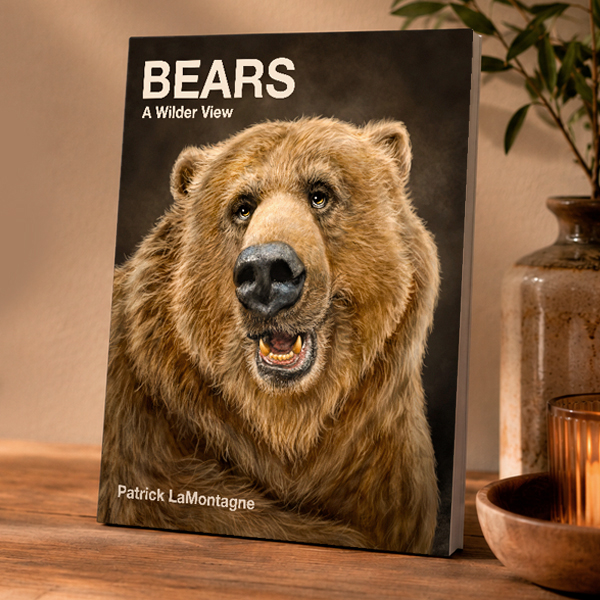
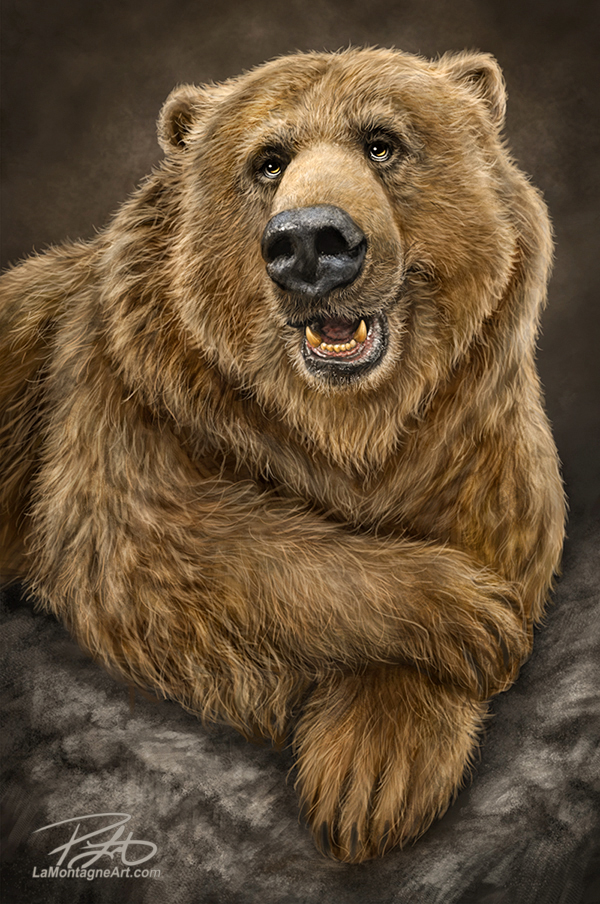
I’m happy to reveal this new painting of Berkley, a bear near and dear to my heart who lives at Discovery Wildlife Park in Innisfail.
I hadn’t planned on painting another bear so soon, as I have commissions I’m desperately trying to get completed, but the book needed the right cover, and the right cover needed a new bear.
After years of delays, procrastination, and perfectionism, my first book is well underway.
My publisher, Alexander, owner of Renegade Arts Entertainment here in Canmore, first started talking with me about a book ten years ago. Leaving out the details and roadblocks along the way, all of which were self-created, I finally got tired of my own B.S. excuses.
I usually see Alexander at Expo each year, as he’s always there with several of his authors, and he brought up the book again this spring. I admitted that I figured he was probably tired of hearing me say, “soon, I just have to…”
But he was his typical gracious self and told me it would happen when it happened.
So I decided it was happening now.
We went for lunch the following week and agreed on some immediate deadlines, including a full book mockup and the marketing material he’d need to begin promoting it on his side of things.
Most pressing of all, he needed a cover.
I tried several existing paintings in the mockups, but none of them seemed right. Eventually, I realized I needed to paint a new bear for the cover of my bear book.
My friend Serena at Discovery Wildlife Park helped me gather some new Berkley reference, because she’s the only bear I wanted on the cover. Fortune favoured me, and I got the shots I needed earlier last month.
As my work is all about personality and connecting with character, I had to think like a customer, and that meant a closeup of her face for the cover. The full painting, however, will appear inside the book, and I’ll have prints available before too long.
Now that this is out there, there’s no turning back.
The book will be an 8X10 softcover, around 70–80 pages. I still have a few pieces to complete, along with additional sketches I want to add. There’s also some writing and editing to do before this fall, when all of this needs to be finished.
You’ll read more about the project in the coming months, and I’m excited, and more than a little relieved, that this is finally a real thing.
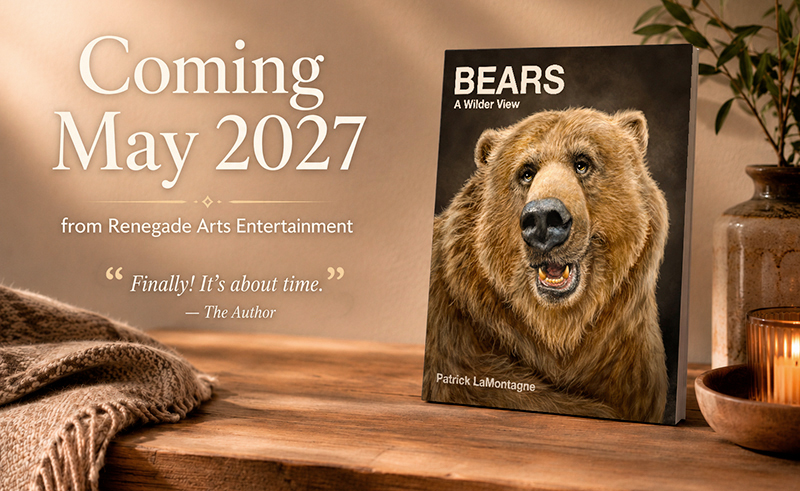
Alexander knows the importance of the Calgary Expo in my world and volunteered last week that he’s planning to have advance copies available for my Expo people in April, ahead of the official book launch on May 12, 2027.
There’s still a lot of work left to do, but I’ll manage. Scary stuff, in the best possible way.
Here’s a time lapse drawing video of my little friend Berkley when she was a cub. You may listen to the voice-over or read it below.
Most artists will experience an inspirational drought where the creative well appears to have dried up, often several times in a career. Get to the bottom and start digging, you may only find more dry dirt.
That’s some scary shit, especially when hauling that water is how you make your living.
The pandemic was a wake-up call for many. Some changed careers because they had to. Others considered returning to their pre-lockdown jobs and realized they’d rather be unemployed.
We were all confronted with hard questions.
One I keep returning to is, “What do I want?”
The easy answer is often ‘more money’ as many imagine that would solve our problems. I don’t want a sports car, a big truck, or a huge house. I’m not a ‘buy more stuff’ guy. More money means safety and security, not having to fret about the finances, now or in my senior years.
Retirement doesn’t appeal to me. To keep my existential angst at bay, I need to have something to do. Idle time is not my friend. Barring any injury, illness or a cognitive decline, a prospect that honestly scares the hell out of me, I plan to work for the next twenty-five-plus years.
But what work do I want to do?
Parents used to tell their children to get an education and have something to fall back on, but those safety jobs have become rare. The days of thirty or forty years with a company followed by a healthy pension are long gone. We read daily about massive layoffs from corporations with names that used to be synonymous with stability.
That’s one reason I opted to sail my own ship rather than shovel coal on a larger vessel where the captain can throw you overboard on a whim, most likely into shark-infested waters during a hurricane.
But even working for yourself, you must still answer to customers. The art you want to create and the art your clients want you to create are often two different things.
At my market or gift show booth, people often ask for their favourite animal. Do you have an iguana, a hedgehog, or a kangaroo? If I don’t, I’ll add it to the list and might eventually paint it. If they follow my work, they might even still be around when I complete it. It could become a bestseller but likely won’t because most people want popular animals like lions, tigers, bears, and wolves.
At one event earlier this year, somebody asked if I had a sloth. I had just painted one, so I plucked it from the bin, put it in her hands and proudly said, “Why yes, I do.”
The woman looked at it briefly, put it back in the bin and started flipping through the others, asking, “Do you have a platypus?”
I wished I had so that I could find out what she’d ask for next. When I said I didn’t, she said, “Oh, too bad, I would have bought one,” and she walked away.
This is often what it’s like working for clients. Several licensing companies rent the rights to put my work on their products. Occasionally, one will ask for a painting of a specific animal. If I can, I’ll try to accommodate the request. But without fail, as soon as I do, the client has a list of other images they want me to create.
Suddenly, licensing my catalogue has turned into their ordering custom pieces, but without commission rates or guarantees that the time spent will generate revenue. It’s somebody else gambling with my money or, more importantly, my limited time.
I recently negotiated with a puzzle company to create a few designs for them. The first was a detailed painting of three giraffes. It was my idea, but one they approved. Shortly after I finished it, the owner told me they couldn’t add any new artists this year due to unforeseen circumstances. No big surprise in this economy.
I’m disappointed but have no hard feelings because I got some valuable experienced advice about what makes a good puzzle, and I stretched my skills to create something new. And I’m also happy with the finished piece. Once I complete a couple more puzzle-minded pieces, I’ll be shopping that first painting and new designs to other puzzle companies. Failing that, I’ll produce my own. When companies are your clients, your needs are not their needs. If your art resonates with their customers, then it’s mutually beneficial. But the moment it doesn’t, you’re yesterday’s news. They’ll work with the artist who makes them the most money. They’re in business to promote their company, not your work.
On the reverse of all my prints, there is an artist bio. The last line invites people to subscribe to A Wilder View on my website, a regular email where I share news, paintings, and the stories behind them. One retailer will only sell my prints if I remove that line from the bio, as they don’t want their customers going to my website.
I’ve had a website for over two decades, and I’m easy to find, so I’m not concerned. But I am reminded of my value every time I prepare to deliver new prints because I must slice off that last line from each bio before sticking it to the backer board.
I recently severed ties with an art licensing agency that kept asking me to create new work to follow whatever trend was popular this quarter, whether it was the type of work I did or not. It wasn’t personal; they wanted all their artists to do the same thing.
If you’re a graphic designer or illustrator, following trends is often part of the job and what you signed up for. But if you’ve found that rare jewel of an established niche as I have, changing what you do every few months because somebody read a post on Facebook that robot plumbers wearing figure skates are in this year, you might as well be panhandling. The artist takes all the risk, creating new work in the faint hope the licensing agency might find a buyer for it. If they don’t, too bad.
If you won’t do it, they can find thousands of young desperate artists who will.
That’s no way to sustain a career. Nobody wins a race to the bottom. Customer service, professional behaviour and sound business practices are essential, as is compromise and accommodating your clients’ needs and wishes. People pay you to supply what they need, and delivering that often builds lasting relationships beneficial to both parties. All boats rise with the tide. Fail to realize these things, and you’ll soon be out of business.
But if you don’t write your own story, you’re just a bit player in somebody else’s. When you spend all your creative energy trying to please your clients and customers at the expense of the things that made you want to be an artist in the first place, you become bitter and resentful.
At least I have. But I’m working through it by redefining my boundaries in work and life.
An old maxim cautions, “Don’t kill yourself working for an employer that would advertise your job before anybody sees your obituary.”
If I suddenly dropped dead, my licensing clients would (hopefully) send my royalties as usual and negotiate any future licensing with my wife. Everybody else would move on.
Newspapers continue to struggle, and the question of how long I’ll be an editorial cartoonist has been front and center for over a decade.
These are things I can’t control.
So I ask again, “What do I want?” I enjoy creating my animal art, but lately, whenever I go to paint something, I think, “Will this animal be popular? Have I painted too many of these? Not enough? Will this make me any money?”
Every art decision has become about revenue. And when money is the prime motivator, the creative light dims. That leads to burnout and no joy left in the work. When the economy is down, costs are up, interest rates rising, and companies are laying people off, it’s hard to invest time in projects that might bear fruit later when other short-term work is more likely to generate income now.
Payments from clients and licensing companies are taking increasingly longer to reach my mailbox, despite their tight deadlines and demands for quick delivery.
Below the surface of every current piece of art is an undercurrent of desperation. Doom and gloom valley is not the preferred habitat for happy-looking animals.
Picasso said, “Inspiration exists, but it has to find you working.”
But then he also said, “The people who make art their business are mostly imposters.”
I’m gonna focus on the first quote and conveniently ignore the second one. So while I’m trying to answer the question of what I want to do, I’m working on my art book about bears. Not promising to work on it like I’ve been doing for more than six years, but working on it, as I’m well and truly sick and tired of my own procrastination and bullshit excuses.
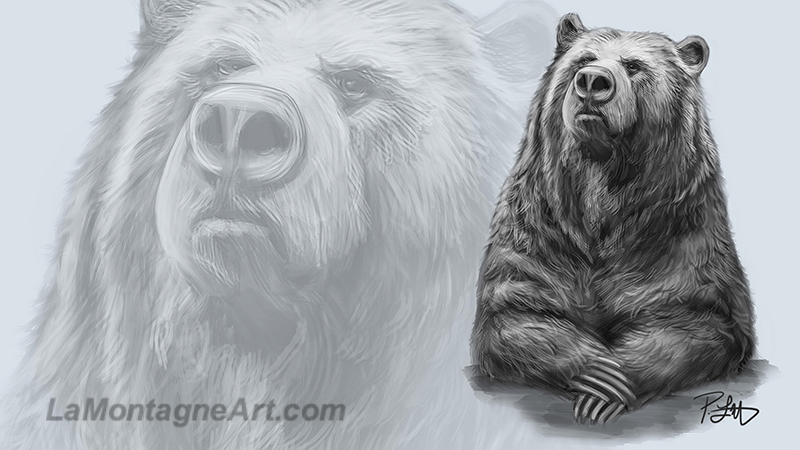
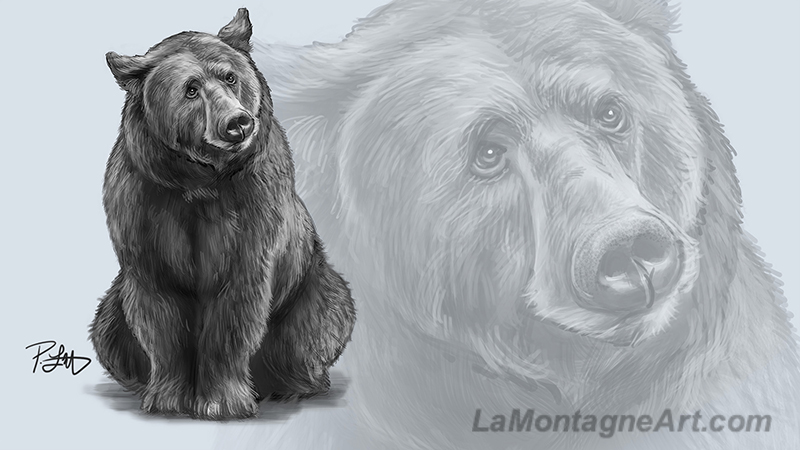
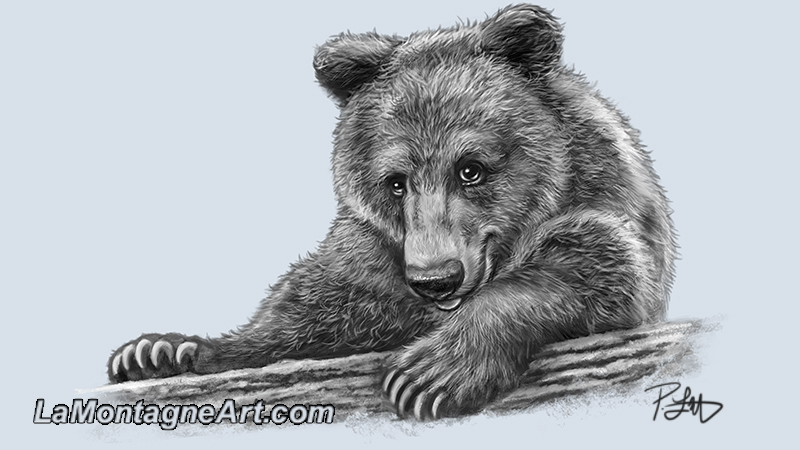
A very patient publisher recently told me to write the kind of art book I like to buy and read. The art books I like have smaller drawings, sketches, and unfinished pieces among the fully rendered paintings.
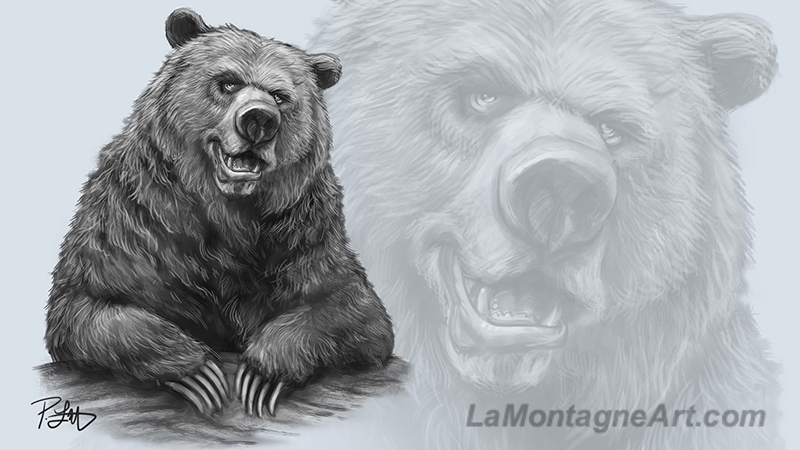
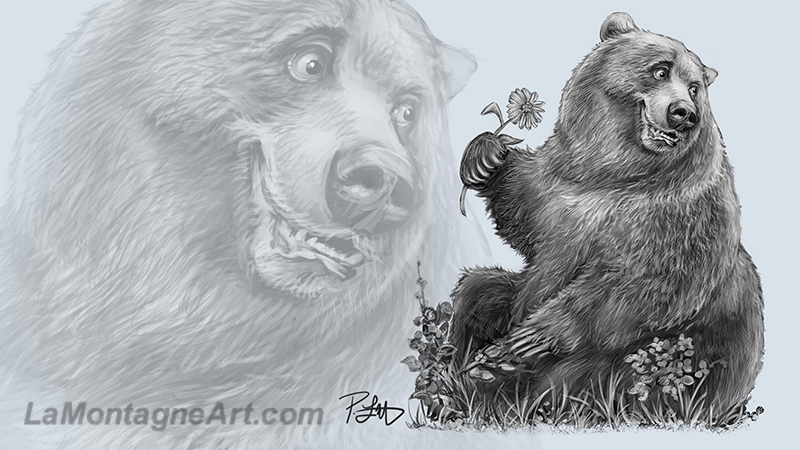
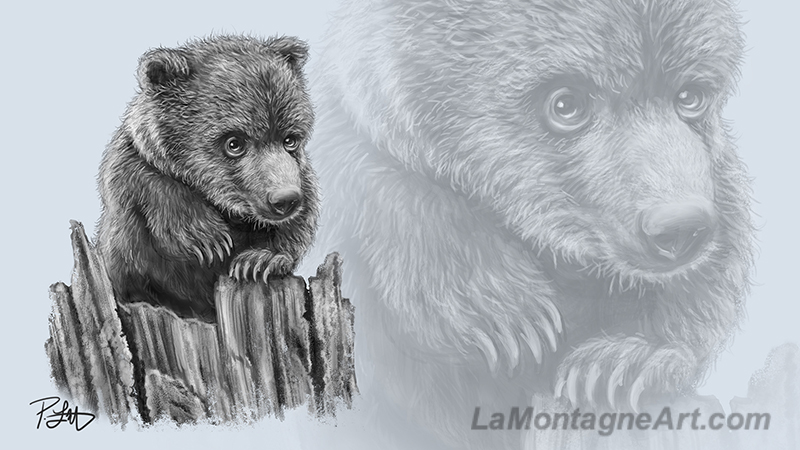
So, I’ve been alternating between writing the bear stories and drawing accent pieces like the ones you see here. I enjoy drawing them and expect one or two will inspire future paintings, as sketches often do.
While working on these images, I realized that whenever I’m lost and trying to navigate this ridiculous profession of art for a living, I always seem to come back to bears.

 I’m happy to reveal this new painting of Berkley, a bear near and dear to my heart who lives at Discovery Wildlife Park in Innisfail.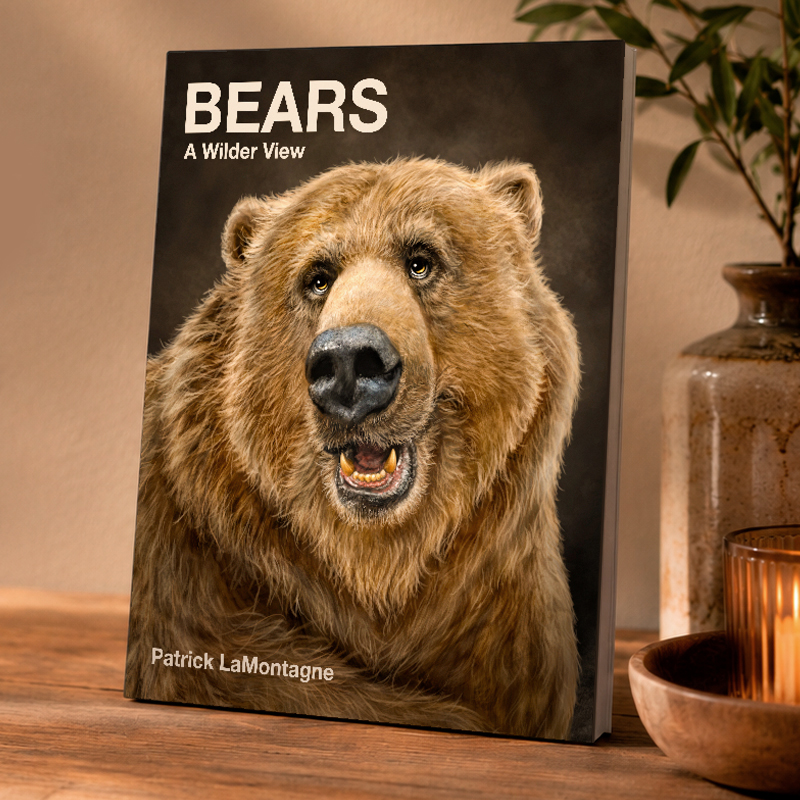

 Parents used to tell their children to get an education and have something to fall back on, but those safety jobs have become rare. The days of thirty or forty years with a company followed by a healthy pension are long gone. We read daily about massive layoffs from corporations with names that used to be synonymous with stability.
 Several licensing companies rent the rights to put my work on their products. Occasionally, one will ask for a painting of a specific animal. If I can, I’ll try to accommodate the request. But without fail, as soon as I do, the client has a list of other images they want me to create.
 When companies are your clients, your needs are not their needs. If your art resonates with their customers, then it’s mutually beneficial. But the moment it doesn’t, you’re yesterday’s news. They’ll work with the artist who makes them the most money. They’re in business to promote their company, not your work.
 Customer service, professional behaviour and sound business practices are essential, as is compromise and accommodating your clients’ needs and wishes. People pay you to supply what they need, and delivering that often builds lasting relationships beneficial to both parties. All boats rise with the tide. Fail to realize these things, and you’ll soon be out of business.
 I enjoy creating my animal art, but lately, whenever I go to paint something, I think, “Will this animal be popular? Have I painted too many of these? Not enough? Will this make me any money?”
 So while I’m trying to answer the question of what I want to do, I’m working on my art book about bears. Not promising to work on it like I’ve been doing for more than six years, but working on it, as I’m well and truly sick and tired of my own procrastination and bullshit excuses.