Posted on

Survey Says!

Preparing for the Calgary Comic and Entertainment Expo at the end of April is proving to be an exercise in anxiety.  I already know that my work sells well in the right venues.  I’ve had my Totem prints in four different galleries and retail outlets and while some are better than others, the response has been quite favorable.  Five of the designs are currently licensed to The Mountain and I’m always working on a commission piece for somebody.  While confidence in the work is usually one difficulty faced by newbies to Cons and Expos, that’s not the problem I’m facing.  Even if my work isn’t popular with the crowd that shows up to the Calgary Expo, I’ll still be OK with the work, and just know that it wasn’t the right venue.  I’m not even uncomfortable running the booth, talking to people, or selling, which is something else artists often have difficulty with.  For many years, I worked in the tourism and retail industries,  I ran Wacom‘s booth on my own for a full day at a training seminar, worked a trade show booth on my own up at Fort McMurray for a Banff hotel I used to work for, and have done live painting and training demos quite a few times in the last four or five years.  While public speaking scares a lot of people, it’s honestly not a problem for me.  In fact, the trick is getting me to shut up.

Where the challenge lies is knowing how to stock my booth.  I could spend many thousands of dollars selling everything from cartoon prints, illustrations, paintings, portraits, cards, prints, t-shirts, posters, canvas…it’s  a long list of possibilities.  The key to a successful booth it would seem, is focus.  And, of course, not overextending myself.  I’ve got three full days to sell merchandise at an event that has become so big that with 600 vendors and artists, and 50,000+ attending, there are a lot of things to consider.  I already know that I’m just going to focus on my Totem paintings, for the sake of continuity.  But I don’t want to run out of stock on Saturday morning, nor do I want to be packing up a lot to bring home on Sunday afternoon.

There’s a lot of advice online from people who attend expos like this, telling artists to balance ‘fan art’ with their own work.  Use the fan art to get people to your booth.  That doesn’t work for me.  Fan art is basically just copying somebody else’s popular characters and selling them.  While illegal, most of these offenses go without prosecution, so artists keep doing it.  Considering how many artists complain about being ripped off online, I’m surprised at how many still condone the practice.  I intend to find out if I can support my booth on my own work alone.

As this is my first booth, I will do a number of things wrong, I’m sure.  How can you learn from experience until you have some?  But in an effort to put my best foot forward, I created a small survey earlier in the week to ask people their opinions on a few questions I’m faced with.  Two winners were chosen from the respondents to receive 11″X14″ matted Totem prints of their choice.  I received 100 responses, which was the survey limit, but the results were pretty clear when it came to ranking which of my Totem paintings people liked best, along with opinions on matted prints vs. unmatted.  In an effort to perhaps help somebody else prepare for a show like this, here are my results and how I choose to interpret them.

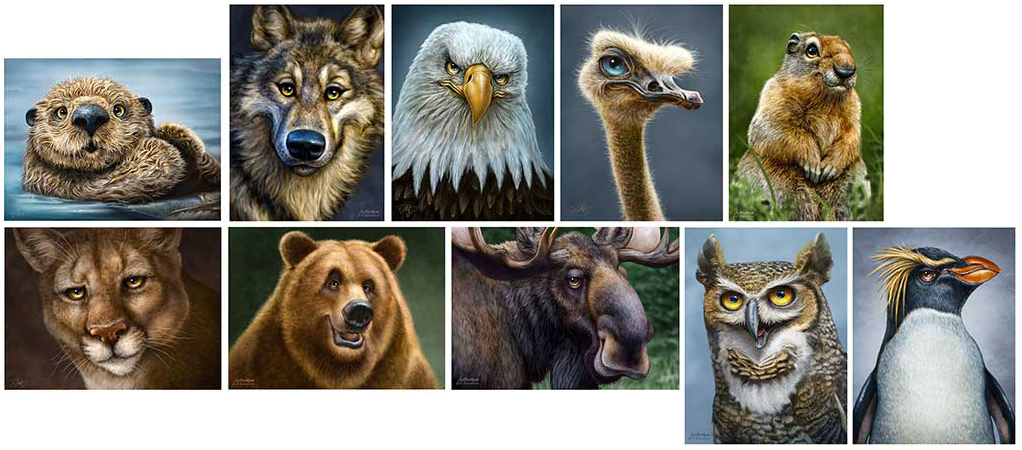
I asked respondents to rank my Totem paintings in order of preference.  While I have 16 Totems in my portfolio, I’ll only be selling 8-10, so here are the Top 10 in the order the survey indicated.

Results001Some surprises here.  The Humpback Whale is one of my favorites, and even though a few people agree with me, most do not.  But for this survey, I would have included it in my print run for the booth.  Many people did say in their comments that it was tough to choose and that they had a hard time ranking them because they liked them all.  While I can understand that, and appreciate the compliment, the ranking was very clear for the first five, not so much for the last five.  The Bighorn Sheep could have easily been shown instead of the Penguin as they were neck and neck.   But I chose the Penguin because the venue will be in Calgary and with the addition of the penguins at the zoo last year, it’s a safe bet some will buy it based solely on where it’s being sold.

The Wolf Totem has long been a favorite among people who like my work.  It’s a big seller and very popular.  But it was done over two years ago and I’m pleased to see that my two most recent pieces are in the Top 3.  Thankfully, it would appear my best work isn’t behind me, something many artists fear.

Matted prints and cost.  78% of people would prefer a matted print to an unmatted one and 73% said cost didn’t affect that decision.  That was very revealing, however the people who follow me online aren’t necessarily the same demographic as those who will be shopping at the Expo.  A lot of people go to the Expo to buy inexpensive prints and even at a reduced price of $30.00, it will be too much money for some, when they could buy two or three prints for the same amount of money, which means more art from different artists.  If this were a Christmas trade show with an older crowd, I would go entirely matted at regular price with a lot of canvas as well, but at this venue, I’ll be doing a mix of matted and unmatted prints.  But this was very helpful in helping me decide the balance.

The majority of people were interested in a discount on buying two prints, rather then three or four.

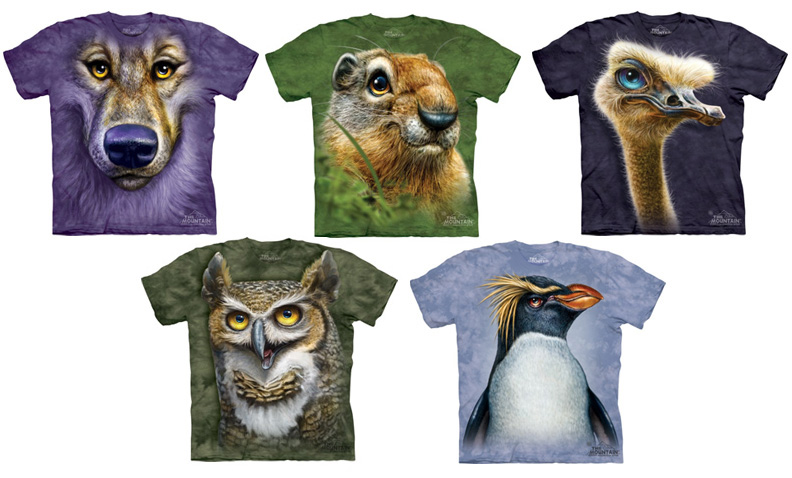
Results002When it comes to the T-shirts available from The Mountain, the Wolf was the clear winner, the Ground Squirrel second, but it was an even balance between the other three.  If I do decide to include T-shirts in my inventory, and that’s still undecided, it is obvious that I should include all five.  The large majority of respondents would buy one for themselves or somebody else.  One commenter suggested that she still liked the T-shirts, but wouldn’t buy one because her family just doesn’t wear shirts with designs on them.  Personally, neither do I, so I was curious to see how many thought the same.  Selling T-shirts as well as prints might be a little too much this year as it would require a lot of inventory in different sizes and might make for a very crowded booth.  This first year, I might just stick with prints and have one of each design on hand to let people know that they’re available online from The Mountain.

Finally, more than half of the respondents left comments, which I found very valuable.  Many were complimentary of my work, which I appreciated.  Others told me that ranking the Totems was very difficult and a couple even seemed to worry that they were hurting my feelings by doing so, telling me I shouldn’t think they hated the last one they picked.  No worries, I’ve got thick skin.  Still, others were just very nice words of encouragement and nobody gets tired of hearing those, so thanks for that.  Some suggested that other animals should be on T-shirts.  As they are licensed and not produced by me, it’s actually up to The Mountain which ones end up on T-shirts.  So while these five are the only ones at the moment, who knows what the future will hold?

Here are some other comments I found helpful, and my thoughts on each.

“Your pricing, I would do the multiples on the $10 mark… so $40, $50 etc. Just keeps things simpler.”  This is good advice and something I’m going to seriously consider.

“Would it be too much work to get more mat colors than black? Black looks nice, but can take away from some pieces depending on color. A color mat can really enhance the work. Good luck!!”  and another comment in the same vein “White matte and $40. I don’t like black mattes. Too heavy. Your prices are too low.”  Matting is always tough.  With lighter colour work or black and white, a white mat usually looks best.  With darker work (such as mine), a black mat usually looks best.  And you’ll easily find people who will disagree with both statements.  In a perfect world, a painting looks best when matted to reflect colours in the painting and matches the decor of a room.  How do you do that for every customer?  Well the simple answer is that you can’t.  White or black are the choices and as in all things, people prefer one or the other.  For continuity in an artist’s work and to minimize cost and inventory, it isn’t advisable to offer both, because hanging together on a wall or display, they will actually look bad beside each other.  As for choosing a coloured mat, that’s a minefield.  A number of people said they didn’t like the purple of the Wolf T-shirt, even though it did draw out colours from the painting itself.  Honestly, purple wouldn’t have been my first choice, either.  But it was still the most popular shirt in the survey.

I trust the advice of my printer, as he does both white and black mattes for many different artists.  After seeing these comments, I asked him what he thought and he said he thinks my work looks better with a black mat.  My wife agrees and I think so, too.  Art is a such a tricky business, because everybody likes different things for different reasons, and you can’t please everybody.  So I’m sticking with the black mats, but wouldn’t tell somebody they were wrong if they swapped it out for a white or coloured mat.  Even still, with the choice of only the black mat, the vast majority still preferred to have a print sold with the mat.

“A set of postcards of your totems on a special paper would be pretty cool.”  That’s a great idea.  While I was going to have postcards for promotional reasons, I hadn’t considered doing that for each animal as a little collector piece on their own.  Might sell them for $1.00 or $2.00 each or two or three for $5.00.  I already have art cards licensed through Island Art Publishers, but promotional postcards for the show might be a nice addition.

“Would like to see your totems on ball caps and mugs.”  That’s a licensing thing and while I wouldn’t produce them myself, you never know what might come around in the future.  I’m always talking to other companies and if I find the right one, you may get to see both.

A lot to consider with this survey and I would like to thank everyone who participated.  The expense of this show is significant, thousands of dollars to prep the booth and stock inventory, so I really wanted to put my best foot forward.  The input was very helpful and I imagine there will be other opportunities in the future for me to ask for your opinion and offer prints as prizes.  As always, however, you can always share your thoughts with me  on Facebook, Twitter, or Google+.

Posted on

Comments and Choices

PostitJust as artists discover their own style,  freelance long enough and you’ll discover your business style, too.  As the online world changes, faster today than ever before, so will your way of doing things.  For example, when I began to post editorial cartoons on this site, I disabled comments because I knew it would turn into a melee of differing political opinions.  While I agree with a person’s right to express themselves and argue their point, anybody who strongly disagrees with my point of view can send me an email or write a letter to the editor of one of the publications across Canada in which my cartoons appear.  But all one has to do is look at almost any political story on a news website and you’ll see how quickly it gets turned into a free-for-all brawl.  Pro-Conservatives will seize any opportunity to further their cause, regardless of whether or not the story warrants it.  Pro-Liberals do the same thing.  Any real discussion is lost amid the noise.  To avoid that, comments have never been allowed on editorial cartoons on this site.

An argument has been made by some in recent years to disable comments on blog posts as well.  While I’d never given it much thought, I’ve read some of those arguments, and recently revisited that question.   When it comes to interaction with artists, freelancers, and the folks who just generally like my cartoons, social media is where the action is, at least for me.  Facebook is where I get the most feedback and where people seem to like to comment the most.  It’s also where I get the most questions about how I do things, requests for help, and just general discussion on cartoons, blog posts, and other links.  I regularly get commission work on that platform as well.

Twitter is another form of interaction that has proven to be worth my while lately.  Not only does it grant access to other people I don’t interact with on Facebook, but I get real time information in short bursts.  It also forces me and others to be succinct in posting any links and comments.  It took me a long time to see the value in Twitter, but I get it, now, and am using it daily.

Google+ is still an effort for me.  I don’t get nearly the interaction there that I get on Facebook or Twitter and have been having a hard time finding the value in the platform.  While some would argue that Google+ is where everybody is going, I’m just not seeing it.  For awhile, it seemed to be taken over by photographers or at least hyped to be the place where photographers should be, but I only post there lately because it takes two more seconds after I’ve posted to Facebook and Twitter.

When it comes to blog posts, there are many who will tell you that you must keep a blog, while there are others who’ll say blogging is dead.  I still believe in keeping a blog, but only because I enjoy writing.  If you don’t like writing or teaching, you won’t enjoy it or keep it current.

The point of all of this rambling about my online posting practices is to show that what works for one person may not work for another.  Many self proclaimed authorities will tell you the exact methods and devices you must use when it comes to self promotion, but usually they’re just validating their own choices.  It’s the same reason the Apple vs. PC, Nikon vs. Canon, Coke vs. Pepsi debates still rage on.  If you can get other people to do what you do, then it somehow means you’re right.

The reason so many more people are choosing freelancing as a career is that they want the freedom to make their own choices.  It’s a very big reason why I chose to do it.  I would much rather screw up and learn from my own mistakes, than take orders from a boss who refuses to admit he ever makes any.  With that freedom of choice, it’s important to listen to other professionals and find out what your options are, but then make your own choices based on what you feel is right for your business.  Weigh the facts, but trust your gut.  We’re all just winging it, even the so-called experts.

When it comes to my website, I think of it like a storefront or a brochure.  It’s the image of my business that I want to project.  That means controlling the content, the look, and what gets posted.

I don’t get  a lot of comments on this site in the first place, largely because most people choose to interact with me on social media, and to be honest, that’s the way I prefer it.  While many of the comments I do get are positive and supportive, I regularly have to weed out the ones that are argumentative, ill-informed, and some that are so long, they’re blog entries all on their own.  It’s a time suck, and lately, it’s just not working for me.  By censoring comments, as well as picking and choosing which I want to show, it would be hard to argue that it’s real interaction, anyway.  Consequently, if I allowed anybody to post whatever they want, it would quickly begin to look like a business where the front window is covered in leaflets, announcements, and propaganda for other businesses, agendas, and personal causes.  I find neither of those options particularly appealing.  The main reason I chose not to sell ad space on my site was to avoid that problem.

Freelancing is a tough gig most of the time, but if you try to please everybody, you’ll be miserable.  Make your own choices, judge their effectiveness, make new choices.  Keep what works, discard what doesn’t.  Repeat ad infinitum.

Today, I’ve decided that even though blog comments used to be mainstays in online interaction, I believe that social media has replaced their usefulness, so I’m disabling them on my website.

Thank you for those who have commented on this site in the past, and just because I’m turning comments off here, doesn’t mean I don’t want to hear from you.  I’m on social media every day and am happy to talk with you there.  Chances are you found this link on social media in the first place.  But if not, here are the links to my social media accounts.

Facebook: LaMontagneCartoonInk

Twitter: @CartoonInk

Google+: Patrick LaMontagne


Posted on

Spec Work and why you should avoid it

When freelancers are first starting out and are very hungry, both literally and creatively, they’ll pretty much work for anybody.  Almost all of us get taken at one time or another, and often more than once, by the promise of exposure, low pay now/higher pay later, or just cheap clients.  Most of these lessons have to be learned the hard way, and while it’s easy to blame the client, it’s really our own fault for agreeing to the work in the first place.  Spec work falls into the same category of ‘should have known better.’  In the case of a graphic designer, for example, a ‘client’ will ask you to submit a logo and if they like it, they’ll pay you for it, but if they don’t, they won’t.  Basically all of the risk lands on the creative and the client gets free work done.  Try doing that in a restaurant, ordering five meals and only paying for the one you really liked.

“Spec work (short for speculative) is any job for which the client expects to see examples or a finished product before agreeing to pay a fee,” a quote by Eric Miller in an About.com article.

This is also how many design and illustration contests work as well.  They solicit many entries with the promise of big prizes or cash to the winner, and often second or third prize as well.  What they’re really getting is a ton of submissions for their project at a fraction of what it would normally cost them.  If you read the fine print for most of these contests, you’ll see that they still have the right to use all submitted images in a collection, book, future project and online with no compensation to the designer or artist as well.  This is why I don’t submit to editorial cartoon contests, unless it’s work I’ve already done.  I’ll frequently see ads for cartoon contests out of places like Romania or some other foreign country where you have to draw a cartoon or caricature on a theme, usually a politician you’ve never heard of.  All of the above mentioned criteria apply.  And while the contests are legit, and the prize money is real, the benefit is almost entirely to the company, organization, or person holding the contest.

Spec work is something to be avoided,  especially if you already have a body of work where your skill can be adequately measured.  If somebody asked me to paint their dog and told me they’ll only pay me if they like it, the conversation is going to end pretty abruptly.

So why did I just complete a spec project this morning?

Well, there are a few reasons.  First of all, it was an interesting challenge, something I hadn’t done before.  I was tasked with painting somebody else’s artwork, a cartoonist/animator whose work I greatly admire, because this person has drawing skills that I don’t.  A chance to paint a character designed by this person was intriguing.  Also, the company in question is well established and one I would like to work for on a contract basis doing just this kind of work.  While it’s work I can never claim as my own, and likely never show on my own site, it’s good practice of my painting skills.  To be considered for this work, I had to submit a painting test, and I’m sure I wasn’t the only artist tasked to do so.  There was no ambiguity in what I was agreeing to.  Paint the character, deliver it on a tight deadline (something I didn’t know going in), and if they like the choices I made and the look I came up with, I get paid for the work and will likely get additional work as a result painting this and other characters.  It was basically an audition.  And even though I have no doubt at all that I will be paid if my work is chosen, it’s still spec work.

Along with my other deadlines, I suddenly had a new one which meant working late last night and getting up very early this morning to submit the work on time.  It was hours of work that I may not get paid for.  As I’ve worked very hard to develop my painting skills, I have no doubt in the quality of my work.  That being said, there are many painters out there a lot better than I am and they could have submitted a test as well.  Also, if I don’t get chosen, it could simply be a fact that my style doesn’t suit the project.  My work may not be chosen for any number of reasons and I’m OK with that.  I went into this with my eyes wide open, basically expecting that I was working for free, with no assumption that I’ll ever get paid for it.

Now, all that being said, I thoroughly enjoyed the test.  It was a great character I was painting, the drawing of which is currently beyond my cartoon skills.  And even though I’m pretty tired right now, it was a bit of a rush this morning, getting up an hour earlier at 4AM, and scrambling to get it done, not to mention I had two editorial cartoons to get done this morning as well.  I feel good about the work I submitted and have divorced myself from the outcome.  If I get the gig, great, if I don’t, that’s fine, too.  I have plenty of work without it.

But this is a strong warning.  Think very carefully before accepting any spec work.  Know what you’re getting into and if it seems like you’re being taken advantage of and you’re uncomfortable with that, turn it down.  If you don’t value your work, then nobody else will.  And if you do choose to take the occasional spec job just because you find it interesting and are willing to do the work for free, know that you’re doing it for that reason, and have no expectations afterward.


Posted on 2 Comments

Two By Two: The Sequel

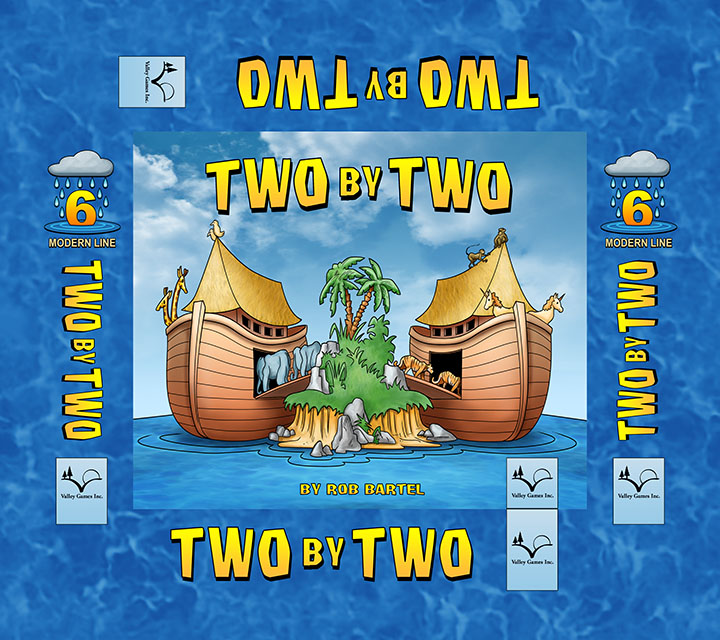
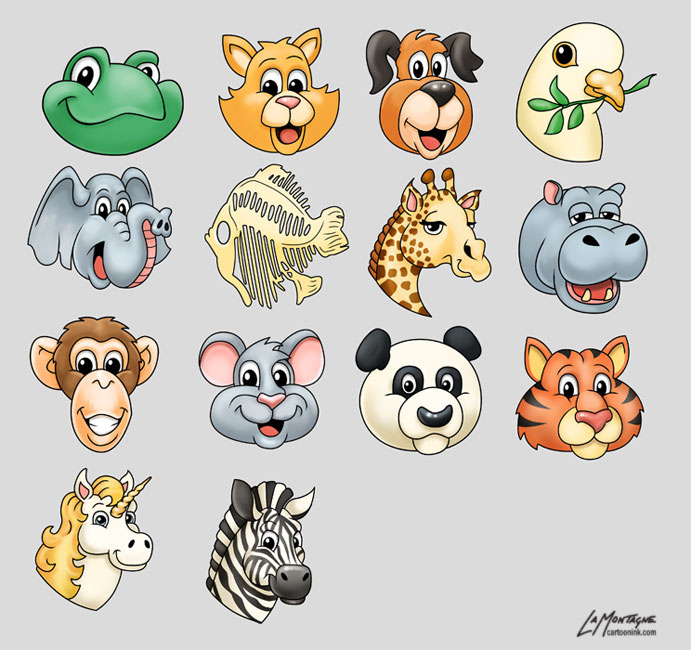
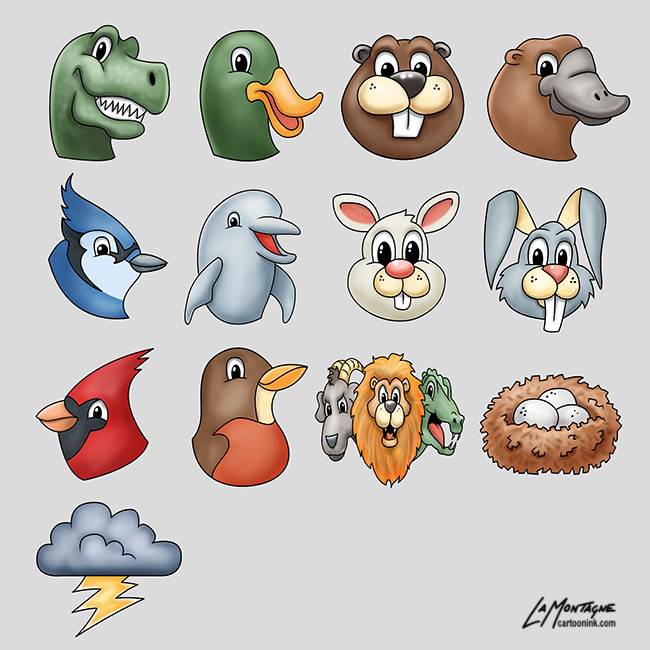
About three and half years ago, I created the artwork for a family board game called Two By Two for Valley Games, a company out of Calgary.  Around that time, I actually illustrated four titles for them and they were a lot of fun.  A small company at the time, but with great momentum and their board and card games have become popular worldwide with fans.  While I haven’t done anything in a couple of years for them, I recently got the call to create artwork for an expansion pack to the original Two By Two game.  Here’s the original artwork I did.  The box cover…

Ship at Port

…and the animals…

AnimalSheet2009

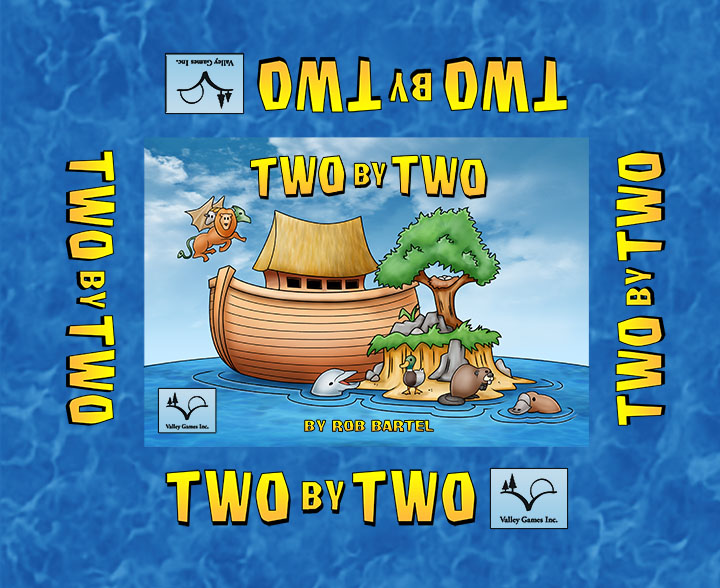
My artwork in general is constantly being refined.  While the look of my work years ago is still recognizable as mine, I’m always trying to improve, so while I’m still proud of the work I did on the original Two By Two, the choices I would have made if I’d done it from scratch today would likely have been different.  Everything from the animal design to the colour and texture choices, not because I don’t like what I did, but just because artwork evolves.  With this expansion pack, however, it had to look very much the same.  So rather than designing characters from scratch, I used the old animal style as models for the new animals, and the old cover as a model for the new cover.  The titles are still the same at this point, but I know I’ll be asked to change them soon.  They don’t quite know what to call it yet.  Two By Two 2 doesn’t really have much of a ring to it.  The invoice has been sent, but I knew from the beginning that this change would be requested at some point in the future.  Here’s the new cover…

Cover2013

…and the NEW animals…

AnimalSheet2013

The beauty of Photoshop files, and designing with layers is that I was able to use some of the parts of the original file for the new cover, which really helped with the continuity of the look.  The water texture, sky, clouds, titles, Valley games logos were all re-used.  The rest of the cover was new drawing and painting.  The animals can’t be all that detailed because they go on small tokens.  If you use too much texture for something small, it can look muddy when it’s shrunk.  The expansion pack box is a lot smaller and has different dimensions.

One of the problems artists have a hard time getting used to when working for commercial companies is that you’re not creating art for yourself, you’re creating it for a product.  Even with licensing on work already done, you have to expect that your work is going to be changed, and it’s up to you how much change you’re comfortable with.  For example, my t-shirts with The Mountain are designed from my Totem paintings, but due to the look and texture of their shirts, they don’t want the backgrounds I painted, so I remove them.  They may also scale, crop, mask and compose the image differently than I did it, most noticeably with my Ground Squirrel Totem, where they didn’t use the body.  I am comfortable with these changes because it’s still my painted work, but they know their business better than I do, and they haven’t ruined my work by tailoring it (pun intended) to their product.

With something like this board game, however, I was hired to create specific illustrations.  The work is not based on my vision.  I was given a list of animals to draw and I don’t even know why these specific animals were requested.  For example, there’s a bunny AND a rabbit.  I’m curious as to why, but I can live without knowing.  There’s also a mythical chimera, the goat/lion/dragon heads.  On the cover itself, all of those elements you see were specifically ordered.  Everything from the nest in the tree to the dolphin and platypus in the water.

While I still own copyright of all of these images, I’ll very likely never use them for anything else but my portfolio, because they were drawn specifically for Valley Games.  When you’re a freelance artist, a lot of your work is just going to be work based on other people’s ideas.  This was still fun to work on, and proved to be a challenge to get everything to look like the older game, but it’s contracted work, which is what most freelancing is about.  It’s a great job, but you still have to treat it like a job.  That means giving the customer what they want, making sure they’re happy with it, and moving on the next project.

In this video, you can see a review of the original game.  I designed the animals for the tokens, and the cover, but not the board or other token textures.  They also made changes to the cover layout, which is why I supply the finished product in layers.  Changes are expected and they need to have a flexible file.

Posted on

To thine own self be true

SnowmanThe last few weeks have been less than stellar.  While I find winter tough to take most years, a cold snap hits my mood especially hard.  When the temperature drops to -20C and below, I’m about the unhappiest camper you’re going to find.  Vitamin D, sunlamps, and other home remedies, I’ve tried ’em all.  Short of moving away to a warmer climate for 6 months of the year, I’ve just learned I have to ride it out.  Add to that the holiday season, of which I am not a fan, and a nasty cold that knocked me down hard on my one slow week of the year, and the last few weeks have felt like I’ve been living at the bottom of a deep dark hole.  Don’t get me going again on the fact that I’m supposed to be in Vegas this week.

There seems to be this ridiculous belief that if you are fortunate enough to love what you do for a living, you’re happy and upbeat all the time, and everything is right in the world, every minute of the day.  Trust me, that’s not the case.  While I’d much rather chart my own course than have somebody else tell me where to go and how to do it,  there will always be bad days and bad weeks, just like at any job, even one you enjoy.  Think of it this way, if somebody offered you your favourite food for dinner tonight, you’d jump at the chance.  If they offered it to you tomorrow, you might still be happy.  Now, imagine you have to eat it every night for the next year.  Would it still be your favourite, or would you be willing to pay anything for a rice cake?

It is not only in an artist’s nature to keep trying new things and new ways of being creative, it’s an absolute necessity.  If new challenges don’t present themselves, you have to go looking for them, otherwise what used to be exciting just becomes routine.  Creativity doesn’t do well with routine.  It withers and ends up on life support.

There is an elusive state of being that we all seem to be looking for called ‘balance.’  Parents try to find the balance between a fulfilling work and home life, workaholics need to balance their schedule and time off, creatives look for a balance between inspired work and selling out.  I’ve come to the conclusion that this balance is an illusion, it doesn’t exist, and that to try to find it leads to a futility that only makes  a person feel even worse about their situation.  This is largely because your perception of balance is fluid.  Find that extra hour in a week to read a book, and you’ll be looking for two next week.  Manage that, and you’ll be wanting a whole day off, then two, then three and pretty soon you’re running out of money because you’re never working.  Balance is the pot of gold at the end of the rainbow.  The closer you move toward it, the further it moves away.

Perhaps you’ve heard the fable about the scorpion and the frog.  The scorpion needs a ride across the river and asks the frog for a lift.  The frog declines saying the scorpion will just sting him.  The scorpion argues that it if he did that, he’d sink, too, so the frog gives in to a logical argument.  The scorpion climbs up on the frog’s back and they start off across the river.  Before too long, the scorpion stings the frog, and the frog says, “Why did you do that?  Now we’ll both drown!”

The scorpion says, “I can’t help it.  It’s just my nature.”

Rather than listen to all of the people that tell me I should relax more and take time off and try to find some balance, I’ve decided to make peace with the fact that I’m only content when I’m working.  Even when I’m not working, I’m thinking about work.  With that in mind, I’ve packed my next few months, and most of it will be quite challenging, because a lot of it will be new ground.  I’ll be recording a new DVD on painting portraits, something I’ve been talking about for months but haven’t actually gotten around to doing.  I’ve been commissioned to paint a couple of cat portraits and have received inquiries about two more pet portraits this week.  Another Totem is being prepped to paint as is another portrait, a painting of one of my absolute favorite characters in film.  The last one, I’ll be trying to paint in Corel Painter.  I haven’t used the Painter software since Painter Classic many years ago, and I’ve been wanting to try Painter 12, bought this past week.  The best way to do so is to just throw myself into a painting and learn as I go.  I have no desire to stop painting in Photoshop, but I also don’t want to be restricted to it, either.

There are a couple of online courses I’ve wanted to take for awhile, and there’s no time like the present.  Waiting for my schedule to slow down is just another way of saying that it’s never going to happen.

And finally, I’m well into the planning for my booth at the Calgary Expo in April.  There’s a lot to think about and organize, everything from which prints to sell and how many of each, banner design, and all of the other logistics involved with having my own booth and selling my own work at the event.  It’s very intimidating, I’m likely going to be stressed about it, but at least it’s not routine.

Some of the work will be fulfilling, some won’t.  Some of the deadlines will be ridiculously short, others will give me far too much time, which inevitably leads to procrastination and working at it last minute, anyway.  There will be up days, low days, but mostly just middle of the road days where it feels just like punching a clock, just like any other job.  That’s the cold hard truth of it and anybody who is thinking about being creative for a living should know that.

Motivation and inspiration, these are wonderful things.  Sometimes it’s the kick in the ass that will get you moving when you feel like you’ve got cinder block boots on.  But when everybody is telling you to be Polly Anna, optimistic, happy go lucky, and you-can-do-it, it can also wear on you.  Chasing that high will eventually lead to an overdose.  From time to time, you just need to turn off all of that noise and just get the work done, regardless of how you feel about it.  That’s all anybody does, no matter what they do for a living.

So what’s the point of this melodramatic post?  Simply put, sometimes it’s OK to feel bad even when things are good.  Don’t beat yourself up about it.  The pressure as a freelancer to be ‘up’ all the time is maddening and I’d bet that a lot of folks out there, the ones you think are riding high all the time, are either faking it as a marketing tool or they’re heavily medicated.  Even the most optimistic of personalities has down days, too, and you’re entitled to yours.  I’d rather share with you the reality of being a self-employed creative than be a complete hypocrite and sell you a bill of goods.  In my experience, it can do a lot more harm than good.

But this too shall pass.  For while I’m having a few down days lately,  I know that two weeks from now, you’ll see me giddy with excitement when I pick up a certain painting from the printer.  Bet on it.  After that, there will be something else exciting, and before too long, it’ll be Spring again, my favourite time of the year.  Enjoy the highs, resent the lows, but be who you are and stop trying to please everybody all the time.  It’s exhausting!

You may not be happy all the time, but at least you’ll be sane.


Posted on 2 Comments

A work visa? But, I’m Canadian.

This year could have started better.  I just cancelled my flight, hotel and other arrangements for CES in Vegas next week and I’m not too happy about it.

I was supposed to be working in the Wacom booth for the Consumer Electronics Show next week, leaving Monday morning, coming home on Friday.  While I did a demo presentation at their booth at Photoshop World last year,  I wasn’t compensated for that appearance, so it didn’t pose a problem.  For CES, however, Wacom was sending me there and we overlooked something very important.

Canadians need a work visa to work for an American company in the United States.   I honestly didn’t know this and neither did Wacom, as this was a new experience for both of us.  My research over the past 24 hours has shown that most Canadians who get paid to travel to work at trade shows, do guest lectures, and speak at U.S. conferences are completely unaware that without a work visa, they’re doing so illegally.  If you’re compensated for your appearance, even if it’s just your expenses, you need a work visa.

Believe it or not, this came to my attention just yesterday while my wife and I just happened to be watching a National Geographic Channel series, “Border Security” which looks at the challenges faced by Canadian Border Services at the three different types of entry (air, sea, land) into British Columbia.  An American traveling to Canada needs a work visa for trade show work, guest lecturing, speaking, etc. as well.  One particular case sounded so similar to mine, and the person was denied entry into Canada, that I started looking around and found out that I was in trouble.

Had I shown up at the airport and told them what I was doing, completely unaware that I was in violation of Immigration Law, U.S. customs would have likely denied me entry into the U.S. and I’d be doing a quick turnaround heading right back home, my file flagged for all future border crossings.

My research, of course, found plenty of examples of people saying they just say they’re ‘attending’ a conference, rather than working it, and that’s how they get around the rules.  Then there are the people who’ve been caught lying to border security who caution against that tactic.  Border security officers are trained and experienced to know when you’re lying and I’ve always said I’d be a bad poker player.

I have an over-developed sense of ethics that has served me well throughout my life, but I’ll admit it makes me feel like a bit of a pushover sometimes when so many others regularly break laws like this and get away with it.

But here’s the thing.  If I tried to skirt the U.S. border laws by lying about my reasons for heading into the U.S. and they caught me in the lie, I’d be banned from travel to the U.S. for 1-5 years with no opportunity to appeal.  They don’t even have to prove you’re lying, they just have to think you are.  That means I couldn’t even land in the U.S. enroute to somewhere else.  And anybody who has ever had issues crossing the U.S. border will tell you that all it takes is ONE incident and you’ll have issues for the rest of your life, because they make a note of it on your file.  This would be far more damaging to my life and career than missing three days at CES in Vegas next week.

Just the fact that I called the U.S. consulate this morning to confirm all of my concerns, and they won’t even talk to you without your giving them your passport number, means I can expect that the inquiry alone is now on my file.  Any entry into the U.S in the near future will be met with additional scrutiny, I’m sure.

There is obviously a lot more for me to learn about this situation.  While the U.S. Consulate in Canada did answer some of my questions, they weren’t very helpful and seemed to have no sympathy for my situation at all.  Just getting to talk to a real person took me four or five different phone numbers and about 20 minutes playing touch-tone Olympics getting through the various menus.  Hitting zero just disconnected the call.

As it stands now, I need to talk to the U.S. Consulate in Calgary to find out exactly which visa I need (there are several kinds), make an appointment for an interview (in person), pay the fee if I’m accepted, obtain letters from any U.S. companies I’m working for, etc.  There are a couple of visas I may need, however, that require this work to be initiated by any company in the U.S. that I’ll be working for on U.S. soil.

Canadians have gotten comfortable with the fact that we are such close friends and neighbours with the U.S. that we’ve started to think that we have certain rights when crossing into the U.S. and it’s just not the case.  The United States is solely concerned with looking after Americans.  While Canadians may have a more trusted status in most cases, we are still visitors in a foreign country.  We can be refused entry for any reason deemed appropriate by the U.S. government and they don’t have to justify it to us.  In today’s charged protectionist climate, the rules are stricter now than they’ve ever been.

The same holds true in reverse, something that surprises many Americans when they travel to Canada as well.

So I’ve learned a valuable and humbling lesson this week, and as with most hard lessons, I’m paying for it by not going to Vegas next week, and worse, not working with Wacom while I was there.  Gut feeling, I did the right thing and even though I’m not a happy camper today, things could have ended up worse in the long run.

If there is a bright spot in all of this, it’s that I found out now, so I could cancel my flight and hotel and only be out a couple of hundred dollars in non-refundable fees.  Had I shown up at the airport and been denied access to the U.S. for lack of a work visa, I would have been out the cost of my flight, first night’s hotel, and the return fee for the airport shuttle I was taking Monday morning to Calgary.

There are a couple of days off in my immediate future.  Self-pity will likely be involved.

Posted on

Top 12 of ’12

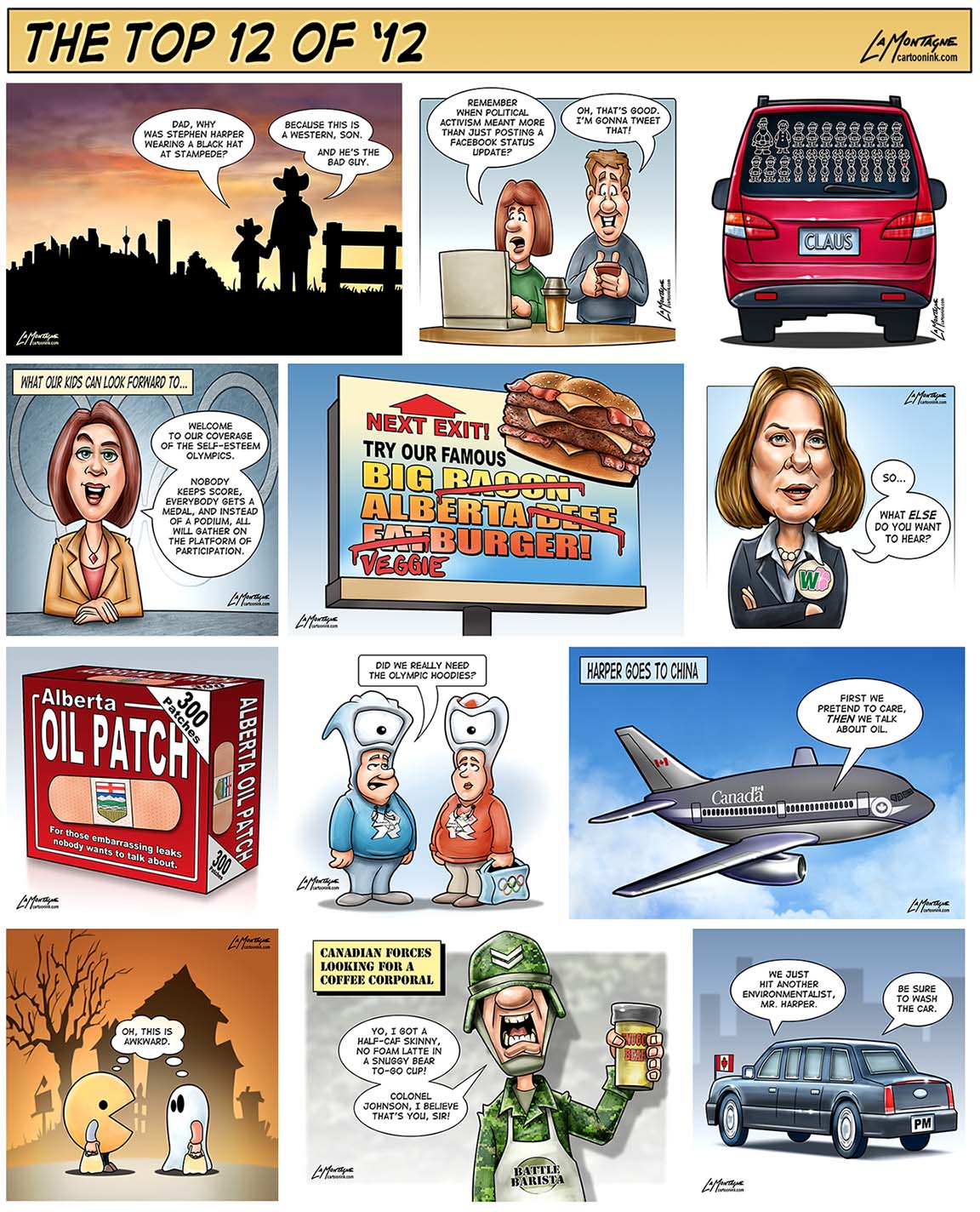
It’s that time of year when editorial cartoonists and other creative types compile their ‘Best Of’ collections.  To be honest, I have no idea if the following cartoons are representative of my best work for 2012.  How it works in the world of freelance and self-syndication is that I follow the regional, national and international news each day, decide which stories are big enough or interesting enough to comment on with a cartoon, and then I send the images off to newspapers across the country.  If editors like the cartoon, they print it, and I get paid.  If they don’t, I try again the next day.  At the end of each month, most papers simply tell me how many cartoons they used, but only a few tell me exactly which ones.  Preferences vary from region to region, so while a cartoon may play well in Ontario, it might be a dud in Western Canada.  That’s the nature of this business, trying to please everybody.

So, when it comes to picking my ‘Best of’ cartoons for 2012, I’m just showing you the ones I liked best out of the 275-300 syndicated cartoons that I drew this year.  Could be because the commentary still made me smile when I was going through the archives, or that I remembered enjoying working on the drawing.  For example, the Pac-man cartoon has no editorial or political value at all.  It’s a seasonal cartoon.  But for some reason, I really like it, so it made the list.  There are a few that take shots at Prime Minister Stephen Harper in here as well.  The other party leaders have no power right now.  They’re just noise in the wind.  So naturally, the blame is placed at the top, the guy with the power.  And considering how much he abuses it, there were a number of cartoons about that this year.  Pardon my candor, but that guy just pisses me off.

All the rest were on topics that made me laugh, made me think, or in a perfect world, accomplished both, which is what an editorial cartoon is supposed to do in the first place.  For those of you who follow my daily cartoon posts on Facebook, Twitter, and Google+, thanks for your continued support this year.  I will do my best to keep you interested and amused in 2013.

To get a better look, click on the page and it’ll allow you to zoom in.

Posted on 1 Comment

Totem T-Shirts have arrived!

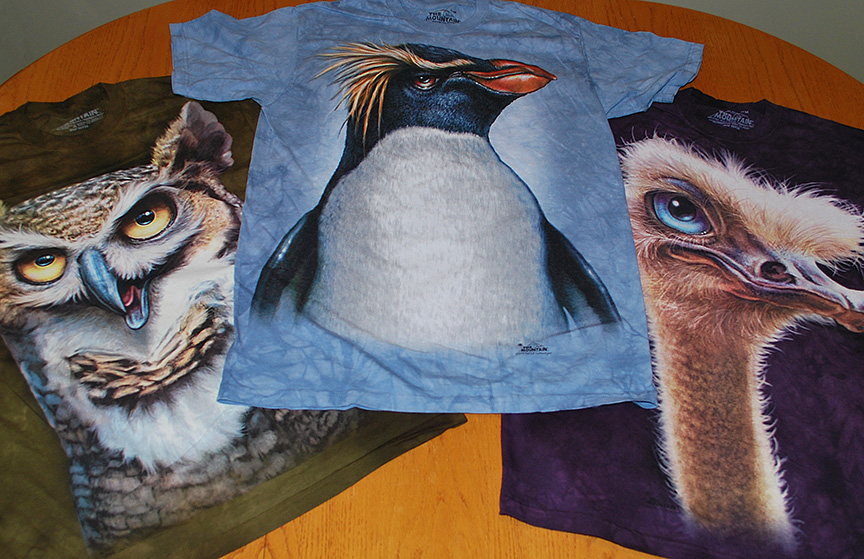
Was pleased to receive my first samples of the Totem T-shirts from The Mountain.  While there are two others yet to come for the 2013 line, the Wolf Totem and Ground Squirrel Totem, I’ll receive those soon, once they’re up for sale on their site.  As the Ground Squirrel Totem went up just recently, I would expect I’ll see the remaining two in January.

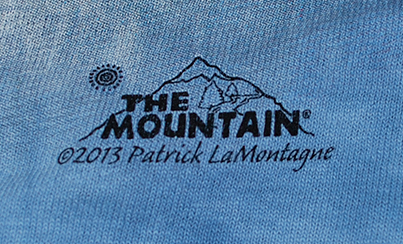
I received three shirts of each design in different sizes and was very impressed with the quality of the shirts themselves and the printing, not to mention my name clearly visible on every shirt.  Images will always vary in how they look, depending on what surface they’re printed on.  Paper looks different than canvas, so I was a little anxious to see how well they would reproduce on fabric.  I wasn’t disappointed.

As mentioned before, one of the things I like best about my Totem paintings being licensed to The Mountain is their commitment to being environmentally responsible and their business ethics.  I know that we get a little cynical about believing that these days, but I’d invite you to check out their claims at the following link, The Mountain: America’s Greenest T-Shirt Company.

If you’d like to purchase one of these shirts, you can visit their online shop.  Here is the link to the four shirts that are currently available, and coming soon, the Wolf Totem will be available as well.

Posted on 1 Comment

Risking your love for a living.

There’s an old saying that says, “Do what you love for a living and you’ll never work a day in your life.”

There’s  another old saying, “Be careful what you wish for.  You just might get it.”

With the accessibility of training, the affordability of equipment and an endless string of stories of people who have turned their hobbies into their living, it seems that many have become convinced of that being the end goal for any creative pursuit.  If you can draw, write, paint, play music, act, sculpt or create anything, you’re supposed to be working to make that your profession.

As someone who made that very choice and is creative for a living,  I consider it a great job, but it is still very much ‘a job.’

Right about now, you’re likely thinking this motivational blog post just went wildly off the rails.  My apologies if you’re disappointed, but there’s plenty of ‘you can do it!’ advice out there and too few reality checks.  Brace yourself.

Now, I don’t want you to think that I’m not comfortable with my choice to be an artist for a living, because I am.  I make my own schedule, I answer only to whom I choose, and if I sense a job is going to be a nightmare, I’m in the enviable position that I can turn it down.   Lately, however, I’ve been experiencing an uncomfortable anxiety about my work.  While there are going to be bad days  in every profession, regardless of how much you like it, there seem to be many more days lately where I get up in the morning and just don’t feel like drawing or painting.  For somebody who used to find any excuse to do either, that’s disturbing.

I used to work at a hotel in Banff.  As far as jobs go, it was a very good one with good people, and I look back on my time there fondly.  During my six or seven years at that hotel, I ran a waterslide facility, then worked night audit, front desk and eventually became the accounting clerk.  During the off season, there was more than the usual downtime.  Sometimes, after all of the cleaning was done each day, I might be alone in the waterslides for an hour or more, just sitting at the desk.  It was then that I’d doodle and sketch and it would pass the time.  When I worked night audit, I would arrive just before midnight, run the reports and balances until about 2:00 AM and then just babysit a sleeping hotel until about 6:00 when people would start to be up and about and the day staff would come in.  That gave me about four hours to read, draw and sketch.

No deadlines, no expectations, just enjoyable drawing.  It was a nice hobby.

During that time, I began drawing one editorial cartoon for the Banff Crag and Canyon, the local weekly newspaper.   Not very well drawn, not very insightful, but no real pressure.  It wasn’t the National Post.

I could write a whole volume about what has come between then and now, how one thing led to another and how I ended up being a full-time artist.  Let’s enter that as read and we’ll jump ahead to the present, shall we?

I can’t remember the last time I drew something simply for fun.

You see, these days, everything I create is part of an end product.  If I’m sketching or drawing, it’s for an editorial cartoon or illustration.  If I’m painting, it’s for promotion, a training video or DVD, or an image I will sell or have been commissioned to do.  Everything feeds the constant deadline.  I realized this recently while working on my last couple of Totems and a commission piece.  There was something missing in the enjoyment of it and it was unsettling.

At the beginning of this ride, there was excitement in the scramble of it all.  Getting that new newspaper, having a magazine print an image, being recognized by a publication or resource.  I was younger, hungrier and enjoyed the competition.  After you reach a certain level, however, it’s no longer a thrill of being ‘on the way up’, but the maintenance required to ‘keep from losing any ground.’  The same old drug dosage is no longer providing the high that it used to.

Continuing on with known sayings, how about this one? “When your hobby becomes your job, you need to find another hobby.”

I used to have full-time day job, and editorial cartooning was the fun gig on the side.  Then it became ‘the job.’  Illustration was then the fun side gig, then it became part of ‘the job.’  Painting became the fun side gig…you can see where I’m headed, here.

Being an artist for a living is great.  I wouldn’t want to do anything else and I would still say that even when I’m having a bad day.  But if you’re considering that leap, go into it with your eyes wide open.

The truth is that business and marketing is where success lies as a creative, not doing what you love.  I’ve seen artists so much better than myself and others, fail to get anywhere because they don’t know how to sell and manage their business at all, or ignore the necessity of it.  I know some self-employed people who are three years behind on their taxes and are living under a ton of debt they’ll be lucky to ever crawl out from.  They wonder why they have no money but they haven’t done any invoicing in months.  I speak to school classes regularly and one question always comes up about whether or not they should go to art school.  I tell them to go to business school.  If you love art, you’ll do it anyway and will find the resources to become better by yourself, but where most artists fail is running their business and selling their work.

You have to be every department as a freelancer.  Accounting, PR, sales, admin, and creative.  Invoicing is done immediately or at the end of the month, without fail.  GST payments are never late.  Tax installments are never late.  You must foster relationships with your clients all the time.  If they know you and like you, they’re unlikely to replace you.  I would estimate that I spend only half my time drawing and creating, and the other half of my time running the business.  All of that comes with expenses, too.  Website design, printing costs, accountants, bookkeepers, lawyers, etc.  Even designing your own budget website will cut into the time you’d rather be working on why you’re in business in the first place.

If this is what you want and are prepared for what it takes, then more power to you.  I would encourage anybody to give it a shot because I prefer these long hours working for myself than shorter hours, vacation time and weekends off working for somebody else.  If, however, you just love to draw or create, seriously consider if you really want to risk that by turning it into your job.  When your hobby becomes your work, it will change how you feel about it and it will no longer be that which you do in order to relax and unwind.  While compromise is always a part of life, decide how much you’re comfortable with.  There is no right or wrong answer, but there is a choice.

I will still write inspirational ‘you can do it’ posts here and elsewhere, and if you read one of those, don’t doubt that I mean it, but success stories will always be about hard work.  In this age of instant celebrity with folks believing they will be ‘discovered’ on shows like American Idol or YouTube and that they deserve to be successful by the simple virtue that they exist, inspiration needs to be tempered with reality, too.

Finally, a word of caution in the form of one more old saying.  “Judge your success by what you had to give up in order to get it.

Posted on Leave a comment

Forward Momentum

One of the best things about being a freelancer these days, whether it’s writing, photography, illustration or just being self-employed is that there is no shortage of information out there to help you.  Just twenty years ago, there was no such thing as Google.  The Internet didn’t begin to gain real traction with the public until the mid to late 90’s.  Before that, you had to go to the library.  That’s a building with books in it.

We enjoy almost instant connection today, but it used to be a lot more difficult to find information while learning a skill.  If you were lucky, you might find a professional artist with whom to apprentice, but what to do if you lived in a rural area and had limited resources?  Now, we have access to apps, books, trade magazines, DVDs, online courses, webinars, forums, and websites full of information, all from the comfort of our own homes.

The problem with access to all of that information is that it is far too much for any one person to take in.  You may have the resources to learn all you want to, but so do your competitors, so there’s no room for complacency.  Thirty years ago, for example, a newspaper would have an editorial cartoonist on staff and that’s how they’d make their living, drawing one cartoon a day (sometimes less) for that one publication, spending the whole day working on one image, and not having to worry about sales, marketing, printing, promotion or local, national, and international competition, certainly not to the extent one must do so, today.

Most daily newspapers have dismissed their cartoonists and are opting for more regional, national and international syndicated cartoons and paying significantly less than they used to.  We are all familiar with this trend in every industry, so lamenting the fact is a useless exercise.  Adaptation is the order of the day in every profession.

With all of that information available and so many options, it can be easy to become anxious about where to put your efforts.  Ask ten freelancers which sites, organizations, and advice you should follow, and you’ll get an infinite number of answers.   If you dig a little deeper, you’ll discover that each of those ten freelancers is following the advice of ten other people, and everybody is just winging it, hoping to get enough work to pay the mortgage.

Put simply, you have to try new things and then evaluate their worth on your own.  Then you have to consider that something that worked for you yesterday might not work for you tomorrow.  Your own instinct will be your best guide.

For example, I’ve been a member of the National Association of Photoshop Professionals since September of 2004.  That’s quite a long time these days.  In addition to all I’ve learned about Photoshop, I’ve made invaluable contacts in the industry, and have formed lasting relationships with many people, a number of whom I consider good friends.  The investment in that membership has been very good for my career.

In recent years my skills have reached a point where I’m now in need of more advanced training and when the air gets a little thin, it’s tough to find that in any organization that must cater to a wide variety of skill levels.  That, coupled with the fact that today, NAPP’s focus is almost exclusively on photography, it has become obvious that there isn’t much left there for me anymore.

The friendships and connections, I take those with me, but when my membership expires next month, I won’t be renewing it.  It was a tough decision, but I based it on the question, “Had I not been a member for the past eight years, would I  join the organization today?”

The answer was an easy No. It isn’t that NAPP doesn’t have value for photographers, because it clearly does.  But I’m not a photographer.

While I had a good run and it was time and money well spent, I’m looking for other learning opportunities.  That being said, there’s still a good chance I’ll return to Photoshop World in Las Vegas next year.  Connecting with others, networking and spending time with other industry professionals is invaluable, not to mention that I always have a good time.  My experience teaching at the Wacom booth in September was great and I hope to repeat it again next year.  But I’ll be there on the periphery, not as an attendee.

So the message here is that continuing education as a freelancer is crucial to developing and maintaining a thriving career, but it’s up to you to find your own teachers,  a task that will never end.  You must constantly adapt to an environment that is changing so much faster than most can keep up with.  When something is working for you, get as much from it as you can.  When it stops contributing to your momentum and success, you need to cut it loose.

For now, my own path to continued education is uncertain, but I’ll keep looking to online courses, webinars, trade magazines and I’ll follow the art of other creatives, those who inspire me to be a better artist.  They say when the student is ready, the teacher shows up, so I’m not worried.

While I’m waiting, I’ll just keep working.  Practice makes perfect and even though I’ll never get there, I’m still aiming for it.