
I’ve been drawing and painting my whimsical wildlife art for 16 years. Licensed internationally on several products, I also sell prints and stickers wholesale to places like the Calgary Zoo and Discovery Wildlife Park, in my online store, and at live events like the Banff Christmas Market and the Calgary Expo.
Most people subscribe to A Wilder View to see new paintings and hear the stories behind that work. So, it often surprises some and occasionally annoys others when I write the odd post about politics or things going on in the news. What does that have to do with funny-looking animals? Does everybody have to share their political opinion these days?
It’s usually that many people don’t know that I’ve been a syndicated editorial cartoonist for over twenty years. But if it weren’t for the political cartoons, there wouldn’t have been any animal paintings.
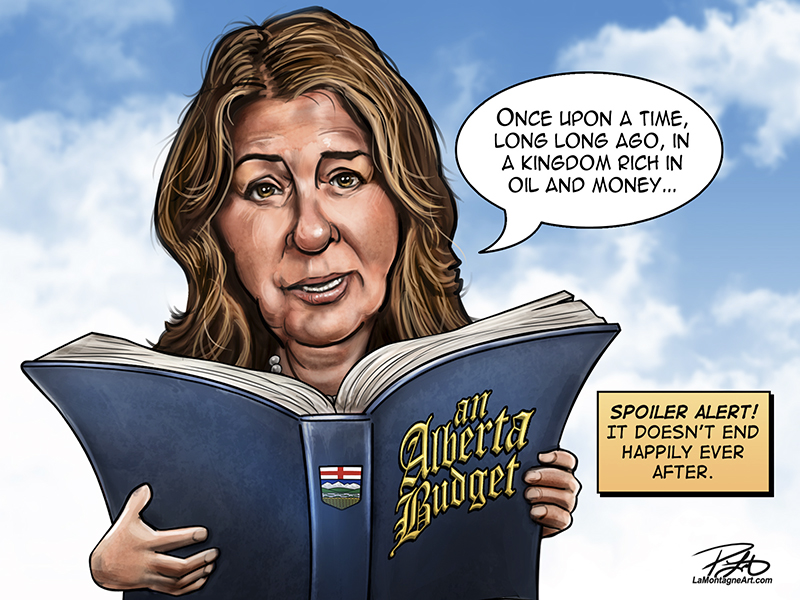 In 1998, while managing a waterslide facility at a hotel in Banff, I drew my first cartoon for the Banff Crag & Canyon. Many editorial cartoonists get into the profession because they’re political junkies who can draw. I liked to draw, and I figured I could learn to follow the news and politics if I had to.
I was 27 at the time. I had never been to art school and didn’t know the difference between right-wing and left-wing politics. But hey, it was a small weekly paper, and $30/week gave me a little beer money.
In 2001, I was invited to join the Rocky Mountain Outlook; about the same time, Shonna and I moved to Canmore. It was an upstart weekly newspaper looking to compete with the Banff Crag & Canyon and the Canmore Leader.
Today, the Outlook is the newspaper of record for the entire Bow Valley; those other papers are gone. It is a point of pride that I have had a cartoon in every issue for 24 years. While most Outlook cartoons have a local theme, they sometimes run one of my syndicated cartoons if a local toon doesn’t work that week.
 So, what’s a syndicated cartoon? I get that question a lot.
Each week, I draw five to seven more cartoons on regional, provincial, national or international issues and submit them to newspaper clients across Canada. I follow the news every day, come up with ideas and draw them. If a publication prints the cartoon, they pay me.
Many of my clients are weekly publications, and several are under monthly contracts. That means they only print my cartoons. They only need one cartoon each week, but because I also supply dailies, they have several cartoons to choose from.
While some daily newspapers still have editorial cartoonists on contract, many have a few available spots each week or only use syndicated. Several daily papers in Canada run my cartoons, but they also print submissions from other cartoonists, so it’s a daily competition.
Early in my career, I wanted a job with a daily newspaper. But as we learn in life, sometimes the best thing for you is not getting what you want. Had I got a daily newspaper gig, I would have been laid off in budget cuts years ago, a fate that has befallen many cartoonists in the struggling newspaper business.
Because syndication was always my business model, I never had to face losing my day job and scrambling to pivot. It also meant I had to draw every day, without fail, or I didn’t get paid. I learned early the discipline it takes to run your own business, that you work even when you don’t feel like it because you have to. It’s a lesson I try to share with anyone who asks for tips on making art for a living. As any self-employed person will tell you, you’ll never work harder than working for yourself.
The other benefit was that you can’t help but improve if you’re drawing daily, so my cartoons quickly got better. My early pitiful caricatures, where nobody could tell who I was drawing, became one of my best skills. I used to dread drawing real people, but now I enjoy that part of the work, even though those cartoons take longer.
Best of all, my years of learning to be a better cartoonist led to the work I enjoy most: my funny-looking animals. If I hadn’t been a cartoonist first and still somehow stumbled into painting wildlife, they wouldn’t have that ‘cartoony but real’ look that so many people enjoy.
I’ve been fortunate to receive some awards in my career, but not many. Artists only need one award to add ‘award-winning artist’ to their bio. They’re kind of like high school diplomas. Employers look for them on your resume, but how many ever ask to see one?
To think, one lie and I could have skipped those three years and started work early.
 I’m most proud of the awards I received at Photoshop World Las Vegas in 2010 and 2014. The first year, I won the Illustration and Best in Show awards for some of my early animal paintings. That recognition was important to me because it was from an organization full of people I liked and respected. They were an encouraging group of talented artists and teachers, and they helped me become a better artist.
That award also opened doors at Wacom. They make the drawing tablets and displays on which I have created all my cartoons and paintings since the late 90s. I’ve worked with them several times on promotional projects over the years, and it’s been one of my favourite professional relationships.
In 2014, the last year I attended Photoshop World, I won the Best in Show award for my One in Every Family painting. The prize was the Canon 5D Mark III camera I still use today to take reference photos. Just like my car, it may not be new and pristine anymore, but it gets me where I need to go, and I will be truly upset the day I no longer have it.
That organization and event no longer exist, but it ended on a high note, and I look back on that time with fond memories. Many of those friends and acquaintances still follow my work in A Wilder View.
I have won several Alberta Weekly Newspaper Awards and Canadian Community Newspaper Awards for my local cartoons in The Rocky Mountain Outlook. The Outlook enters my work for those, and that recognition does more for the newspaper than for me. But I’ve been happy to be part of the team effort.
This brings me to the National Newspaper Awards. I think I tried to enter once in 2006 but found out I wasn’t eligible because I wasn’t attached to a daily newspaper. Sure, many dailies ran my work, but they most often sponsored their own cartoonists for the NNAs.
So, I didn’t try to enter again and figured I never would.
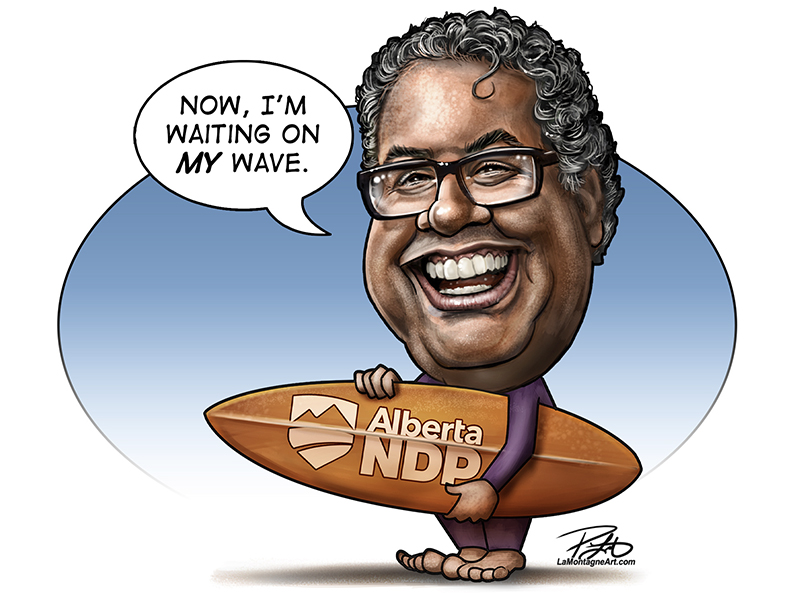 The Calgary Herald has been publishing my cartoons for twenty years. During that time, they’ve gone through several editorial page editors, and I’ve had a good relationship with most of them. But as is the case for all art, some liked my work more than others. So, some years, I might get published only once or twice a month.
A change in editor at any newspaper can be the end of a cartoon contract or the beginning of a new one. They all have their favourite cartoonists, and when an editor goes from one newspaper to the other, they’ve often brought me with them or replaced me with one of my competitors. It’s the nature of the business.
These days, I’ve got a great relationship with the Calgary Herald. The now Editor-in-Chief, Monica Zurowski, has been encouraging and supportive of my work and runs my cartoons around ten times a month.
So, while the Herald does not employ me, they run my cartoons more than any other daily newspaper in Canada. Last year, Ms. Zurowski asked if they could sponsor me for the National Newspaper Awards for editorial cartooning. It was a big surprise because the NNAs hadn’t been on my radar for almost twenty years.
Because the Herald had published so many of my cartoons in 2023, I could choose five cartoons I liked from a large enough selection, and they submitted them on my behalf. I didn’t expect much, so I wasn’t disappointed when I didn’t get a nomination.
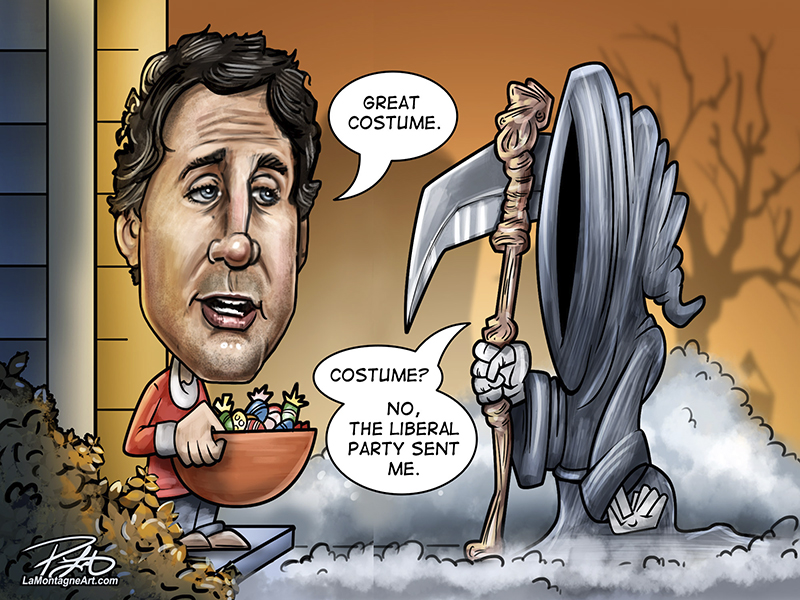
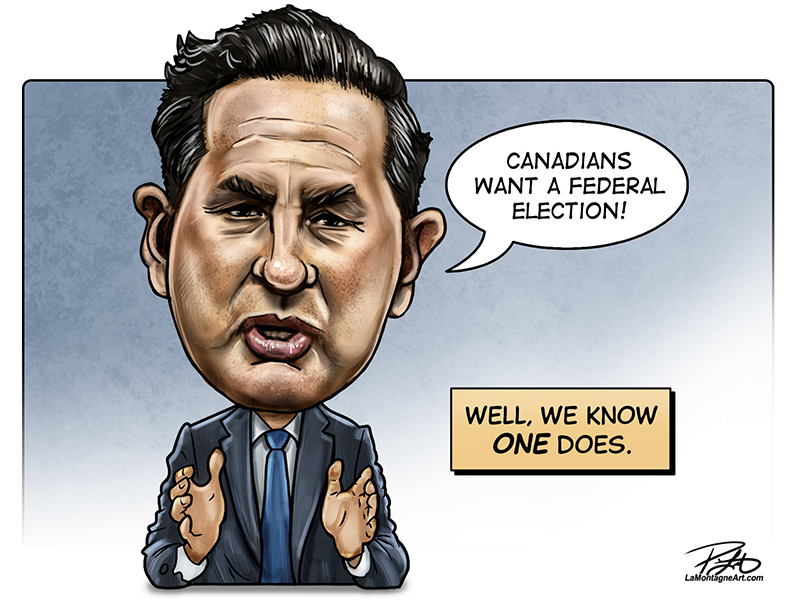
In January of this year, The Herald again asked if I wanted to submit and said they would sponsor me. The editor chose five cartoons she liked from those they’d published and said I was free to make any changes. I suggested two substitutions, and they submitted another five-cartoon portfolio for the 2024 competition. Again, I went in with low expectations. You can see those five cartoons throughout this post.
This week, I received a call from Ms. Zurowski telling me I’m one of three finalists for the National Newspaper Awards. The other finalists are Michael de Adder for his work in the Halifax Chronicle Herald/Globe and Mail and Gabrielle Drolet for the Globe and Mail.
 I’ve got some mixed feelings about this unexpected nomination. I’m pleased at the recognition, of course. It’s a bit of validation in a profession where I’ve often felt like an outsider.
As someone who started relatively late in the profession, when the newspaper industry was already struggling, I often felt too far behind and that my cartoons didn’t measure up. Even when I hosted the Canadian Editorial Cartoonists Convention in Banff in 2008, I felt significant imposter syndrome. And in the aftermath of that event, of which I have no fond memories, I resigned myself to the fact that I was not part of that club. And I moved on. I have had little contact with that community since.
Instead, I have focused on the work, improving my skills, and keeping my business adaptable and sustainable. As newspapers have sold, floundered and folded, I have positioned my other artwork to take up the slack. Financially, 2018 was my best year for editorial cartooning, but each year since then, as more newspapers close, that side of my business has shown a steady decline.
Fortunately, my whimsical wildlife work continues to grow, allowing me to continue to make a good living as an artist. But I’m still drawing a local cartoon for The Outlook and five or six syndicated cartoons each week. I’m just getting paid less now for that same cartoon output.
I wondered this week if the NNA award carries the weight it used to. There are fewer cartoonists on the playing field, and some of the giants of the profession are now gone, out of work, or drawing fewer cartoons. Would a National Newspaper Award mean more to me if more cartoonists were in the race? I think so.
Or perhaps, even twenty-seven years after that first editorial cartoon became a career of thousands more, I still feel that imposter syndrome, that I never was a part of that club. Our demons never leave us, do they?
They will announce the winners of the National Newspaper Awards in Montreal on Friday, April 25th. It’s an appropriate irony that I will be very busy that day, selling my whimsical wildlife art at my biggest annual event, The Calgary Expo. It will be my tenth year at the show, introducing people to the artwork I love most, that wouldn’t have happened without newspapers and political cartoons.
Whether I win a National Newspaper Award or not, I’ll be right where I belong.
Cheers,
Patrick
One more thing
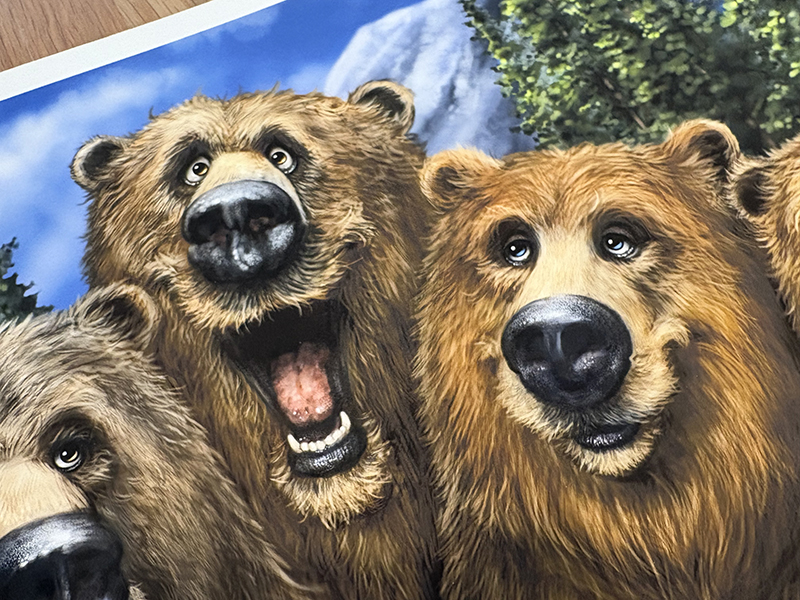
Several metal prints arrived this week for The Calgary Expo next month, the first time I’ve seen some of my newest paintings on metal. Unpacking new prints never fails to put a smile on my face as my work always looks best in print.
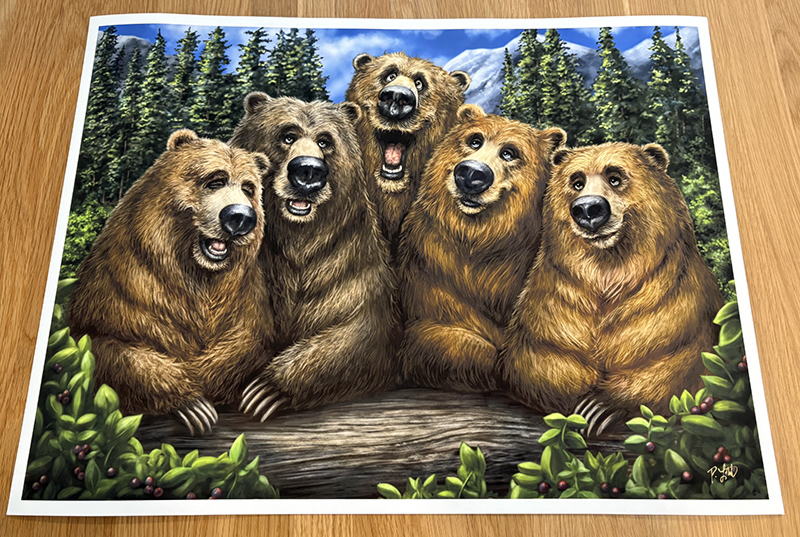
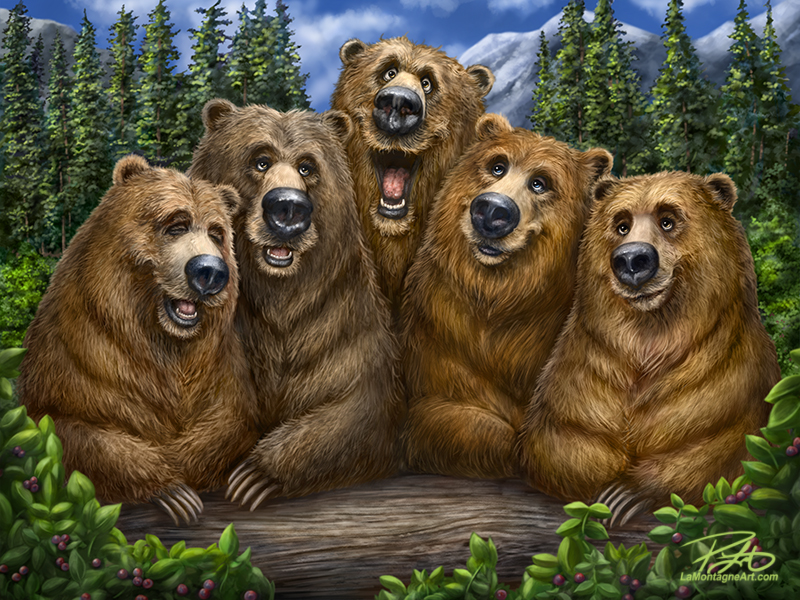
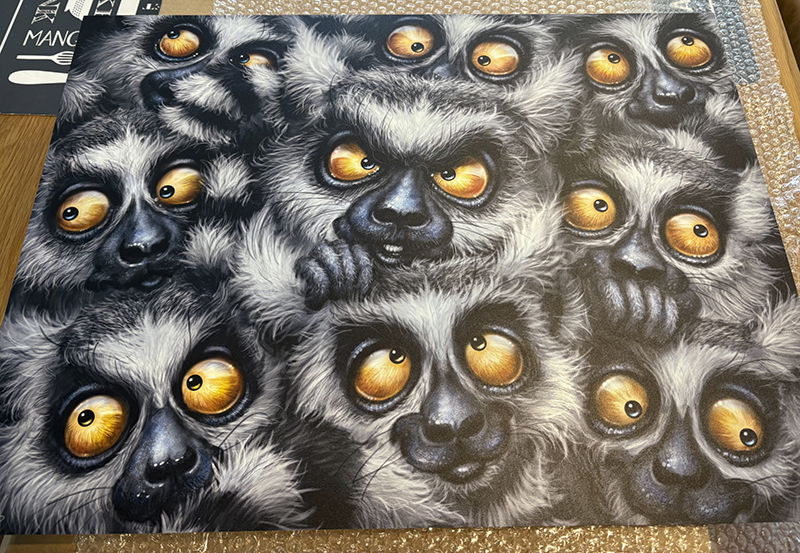 When I finished this Ringleader painting, I wrote, “I have no idea how I feel about this painting and probably won’t for a while. I feel more relief that it’s finally over than satisfaction with the result.”
Just over a month later, now that the perfectionism for the piece has subsided, I can honestly say this is one of my favourite paintings. It’s so delightfully ridiculous and I laughed out loud after unpacking it. Because of the detail and so many faces, I printed it larger at 18”X24” on metal and I’m looking forward to hanging it in my booth.
As I’ll be busy every day for the next month, signing and packing new stock, organizing my booth hardware and equipment, drawing cartoons and trying to get a video recording finished, I wanted a break before all the chaos. So, my buddy Darrel and I spent four nights last weekend at the cabin we often rent in the foothills of Central Alberta.
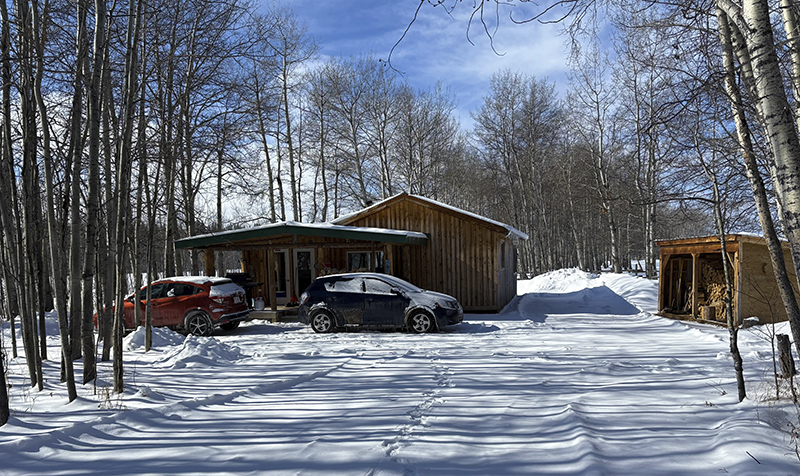 There was still plenty of snow on the ground, on the colder side of March, and we didn’t see any wildlife. But we did what greying old men like us usually do; played cards and games, went for walks around the property, napped and played guitar. This was a selfie I took for a text reply to Shonna one afternoon when she asked how we were doing.
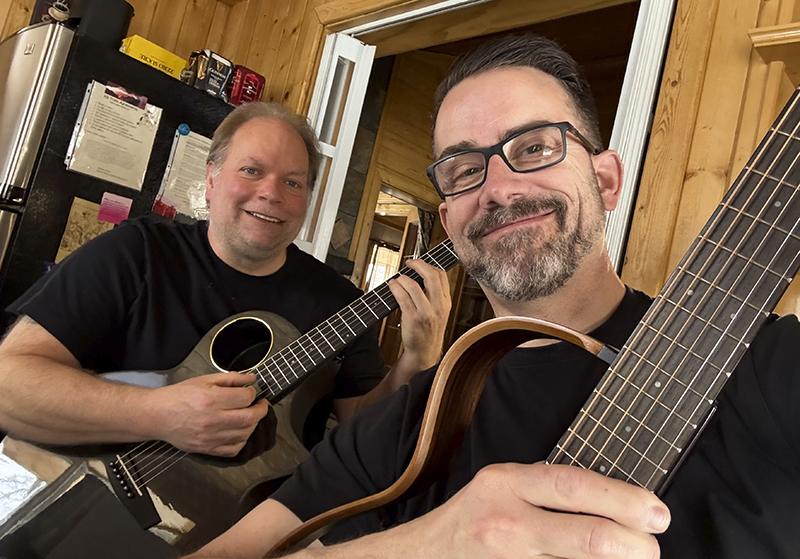 She complimented our usual black T-shirt matching ensembles. I told her I suspected she might be making fun of us, to which she replied, “Nailed it!”
As I finished writing this, an email alert came in that Prime Minister Mark Carney will call a snap federal election this weekend, and Canadians will go to the polls as early as April 28th. That’s the day after the Calgary Expo, which means April just got a whole lot busier.
I’m glad I took the break when I had the chance.


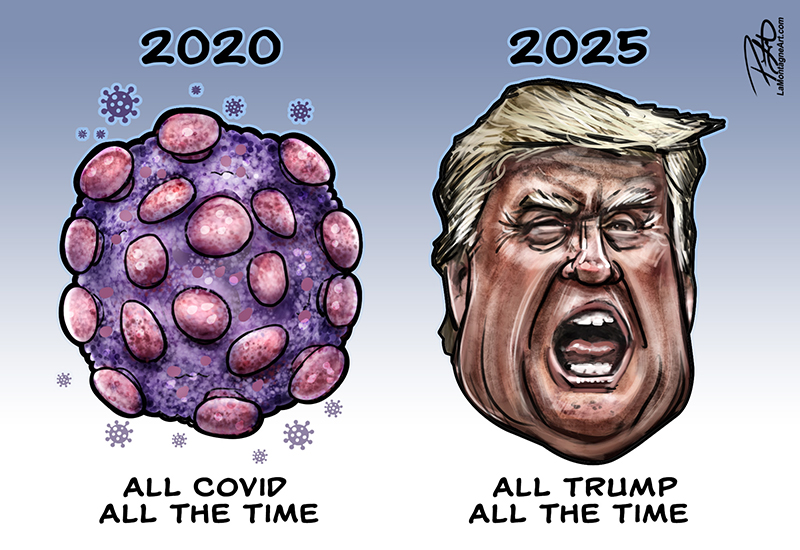
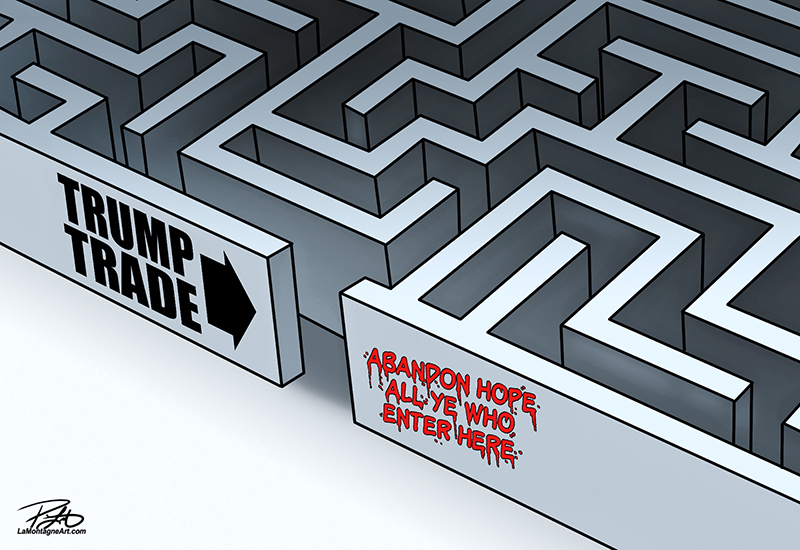 Canadians aren’t happy.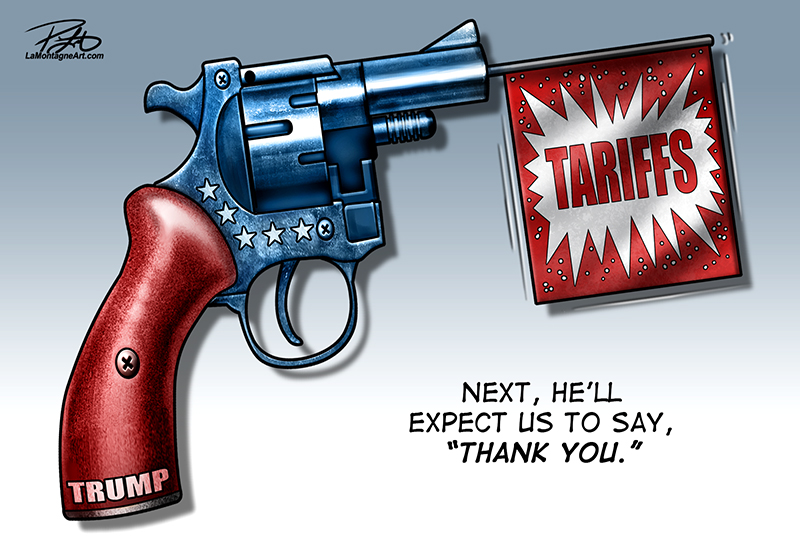

 I have always strived for Made in Canada with the products I sell.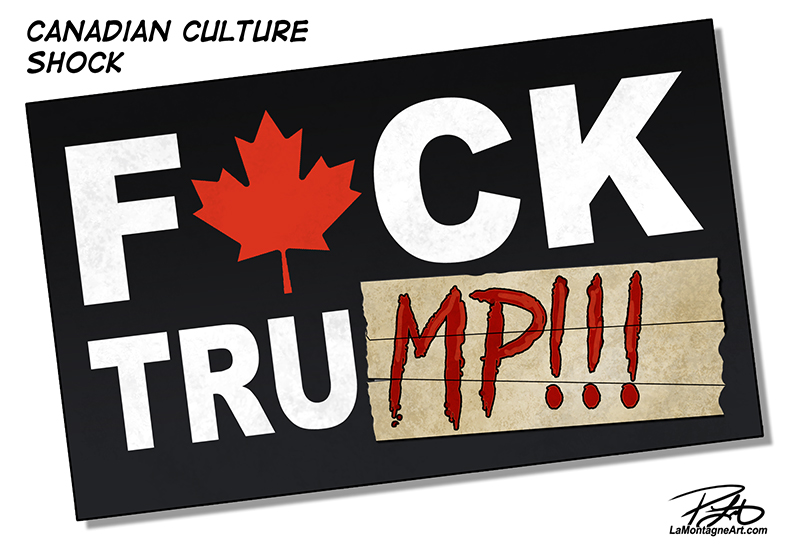
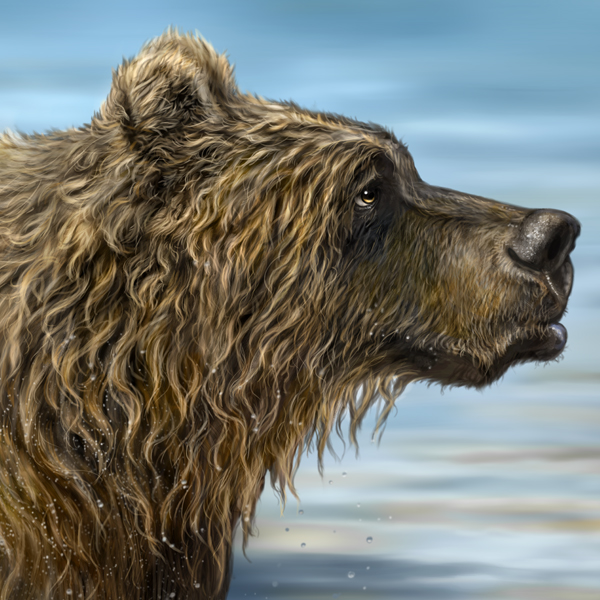
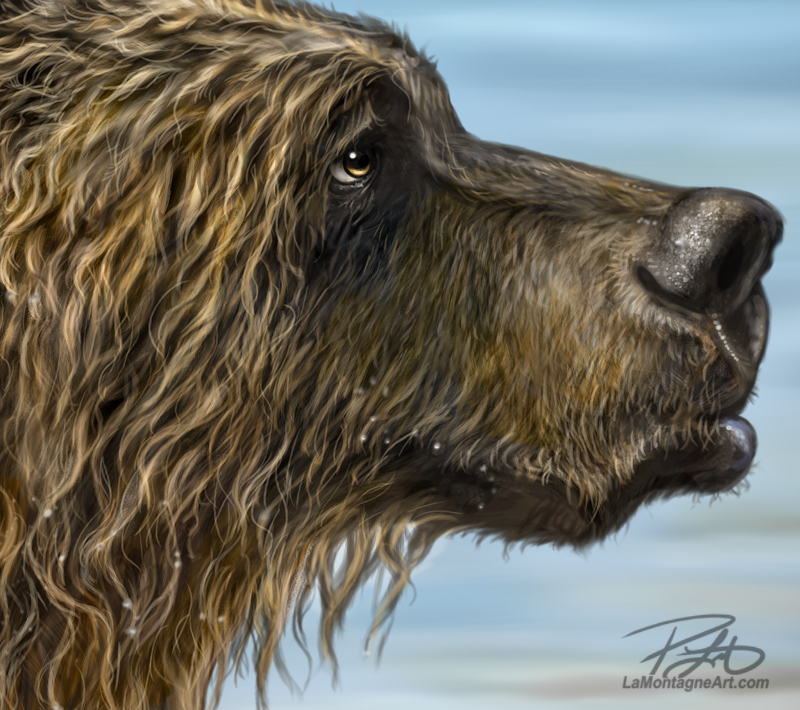
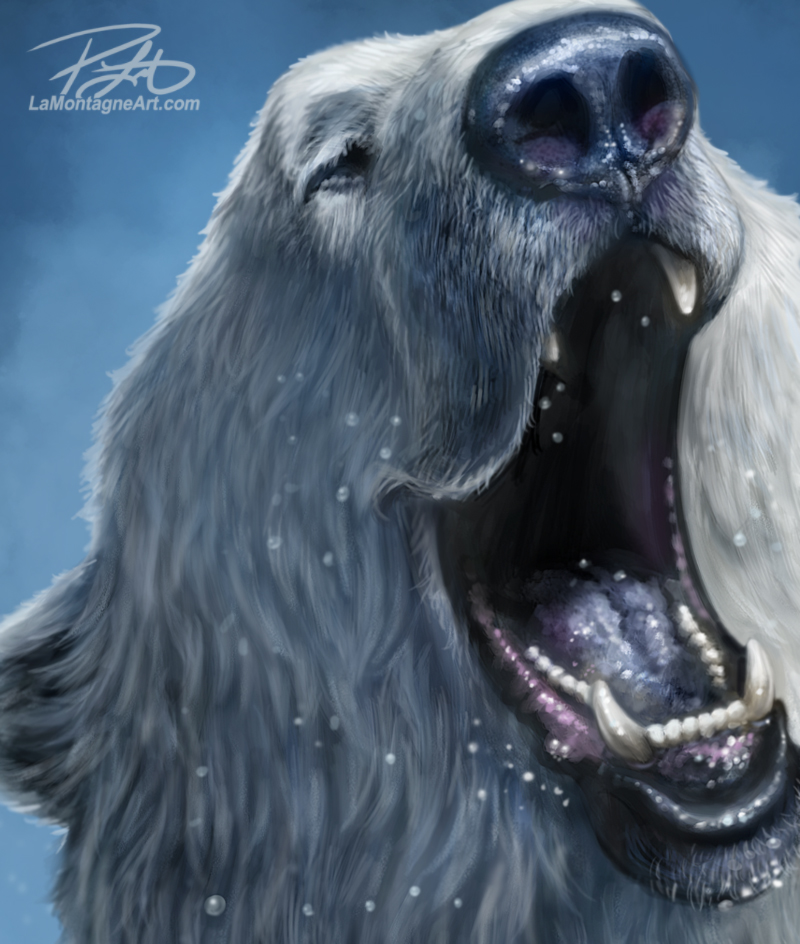
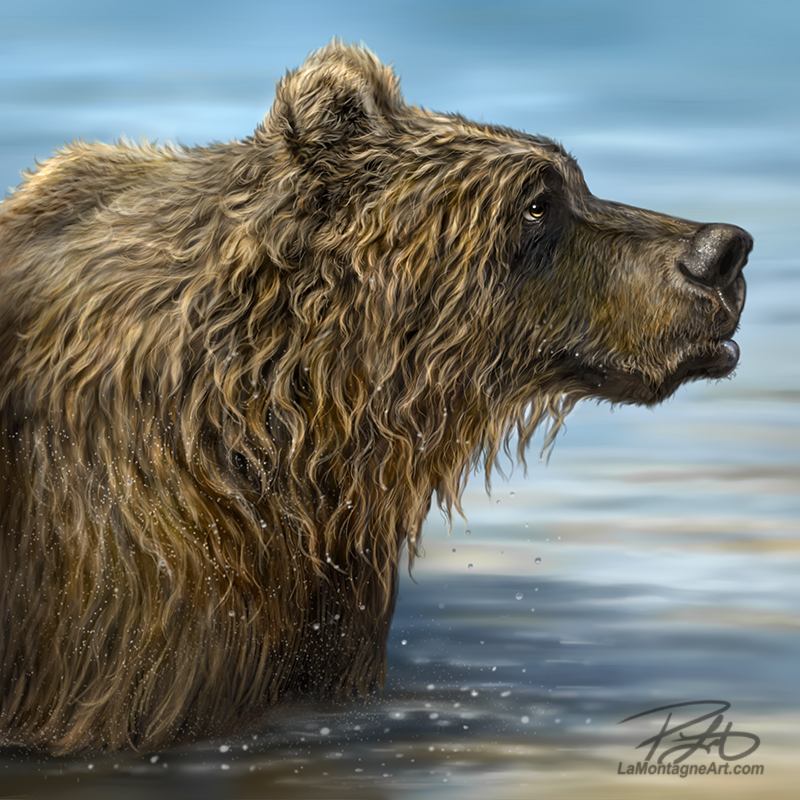 First, here’s a painting I just finished yesterday called Pouty Bear. Even though most of the animals I paint are smiling and happy, I occasionally change them up, even if I know that a different expression may not appeal to people.
 Commissions and Comic-Con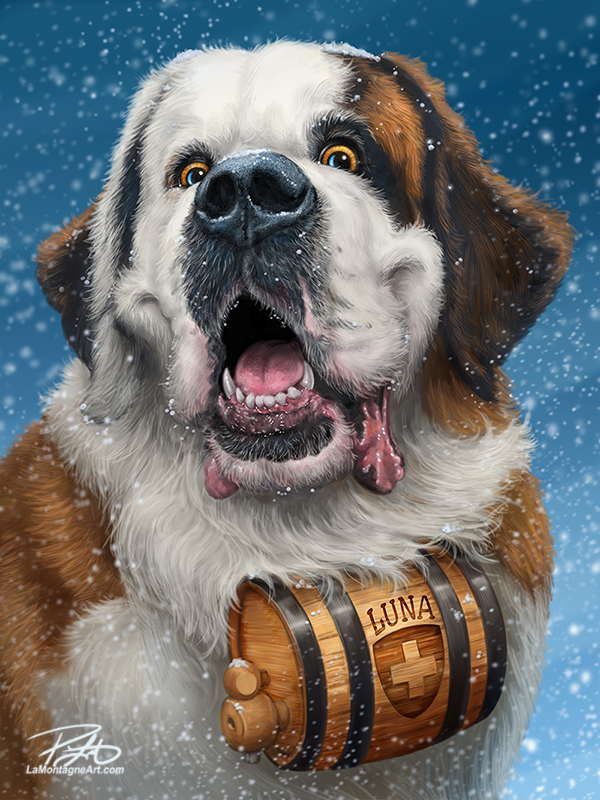
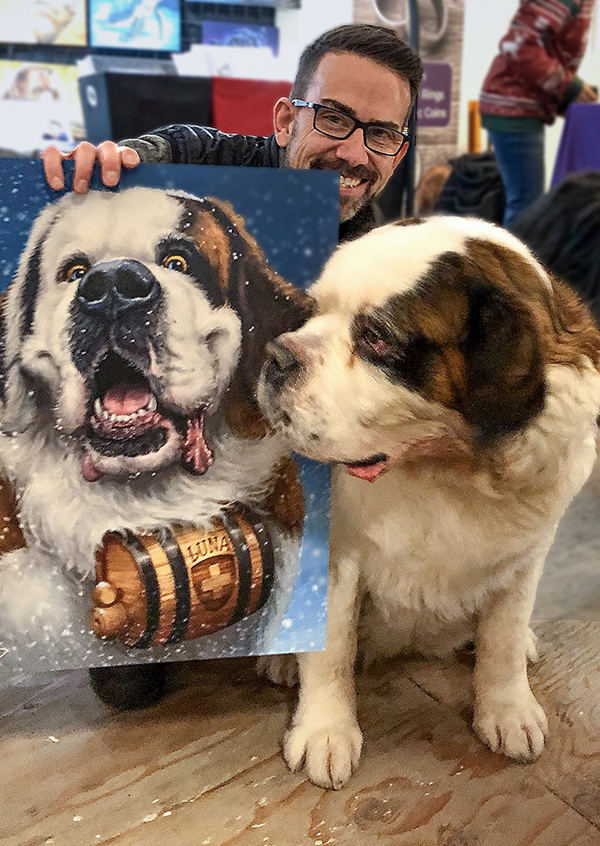
 Several people emailed me asking if I’ll have them in the
  But I’d love to hear your thoughts.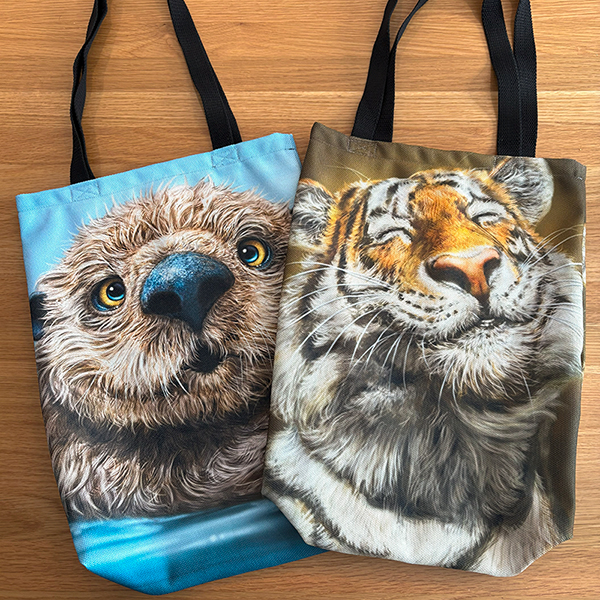
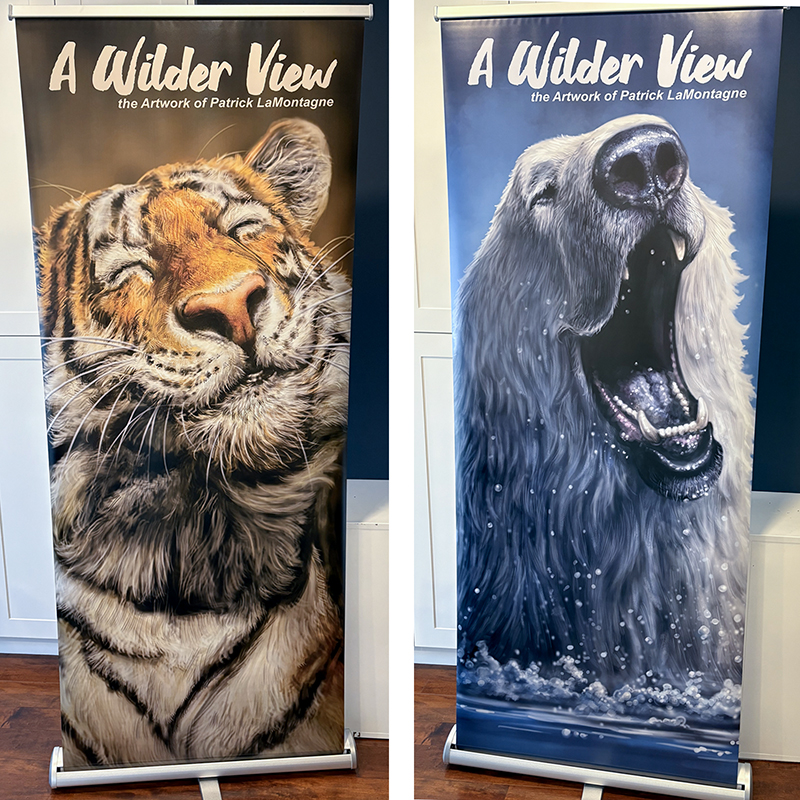 This year, I have replaced them with these retractable banner stands which are more compact and set up in seconds. While I could have gone with new images for both banners, I opted to keep the Smiling Tiger. It’s still one of my bestselling images, but more importantly, it’s part of my Calgary Expo booth and brand identity. People tell me they look for that banner. For the second image, my Rat painting is now retired, and I was happy to use my new Polar Plunge painting in its place. I think it fits this format well.
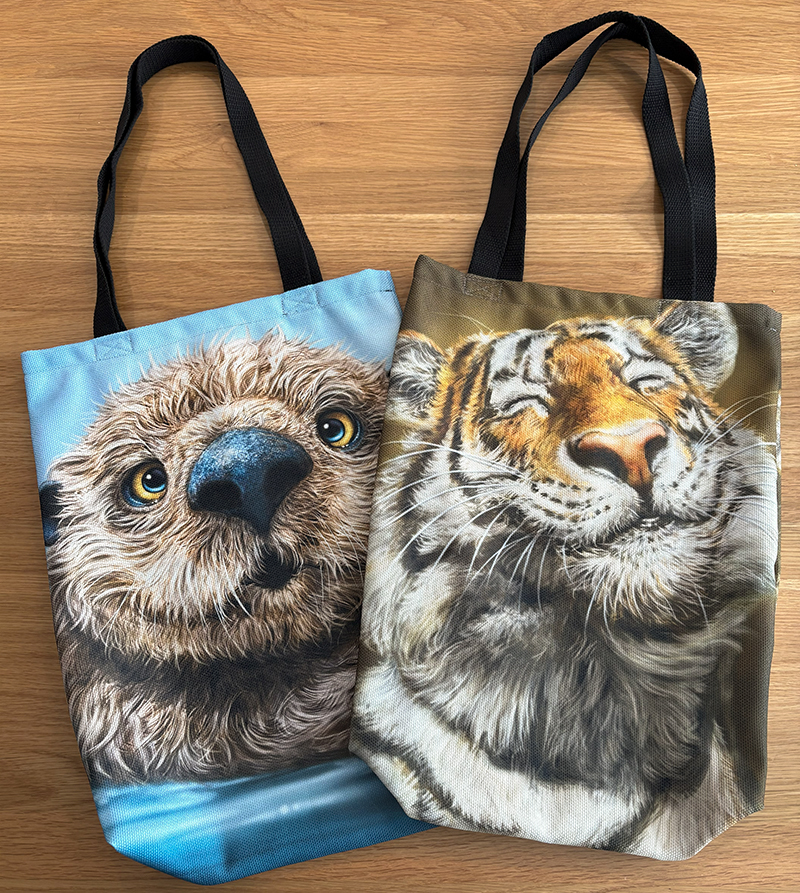
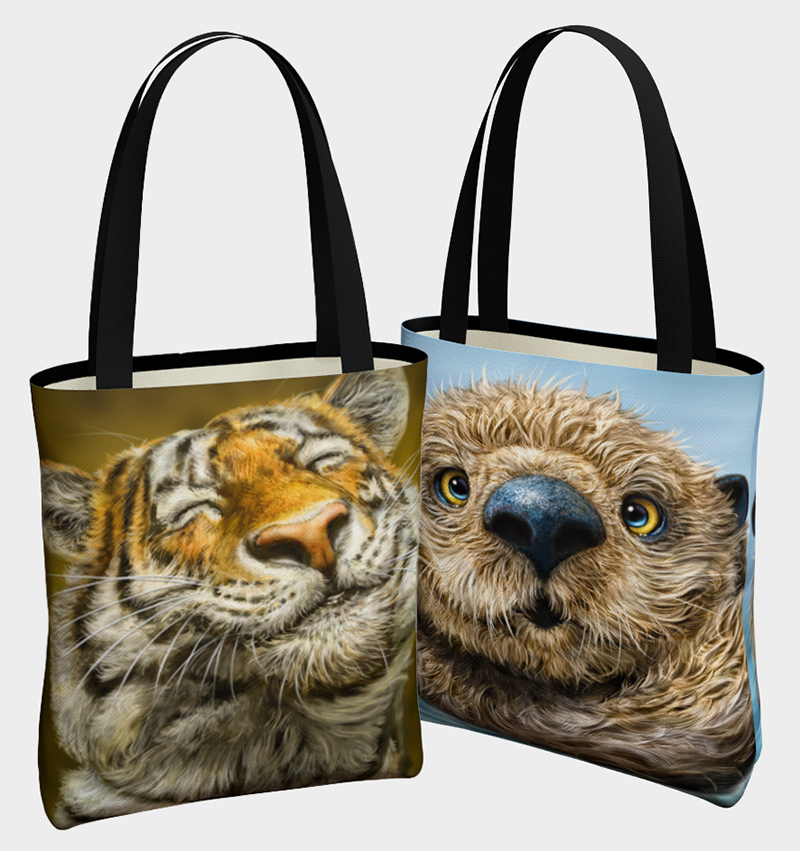
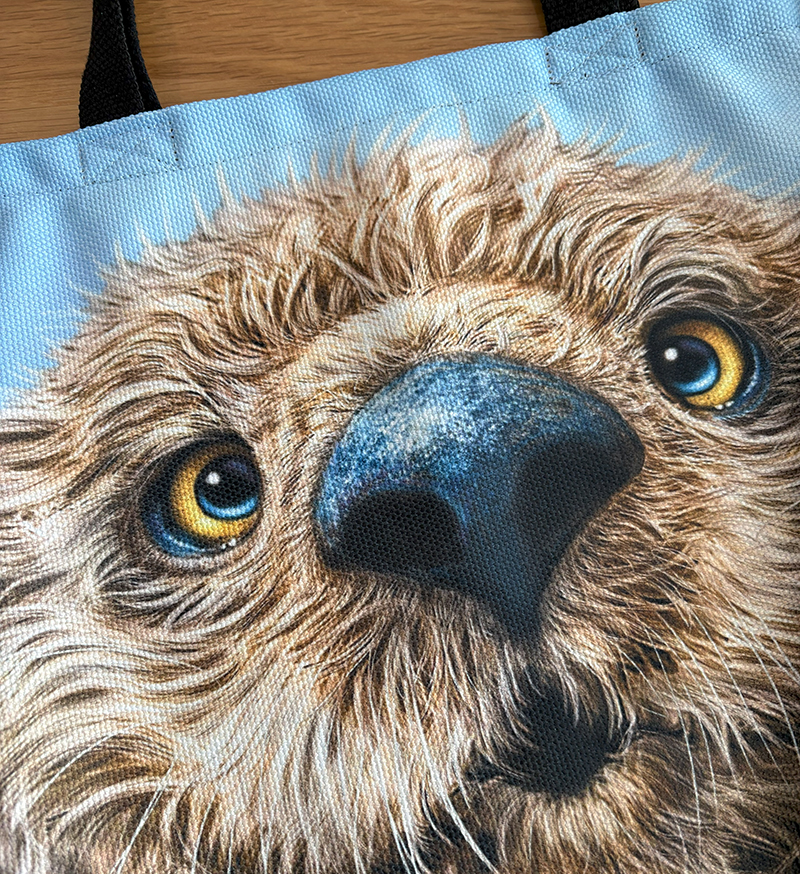
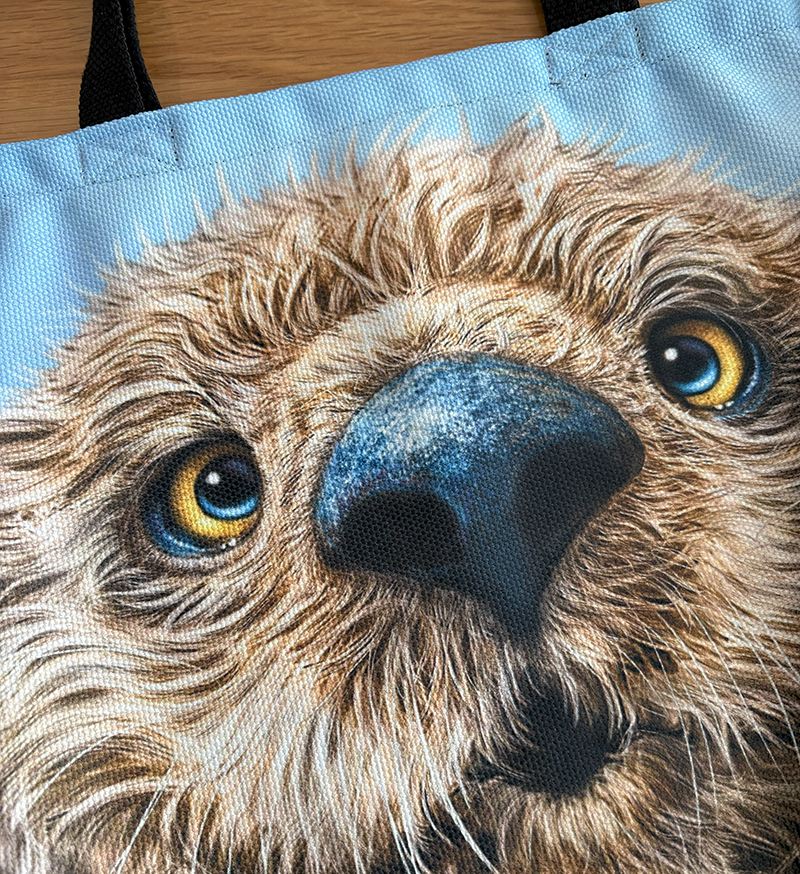 Shonna has been urging me to get tote bags for a long time, but I’ve never been enthused with the idea. There are many different products on which I could print my art, but that would mean buying, storing and transporting them as well. Having too many products gets expensive and complicated, and I wasn’t sure if tote bags would be the best investment.
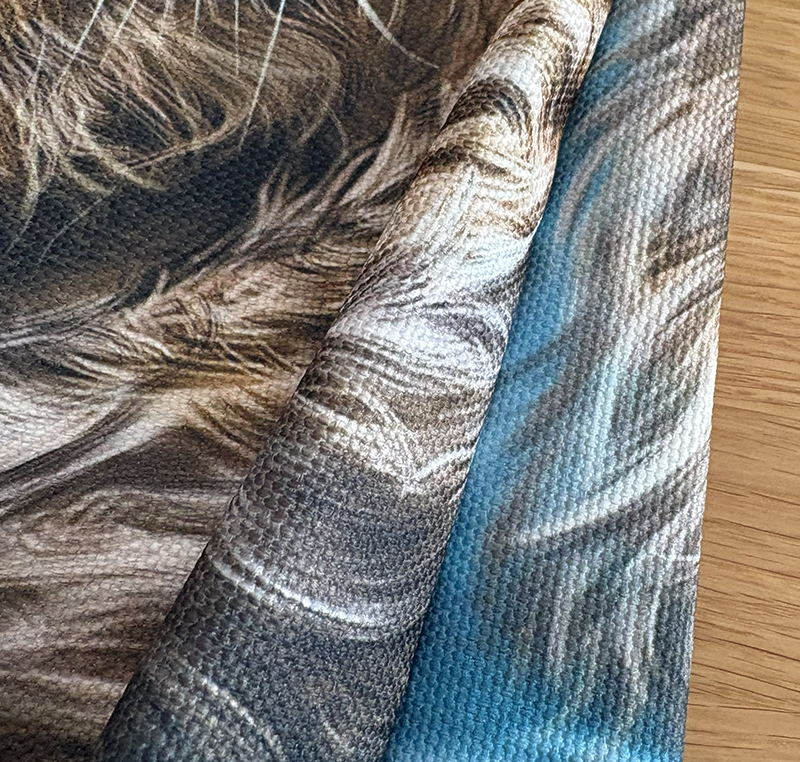 I designed each bag as a wrap; the same image on both sides, with no text or advertising. I’ll have these two bestselling painting designs, my Otter and Smiling Tiger, available for this year’s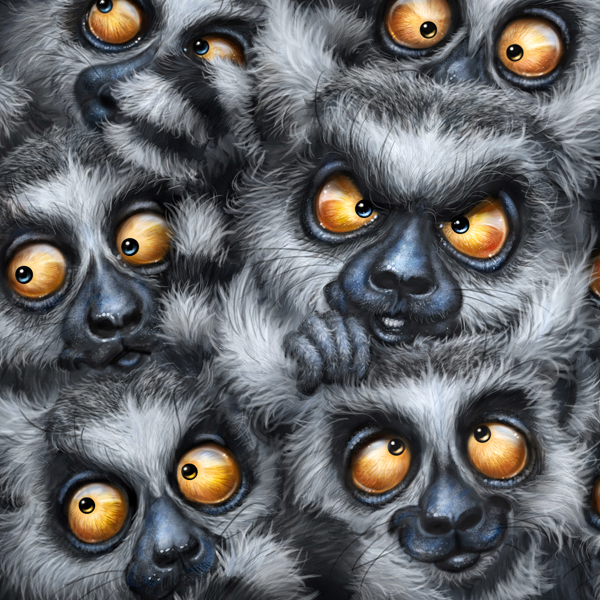
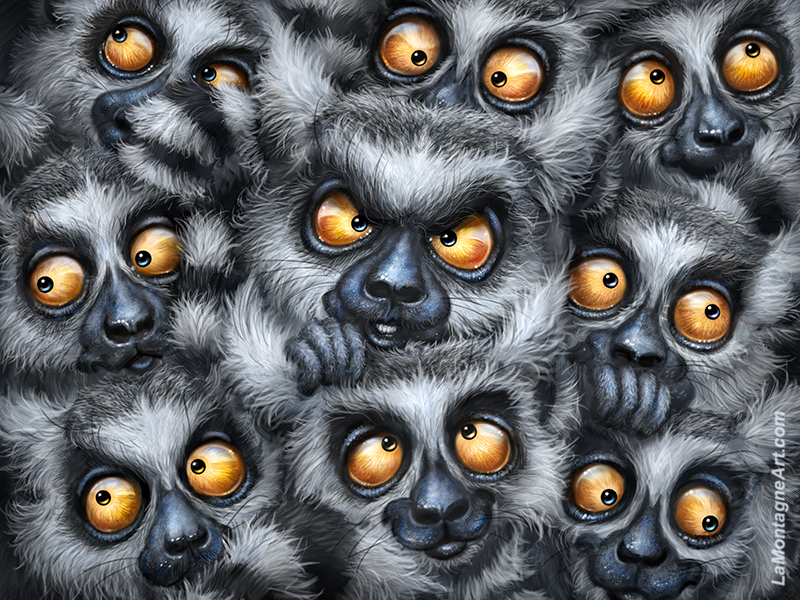 Some paintings come together easily. A reference photo may immediately inspire an idea, I’ll sit down and mock up sketches, and it will almost feel like the image creates itself.
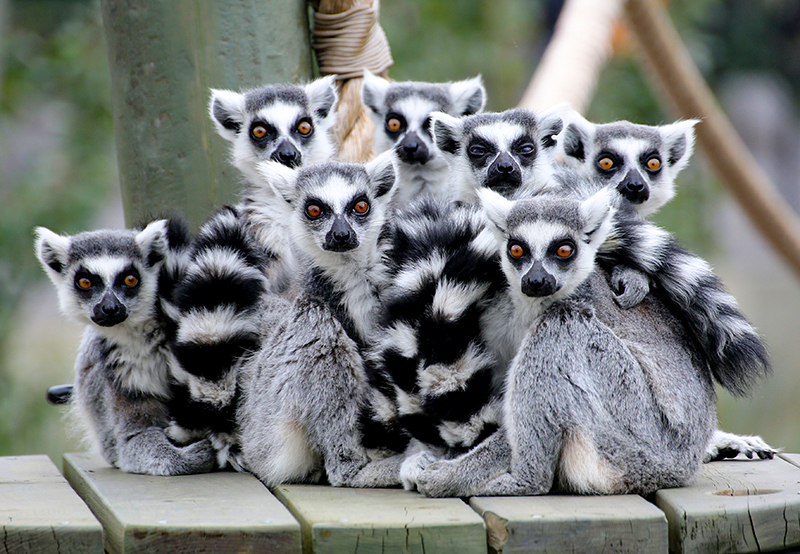 This painting has been something entirely different. Even though I had a clear idea of what I wanted it to look like, I couldn’t get it to feel right. It was inspired by a photo I took at the Calgary Zoo, and I even had the name of the piece before I painted the first brushstroke.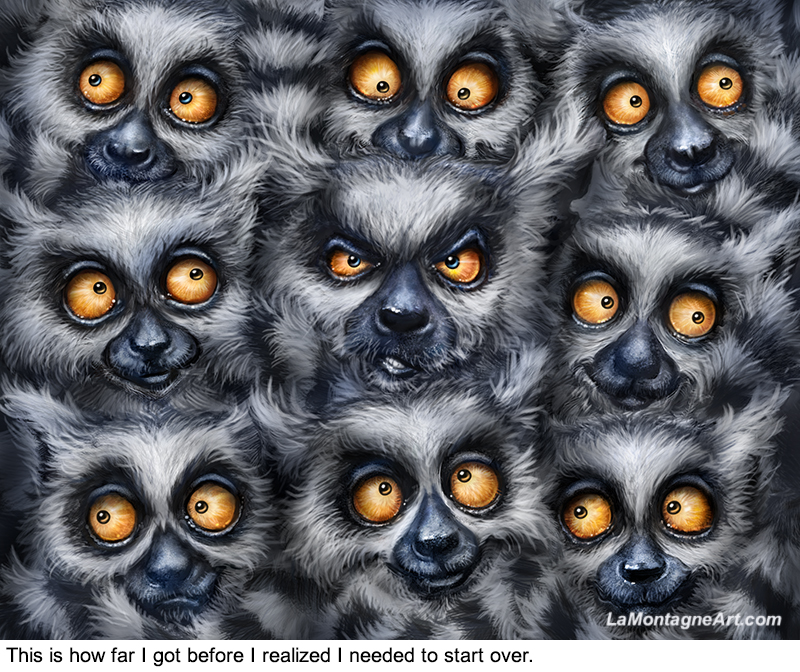
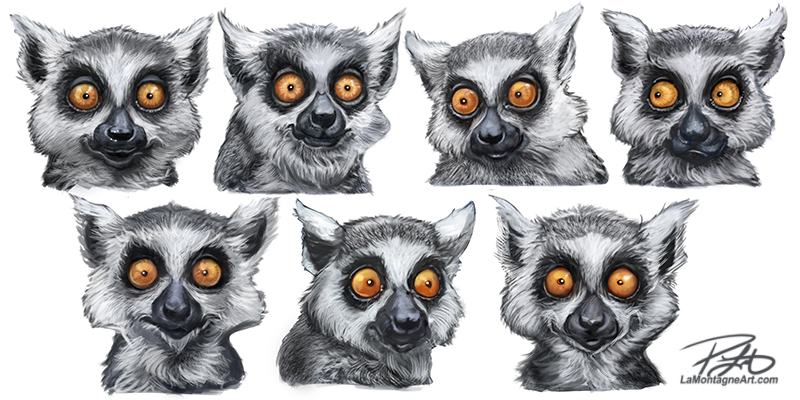 The first go round, I used a specific reference for each lemur I painted and drew them all individually. Even after I assembled them, I kept going back to the individual references for each, and it wasn’t easy to keep track of it all. I made it far too complicated.
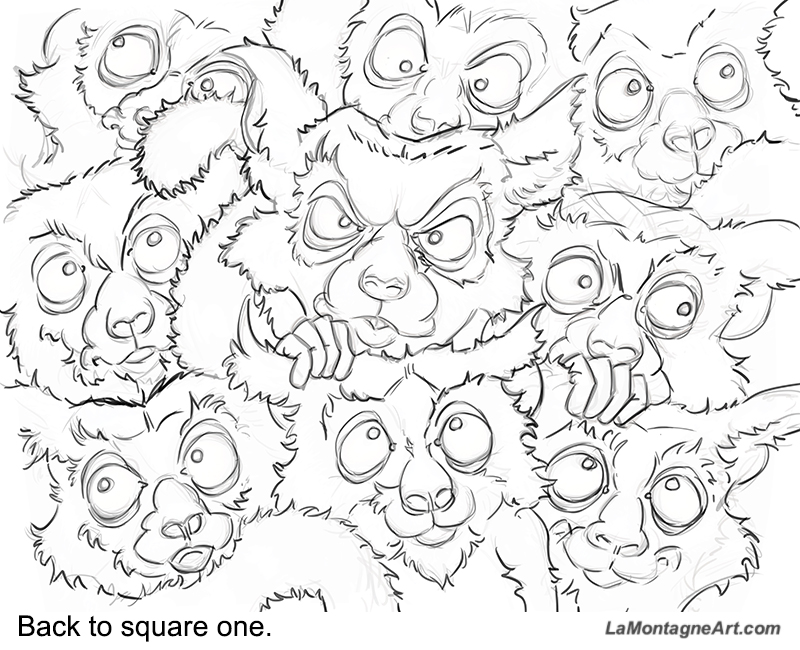 The key to getting this piece back on track was to stop painting individual trees and just paint the forest. Even though this was a challenging painting, with a lot of redrawing and direction changes, I learned from the frustration. These kinds of lessons always contribute to better work in the future.
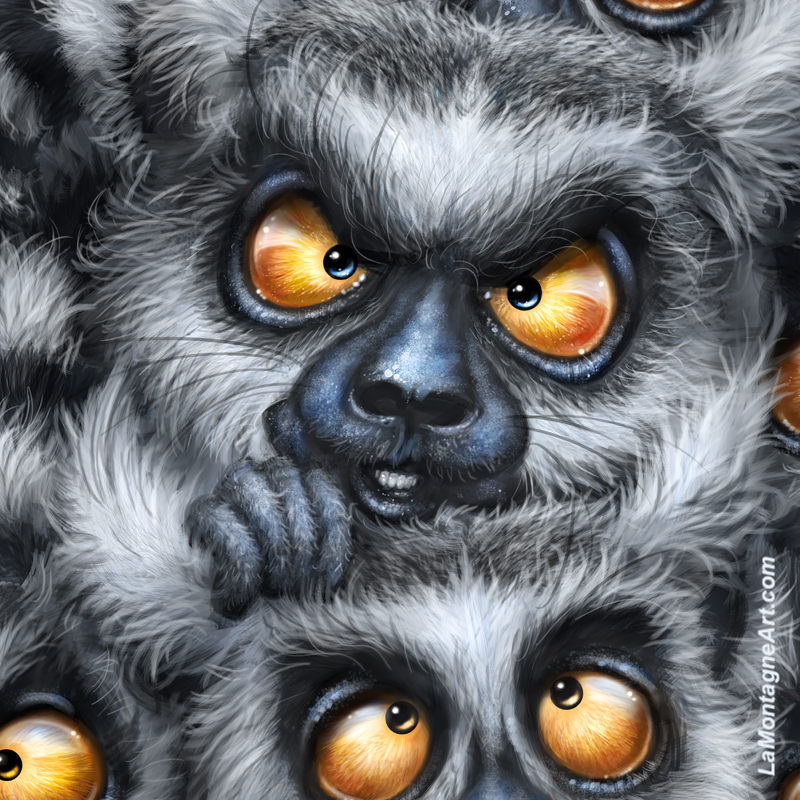 Under these circumstances, my perception of how any finished piece looks is distorted. I have no idea how I feel about this painting and probably won’t for a while. I feel more relief that it’s finally over than satisfaction with the result.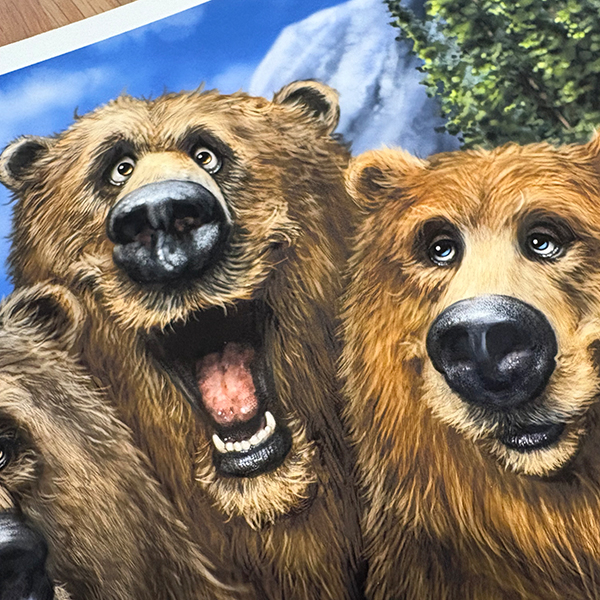
 Rich and Jill have been coming to the Bow Valley from their home in the UK every year for over a decade. While I don’t remember our first encounter in 2010, I had delivered an out-of-stock print of my first wolf painting to them at the Two Wolves gallery in Canmore.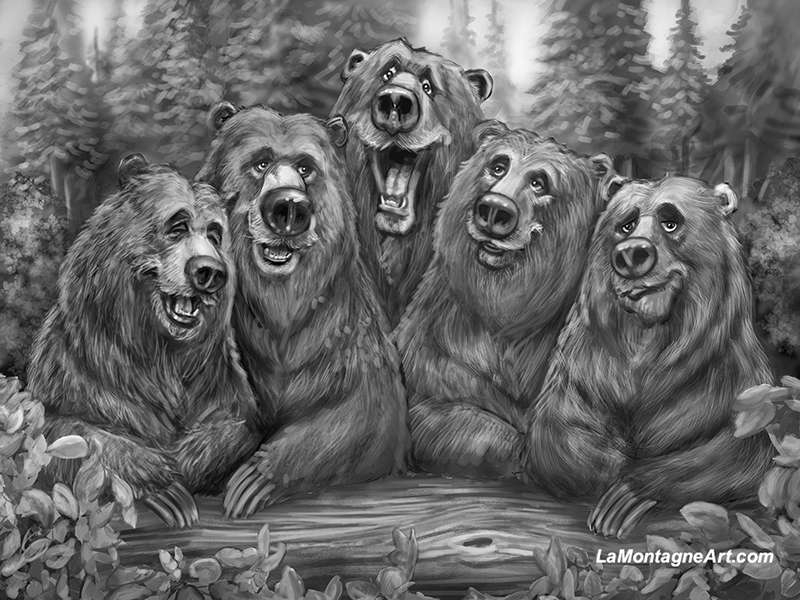
 I met them at a local brewery for a drink to deliver their order this weekend. We haven’t had time for anything more than a short exchange on previous deliveries due to weather or distancing during the pandemic, so it was nice to sit and chat with them.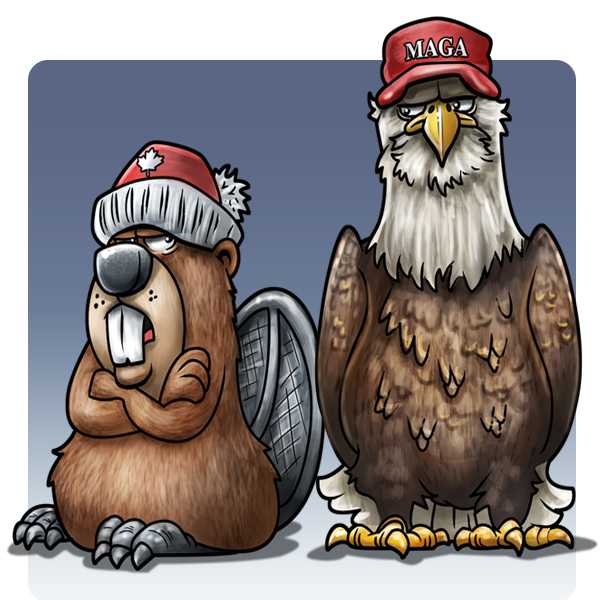
 Each week, I draw five or six syndicated editorial cartoons. I follow regional, provincial, national and international news and draw illustrated commentary on prominent stories. Many of my weekly clients across Canada only run my cartoons in their publications, some for over a decade. Other clients, especially daily papers, will pick and choose from submissions from several cartoonists. Despite the belief that journalism is unbiased, it most certainly is not. Some newspapers lean left while others lean right.
 Years ago, I recall that somebody in Canmore came up with a proposal that each business in the community should contribute to a tourism promotion fee. Some businesses complained they shouldn’t have to because they weren’t in the tourism business.
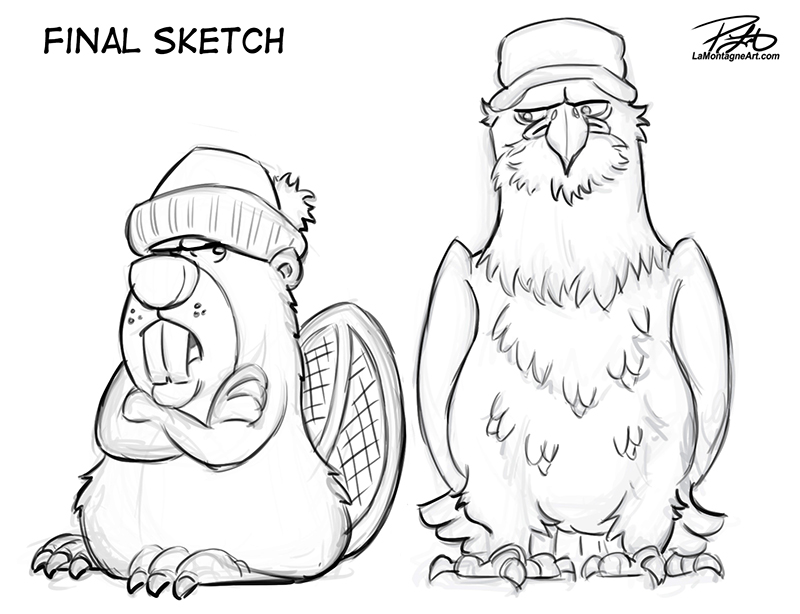
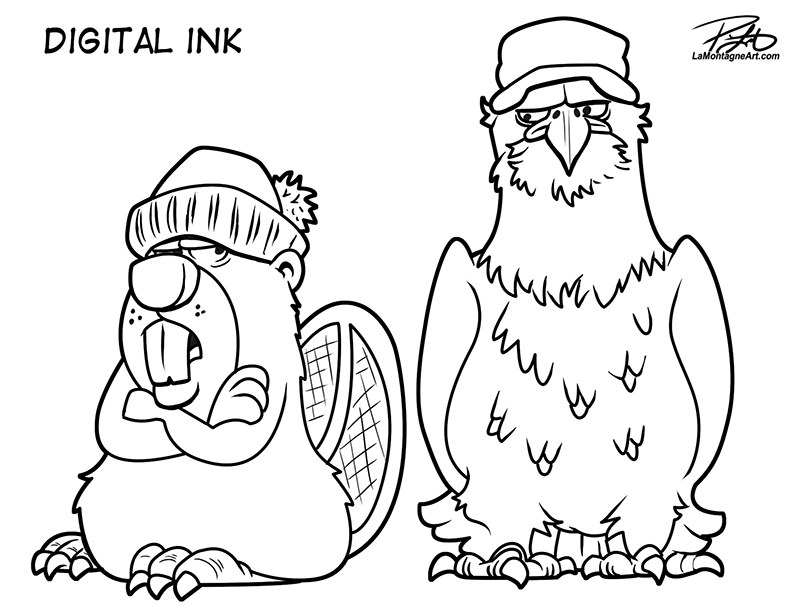
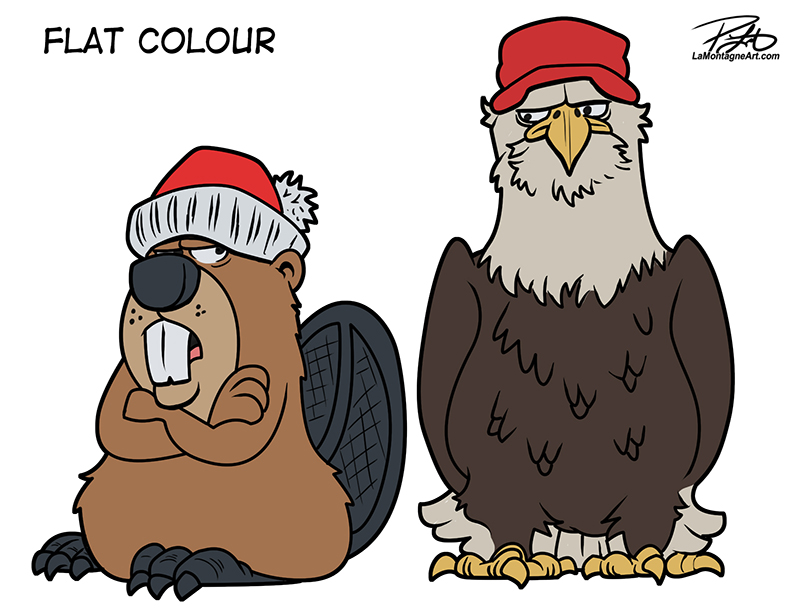 Canada and the United States have had a unique, enviable, and friendly relationship for longer than any two countries. We’ve often referred to each other as family. We’ve had our ups and downs; every relationship does, but it has always endured.
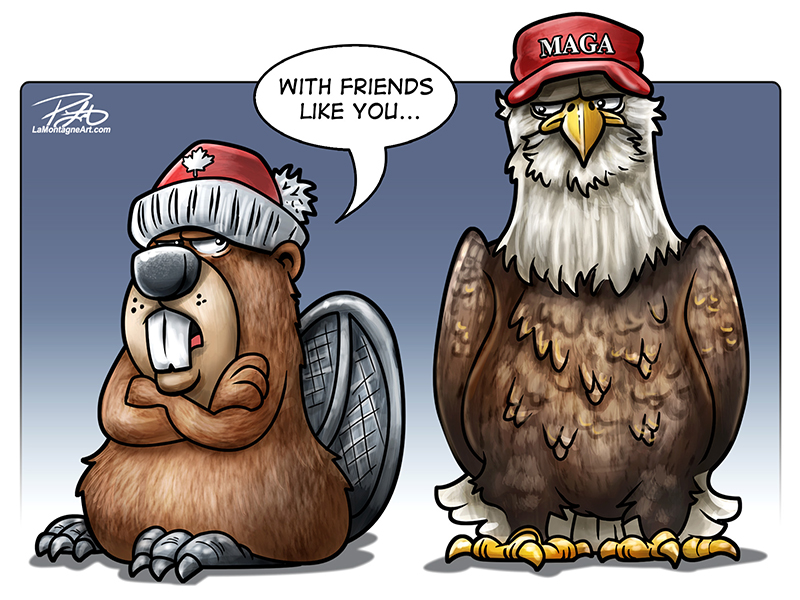 On Saturday, I paid my deposit and applied for the Banff Christmas Market this year. While anything can happen between now and the end of the year, I’m already lowering expectations. I’m currently sourcing and buying stock for the Calgary Expo at the end of April, but I’m no longer planning on some products. I don’t think people will have money to spend on luxuries, and my work certainly qualifies.
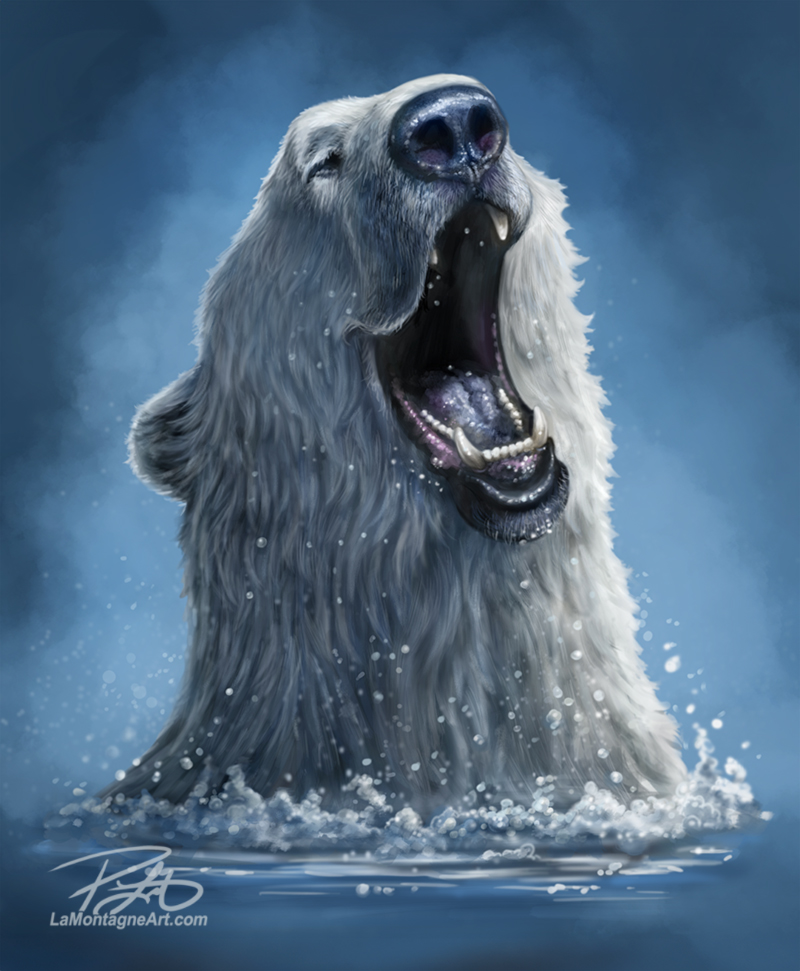
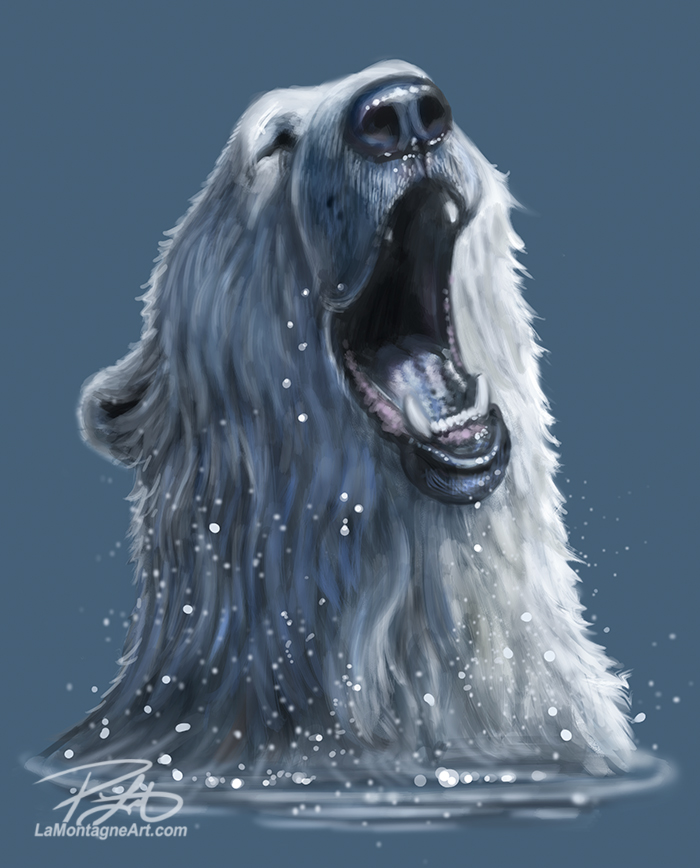 But it had received a positive response, and a few people sent me emails asking if I would finish it. So, over the last week, I put the time in to complete it, and I think Polar Plunge will be a nice addition to my print releases for spring.
 Last week, I delivered the year’s first print and sticker order to the
 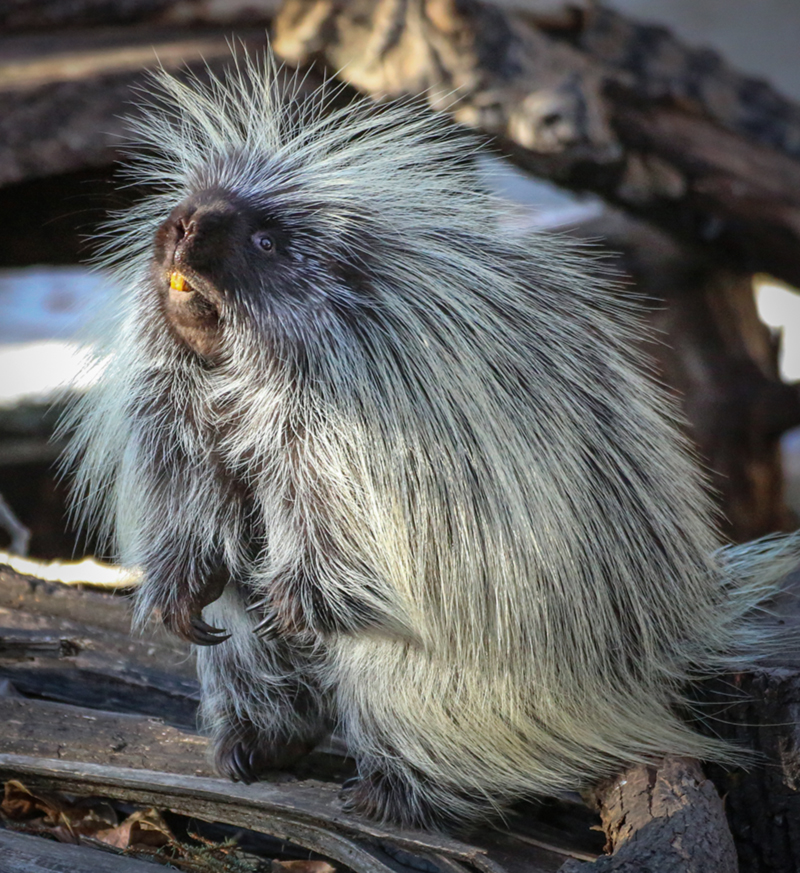 Porcupines are nocturnal, so they’re not active during the day, but like any animal, they’ll make an effort when food is involved. Because Kayla was inside the enclosure, feeding the cute and prickly resident, we had a nice chat while I got some decent reference shots. Add those to the ones I’ve taken at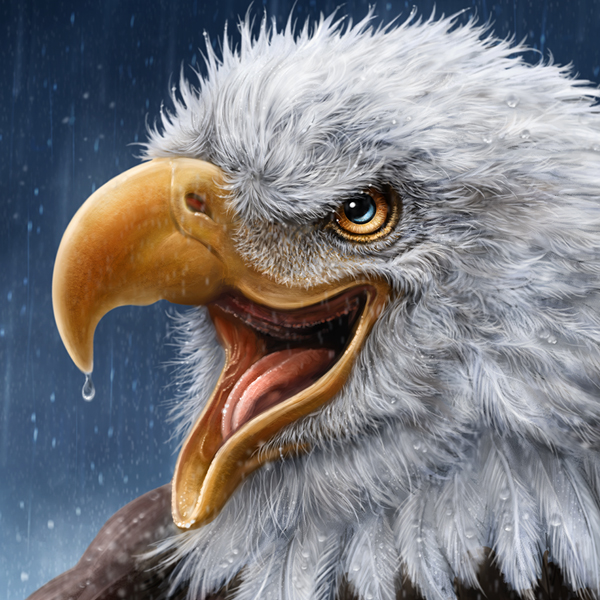
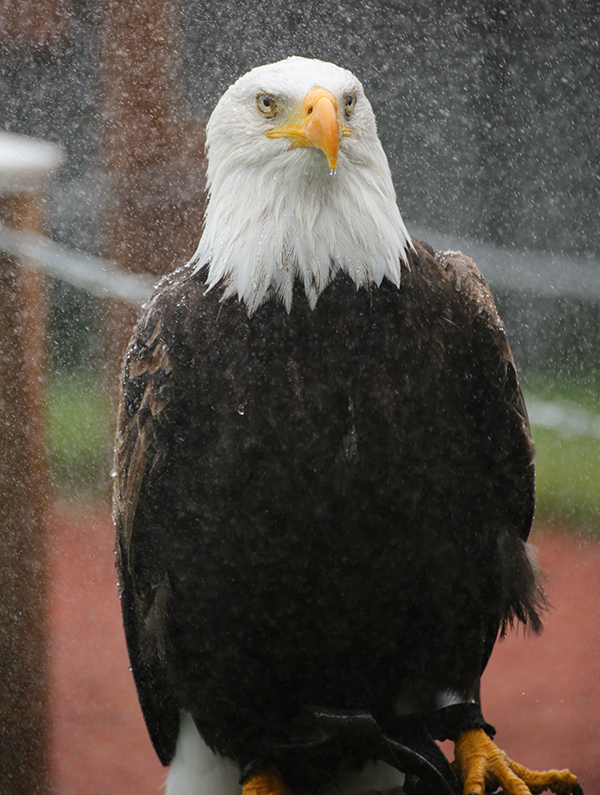
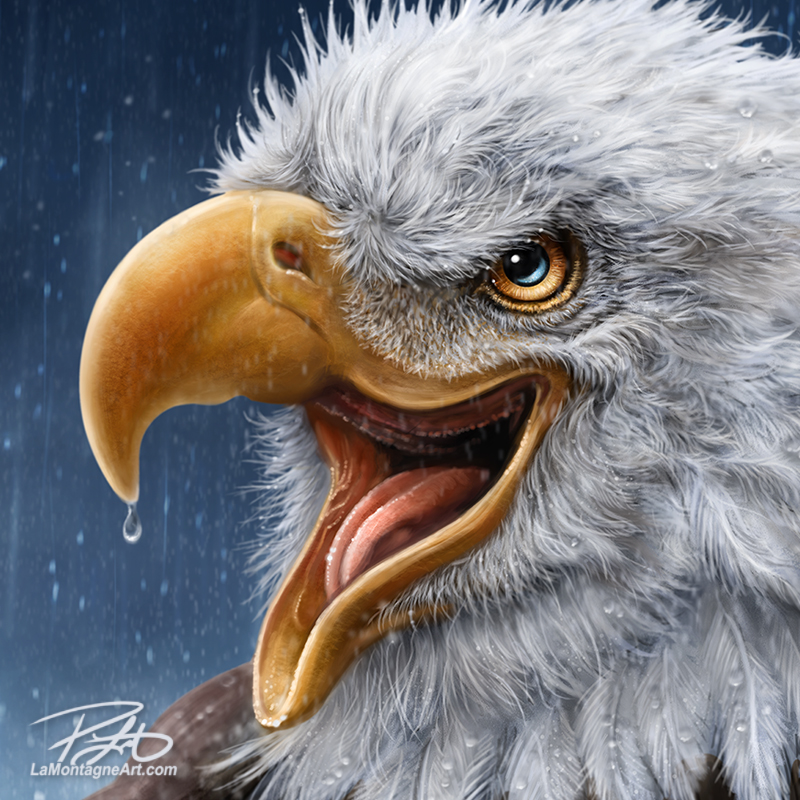
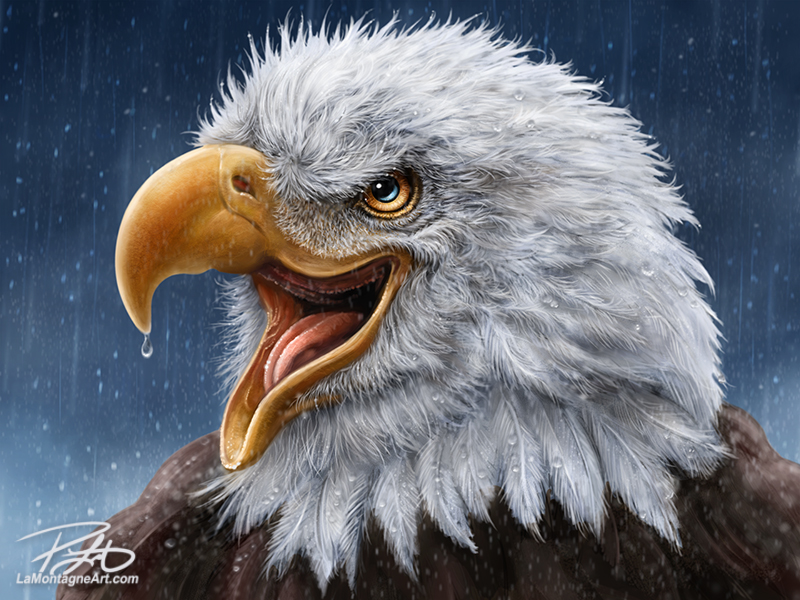 Painting the wet look in this one was challenging because I had to decide where to draw the line. I could have added more rain in the background and foreground, but I’d risk it looking too busy. The same could be said for the water droplets I painted on the feathers. More definition might equal more distraction.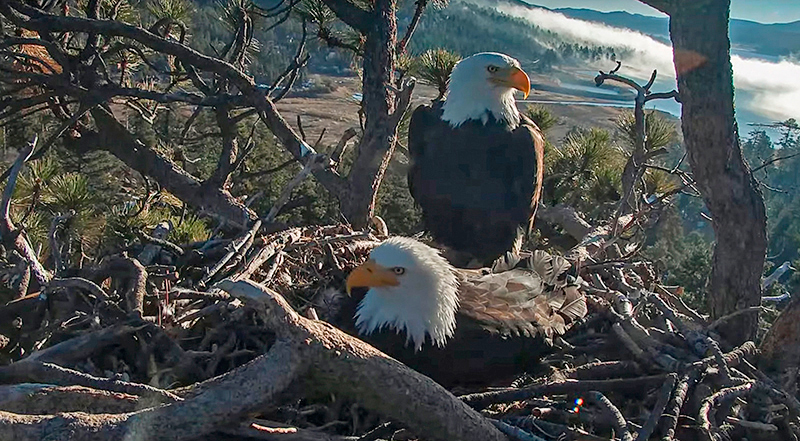
 “How long does it take you to paint one of these?”
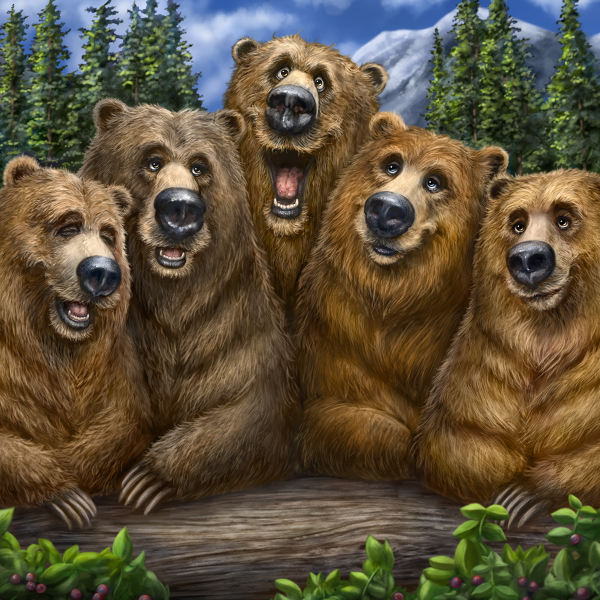
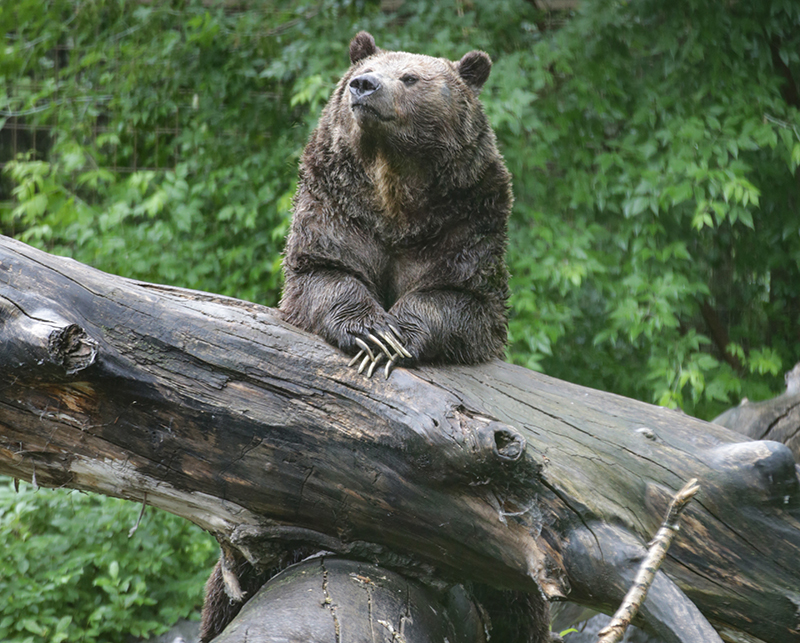 The spark for this painting was reference photos I took at the
 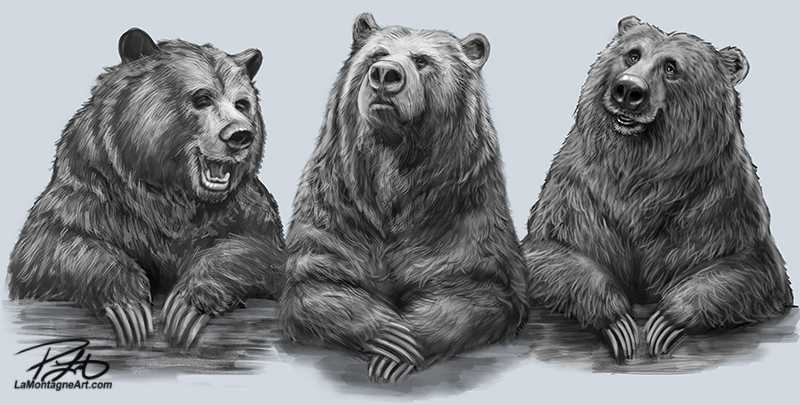 I did some drawings shortly after that and returned to them whenever I had the time. While Skoki was the inspiration, I used several bears in my photo archive as reference for the bodies and faces. If nothing else, I figured they would be good sketches for the book I’ve been talking about for years, but to my eternal shame, never deliver.
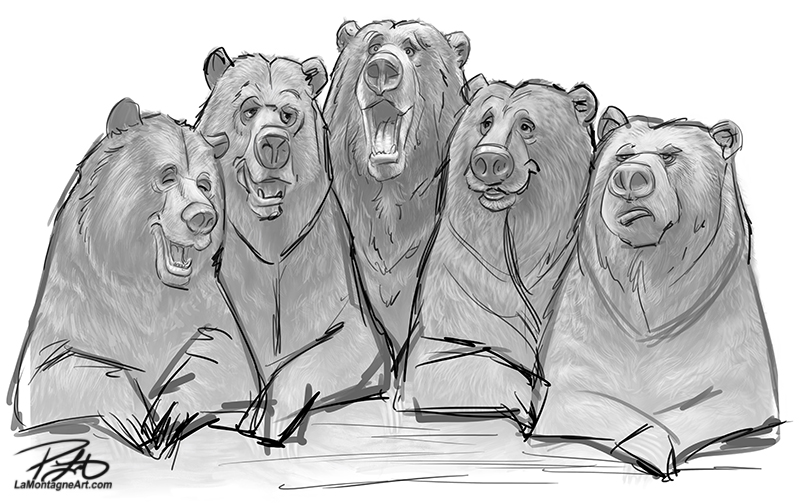 Once I had several sketches, I pieced them together, trying to find a composition I liked. The five grizzly bear buddies soon became five members of a family. It reminded me of a grizzly bear version of a Sears family portrait photo shoot. Refining the shapes so they fit together, and reimagining the expressions meant losing a lot of the sketch detail I had already drawn, but that’s just part of the process.
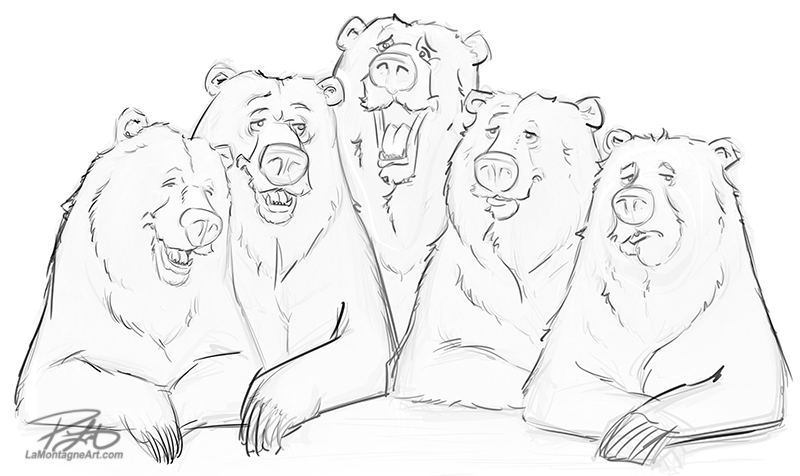 Many paintings begin as one idea but take on their own life while I work. I have no idea how many hours I’ve put into this piece, but it’s more than any painting before.
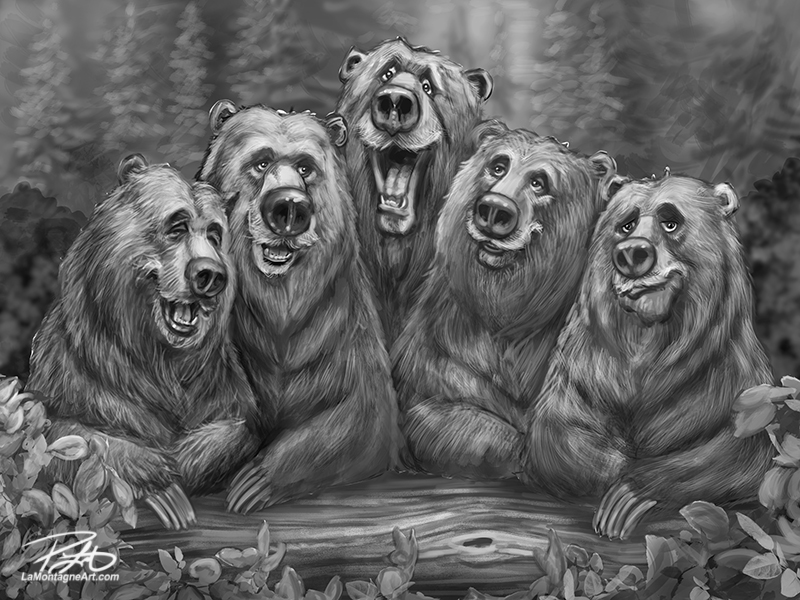 Rather than work in colour from the start, as with other paintings, I started this one in greyscale because I wanted to play with the values and experiment with the scene. Once I had a good starting point, I painted colour in the background and foreground, leaving the grizzlies for last.
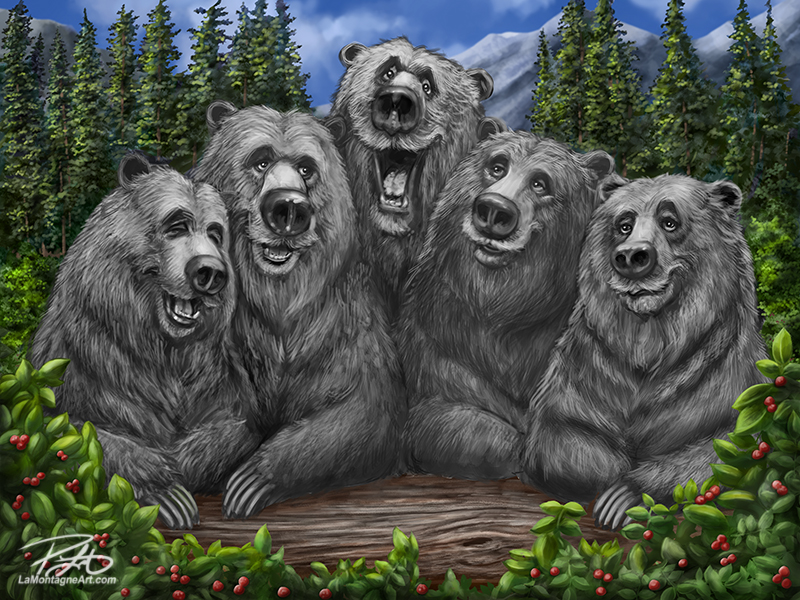 Initially, the berries in the foreground were bright red. But when I showed this work-in-progress image to my buddy, Derek, at Electric Grizzly Tattoo, he suggested they might be a distraction from the bears. It was a helpful critique. So, I toned down the berries and made them a deeper burgundy and blue.
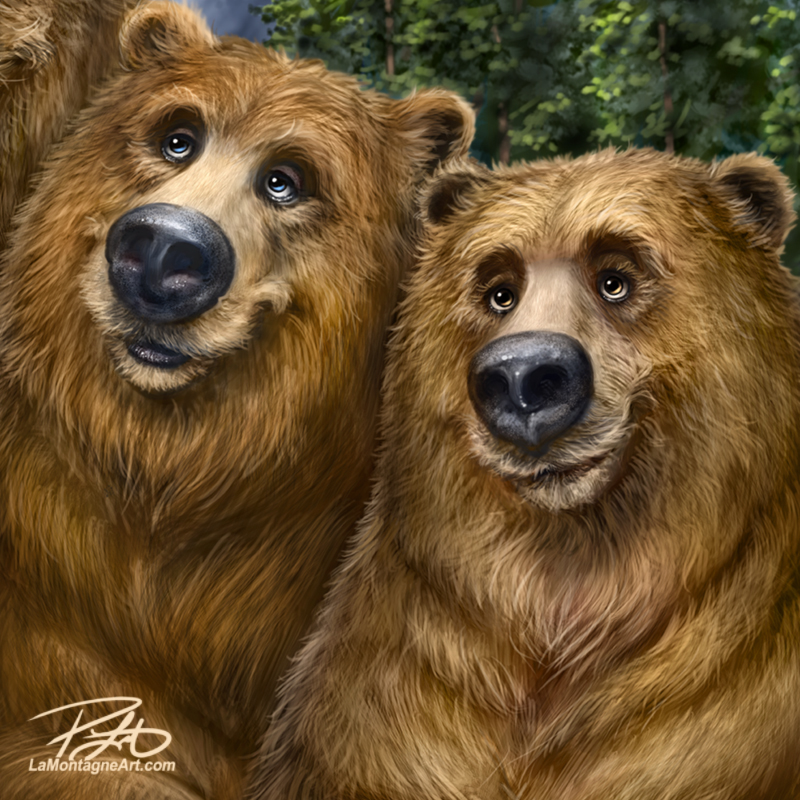 As brown bears come in many shades, from dark brown to red to blonde, I had initially planned to have a more noticeable colour difference between the five. But it looked weird, and I didn’t like it, so I erred on the side of more subtle variations in fur colour.
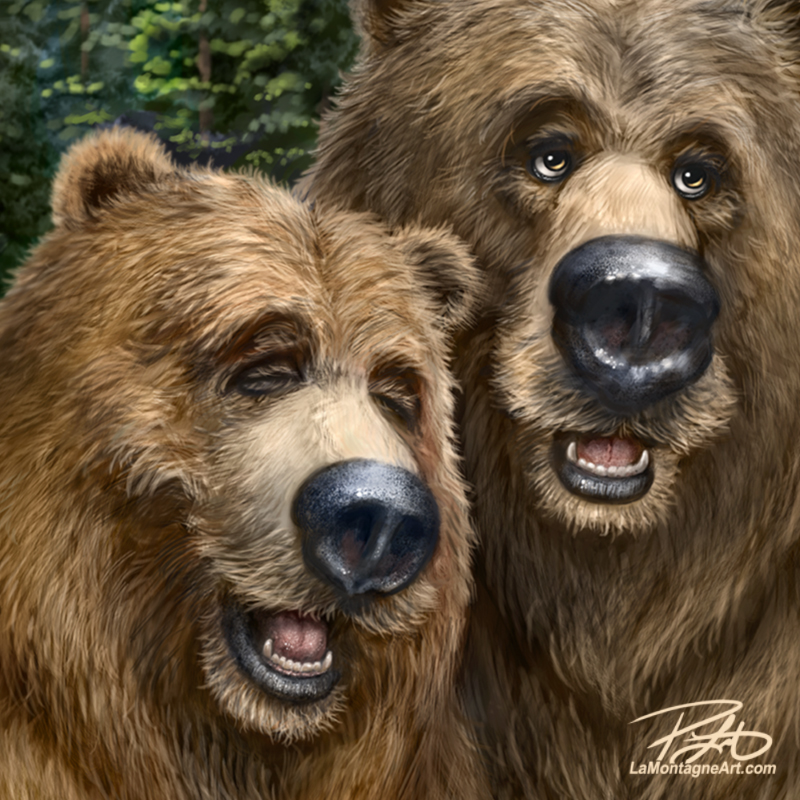 One of the nice things about working digitally is that at the end of each painting session, I can look back at the image when I opened the file and compare it to progress at the end of a session. It’s often a big difference, and that’s satisfying. However, when a painting nears completion, two hours of work may be barely noticeable before and after. That’s usually how I know it’s time to call it done.
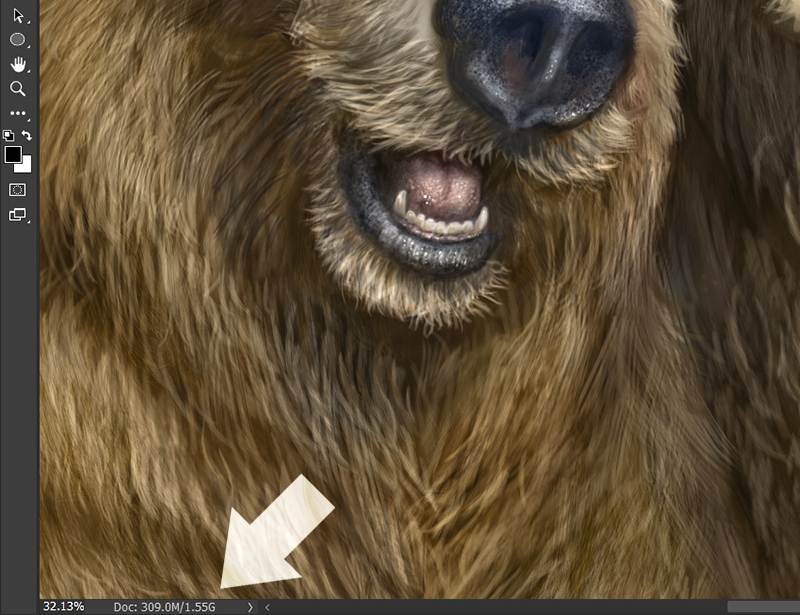 Deciding whether I like a piece or not takes time, but I’m pretty happy with how this turned out. I liked my
 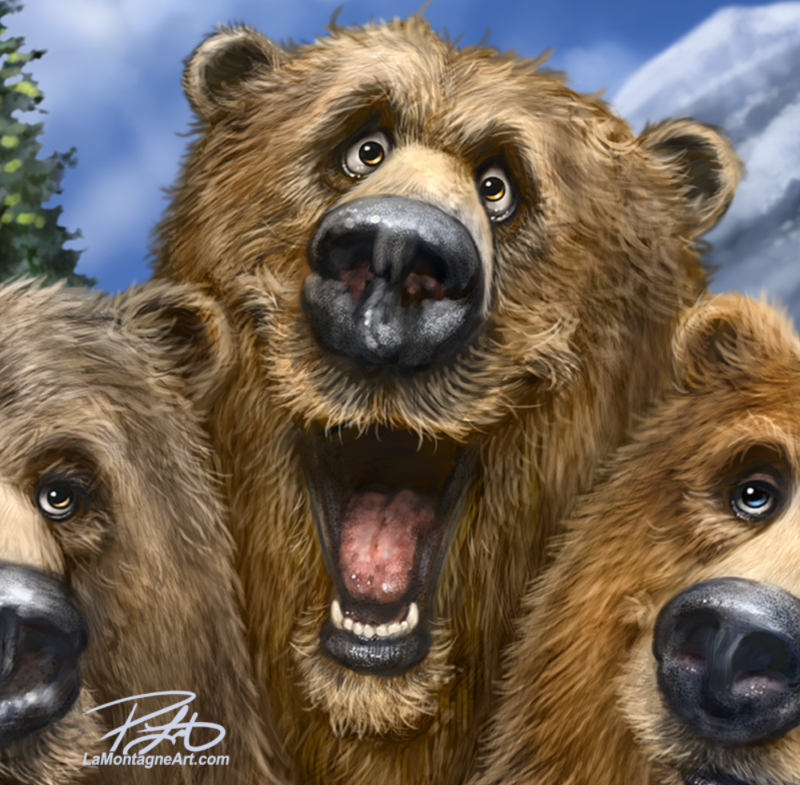 Because of the current uncertain economy, I’m not yet committing to doing puzzles again right away. But when I do, I think this grizzly family is worthy of consideration.