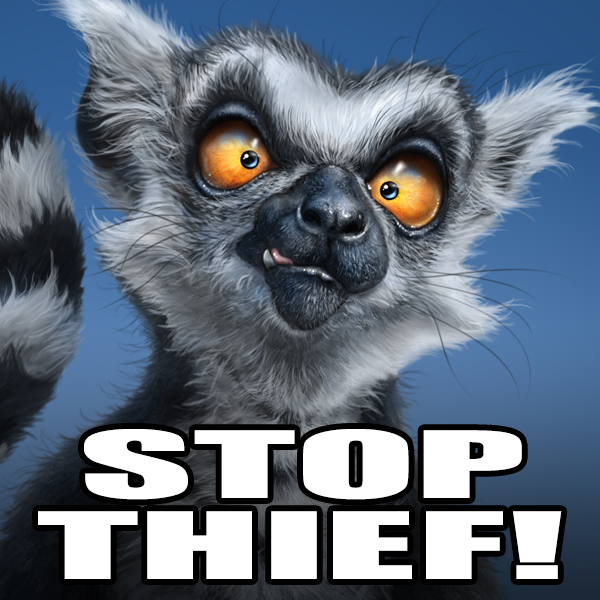
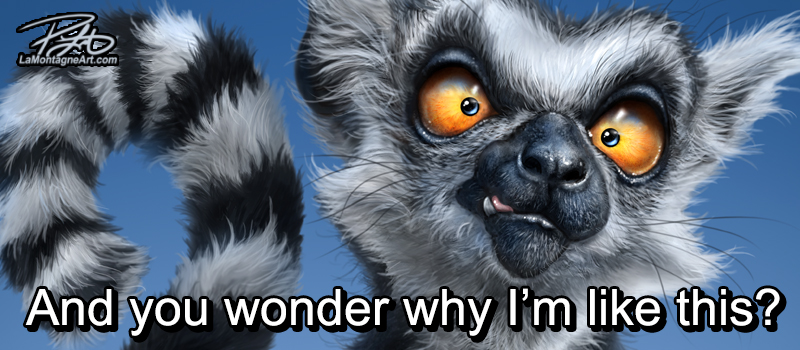
 If your art becomes popular enough that people like it, share it and buy it, somebody will steal it. Some creatives stamp ugly watermarks across every image they post to try to combat this, but what’s the point if you need to go that far?
It’s not uncommon for people to remove my signature or change the wording in one of my editorial cartoons and then post it on social media with no credit or link to my site. It happens to every cartoonist. It strikes me especially funny when the alteration is so they can call a politician a liar, thief, or criminal.
Today’s word is irony.
On occasion, a company has stolen my work and offered it on an online product, usually in another part of the world. In most cases, a cease and desist is all it takes to remove it, and then they steal somebody else’s work. But in some countries, everything online is seen as free for the taking. I know artists who’ve been on vacation in Thailand and seen their work sold at roadside market stands.
If you’re shocked by this, remember that scammers bilk senior citizens out of their retirement savings every day. Humanity has more than its fair share of bottom-feeding scumbags. Art theft isn’t even close to the worst of it.
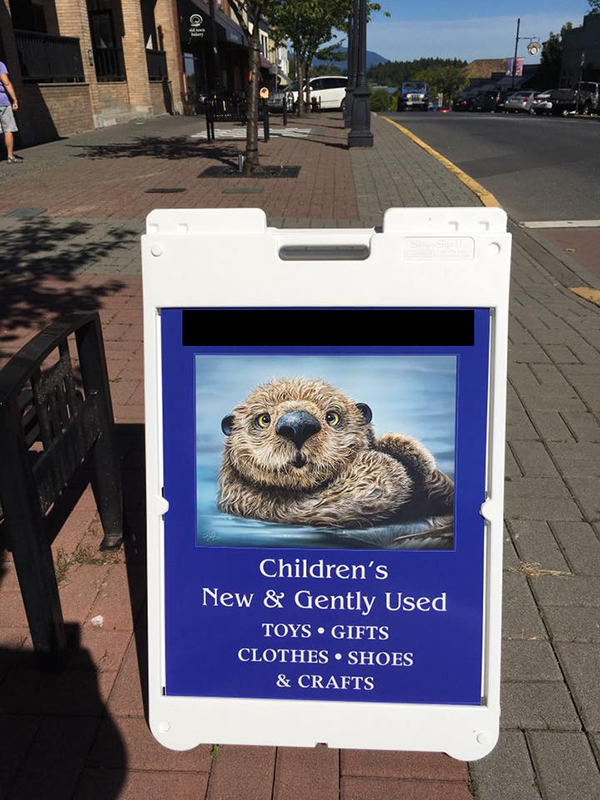 Several years ago, my friend Kathryn alerted me to a woman on Vancouver Island using my Otter painting as the logo for her business. It was on her business cards, a sidewalk sandwich board, window decals and advertising. When I called the owner on it, she said she Googled ‘royalty-free images’ and my otter came up. I asked if Mickey Mouse had come up in that search, would she think Disney would allow her to use him as her logo? My signature is still on the image on that sign! She angrily told me I was being unreasonable and said if I had been nicer, we could have come to an arrangement.
Based on such a trustworthy beginning, I clearly missed out on untold riches.
On a trip to Vancouver Island, we stopped in Ladysmith to ensure it wasn’t still going on. She’d sold the store, and my work was nowhere to be seen. That’s why I’ve blacked out the name in the photo.
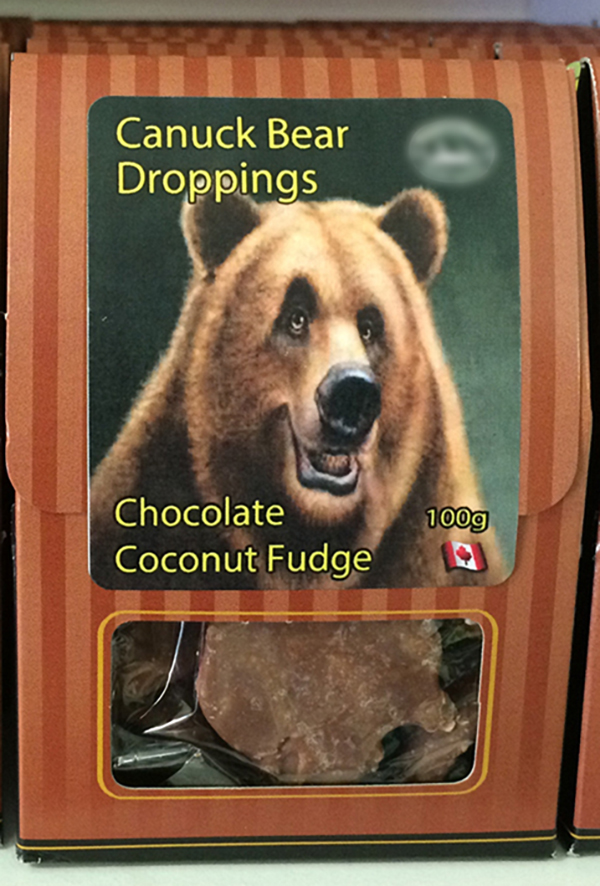 Another company in the same area had my Moose and Grizzly Bear paintings on their chocolate-covered candy labels sold in a local store. The company’s owner in Eastern Canada said they’d hired a graphic designer to make the labels. He just stole my work online and passed it off as his own.
The owner apologized and said he would remove the offending images from his products.
People will frequently look down on artists for not having ‘real jobs,’ or expect us to work for free or the ever-popular ‘exposure.’ Every time I try to pay my bills with this mythical currency, companies laugh at me. I guess it’s only good for art.
For many people, art is their business; when somebody steals from your business, you must deal with them. If it’s an overseas company in a country with lax copyright laws, you could sell your house and spend it all on lawyers, and you still wouldn’t win.
You pick the hill you want to die on.
Which brings me to last week.
A woman in Nevada has been selling my artwork as her own, alongside what I can only assume is questionable CBD potions. As far as I can figure, she has purchased canvases of some of my work, likely from print-on-demand sites like Art.com, Wayfair, iCanvas, and others.
These companies were licensed to sell my work through agreements I signed when represented by Art Licensing International. I ended that relationship early last year, but these companies had contracts with the rights to sell my work until the end of their terms.
Most of those have expired, so even though you can still see my work on some sites, you can’t order it anymore. I’ll write another post later on why I don’t find those sites appealing.
Since the art thief has been doing this for a few years or longer, I suspect that’s where she got them since I don’t post high-resolution images on my site. She then applied some brushstrokes to those canvases and sold them as her original work.
At Photoshop World Las Vegas in 2014, I took a class from a New York copyright lawyer. He was an entertaining character but knew his stuff and had represented plenty of artists who’d been ripped off. His advice even saved me from a deal I worked on that very week with a couple of scammers in Calgary.
The lawyer talked about the oft-quoted 10% rule, the belief that if you change another artist’s work enough, copyright no longer applies, so that you can resell it as your own. He shared the official legal term for that rule; Bullshit.
It’s the kind of thing amateur creatives tell each other to justify stealing.
According to Canadian and United States law, an artist owns copyright to their work as soon as they create it. However, officially registering allows you to claim more financial damages when suing somebody for a breach.
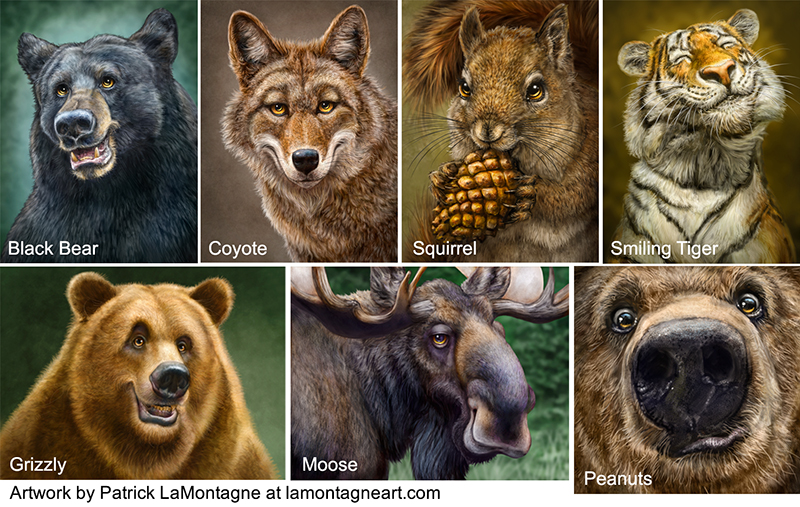 From what I’ve found, she stole my Coyote, Grizzly, Black Bear, Moose, Squirrel, Peanuts and Smiling Tiger paintings, but likely more than that. While the first five are no longer bestsellers, and a couple are even retired, my Smiling Tiger and Peanuts paintings are two of my most popular, bestselling and frequently licensed images.
Stupid is as stupid does.
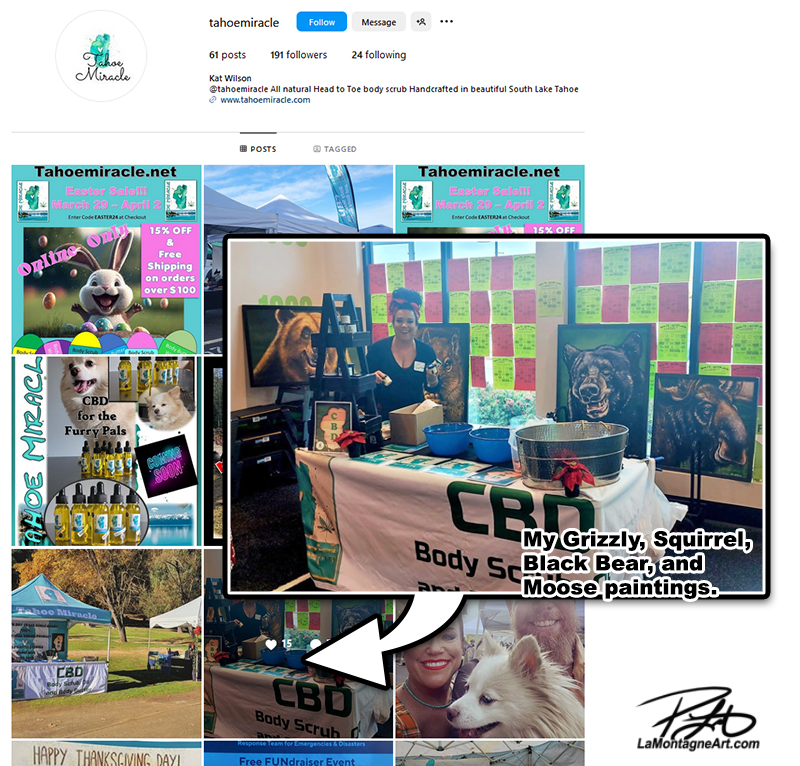
She advertised that she’d be showing her art all month at a venue in Nevada, complete with photos on her website, Facebook and Instagram. She removed the image from her webpage, but I saw that coming and captured screenshots. Not my first rodeo. I have blacked out some areas of the image that may unfairly implicate others.
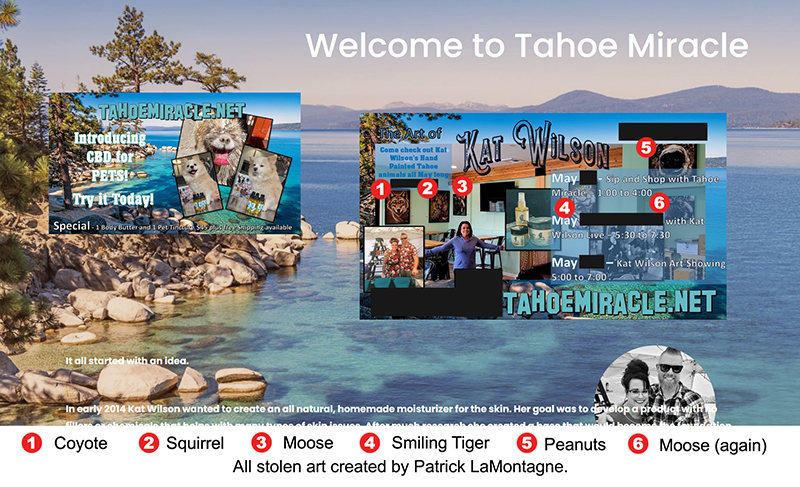 I contacted the venue and informed them that this ‘artist,’ for lack of a better term, had stolen my work. I included several links to my site, blog posts where I wrote about the images when I had painted them, and links to companies that licensed my art. And while I told them I didn’t blame them for the infraction, I suggested they distance themselves from the offender.
The response from the venue was better than I’d hoped. They apologized (not their fault), told me they removed the canvases from their walls and even copied me on an email they sent to the fraudulent artist. In it, they told her she was no longer welcome there, and if she wanted to collect her canvases, they’d be at the local Sheriff’s office for retrieval.
She declined to pick them up.
You don’t say.
I had also contacted a friend who lives in that area and asked if she knew the place. She said she did and spoke highly of it. I don’t believe they’re complicit, and as the business is also a victim of this fraud, I see no need to name them.
I have sent emails to other events she’s advertised on her site and to markets where she has sold my work in the past, informing them of the theft and asking them to cancel her registrations.
I am not an advocate of cancel culture and trial by media. Some people don’t know what a reasonable response is, and internet vigilantism seems to have one setting: scorched earth.
That said, given what I’ve seen, she has been stealing my artwork for years. The problem is that when I searched for her online, I came across a few other legitimate artists with the same name, and I don’t want them confused with this thief. It takes very little time to cancel somebody, and it’s nearly impossible to reverse it when you’ve got the wrong person.
So, instead, I’ve shared the photos from her site. I’ve blacked out the venue name and details but left her name intact. Since references to and images of my work are still up on her Instagram and Facebook, I’m also linking to those. The artwork may be removed when you read this, as I’ll share links to this post in her comments section. She has removed my images from the front page of her website.
From a cease-and-desist email I sent her, she responded, “Patrick. I’m very sorry. I will never paint again. The paintings I have will be destroyed. Kat.”
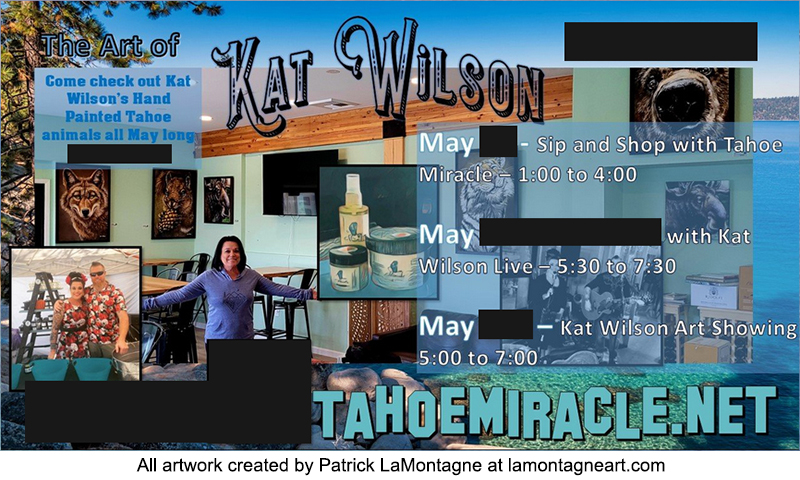 After a whole career dealing with this kind of thing, I am firm-footed in ‘fool me twice’ territory. Her reply almost stopped me from writing this post, but she’s standing proudly in that photo with six large canvases of an art style I’ve spent years developing. And 24 hours after her apology, my work is still visible on her social media with mentions of her amazing paintings. Very sincere.
Genuinely sorry, or sorry you got caught?
 If your only available settings for creating art are stealing it or not painting at all, I’m at a loss to understand why you’d bother pretending to be an artist. Choose a profession more suited to questionable morality, like federal politics.
I’m sharing this story as a cautionary tale and a teaching moment. If you’re an artist learning new skills, copying somebody else’s technique, studying their methods, and imitating other styles to find your own is part of the process. That’s what every artist does. It’s how we learn. Eventually, you get tired of being a poor copy and strive to become an original.
But don’t steal somebody else’s artwork and pass it off as your own. It’s happened to every artist I know, and it can quickly become an open wound that never heals. People will find out. Artists routinely reverse-search their own images to catch this sort of thing, though I found out about this infraction another way.
When one artist sees another ripped off, they will tell them about it because we all know how it feels. In some cases, if the artist is popular enough, their community of followers will destroy you online. I’ve seen it happen more than once. It’s brutal.
Dealing with this issue has taken way too much of my time this past week, time I’d much rather have spent painting. It should be obvious why this got bumped up on the priority list.
While I’m not happy about this situation, I’ve mellowed in my older middle age, and I’m not raging or losing sleep over this. It would be naïve for her to imagine several years of theft can be erased by three short sentences in an email, with little action to back up her supposed remorse. I don’t know how much of my artwork she sold, but I’m confident I won’t get a cheque in the mail. And anyone who bought my work from her likely won’t get refunds.
I’ll keep an eye on her to make sure she stops stealing my work, and if further evidence presents itself of ongoing fraud, I’ll make it as uncomfortable as possible for her to continue.
And if she suddenly finds a new art style (she’s done this before), you can bet I’ll do my best to let the next victim know about it and help them in any way I can.
Cheers,
Patrick

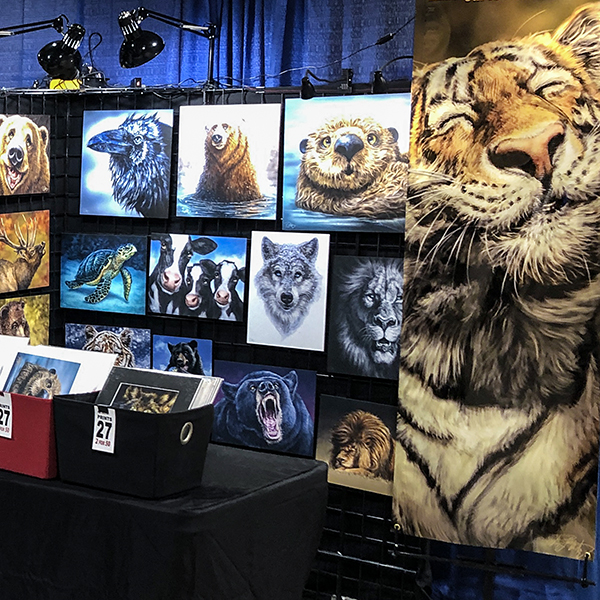
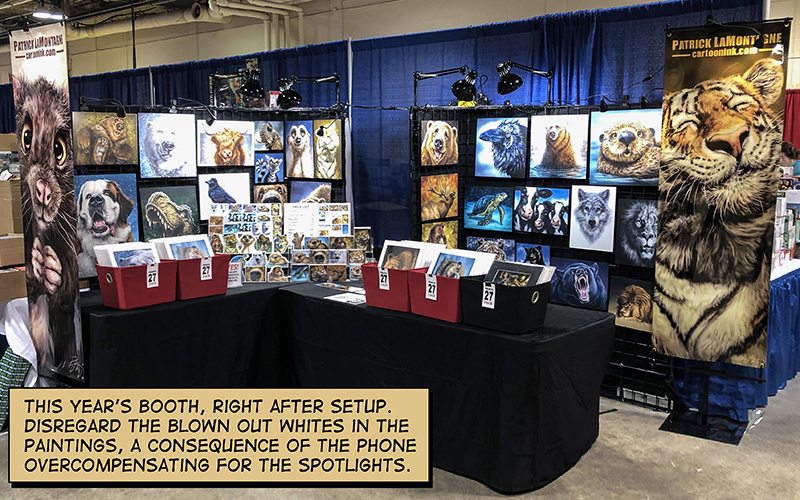 From early prep to tear down, Expo went so smoothly that I kept waiting for something bad to happen. My booth location was ideal, my neighbours were friendly, and all the vendors I spoke with seemed to have a good show.
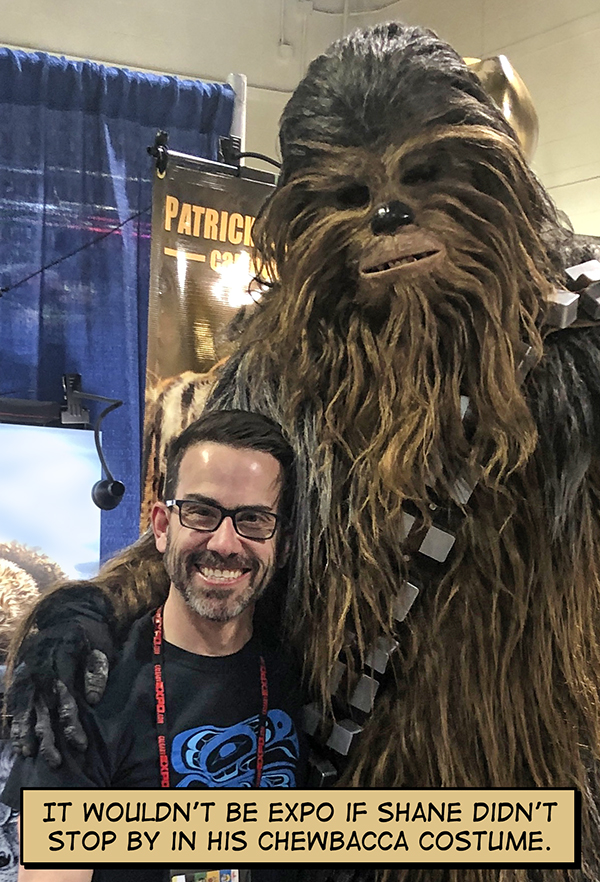 I always come away from this show inspired to draw and paint, with an overwhelming gratitude for those who allow me to keep doing it. Like most artists, I’m an introvert who spends most of my time alone with my work, so when I meet people who enjoy it, it refills the creative tank.
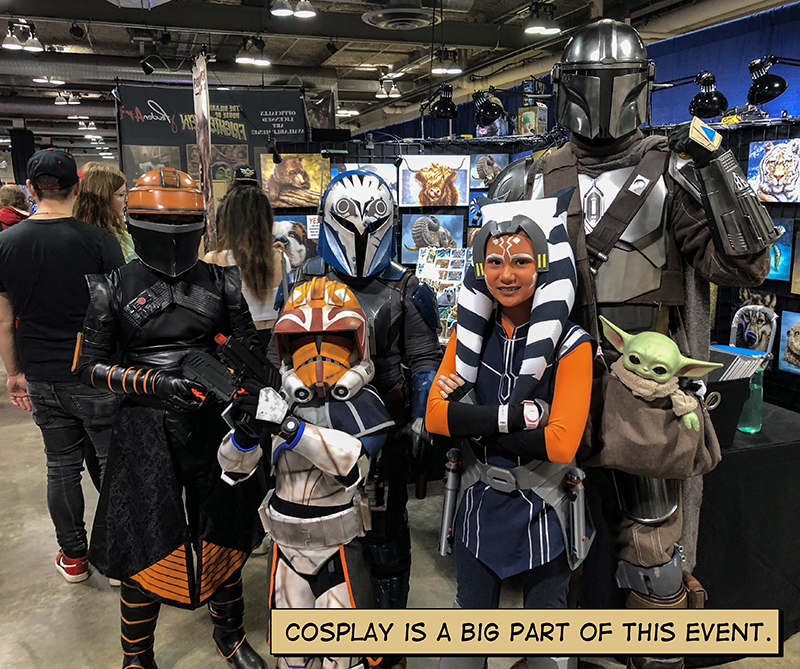 During the first two hours on Thursday, I saw many regulars flood my booth. It was chaos, it was bedlam, it was awesome. The only downside was that these were all people I wanted to spend extra time with, but they all showed up at once. I had the best Thursday sales I’ve ever had, and most of those were from longtime collectors and subscribers to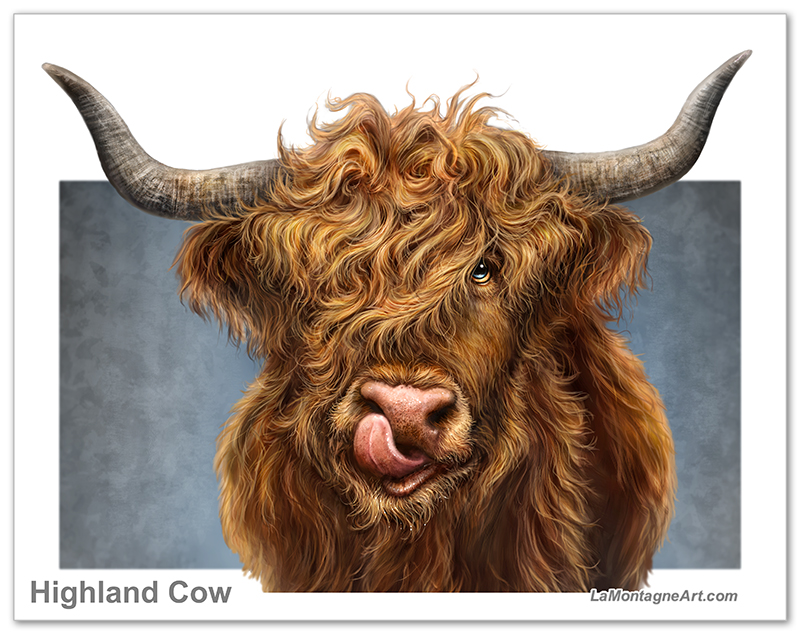
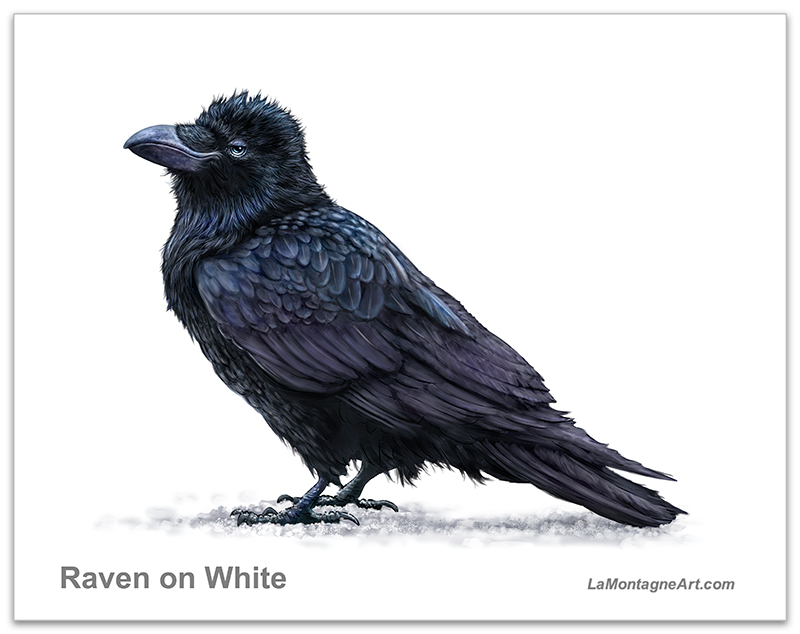
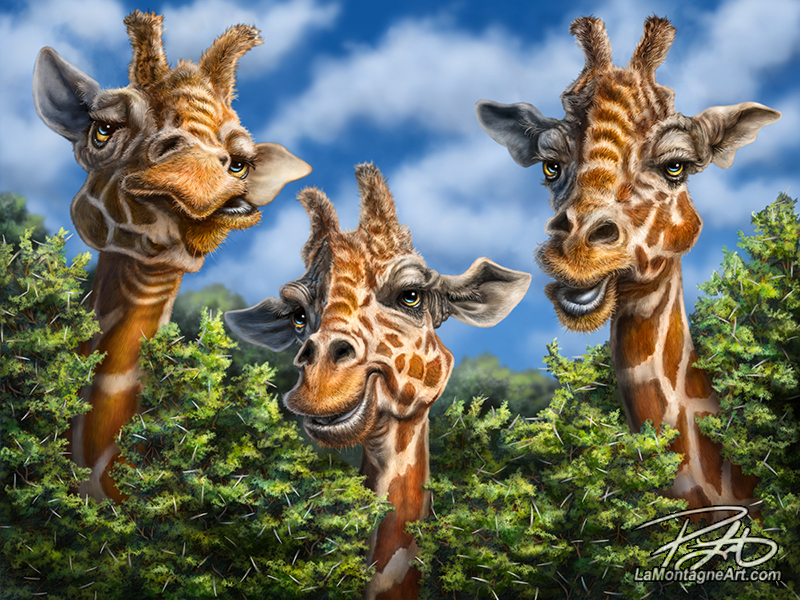
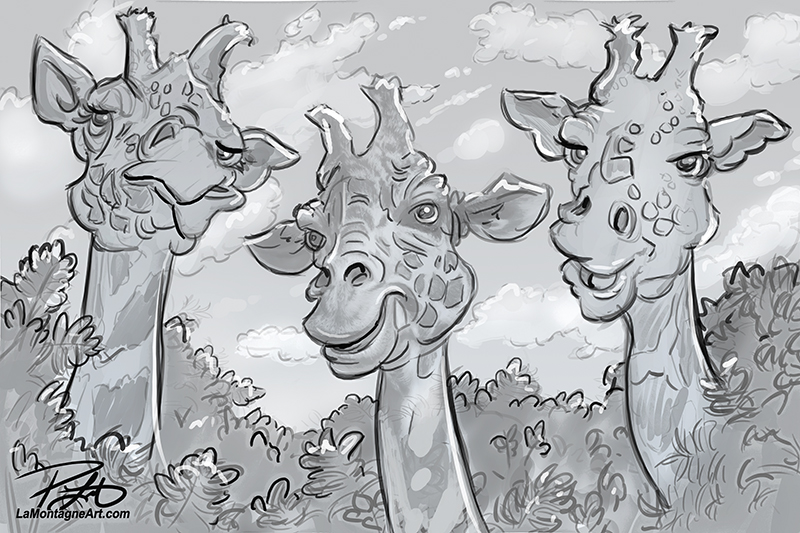
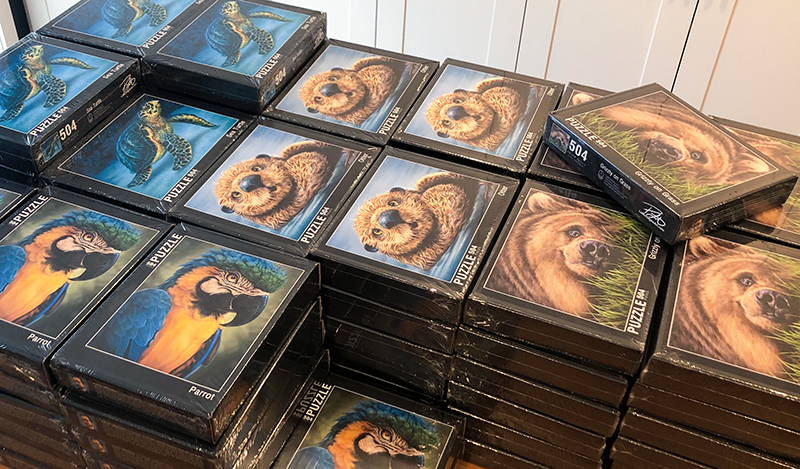 I’m working on five different paintings right now, a few that feature multiple animals in the scene, and I aim to include those on future puzzles later this summer, 1000-piece options many of you have been asking for.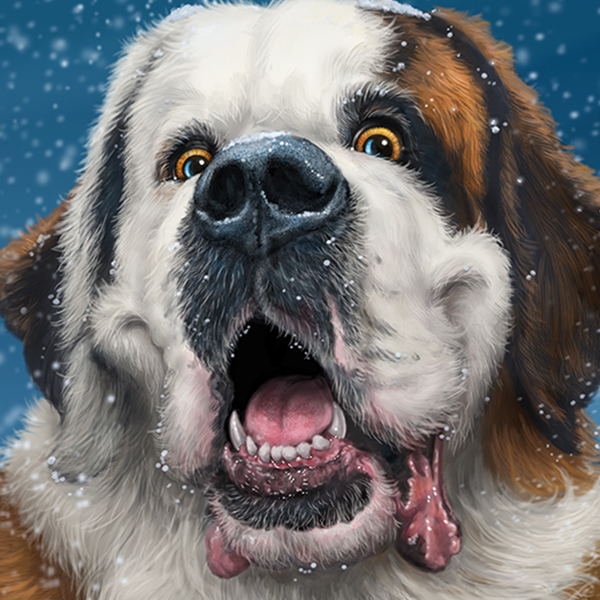
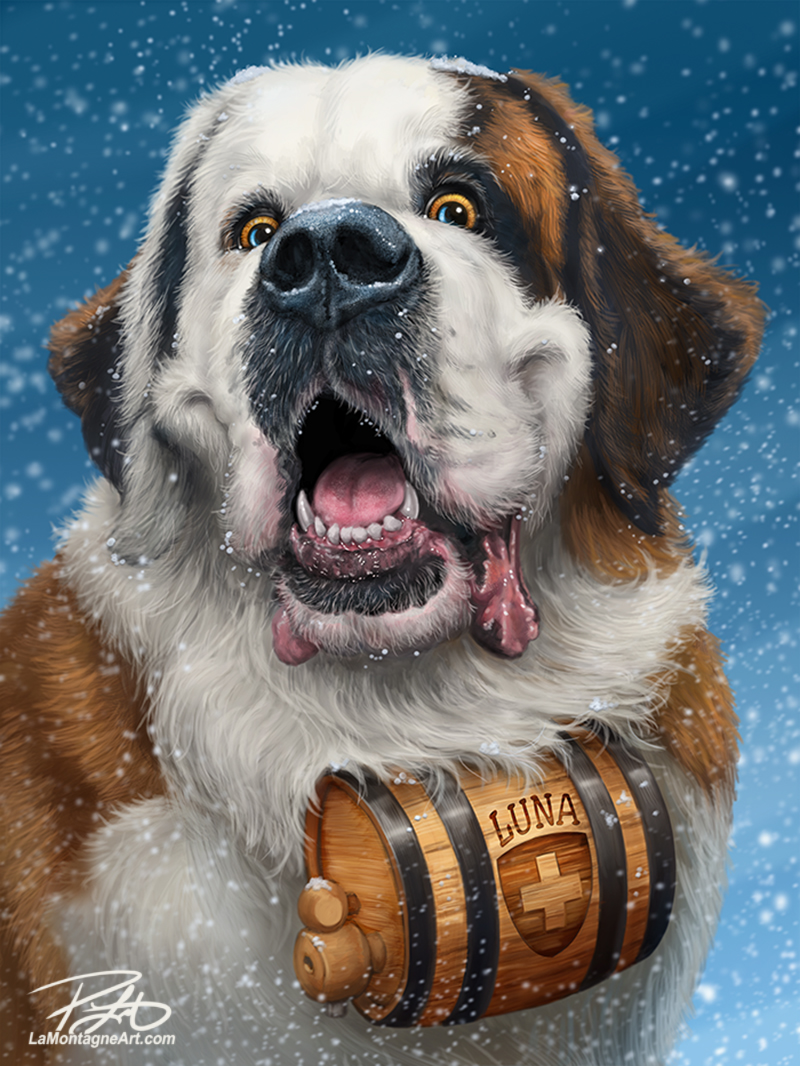
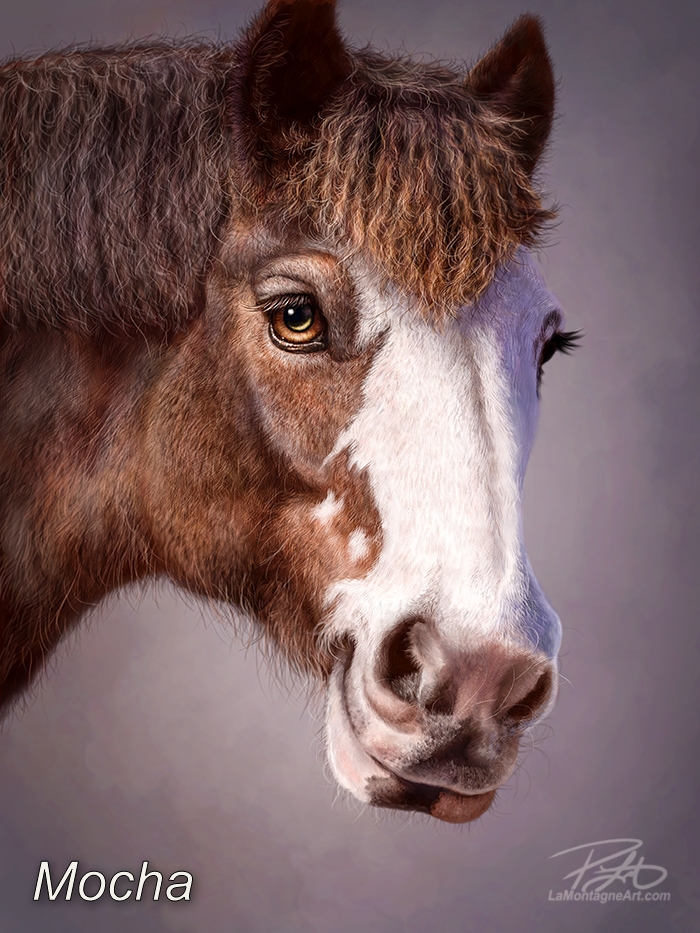 The difficulty with commission work is that, aside from advertising the work to future clients, there is no market for the finished paintings. Most people don’t want a portrait of somebody else’s dog; they want one of their own. And when I’m working on a custom painting, that’s time away from everything else. So, a commissioned painting is an investment for both the client and the artist.
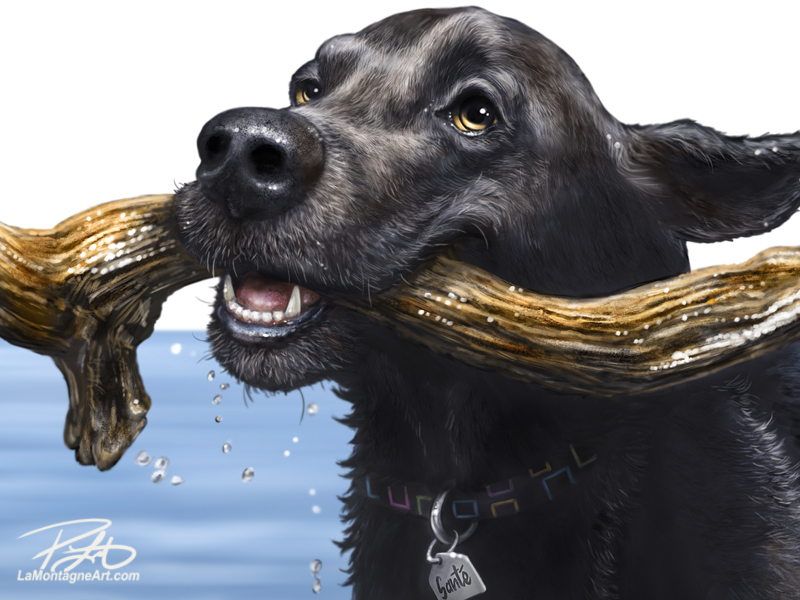
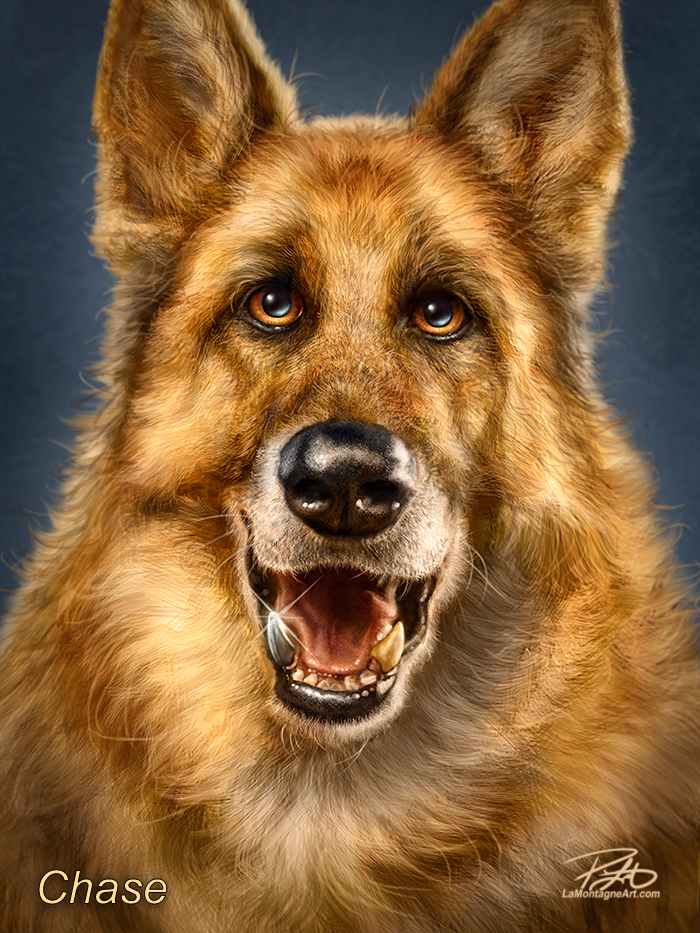 Each client and commission is different, and specific details often make a painting more fun. Chase was a retired police dog in California with a titanium tooth. It was important to the client that the tooth was evident in the piece.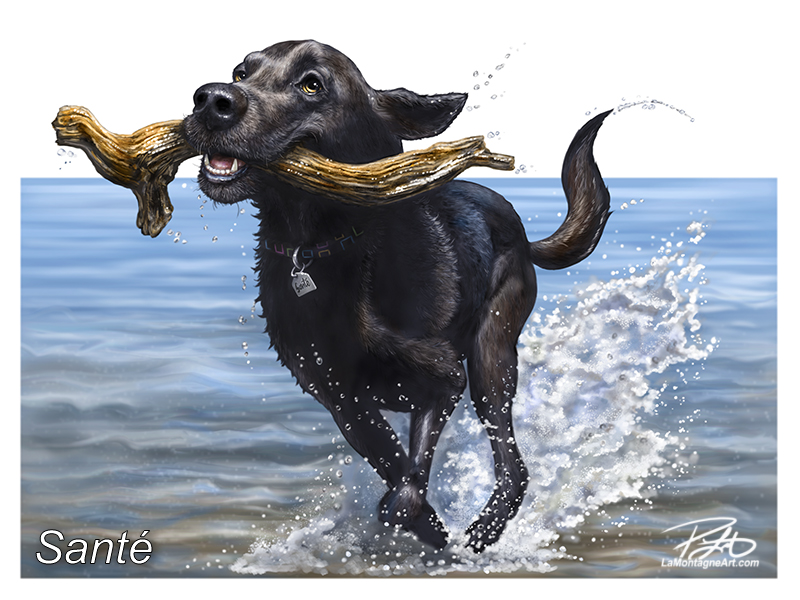
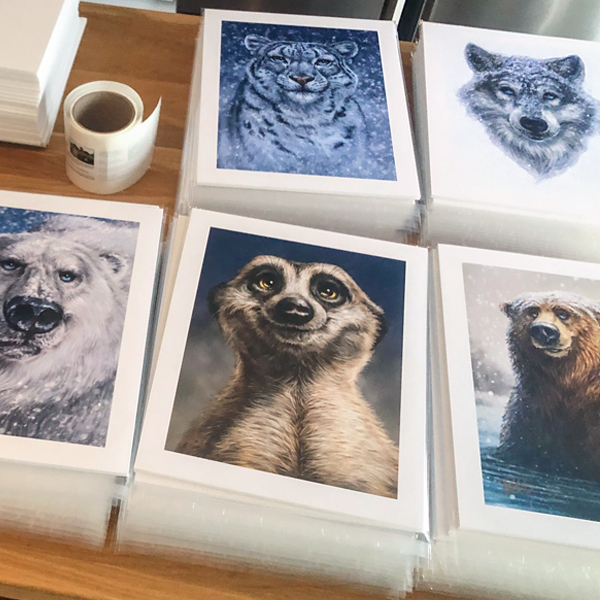
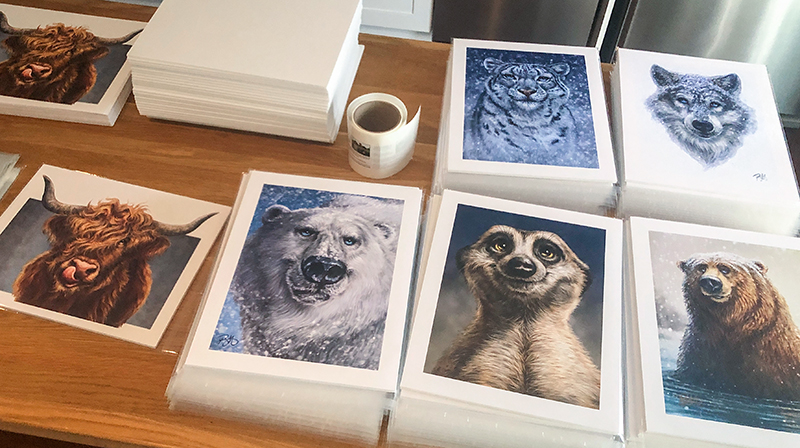
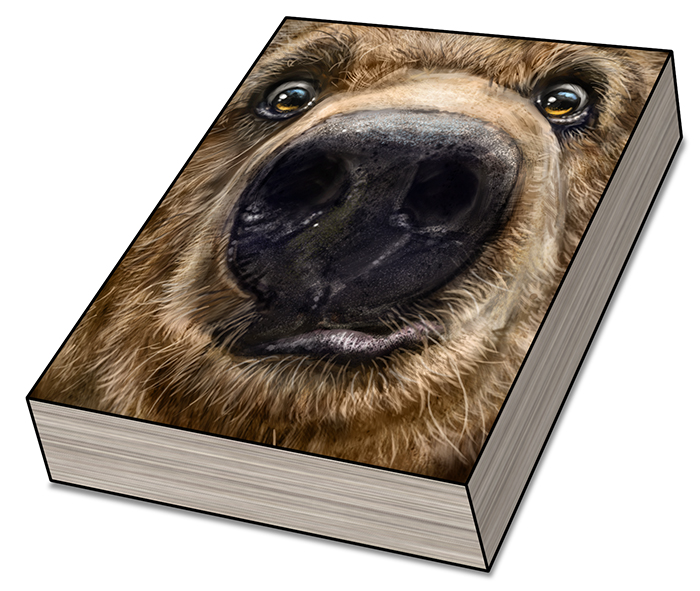
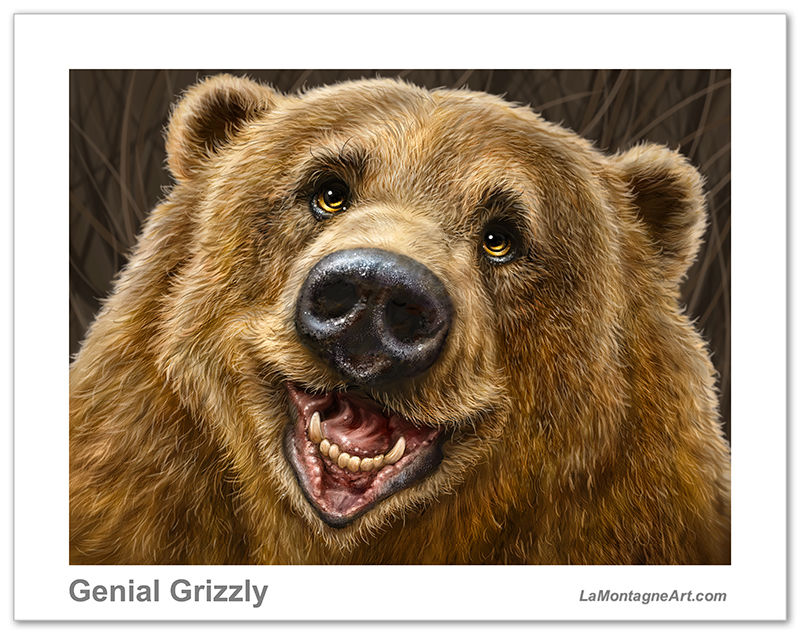
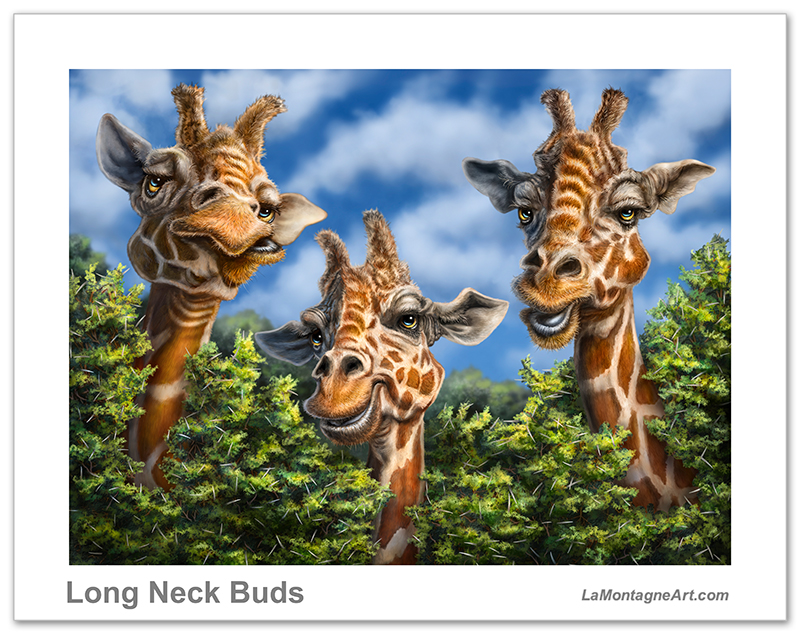
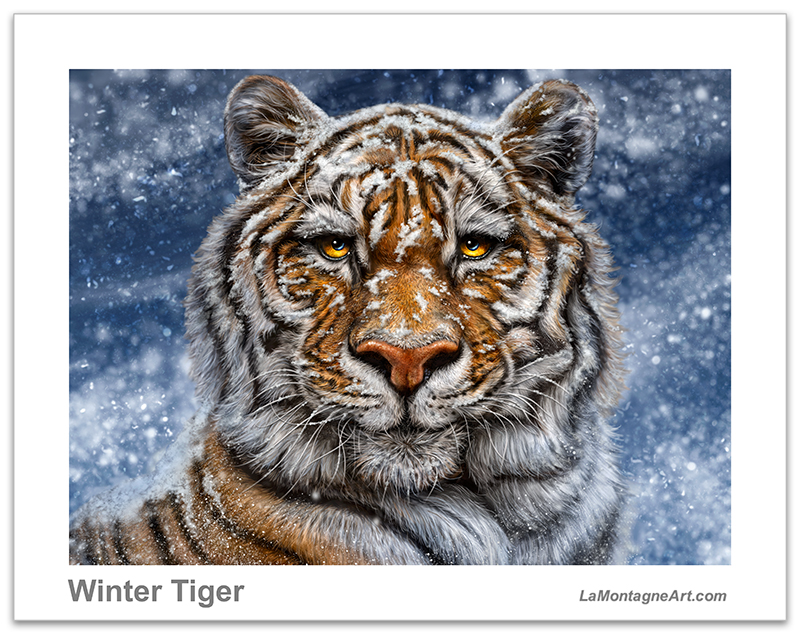
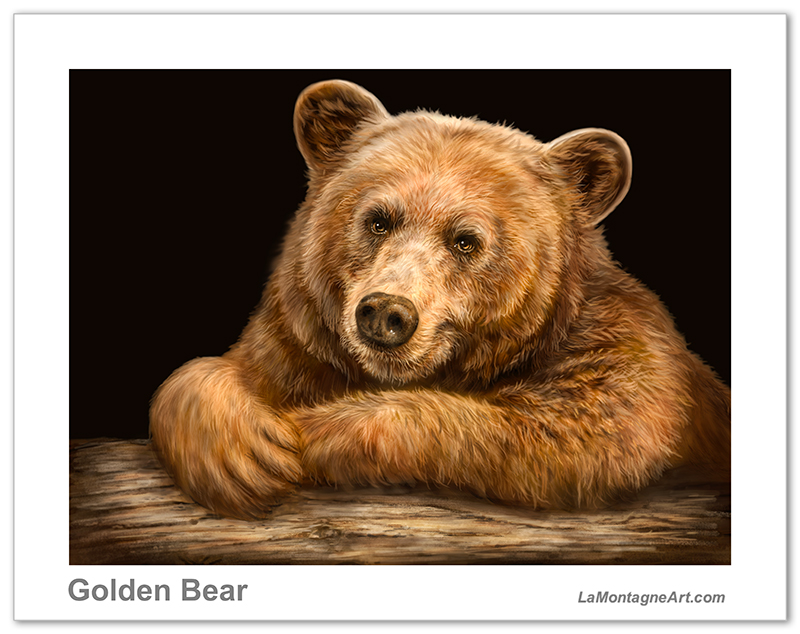
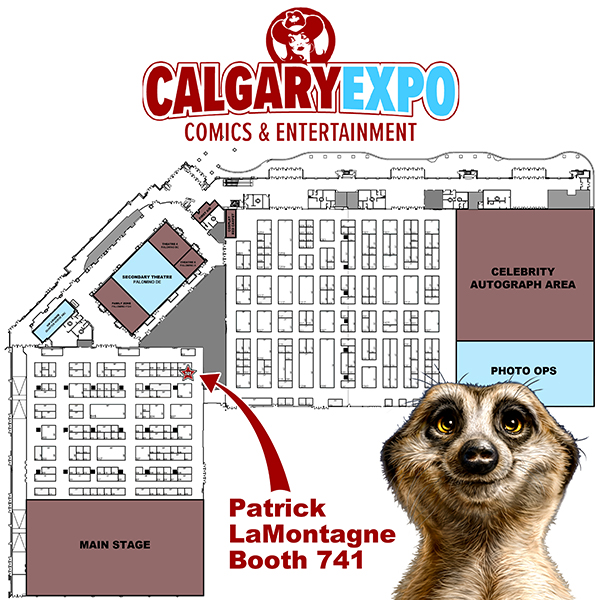
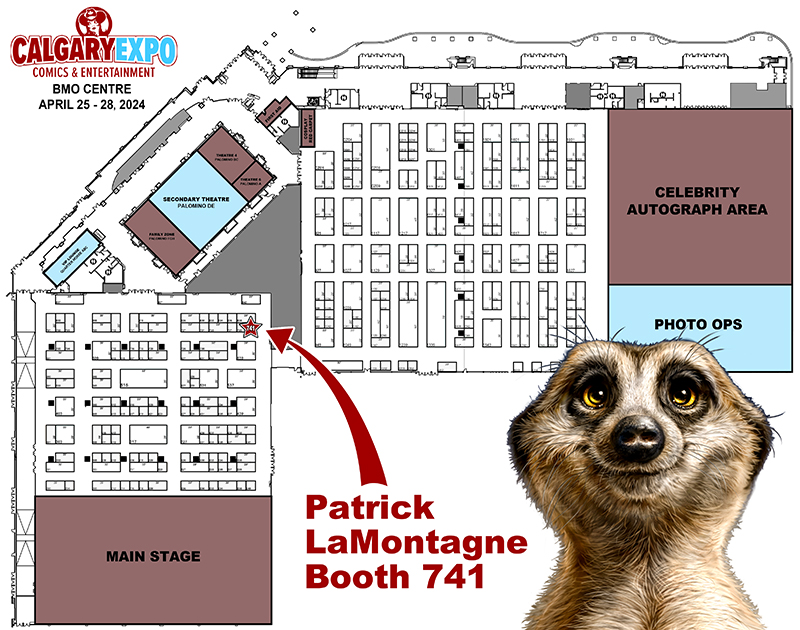 In 2022, my booth location was up in the air until the day of the show, and it was stressful. At first, I didn’t get the type of booth I booked and I needed to address that. Following that, when I got there, one list said I was in one spot and another in a different spot. I couldn’t even unload my car. While I empathized with the organizers’ difficulty trying to please everybody, I still paid a premium for my corner booth, and I had to become the squeaky wheel with emails during the week leading up to the show. I am sure I annoyed the organizers when I became frustrated and could no longer be patient and keep quiet.
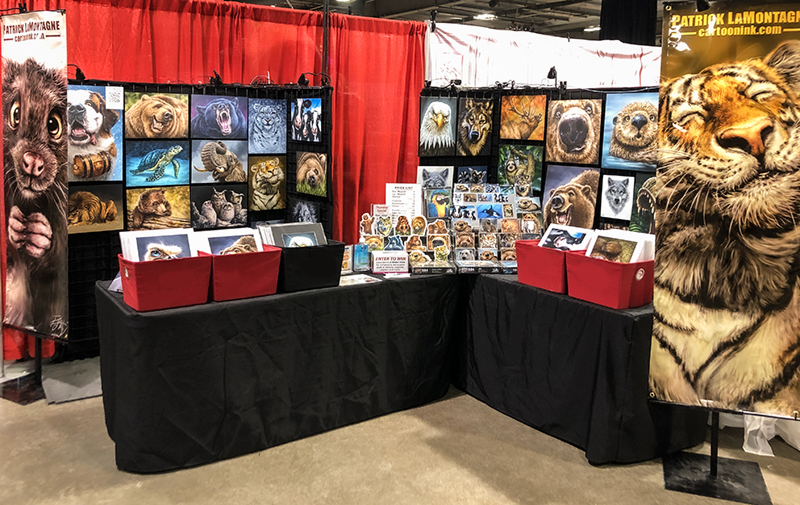
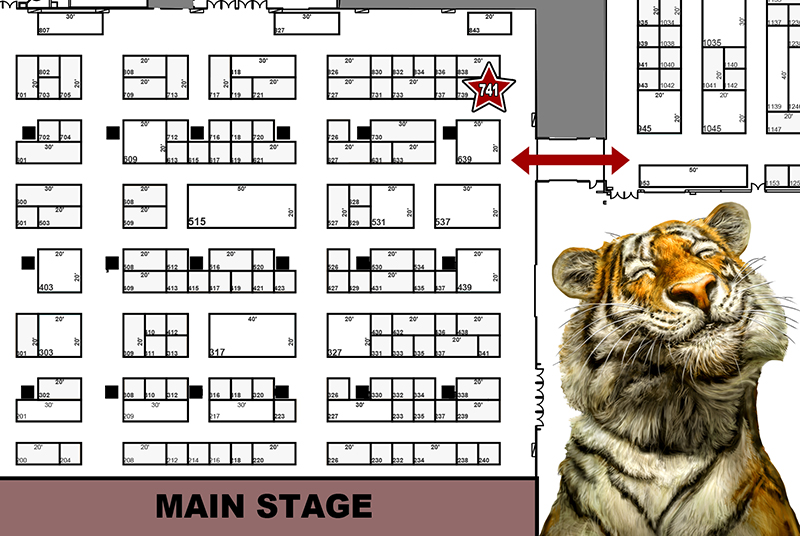 Two more aisles of booths are in that hall this year, so it looks like a bigger show. Between the Main Hall and the Main Stage Hall is a corridor through which all traffic comes and goes. My corner booth is at the end of an aisle, within easy view of everyone coming through that corridor. Below was my booth design last year and it worked so well that I will use the same one this year, only reversed, and with a bunch of new artwork, of course.
 The organizers are likely pulling their hair out two weeks out, trying to get everything done. No doubt, when they announce booth placements, they receive emails from people who didn’t get what they wanted or those politicking for a last-minute change.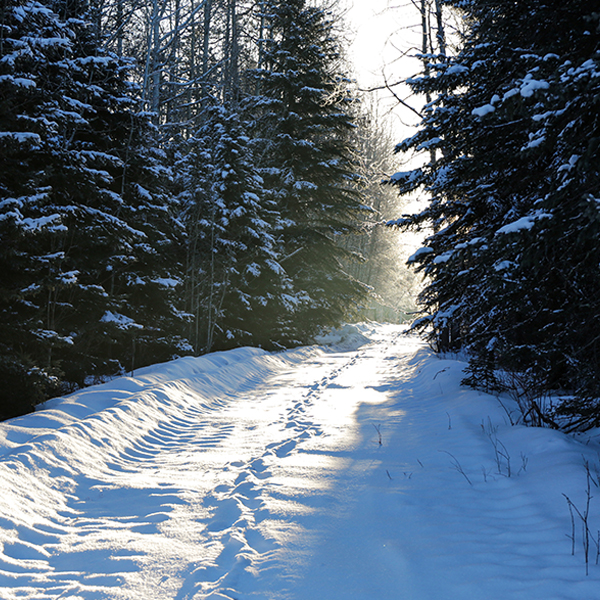
 Most years, I’d rather let my birthday go unnoticed, and thankfully, I married someone who feels the same way about hers. If someone mentioned having a birthday ‘party’ for me, my first thought would be, “What the hell did I ever do to you?”
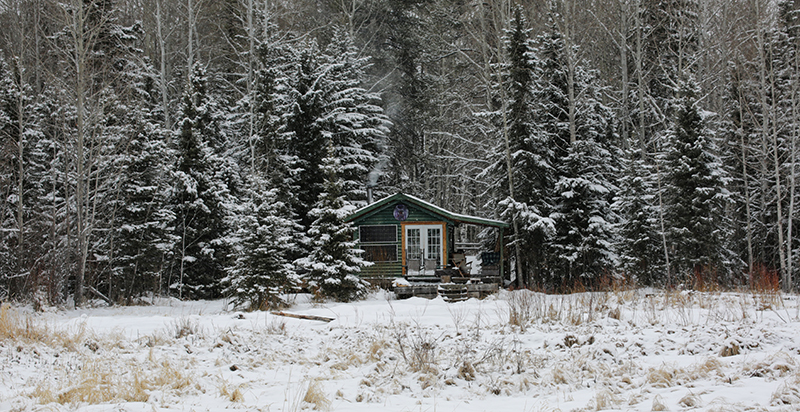 But on the northern border of that same property, nestled beside secluded wetlands, there is another cabin. It’s one room, one bed, solar power for lights, an outhouse, no water and no noise. It’s at the end of a road, behind a gate on private property.
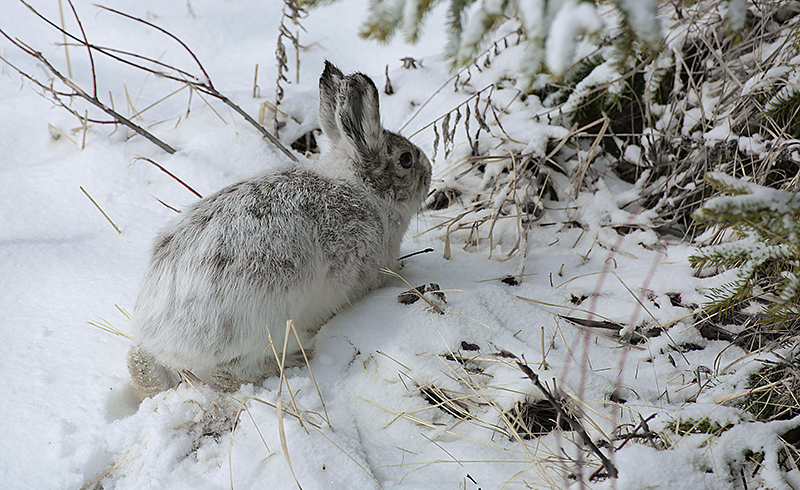 While shovelling snow, I scared a snowshoe hare out from under the deck, and I took that as a good sign. I wanted to see wildlife, even though this critter did not want to see me.
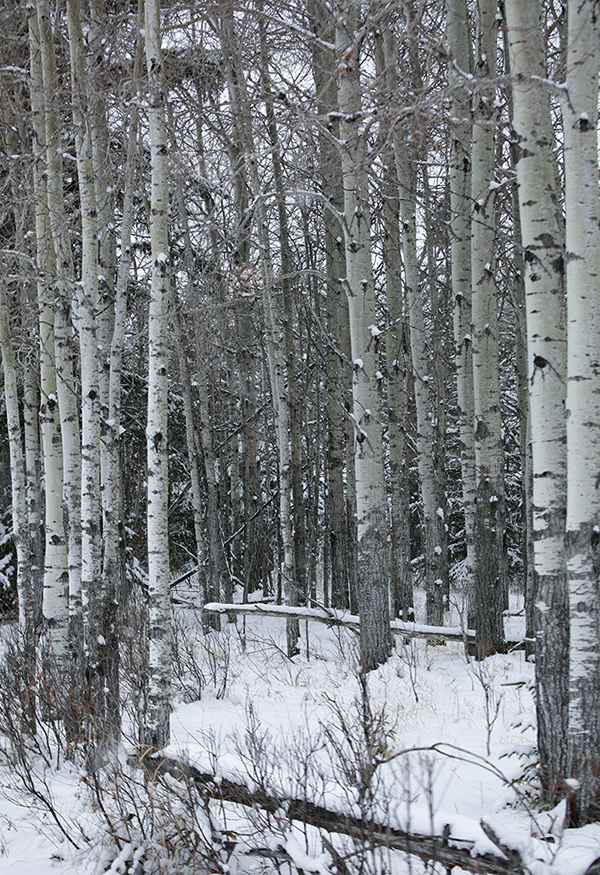 The property owners have become friends over the years, and I like to visit them. While on my daily wanders, I walked up to their place a couple of times, a 5-6 km round trip from where I was staying, as I had no interest in taking the shortest route.
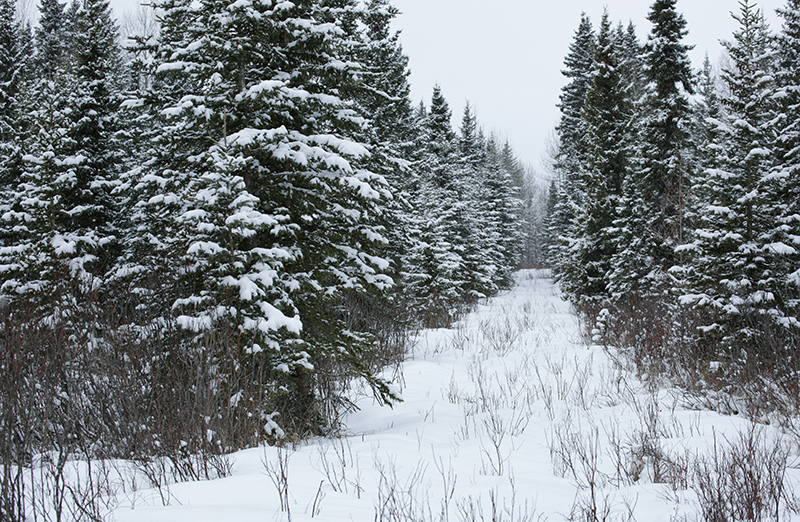
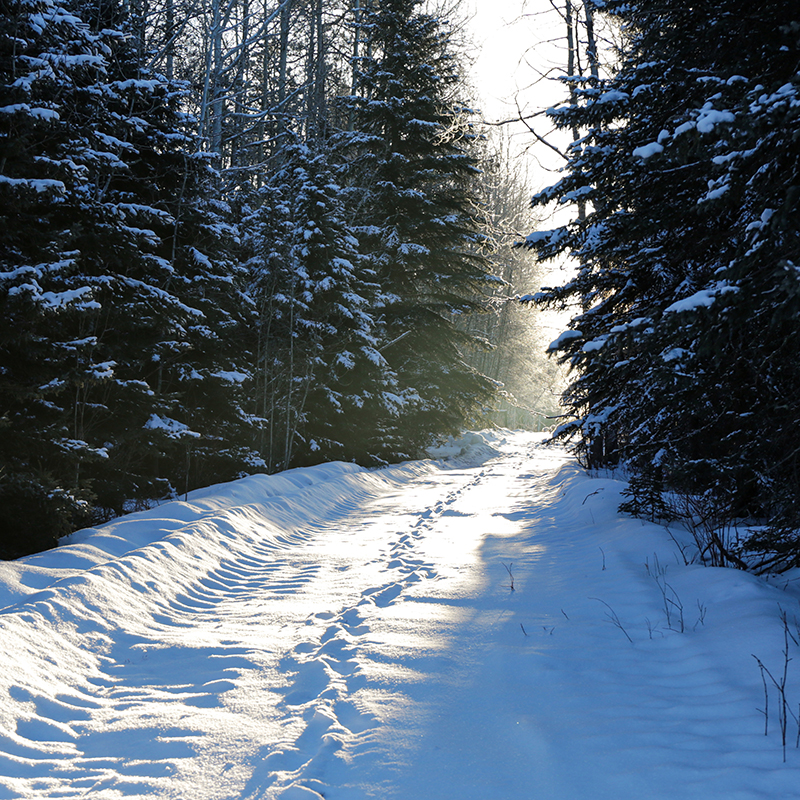
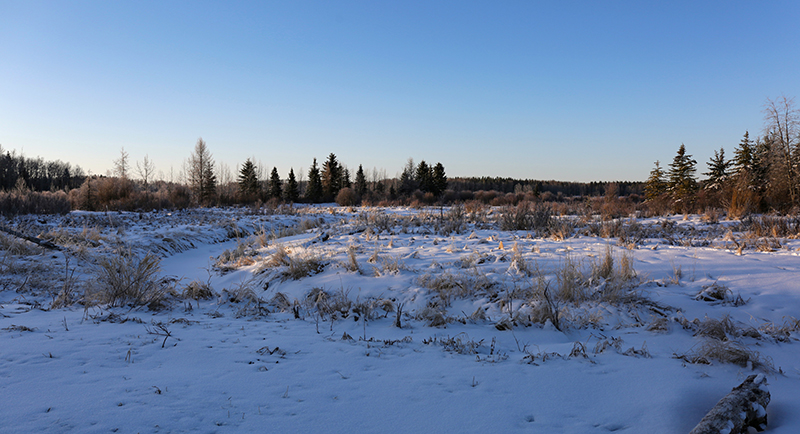 Free to roam more than 300 acres of pasture, wetlands, and forest, I walked close to 20km over 72 hours in snow and sunshine. It was peaceful and very pretty.
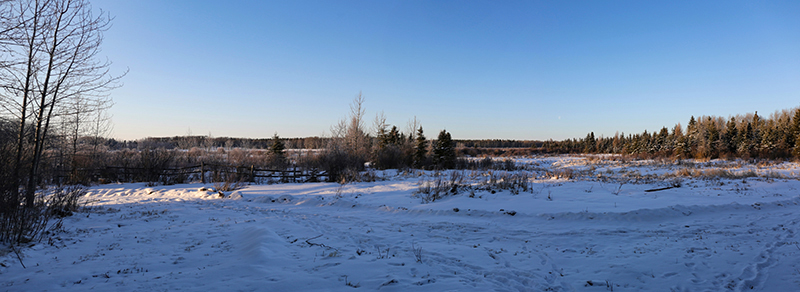 In the new fallen snow, fresh moose, coyote, deer and rabbit tracks were all over the place, many of them just hours old. I heard the coyotes at night and in the morning, and that was nice. It’s one of my favourite sounds. I listened to an owl calling two nights in a row. But all I saw were little birds flying here and there, a few ravens, a couple of geese, and that scared little bunny when I first arrived.
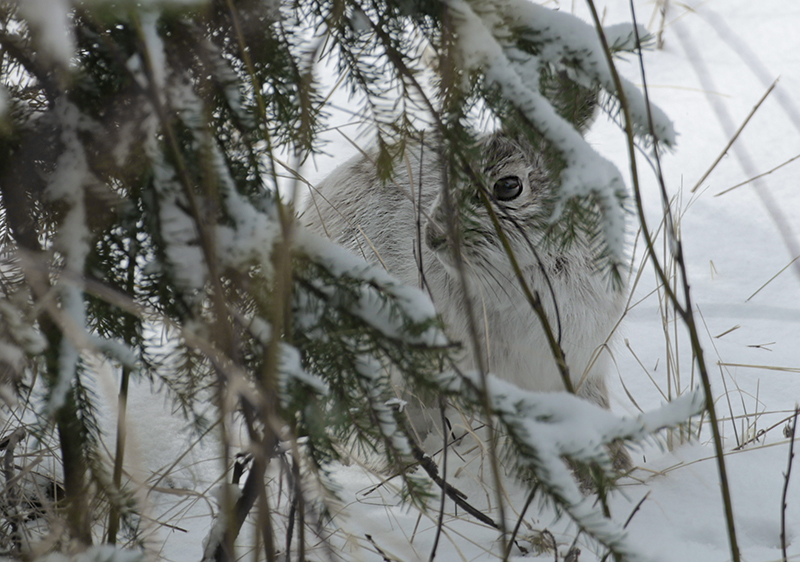 I know professional photographers who spend great amounts of time, energy and money to get to remote places, park themselves in a blind, right next to a game trail for hours and days on end, and often come home with little or nothing to show for it.
 I spent my birthday by myself, without anyone telling me how I should be celebrating it. I got up early, as I prefer, without walking on eggshells for fear of waking anybody up, which is often the case on cabin visits with friends. I played guitar and sang, fumbled with chord changes, learning songs I didn’t know, without intruding on anyone else’s peace and quiet.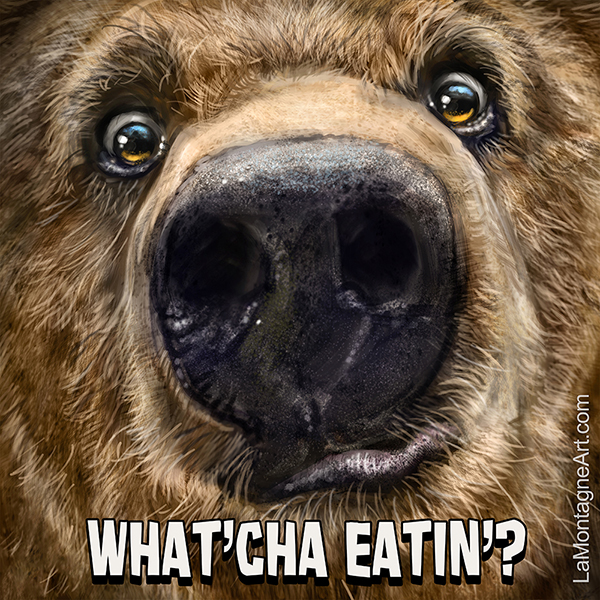
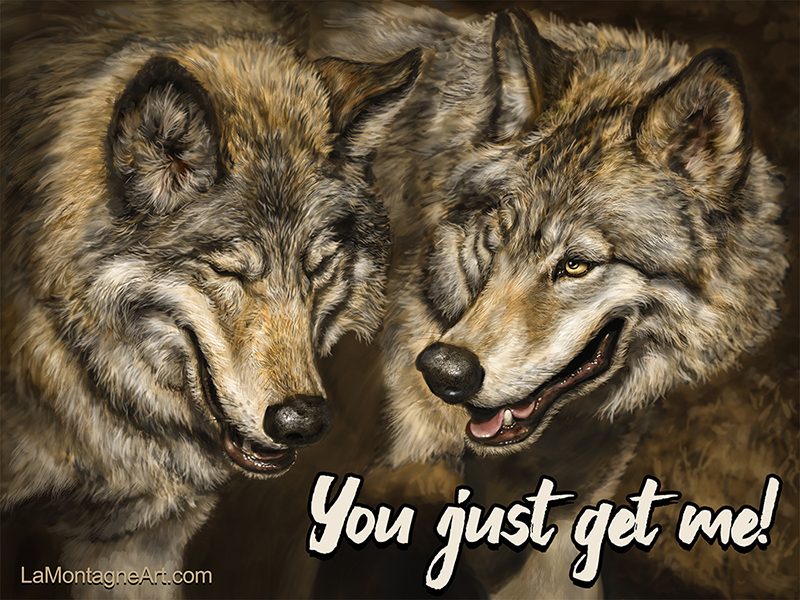 If you’re like me, bombarded daily with negative news and polarized opinions, this noisy world can become overwhelming. It bothers me, and I often wonder, “Why are people so mean to each other?”
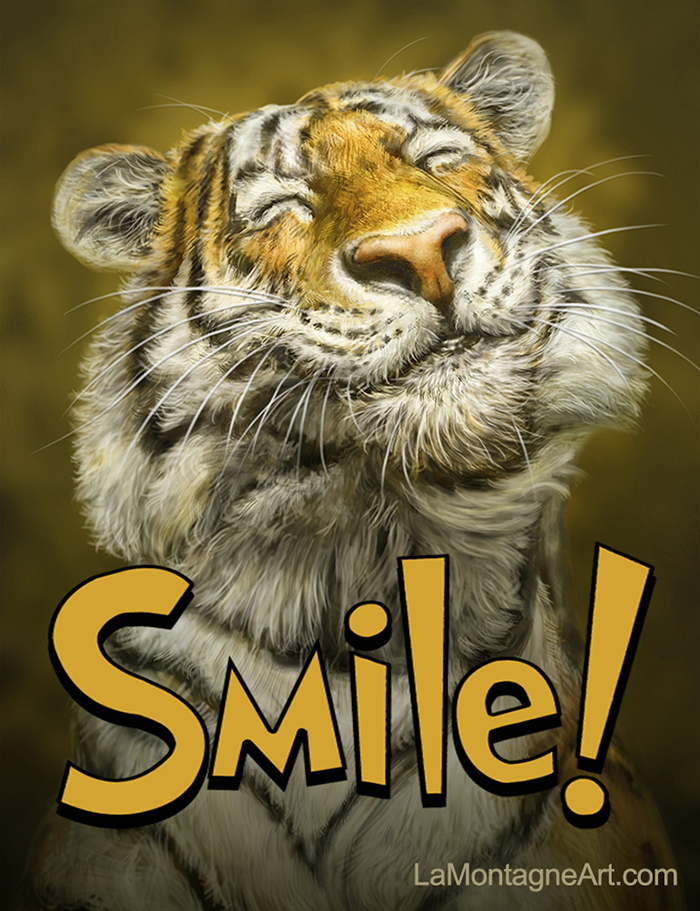 It’s a moment of connection between my funny-looking animals and people I’ve never met. I love watching it happen, and it is a reminder that something I created made somebody else’s day a little better, if only for a moment. In a world that often seems nasty, with people intent on highlighting our worst qualities, I create art that makes people smile. I often forget that, but when I do remember, I’m grateful for this ability.
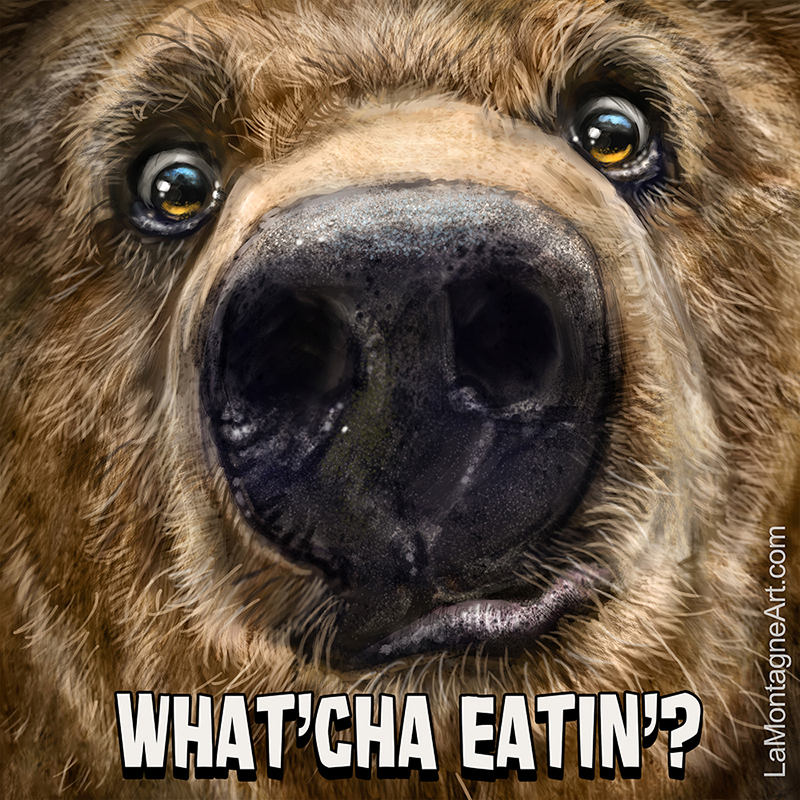 If you know me well, all this might sound hypocritical. I struggle with seeing the good in the world, which often puts me in a dark mood. But just like a smoker knows the habit is unhealthy, it’s worth the effort to try to cut back and eventually quit.
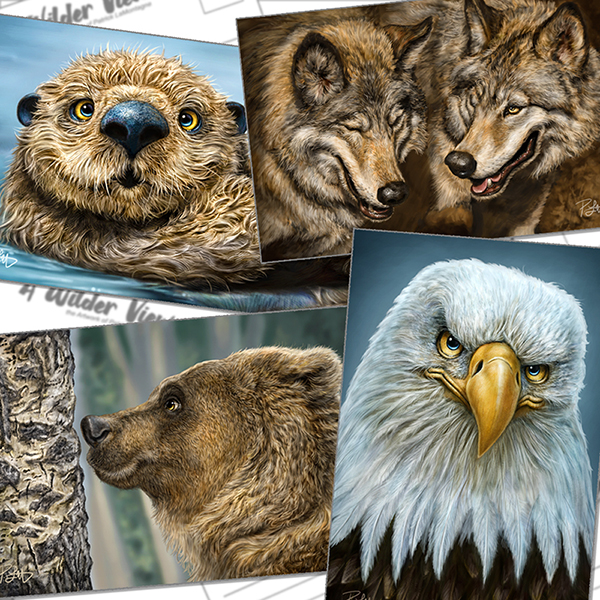
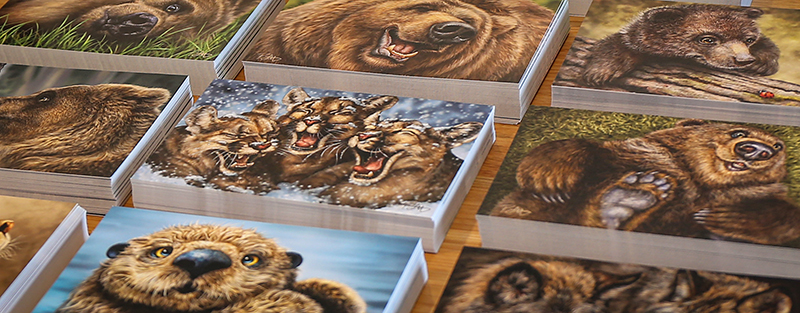
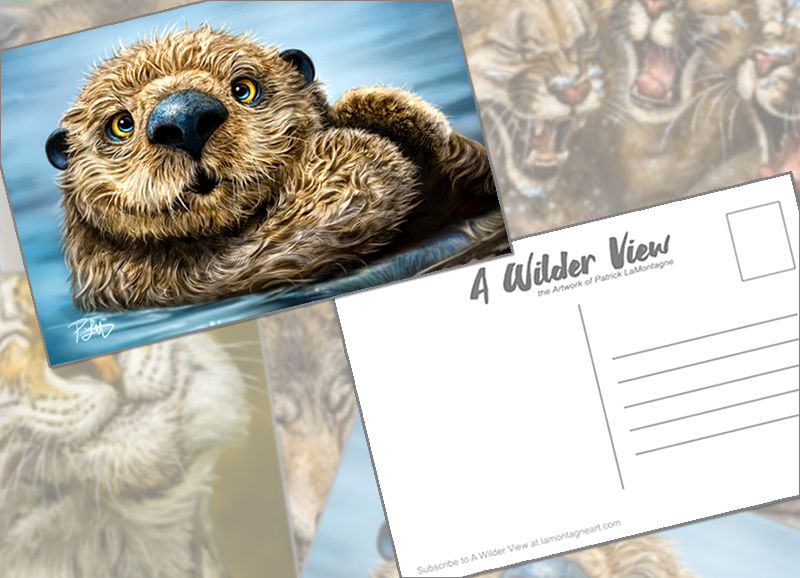
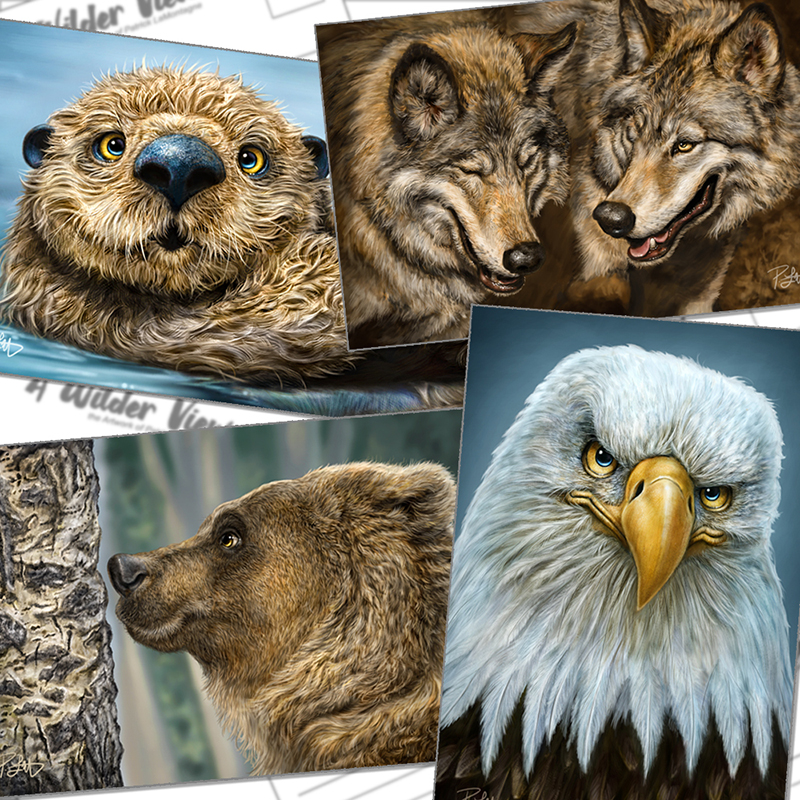
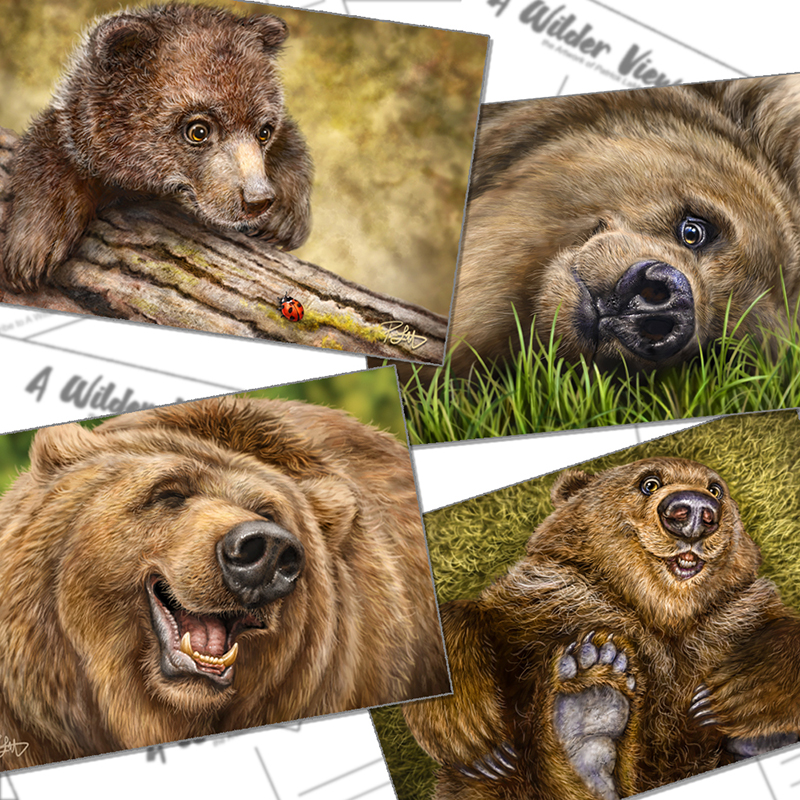
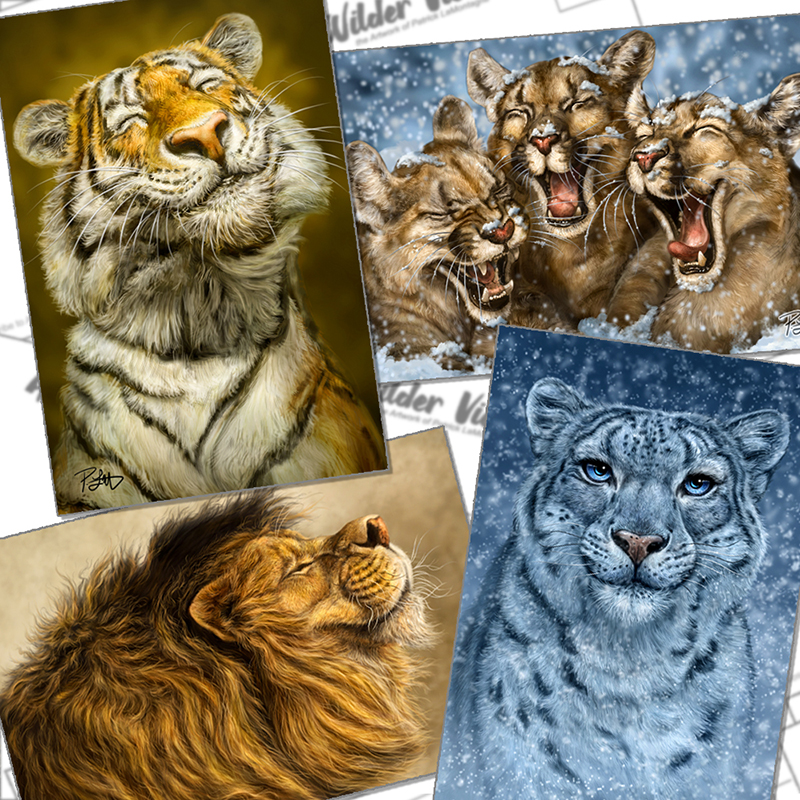
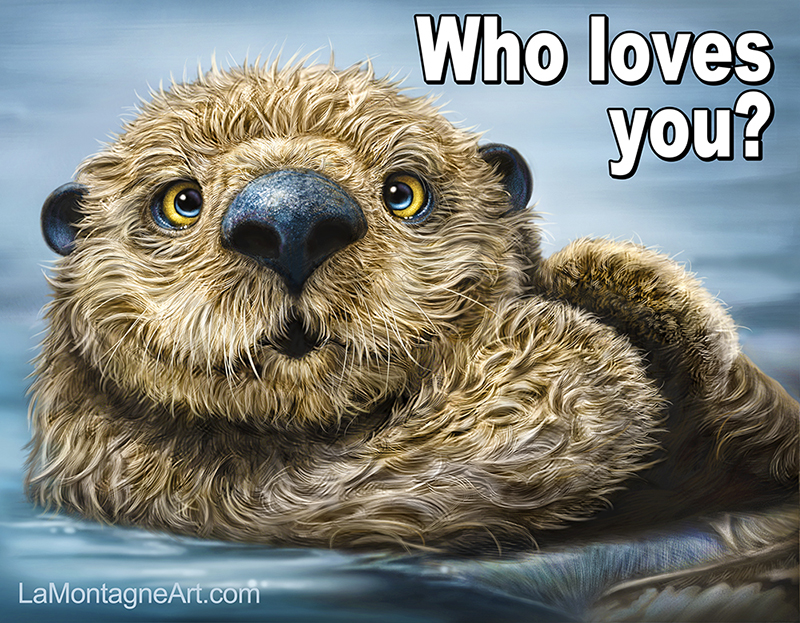 So, to spread some positive feelings around, I created these Wilder Wishes images you see here, from some of
 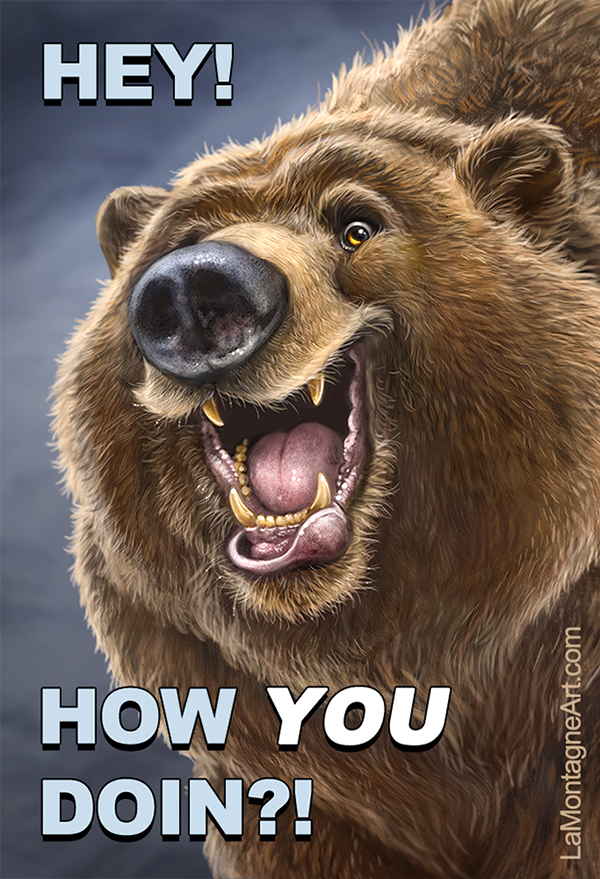 If one of these happy faces makes the day a little brighter, for you or somebody else, then that makes mine better, too. Sometimes, you’ve got to give a smile to get one back.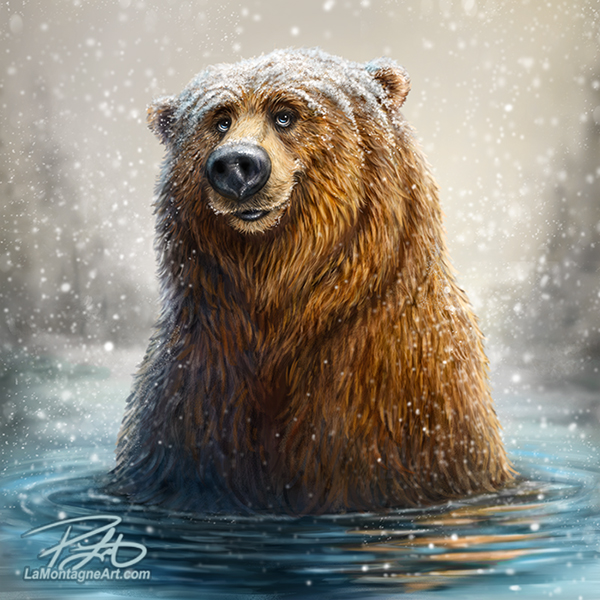
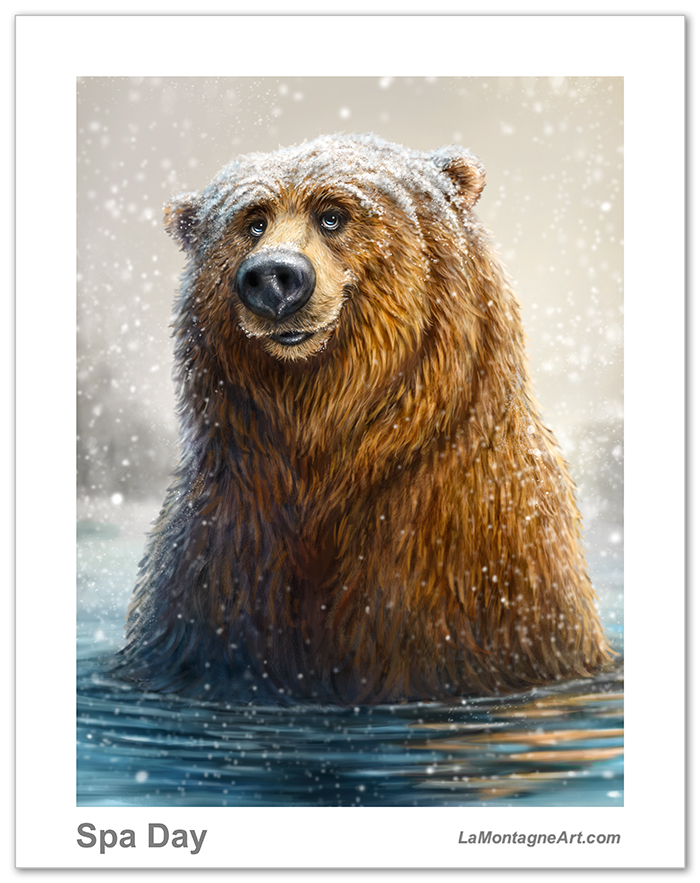
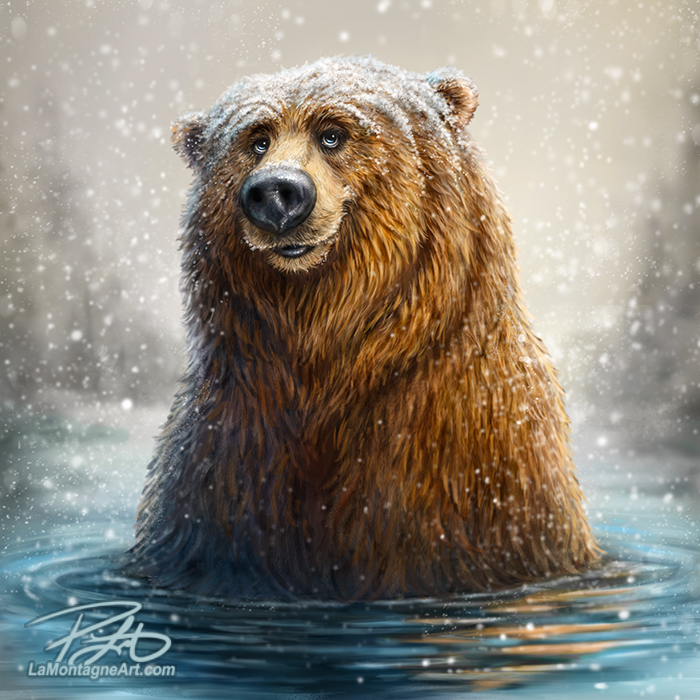 This painting has been rattling around in my noggin for some time. I think I first had the idea at the Calgary Zoo when I saw Skoki, the grizzly bear, sitting in one of his ponds, playing with something floating on the water.
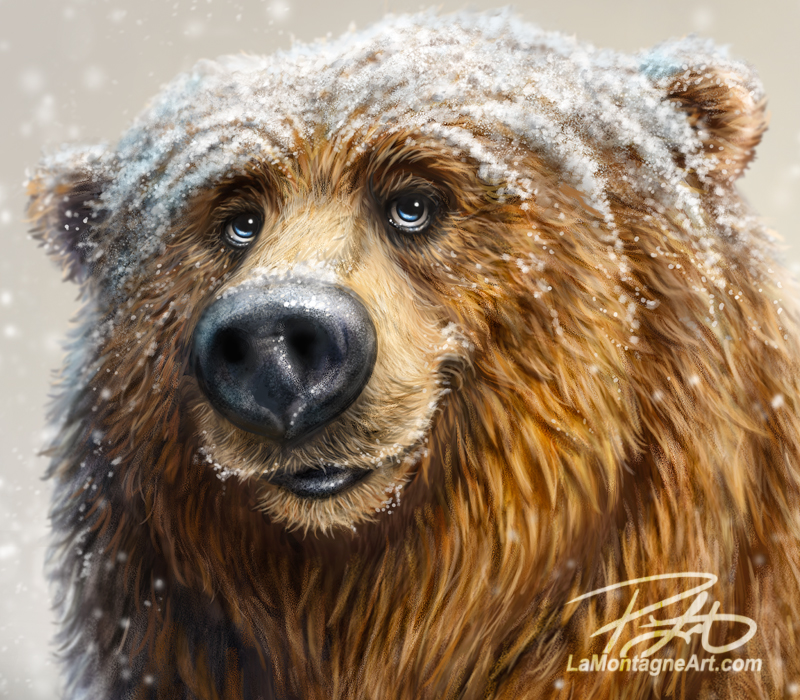 Eventually, it comes together, the personality shows up, and it turns into an enjoyable pursuit rather than a frustrating one. What was at first a slog, seeming like hours of no progress, ended up to be work I didn’t want to stop.
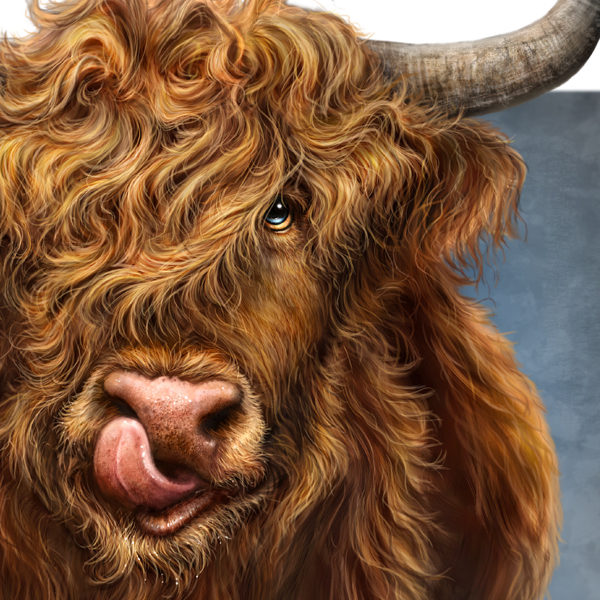
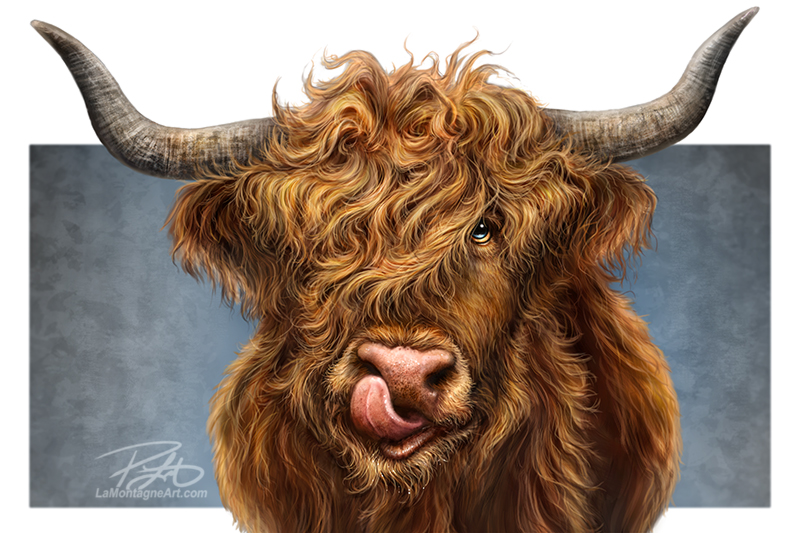 At the Banff Christmas Market late last year, I received several requests for a Highland Cow painting.
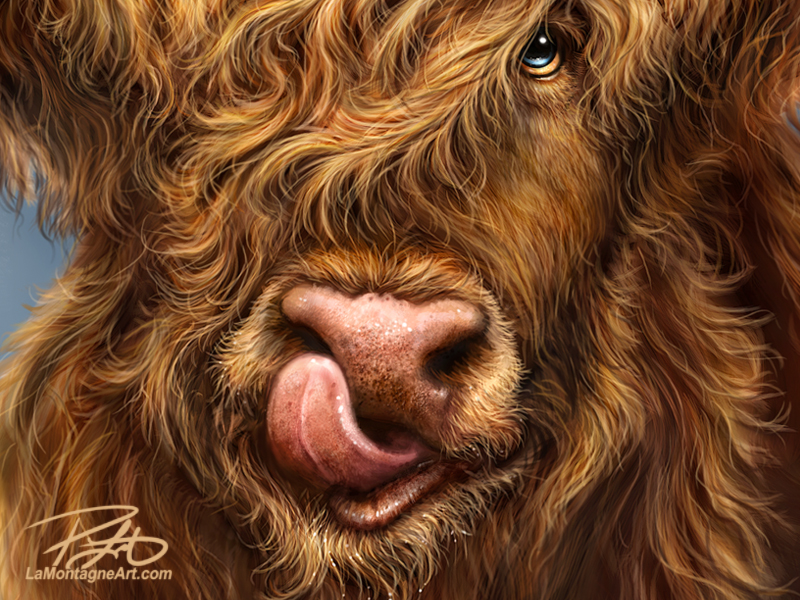 And still, every painting comes with challenges and choices.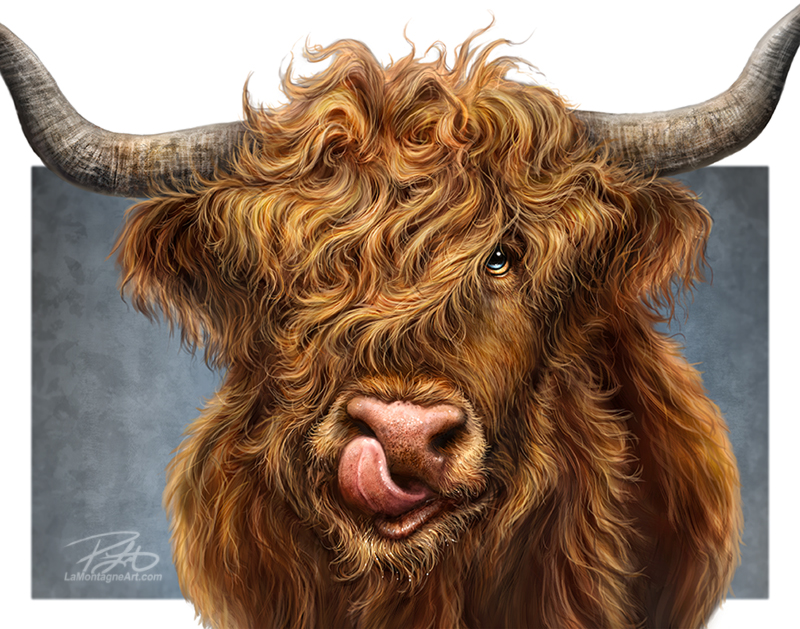
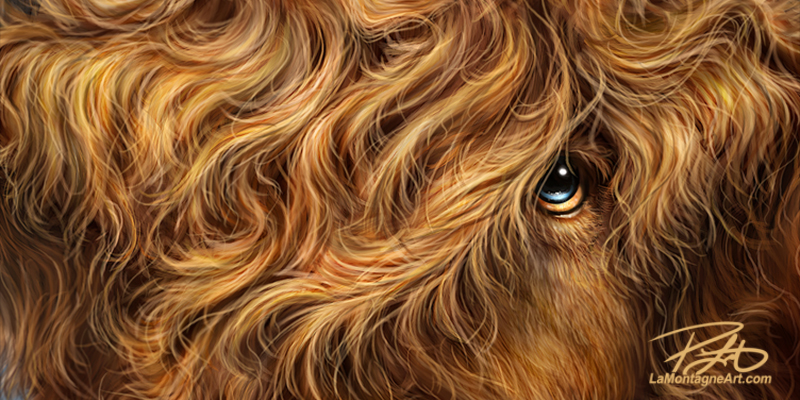 I could have worked on this painting for another week, and nobody would know the difference but me. Eventually you just have to call it done, let it go, and start on another one.