 Another Banff Christmas Market is in the books.
It was a very good year. Even with a couple of slow days where I wondered if it was going to be disappointing, the busy days more than made up for it. After thirteen long days over four weeks, my sales came in just a hair under last year’s excellent total, so I’m pleased the effort paid off.
I had an annoying sore throat after the first weekend, and I’m still not sure if it was a mild cold or simply all the talking I’m not used to in my day-to-day. Either way, I made it through without picking up one of the nastier viruses making the rounds.
The weather was mostly decent, although the final weekend was all over the map. We had a short cold snap earlier in the week and I had to plug in my block heater a couple of nights. Then Saturday night, with a Chinook wind in full force, it was +7C as I drove home to Canmore. By Sunday everything was a wet, sloppy mess, and the roads in town were still treacherous.
I talked to more people than I could possibly count over the past month. Long-time supporters who have followed my work for years stopped by to say hi or add to their collections. People I’ve never met were delighted to tell me they own one of my pieces from a vacation somewhere, and they were surprised to meet the artist who created it. I even met folks who’ve bought my art through Diamond Art Club, one of my licensing clients.
I also met locals who know my editorial cartoons and have seen my animal art, but had no idea the same person makes both. That’s not uncommon. People often recognize one or the other.
Mostly though, I met people who had never seen my work before and told me how unique it felt compared to everything else they were seeing. They asked great questions, and we ended up talking about what it’s like to be an artist right now, including how AI is affecting the art world. That part was prompted by the little signs I added to my booth this year and the video display showing my process.
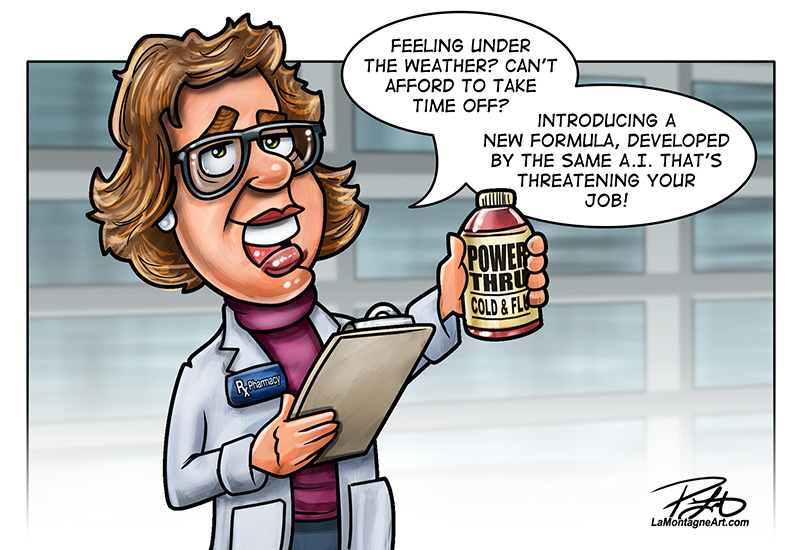
And on that note, Merriam-Webster’s word of the year is slop: digital content of low quality that is produced (usually in quantity) by means of artificial intelligence.
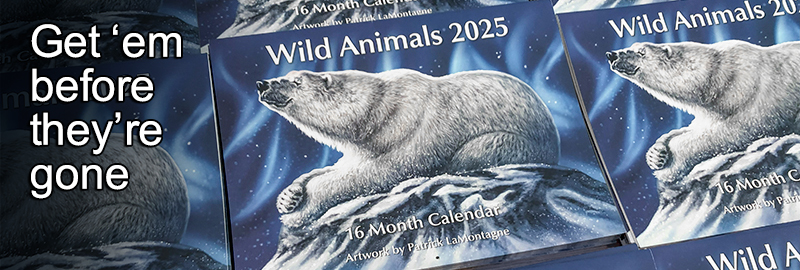
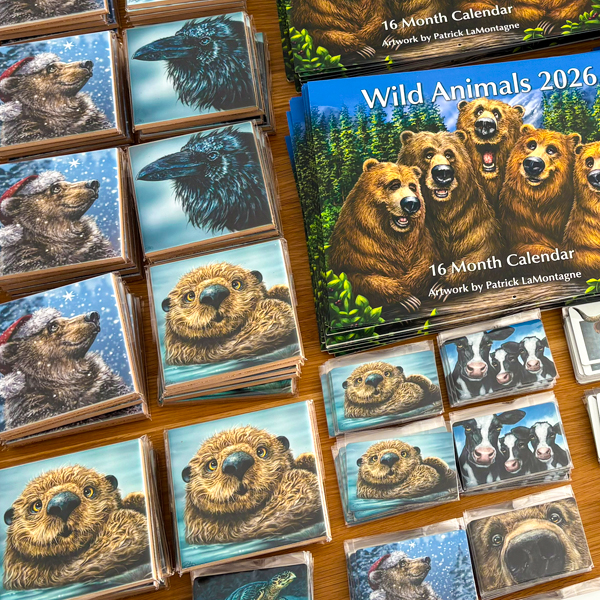
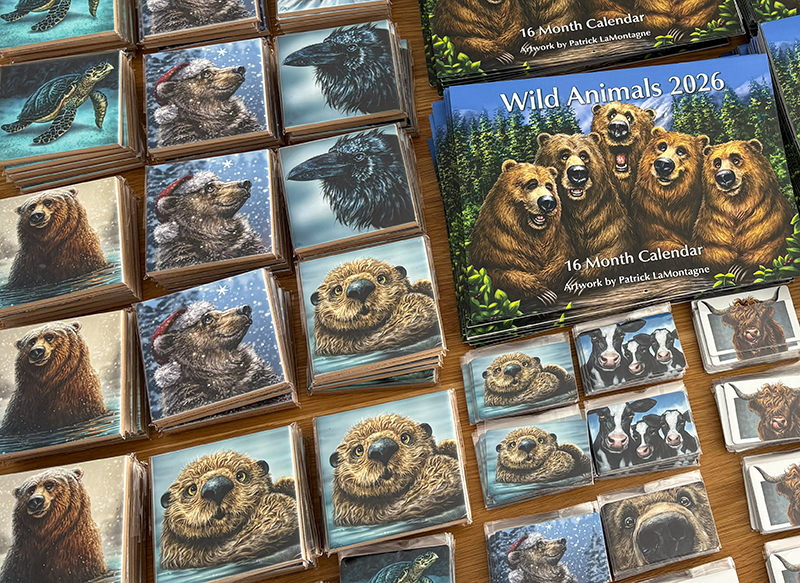
As expected, my 2026 calendars sold out, as did several best-selling prints (thankfully not until the last weekend). In hindsight, I ordered well this year, and there’s nothing I would have changed. It’s a good feeling to know I didn’t leave much on the table.
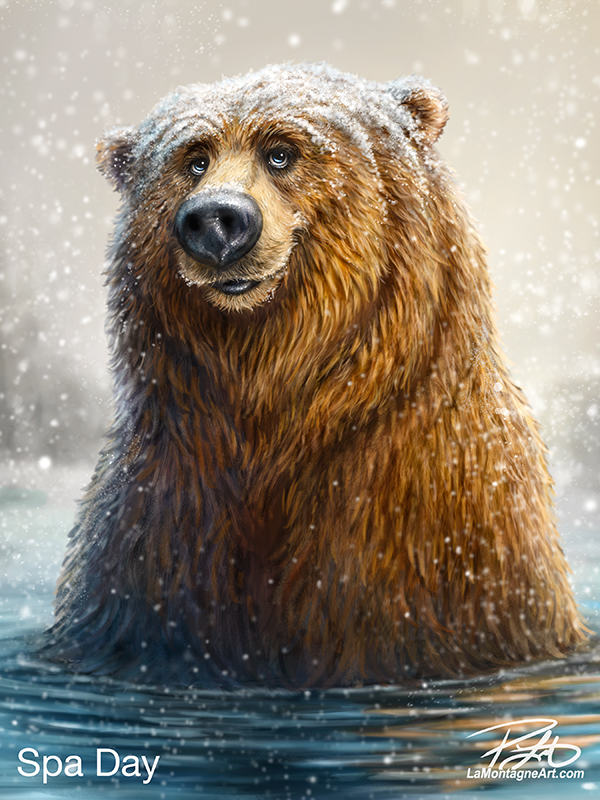
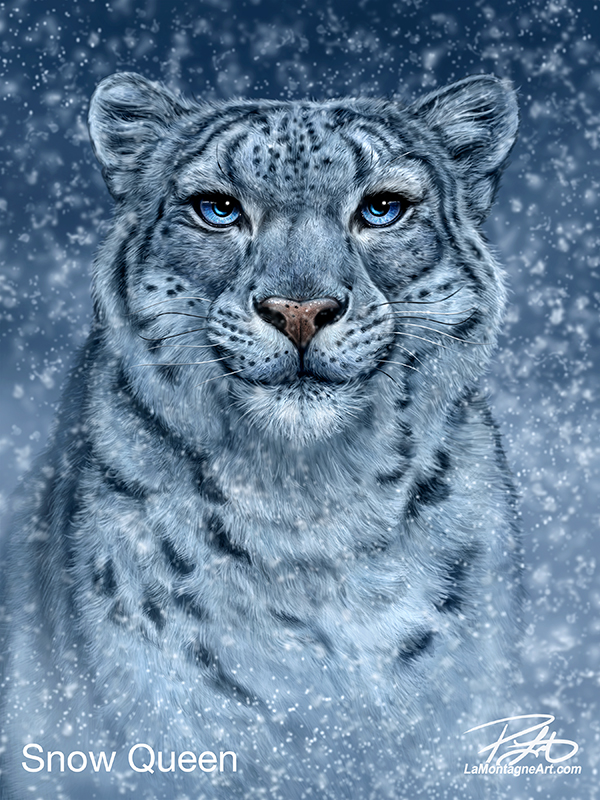
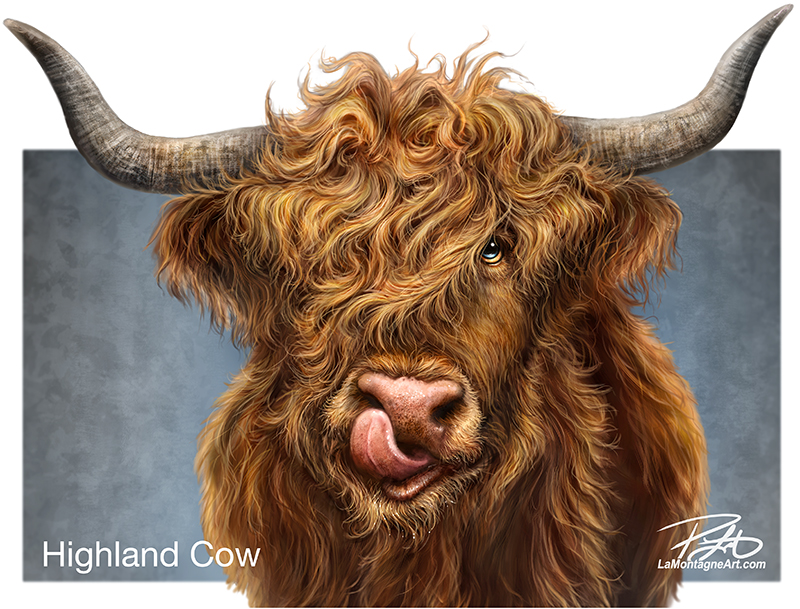 Highland Cow, Snow Queen, Otter, Sire, Kodiak Cub, Raven on White, and Winter Wolf were all popular again this year. Spa Day, one of my personal favourites, seemed to find its audience this year and was more popular than it has ever been. It ended up as my second best-seller after Highland Cow.
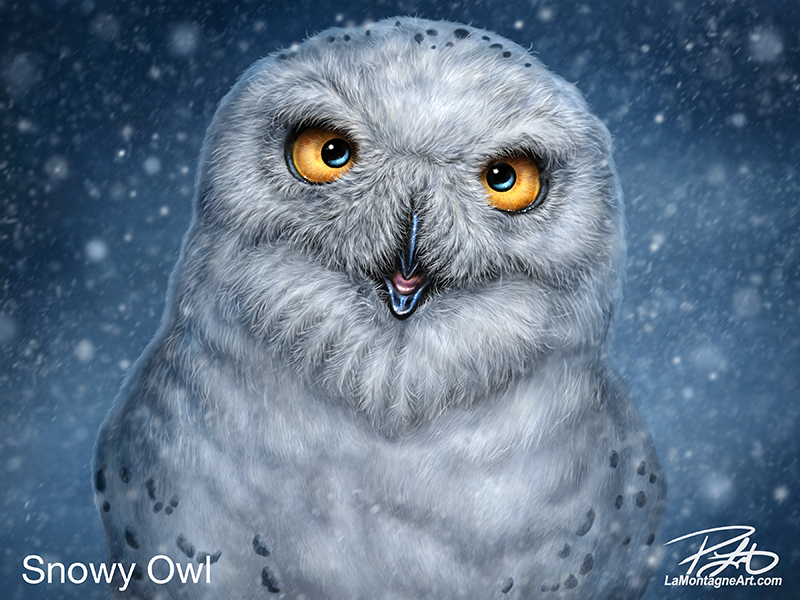
 After the first weekend, I was disappointed that my latest Snowy Owl painting didn’t seem to resonate, but it was a slow burn. By the end of the market it was in the Top 10 out of the 40 paintings I had on offer, so I’ll gladly take that win.
 The week after the Banff Christmas Market is still a busy one, but most of it is thankfully spent at home.
One thing about the market is the seasonal atmosphere. With the wood-burning fire pits outside, it feels like a proper Christmas village. People gather around with hot chocolate (or something stronger), eat from the food trucks, and soak it all in. A very convincing Santa makes the rounds and poses for photos, and all that’s missing is a few reindeer wandering around.
The consequence, though, is wood smoke. It gets into everything, and with the doors constantly opening and closing, I come home each day smelling like I’ve been camping. So every week I’m washing layers and winter coats, and after tear-down, my tablecloths, drapery, and booth covers all smell strongly of smoke. Six loads of laundry on Monday.
I enjoy the ambience of an airtight wood stove at the cabin I rent with friends, but outdoor fires don’t appeal to me anymore. I think it’s because I now associate the smell with forest fires. When this valley fills with smoke in the summer, it’s a reminder that evacuating is always a possibility.
Before I put all the booth hardware, displays, lights, and support kit away until April (Calgary Expo), I do a full inventory of what came home: stickers, magnets, coasters, prints, tote bags, metal and canvas prints. In a couple of months, when I start ordering for Expo, my future self will be grateful I did the work now.
Before the market, I had to remove a lot from my online store so I didn’t accidentally sell something online that had already sold at the market. This week I had to add it all back, though there’s a lot less than there was.
 I’m an introvert, like a lot of artists I know. I’m most comfortable working alone in a quiet place, so after all the noise and interaction, plus an incredibly busy schedule for the past couple of months (when I was already running on fumes), it takes a toll.
Newspapers put their holiday issues to bed early this time of year, so I had to draw nine cartoons this week to accommodate that. The upside is that next week I should be able to take some time for me.
That means painting what I want to paint. And with nowhere to be, I’m planning to indulge in a couple of guilt-free afternoon naps.
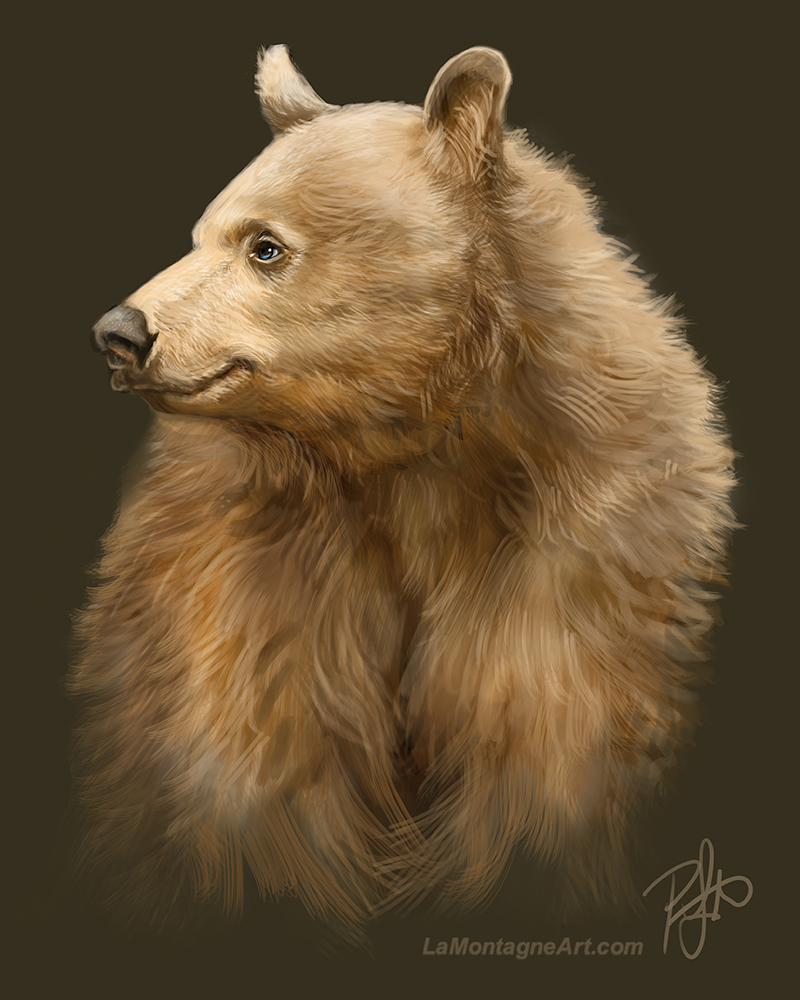
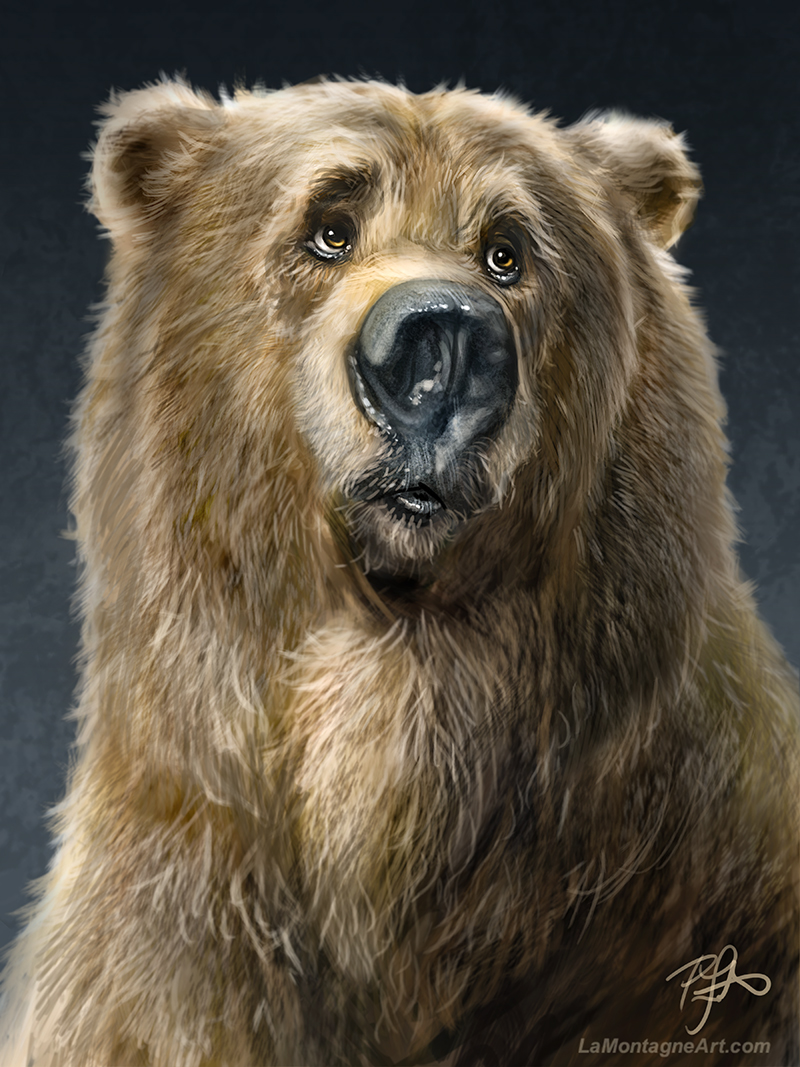
I have a half-finished raven painting I’ve been missing, and I’d like to get back to it. I’ve also been itching to do another painting in the same spirit as my popular Peanuts image. I’m not trying to replicate its success, I just miss spending a few hours on a close-up of a grizzly bear face, which is still my favourite kind of face to paint.
After all the human interaction lately, all I want for Christmas is some quiet time at home without deadlines.
So yesterday, I spent some time in the grizzly folder of my photo archive and found the reference I needed to paint the image in my head. Even though I have photos from many years ago up until this year, the main reference I chose came from a bunch of photos my friend Serena at Discovery Wildlife Park generously shared with me the last time I was there this fall.
I’ve got more to say on this topic, but my biggest failure this year has been balancing business and creativity. When art pays the bills, it’s hard not to ask myself for each new painting, “Will this be popular? Will it sell? Should I paint something else?”
But I also know that if money becomes the prime metric for deciding what to paint, it will rob the life and personality from my work. So that’s what I’m up against in the coming year: how do I create art that I’m proud of and enjoy, while still thinking like a business owner?
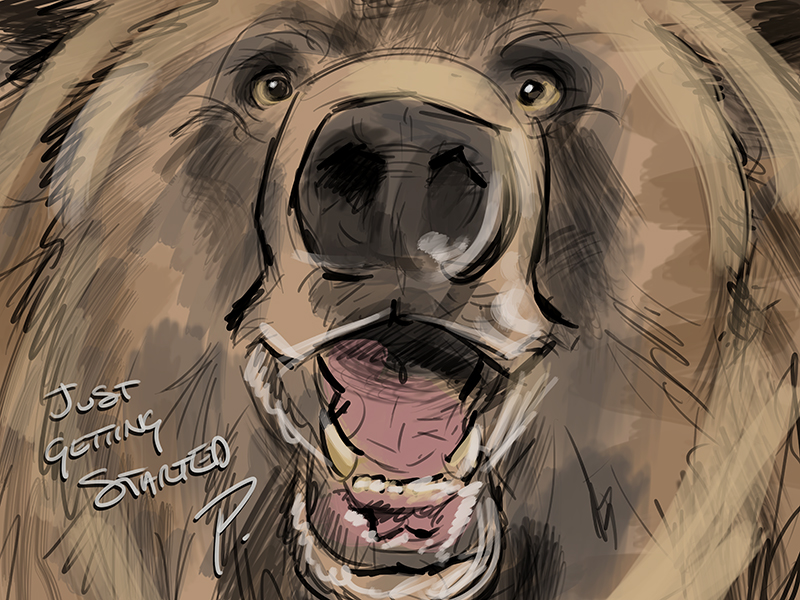 Ending the year painting a grizzly bear face will hopefully help me take some first steps toward better perspective. None of us gets out of this alive, and I’m desperate to use my time better.
Though I’m emotionally and physically tired and selfishly clinging to some alone time right now, I don’t want to sound ungrateful for the past couple of months of craziness. I truly enjoyed meeting so many of you at the Banff Christmas Market, especially those of you who come every year. You say such nice things about my artwork, and while compliments are always a little uncomfortable, they do help quiet the demons that tell every artist their work is never good enough.
So thank you to all of you who found me at the booth, took time for a chat, and took a little bit of my work home with you. I hope you put it somewhere it can make you smile, and that you notice it most on the days you really need it. And if you bought it to give to somebody else, thanks for helping my work travel a little further.
However you spend the next couple of weeks, whether with family, friends, or taking a little time for yourself, I hope you enjoy it.
Merry Christmas, and I’ll see you in the new year.
Cheers,
Patrick


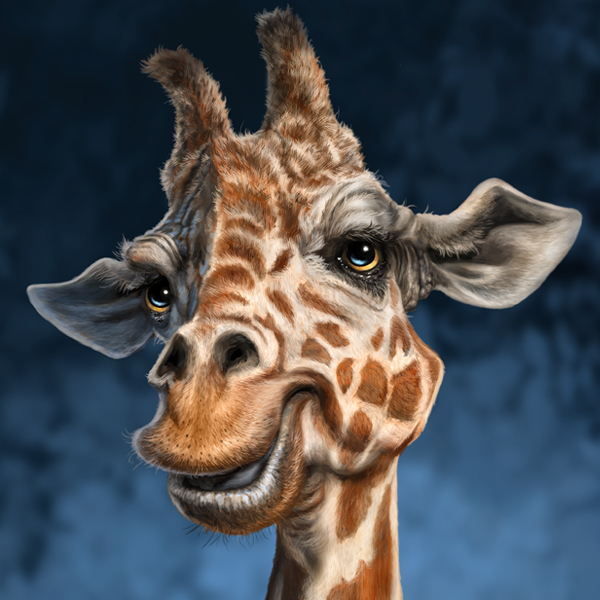
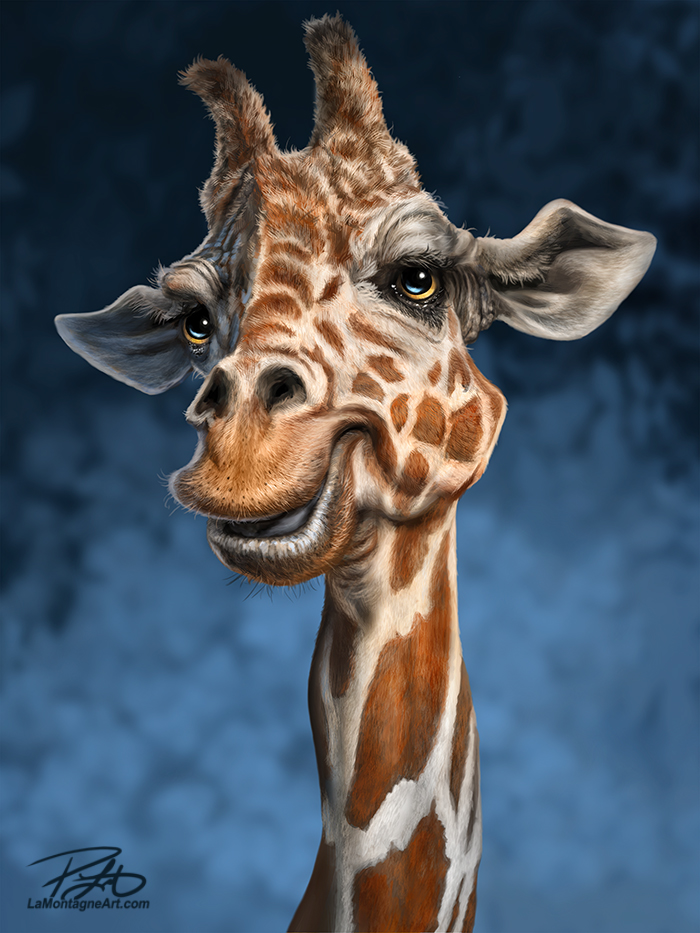
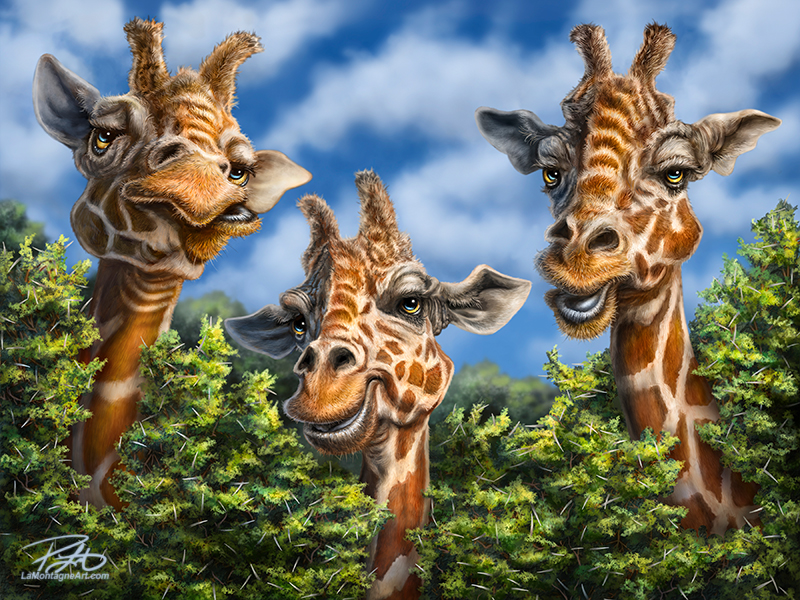 If you’d like to see more about how that came together, that original post is here.
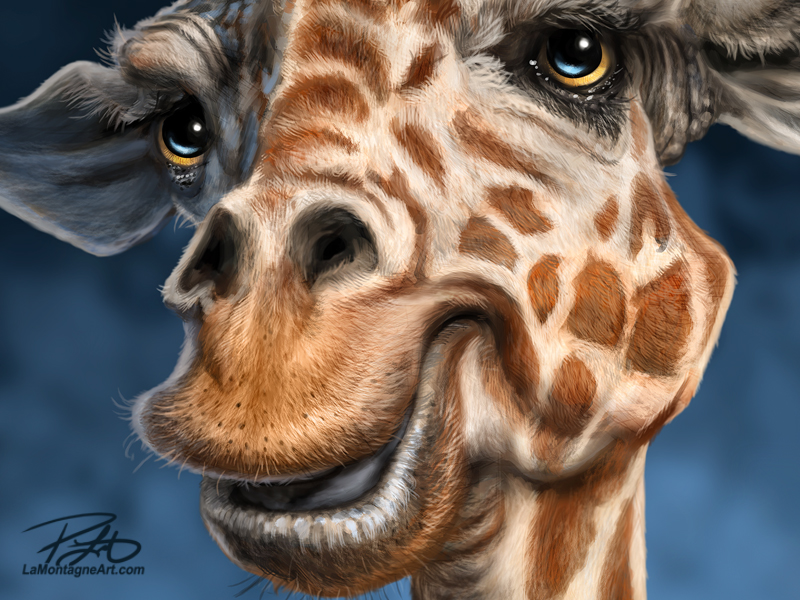 I chose the middle giraffe and spent a few hours Saturday morning refining it. More detail. A slight softening and tweak to the expression to bring out more personality.

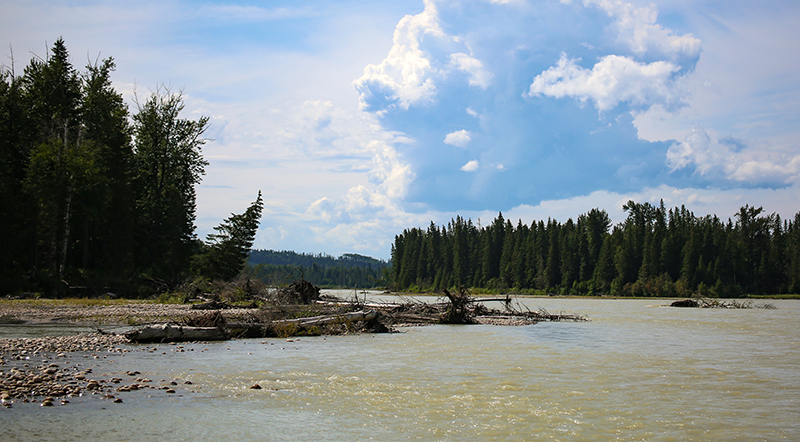 This past week, Shonna and I headed north to visit her Dad and family. It’s a seven-hour drive from here, and we haven’t been up there in quite some time. We planned these dates awhile ago, and thankfully both of our workloads were a little more manageable right now, with good weather for the trip.
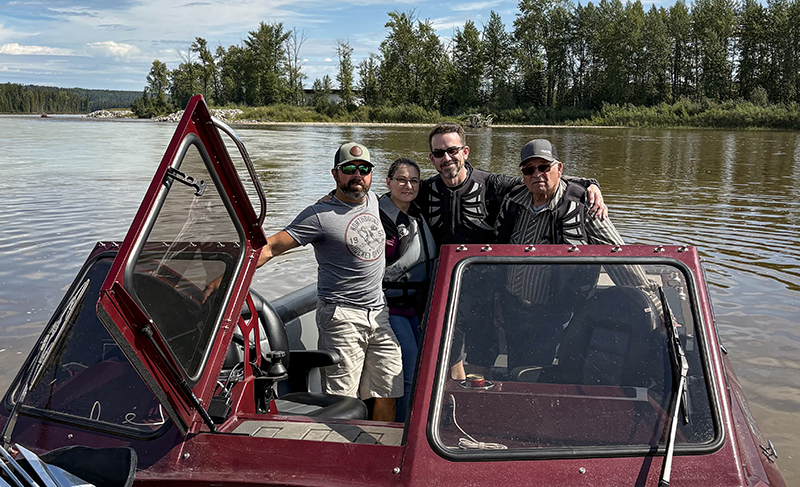 Every time I take the camera out, I learn something new, usually by making a mistake. This time, I left my new DJI Action Pro 5 in the car, not wanting to keep everyone waiting. That was foolish, since this kind of trip is exactly what the camera is designed for. I could have clamped it to the windshield, pressed record, and left it running. Instead, I relied on my phone for short video clips.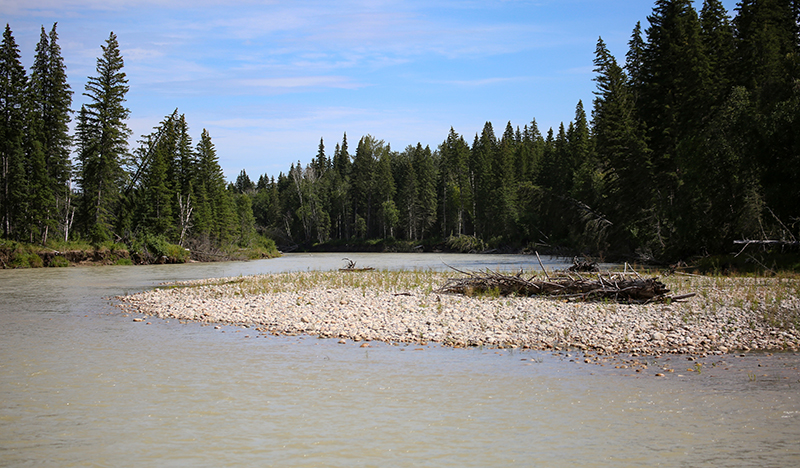
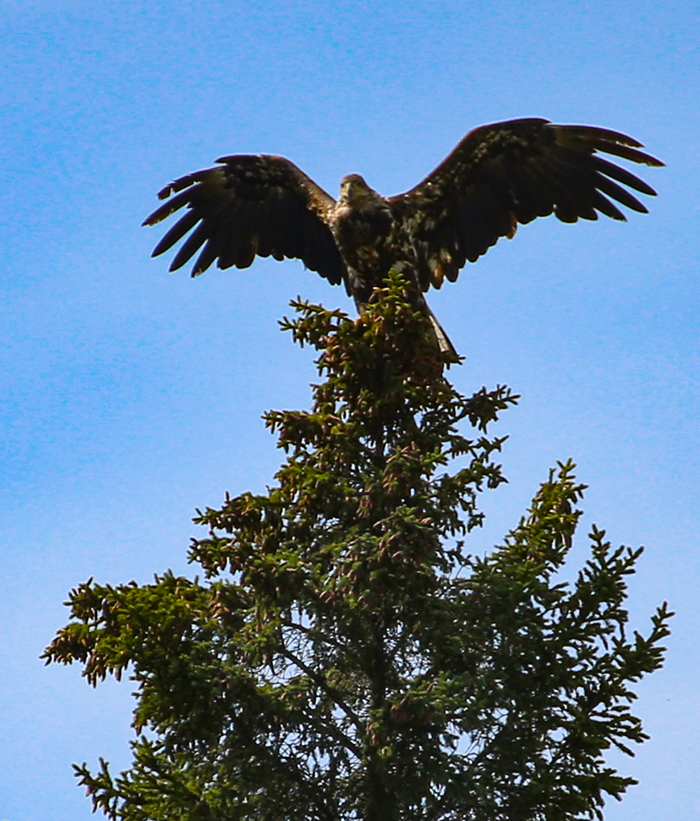
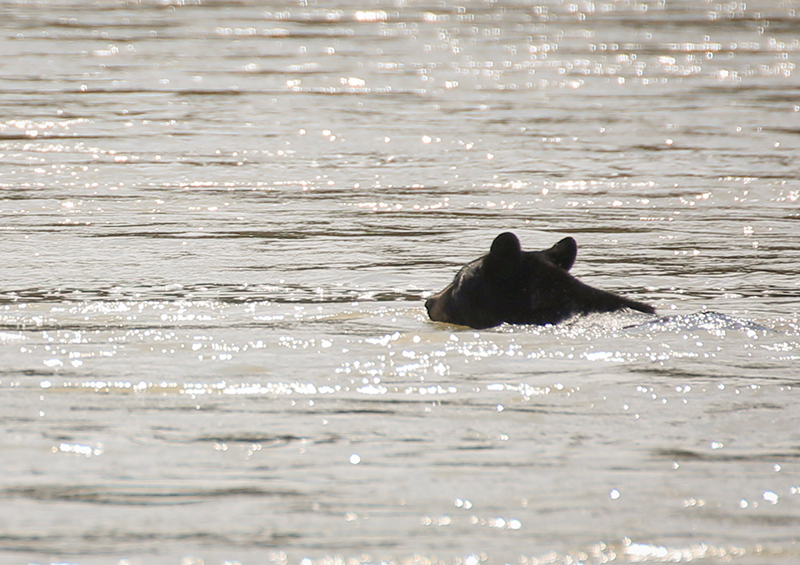 None of the shots from the river are good enough for reference, but I never know where inspiration might come from. Seeing wildlife in the wild is always worth it.
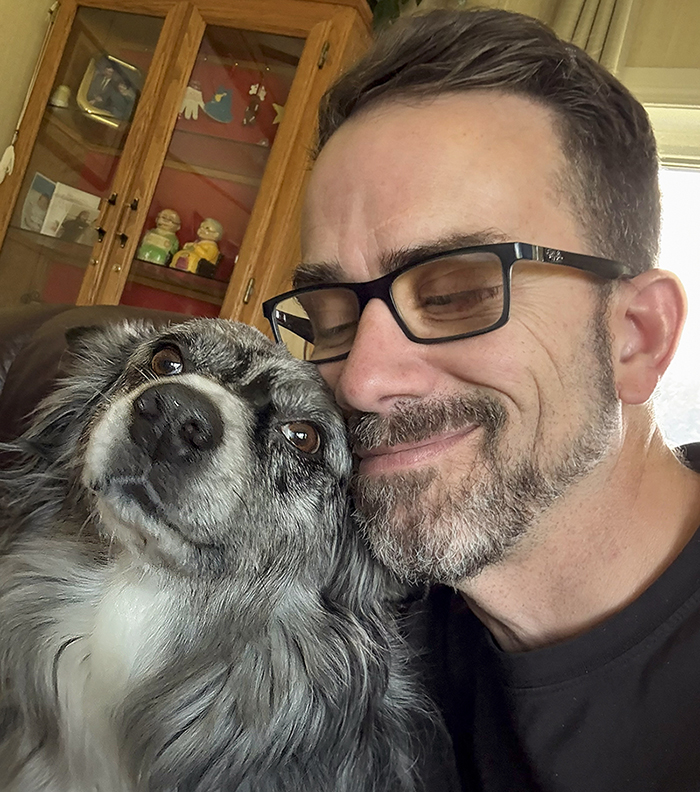
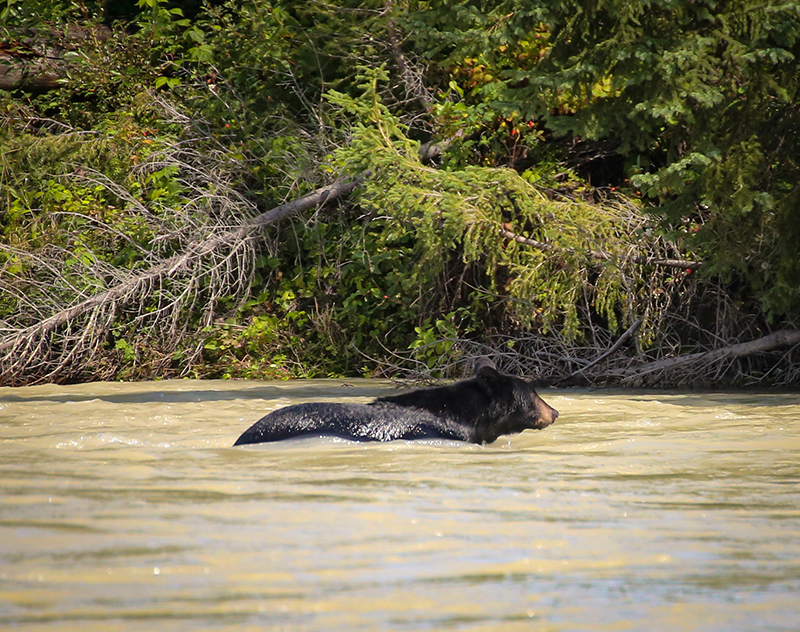 Even without the river encounters, we enjoyed some friendly domestic critters. Shonna’s parents’ dog, Jetta, is a classic rural yard dog. Her job is to bark at strangers, but once she warmed up, we were fast friends. I like that her grey matches mine.
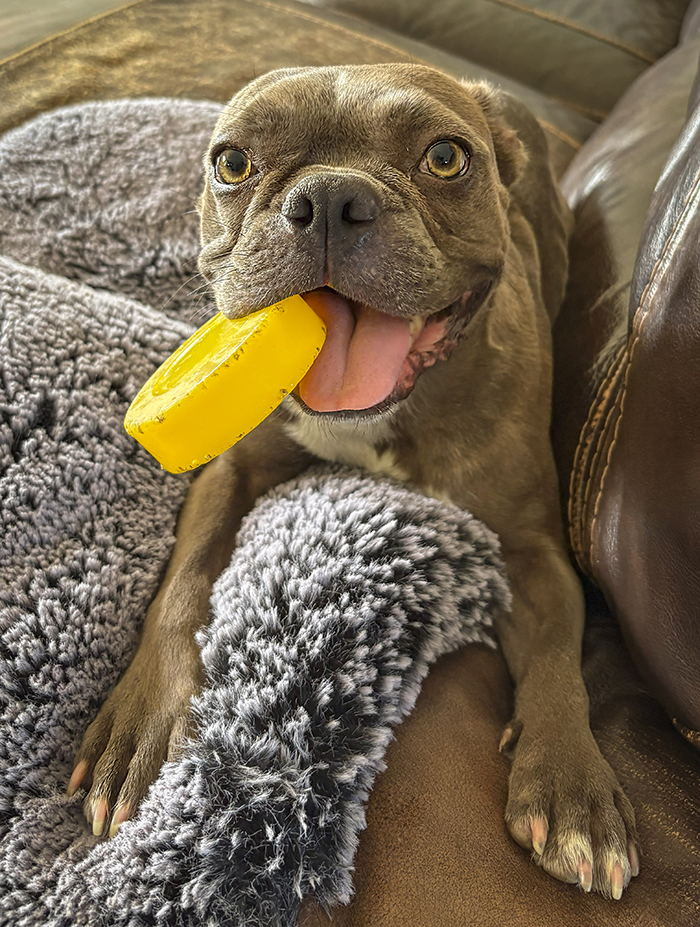
 Shonna’s brother’s dog, Tess, is a bundle of energy with no slow setting. I’m surprised she sat still long enough for me to take a photo. Go ahead, try to take the puck. I dare you.
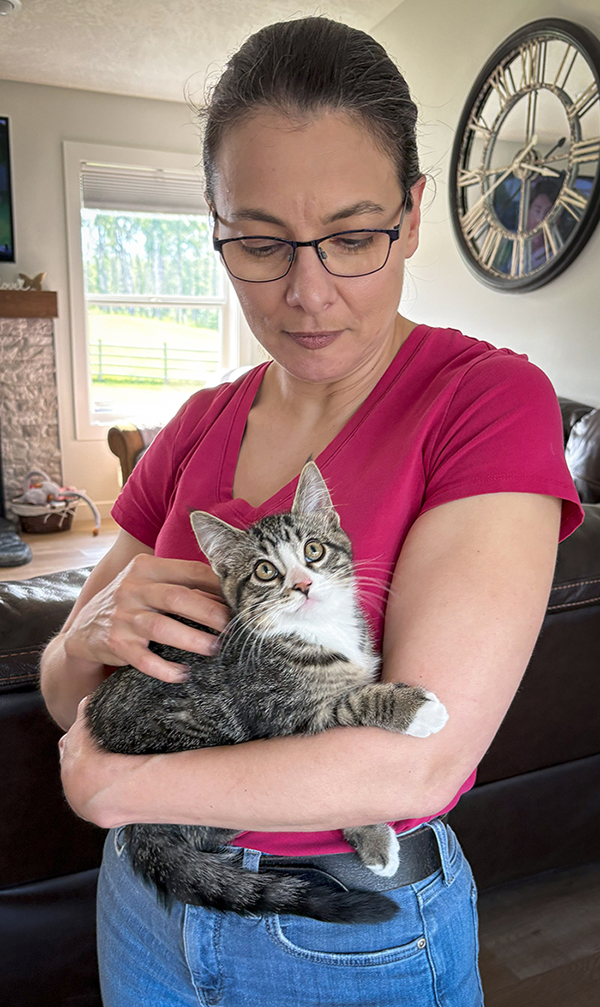
 But the star of the show was their new kitten, Minnie. Already a people cat, she was affectionate, vocal, and had an intoxicating purr. We joked that they would have to check our bags before we left to be sure she wasn’t coming home with us.
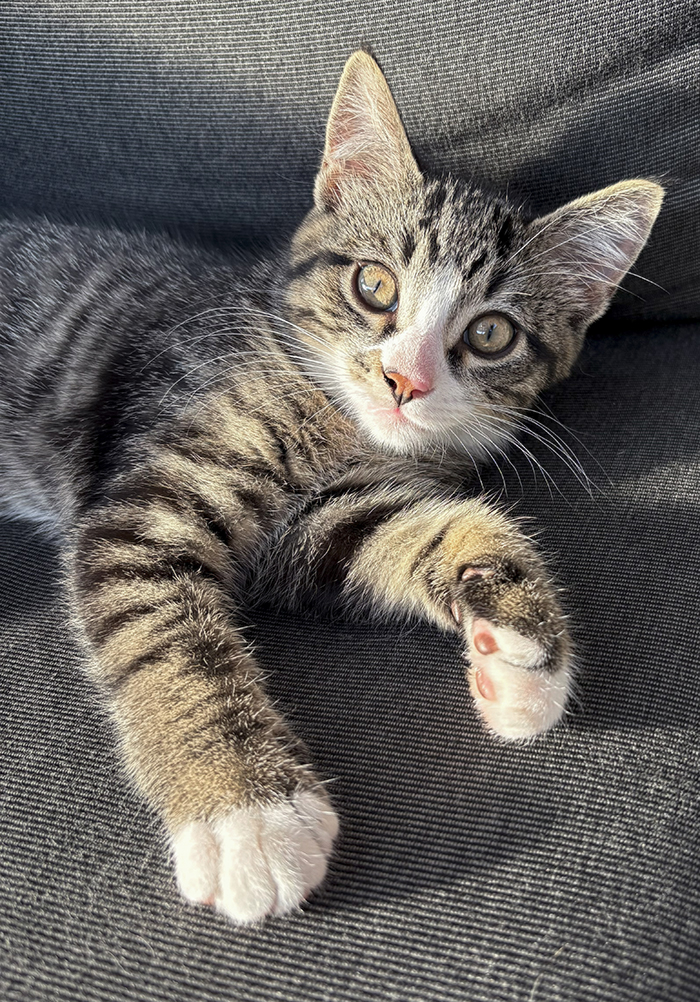
 Whenever I photograph dogs or cats, I want to paint them, and Minnie was especially photogenic. I now have some strong reference shots, though with commissions waiting and a list of wildlife paintings underway, I don’t know when I’ll get to them. That is why the idea of ever retiring feels ridiculous. There are too many animals to paint.
 On the way home Wednesday, we stopped at the cabin I often rent with friends so I could finally show it to Shonna. I had checked ahead and the owners said we were welcome to drop by between guests. Shonna and the owners have heard plenty about each other, so the introduction was overdue.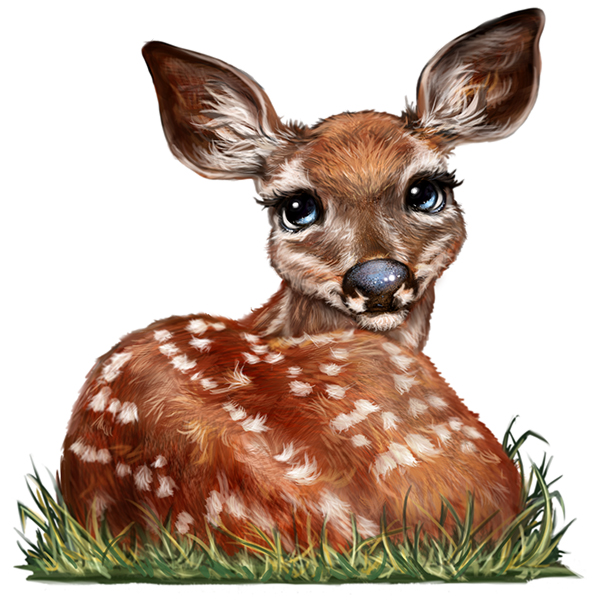
 I’ve been working on a commission of three cats, and it’s coming along well. The client has provided some valuable feedback on the images I’ve shared so far. I’ve also recorded a bunch of the process, written the video narrative, and I’m still working on that video and the painting itself.
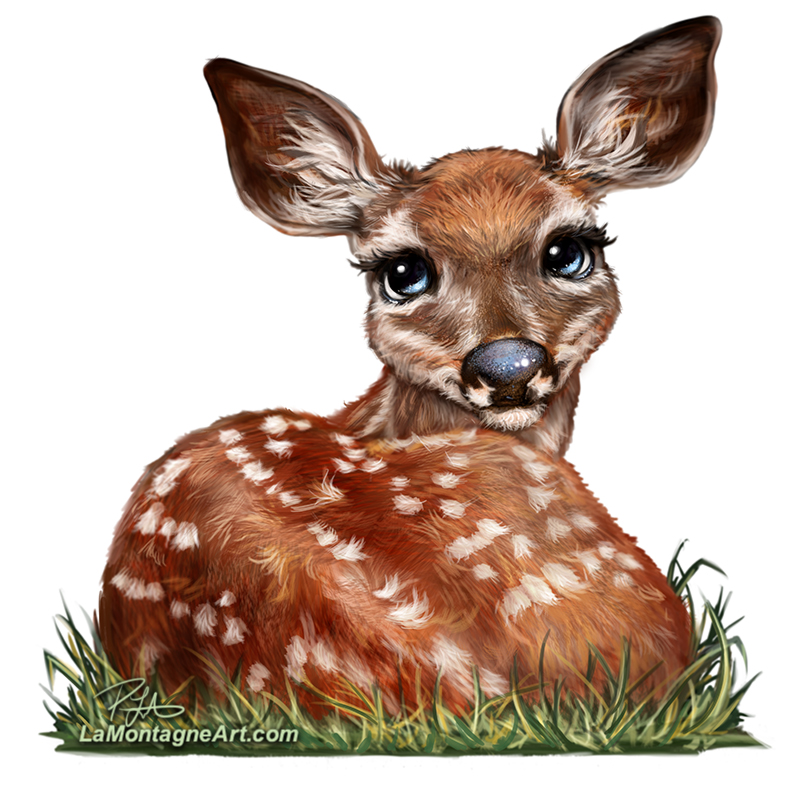
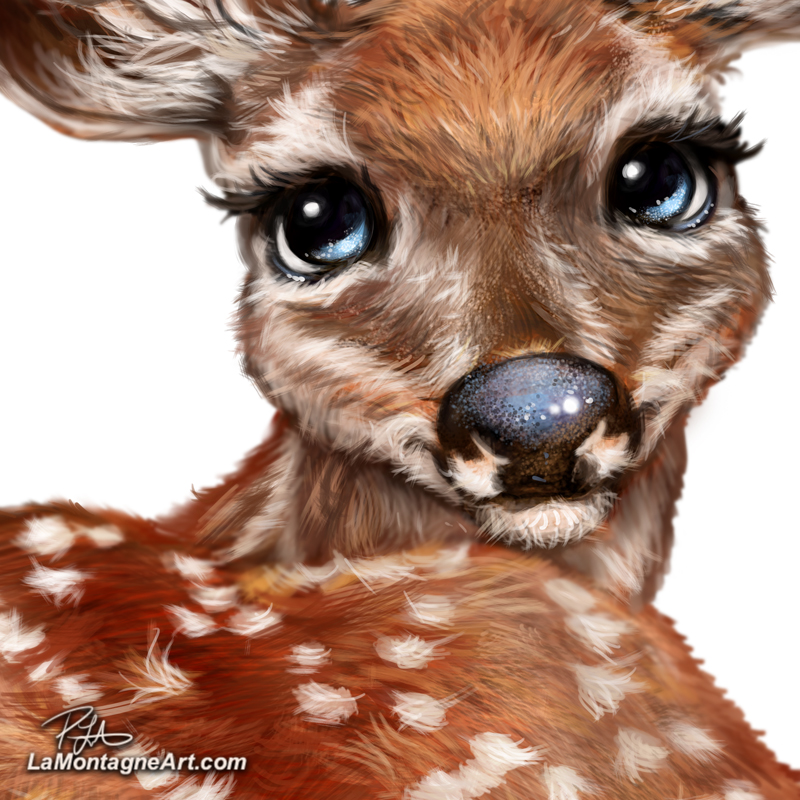 I based this little fawn on reference I shot at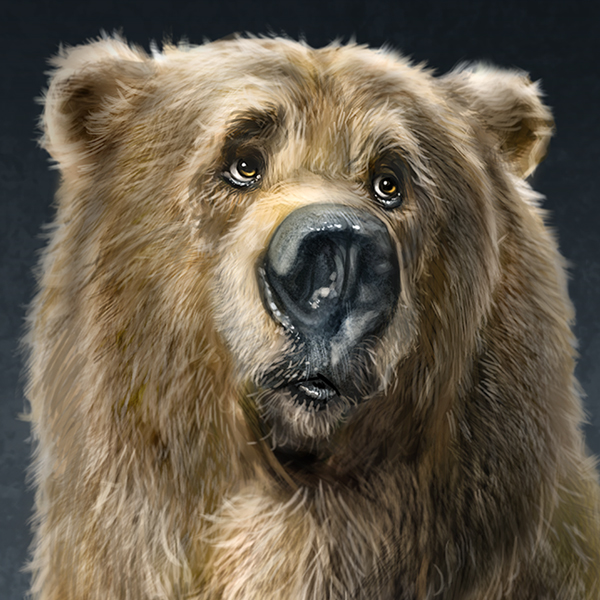
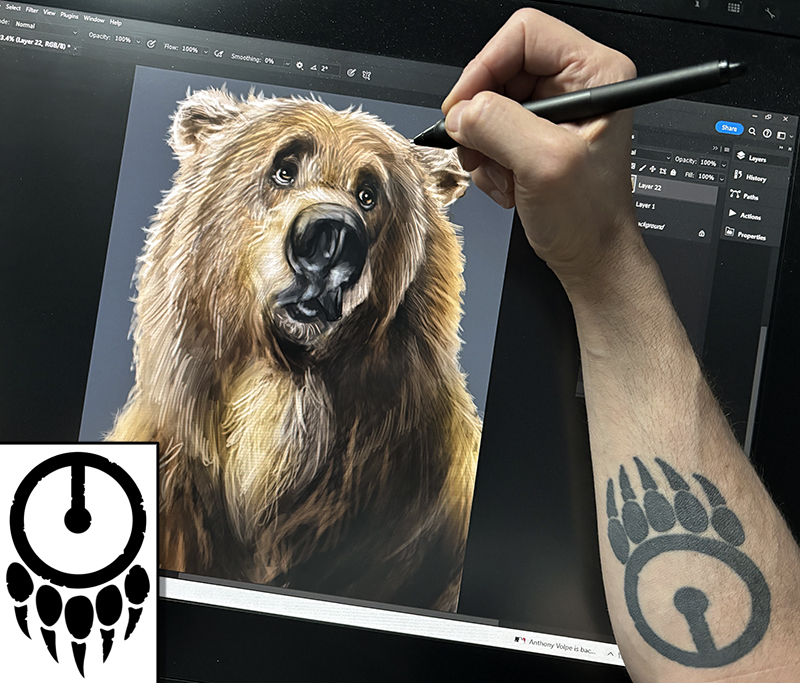 People often ask what it means. If I’m that solitary dot in the middle, my best chance of connecting with others is through my artwork, represented by the bear claws. But just as important is the reverse, where nature, wildlife and the world around me deliver the inspiration to create more art.
  I have been frustrated the past few years that it seems I can never get as much done as I would like to, still failing to find traction. I have too many ideas, too much ambition, and little time to do it all. As fiction writers need to aggressively edit and ‘kill their darlings’ to make for a better story, I must abandon some things to make progress on the ones that mean the most to me.
 I haven’t painted anything in a month and needed to get back into the groove. These were supposed to be rougher sketches, but it’s difficult to stop once I get going. These are neither sketches nor finished paintings, but somewhere in the middle.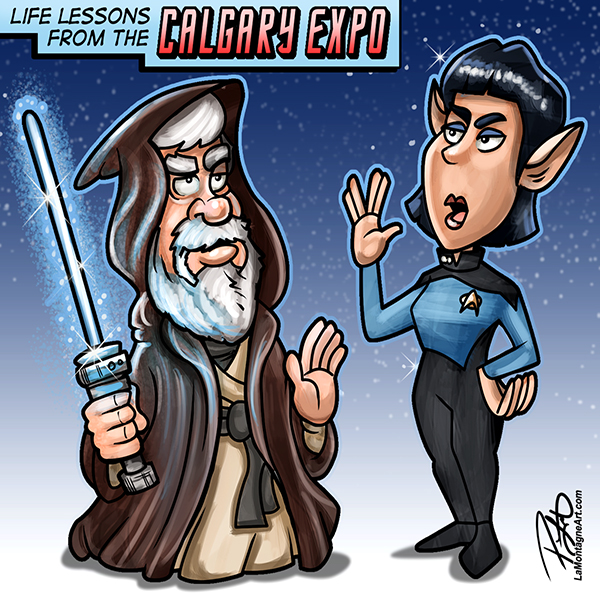
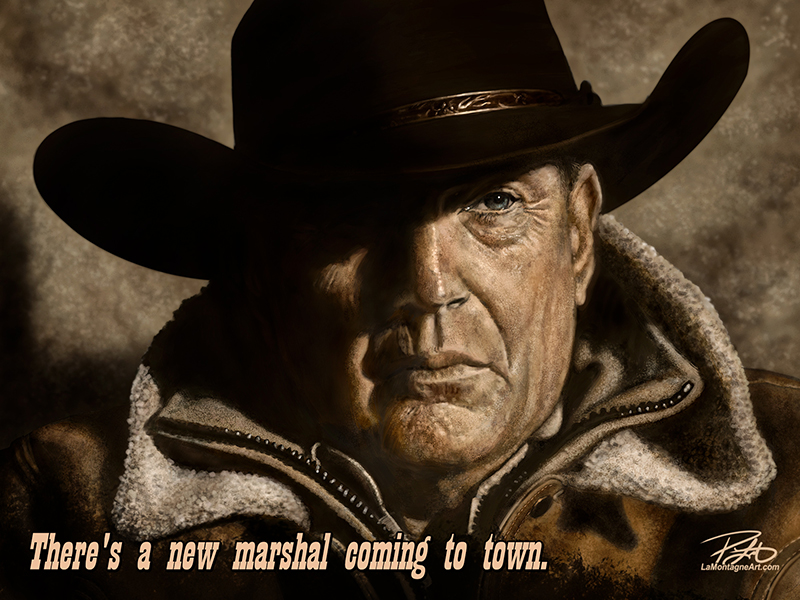
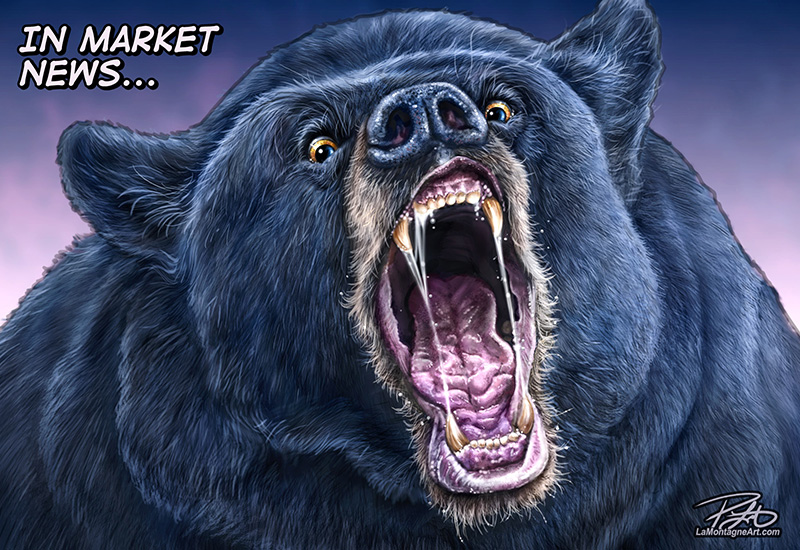 I’ve used a polar bear or two in cartoons about climate change. And when Kevin Costner was the parade marshal for the Calgary Stampede in 2022, I used my portrait of his Yellowstone character, John Dutton, in a cartoon.
 The Calgary Herald currently runs my cartoons more than any other daily newspaper in Canada, and they’ve been publishing my work for more than twenty years. How often, depends on how the editor of the day feels about my work in general. Everyone has their favourite artists.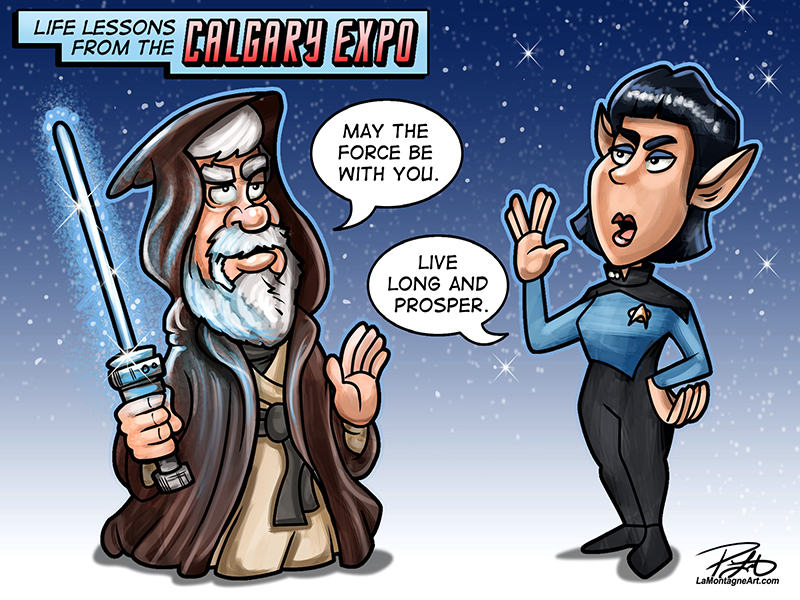
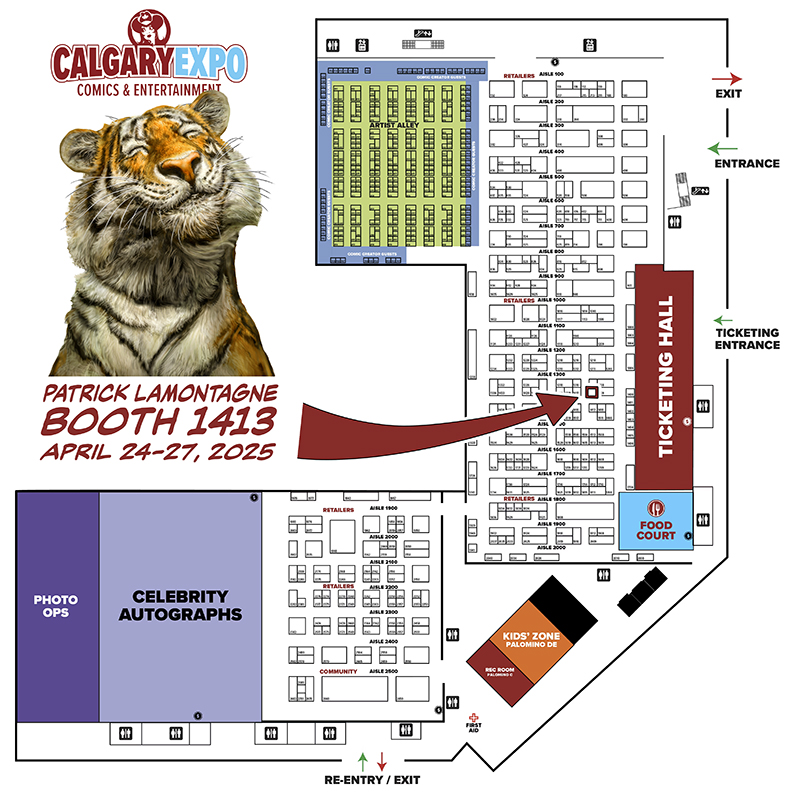 If you’re coming to the Calgary Expo, I’ll be chained to my booth from opening Thursday to closing on Sunday. I set it up yesterday, and I’m ready for the chaos. Come by and say Hello!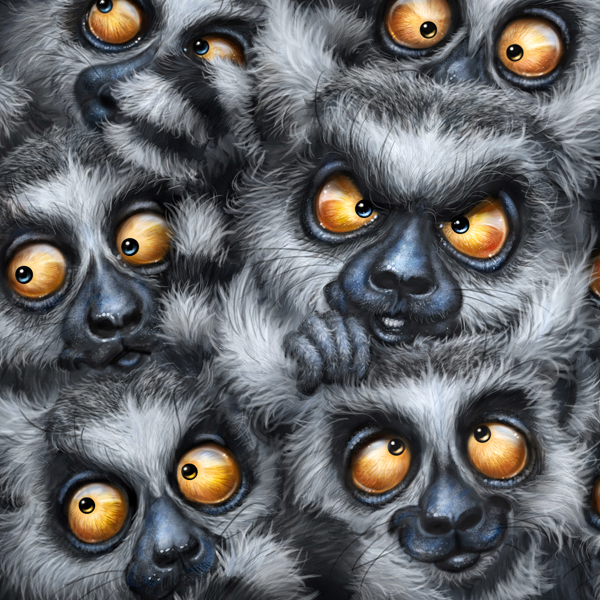
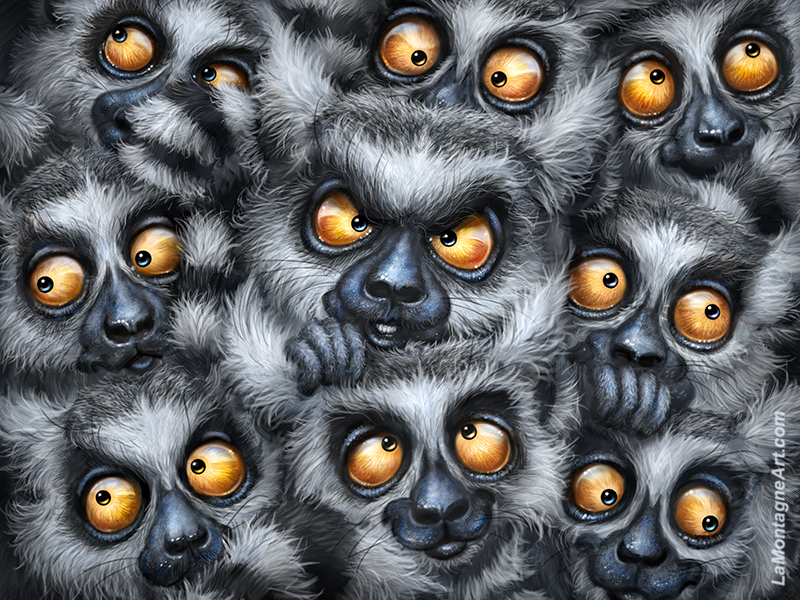 Some paintings come together easily. A reference photo may immediately inspire an idea, I’ll sit down and mock up sketches, and it will almost feel like the image creates itself.
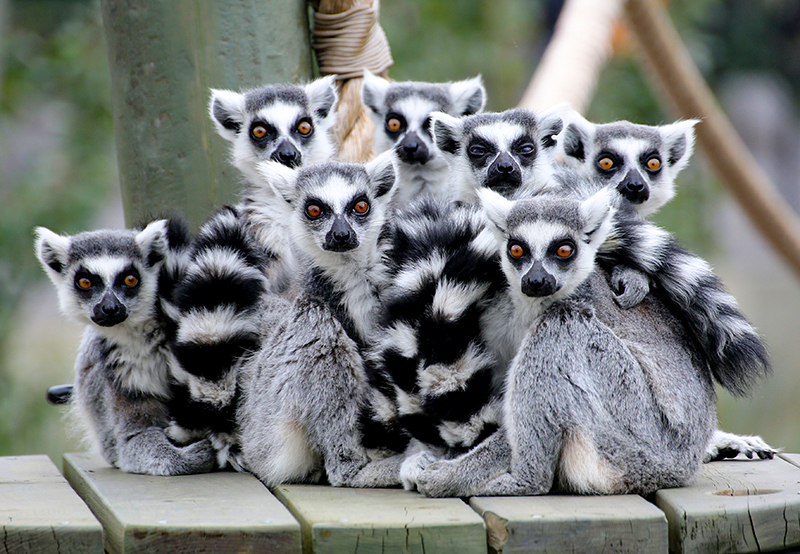 This painting has been something entirely different. Even though I had a clear idea of what I wanted it to look like, I couldn’t get it to feel right. It was inspired by a photo I took at the Calgary Zoo, and I even had the name of the piece before I painted the first brushstroke.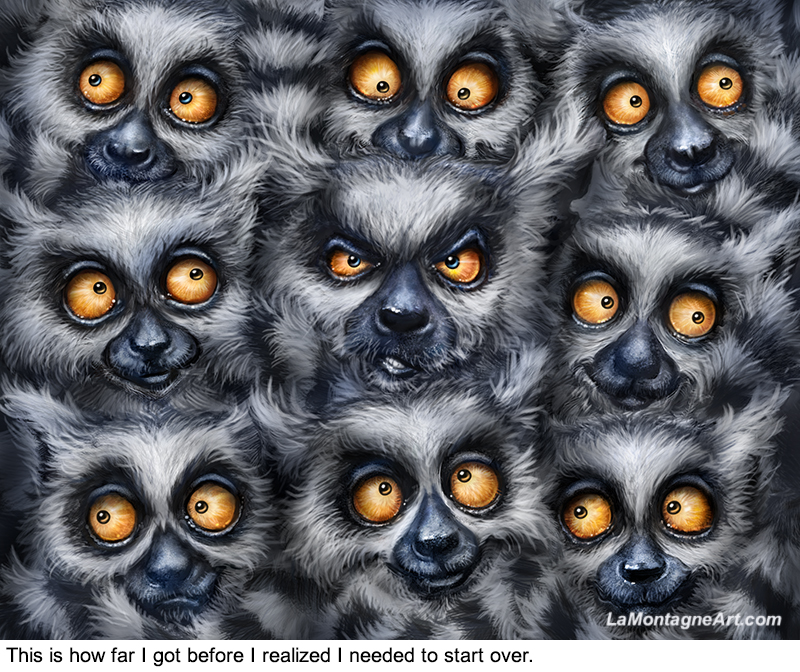
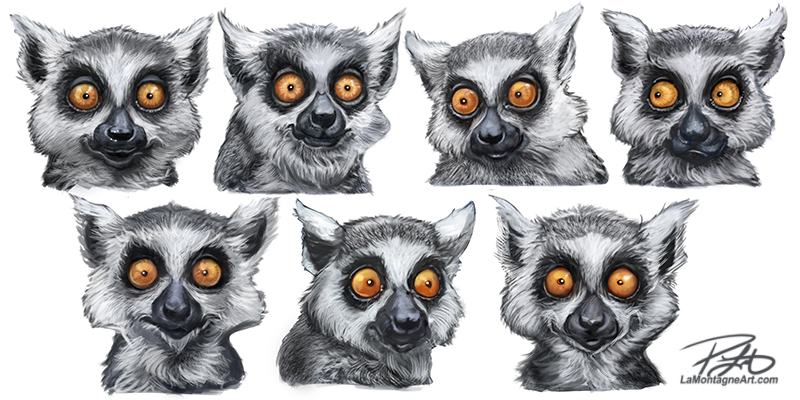 The first go round, I used a specific reference for each lemur I painted and drew them all individually. Even after I assembled them, I kept going back to the individual references for each, and it wasn’t easy to keep track of it all. I made it far too complicated.
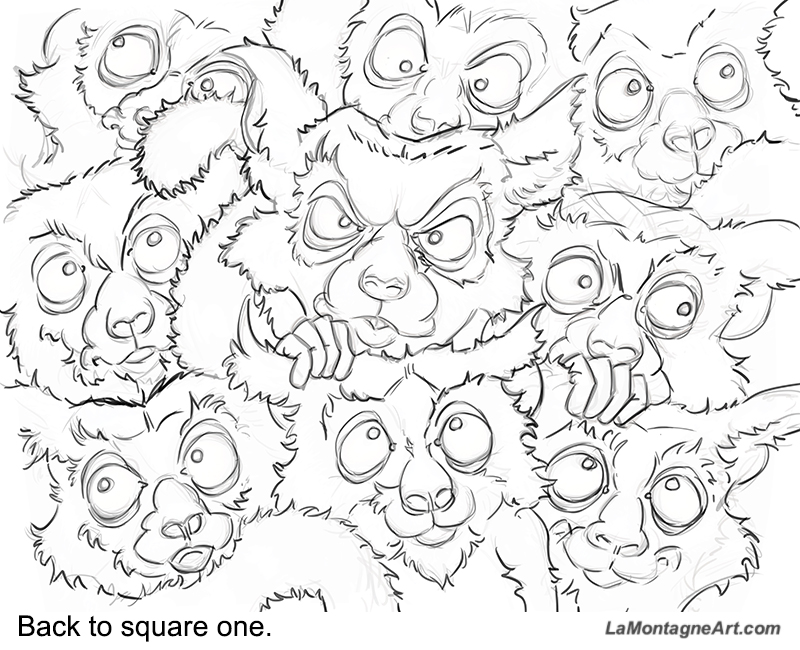 The key to getting this piece back on track was to stop painting individual trees and just paint the forest. Even though this was a challenging painting, with a lot of redrawing and direction changes, I learned from the frustration. These kinds of lessons always contribute to better work in the future.
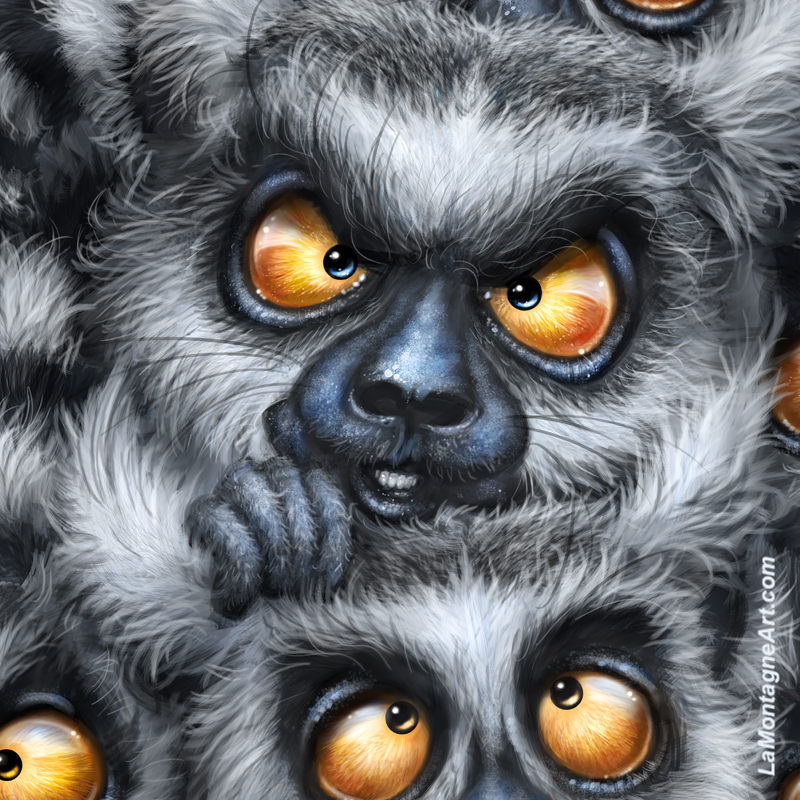 Under these circumstances, my perception of how any finished piece looks is distorted. I have no idea how I feel about this painting and probably won’t for a while. I feel more relief that it’s finally over than satisfaction with the result.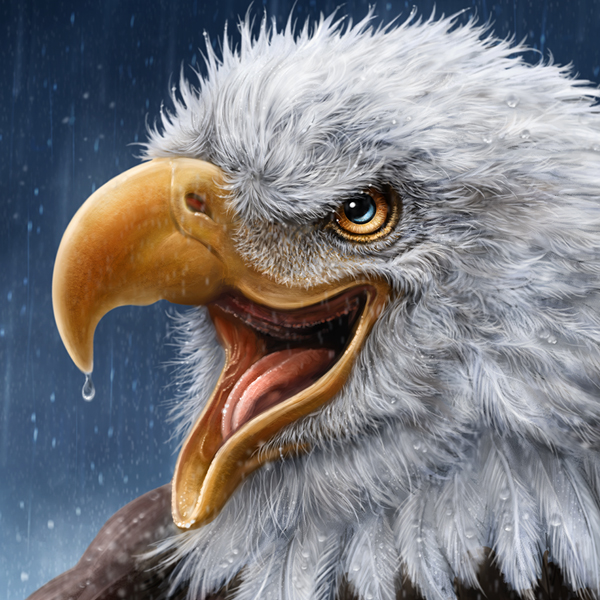
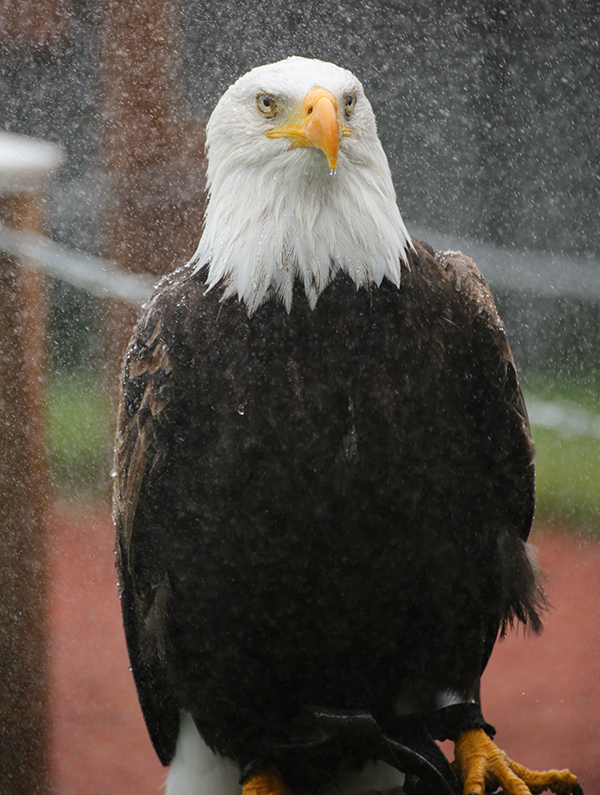
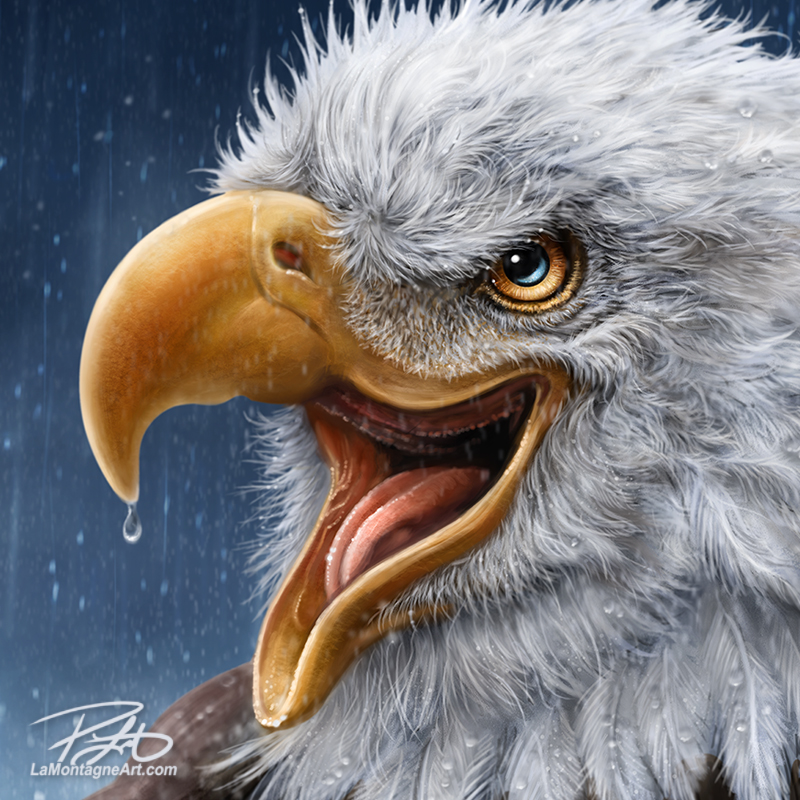
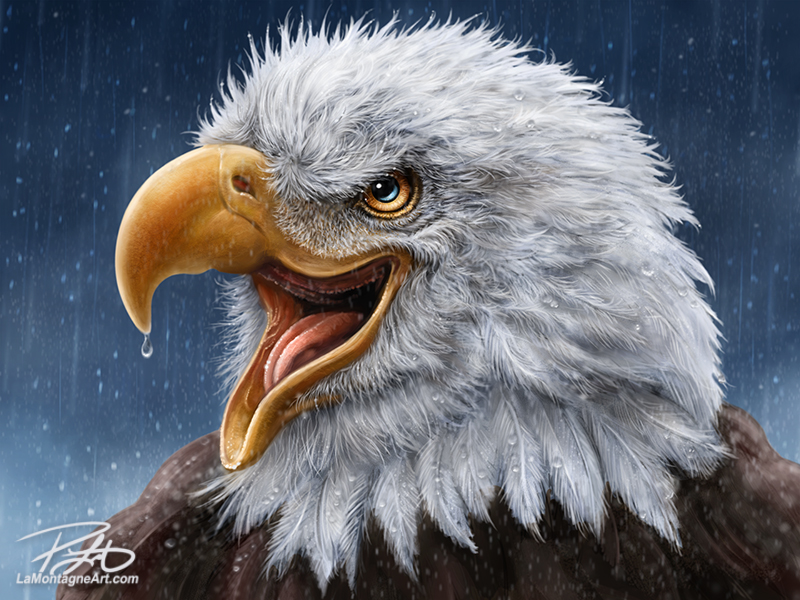 Painting the wet look in this one was challenging because I had to decide where to draw the line. I could have added more rain in the background and foreground, but I’d risk it looking too busy. The same could be said for the water droplets I painted on the feathers. More definition might equal more distraction.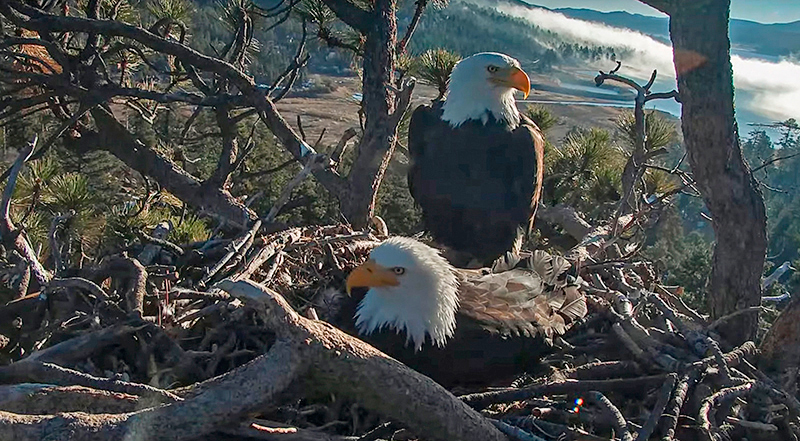
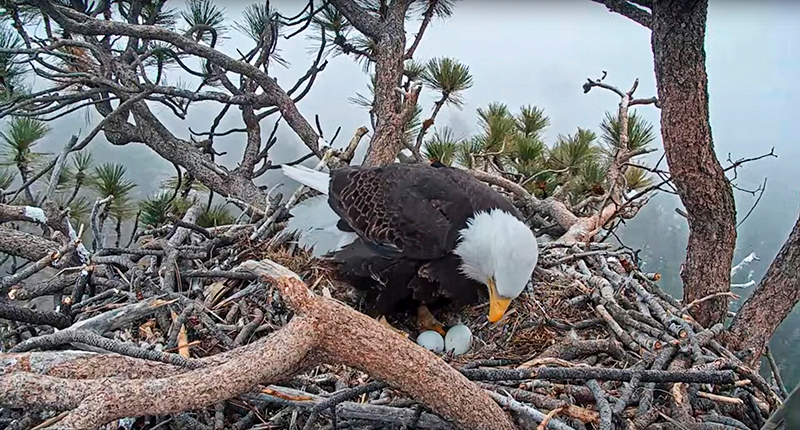
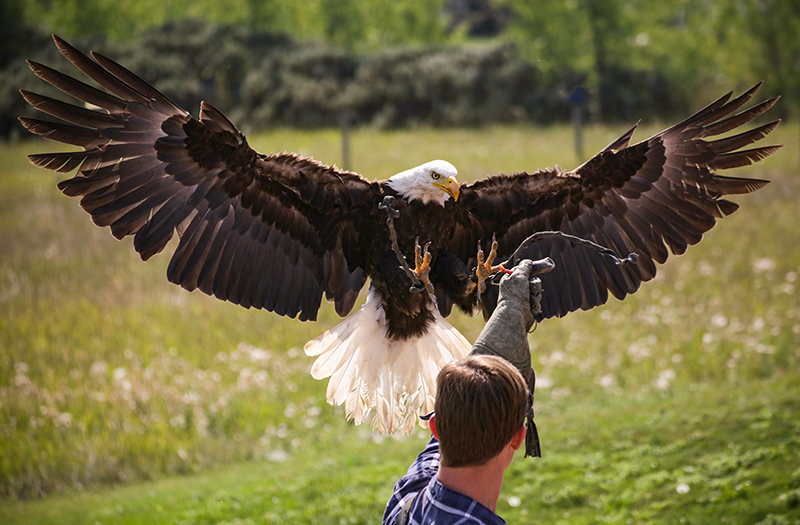
 “How long does it take you to paint one of these?”
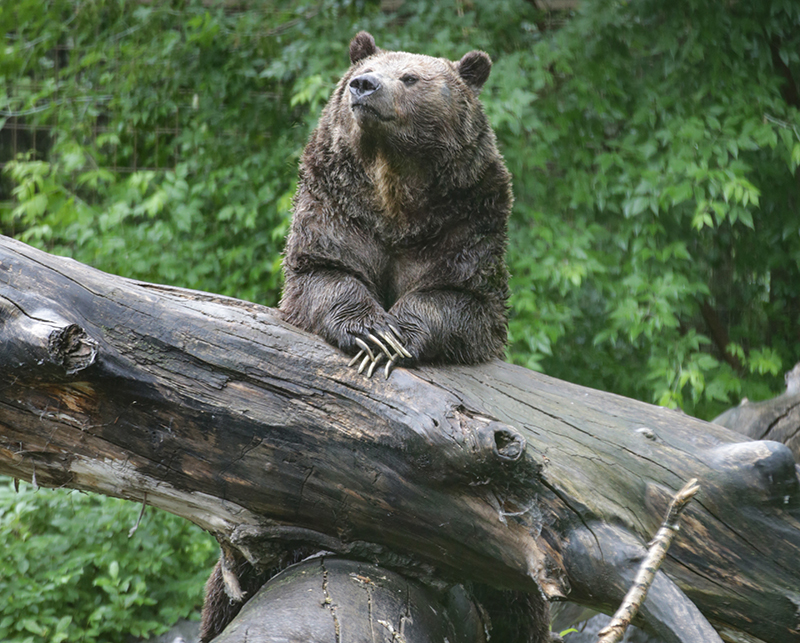 The spark for this painting was reference photos I took at the
 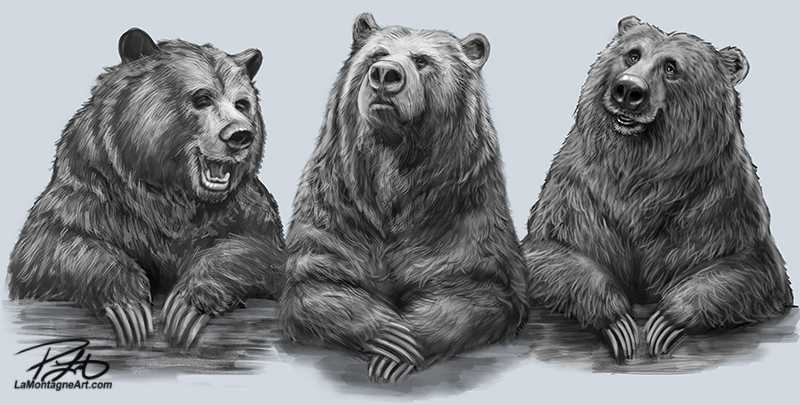 I did some drawings shortly after that and returned to them whenever I had the time. While Skoki was the inspiration, I used several bears in my photo archive as reference for the bodies and faces. If nothing else, I figured they would be good sketches for the book I’ve been talking about for years, but to my eternal shame, never deliver.
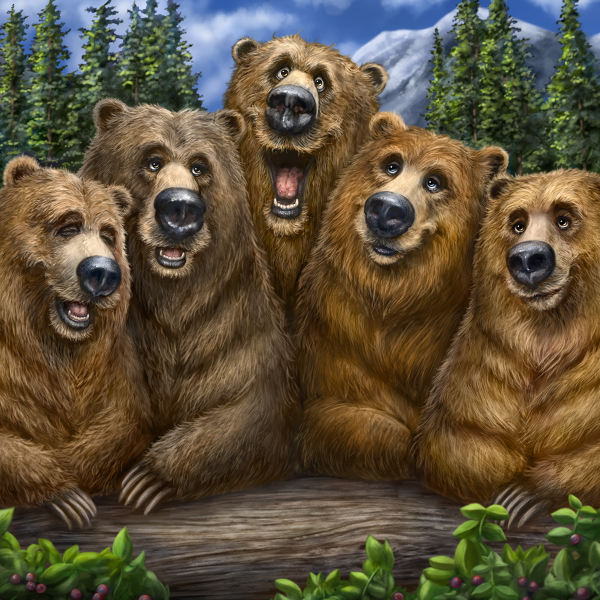
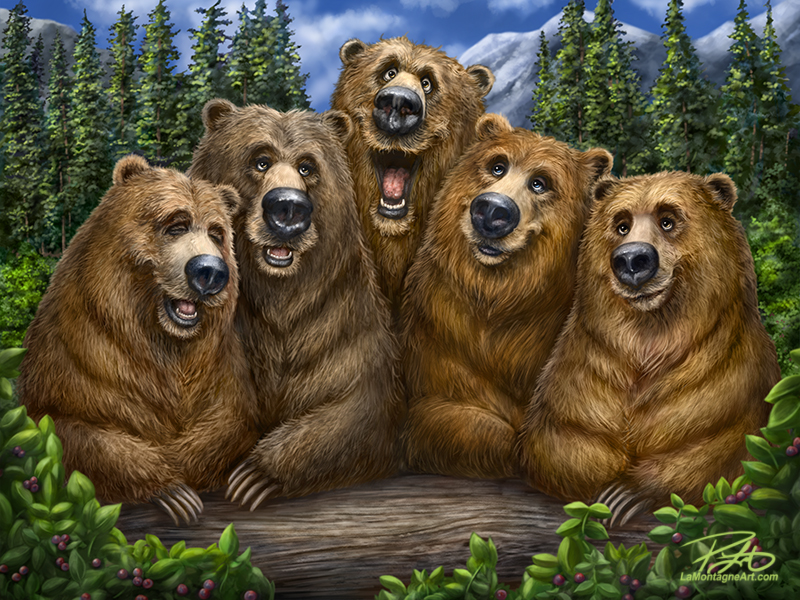
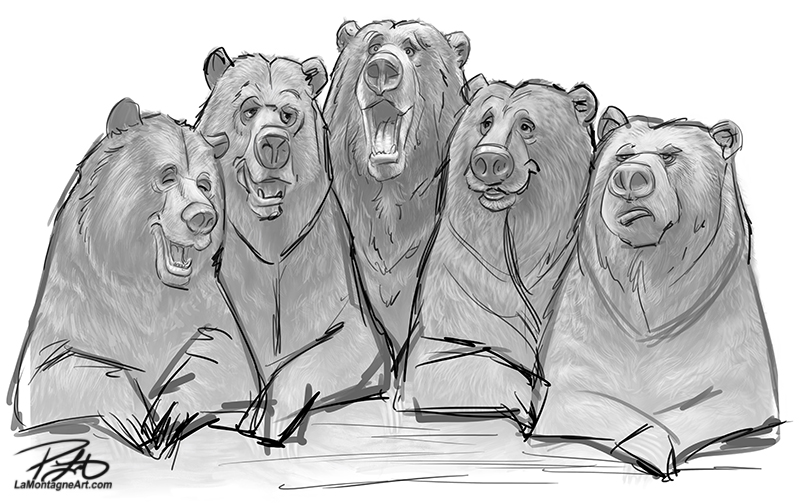 Once I had several sketches, I pieced them together, trying to find a composition I liked. The five grizzly bear buddies soon became five members of a family. It reminded me of a grizzly bear version of a Sears family portrait photo shoot. Refining the shapes so they fit together, and reimagining the expressions meant losing a lot of the sketch detail I had already drawn, but that’s just part of the process.
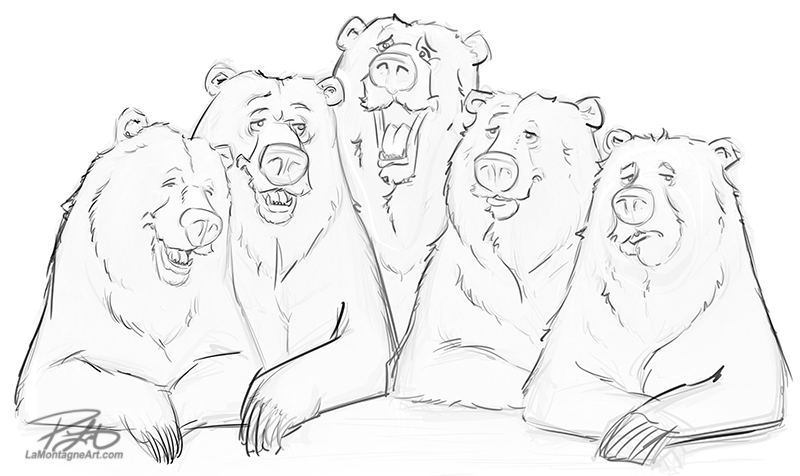 Many paintings begin as one idea but take on their own life while I work. I have no idea how many hours I’ve put into this piece, but it’s more than any painting before.
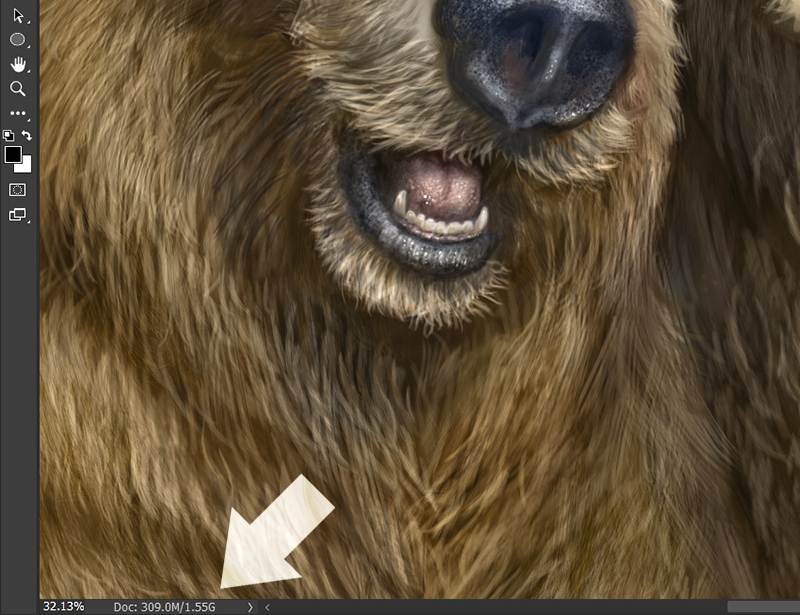
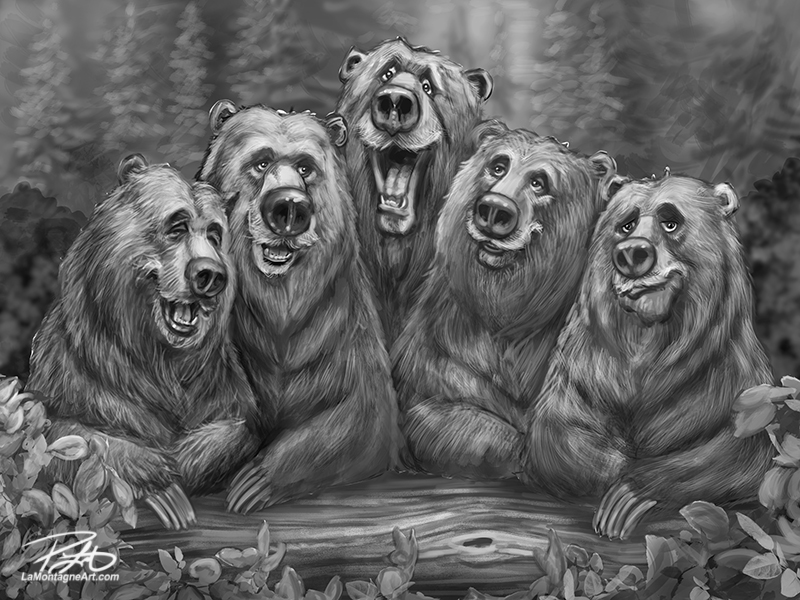 Rather than work in colour from the start, as with other paintings, I started this one in greyscale because I wanted to play with the values and experiment with the scene. Once I had a good starting point, I painted colour in the background and foreground, leaving the grizzlies for last.
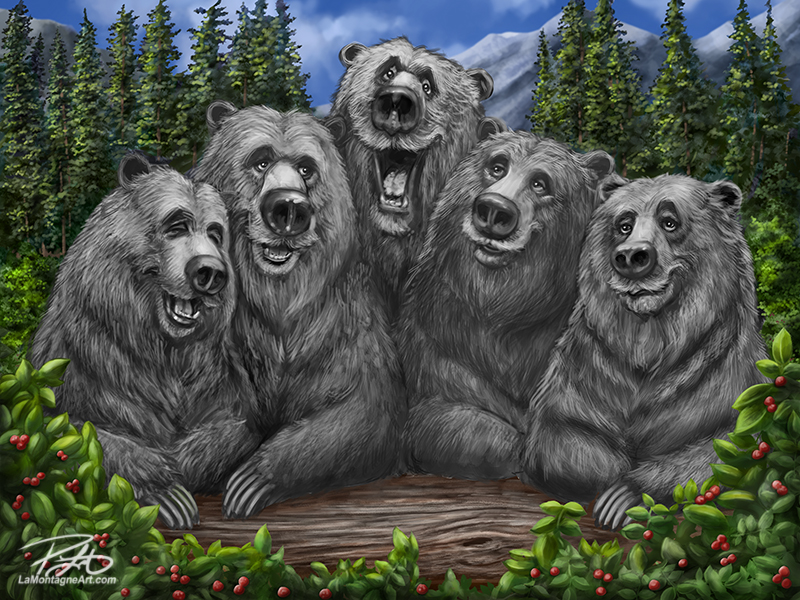 Initially, the berries in the foreground were bright red. But when I showed this work-in-progress image to my buddy, Derek, at Electric Grizzly Tattoo, he suggested they might be a distraction from the bears. It was a helpful critique. So, I toned down the berries and made them a deeper burgundy and blue.
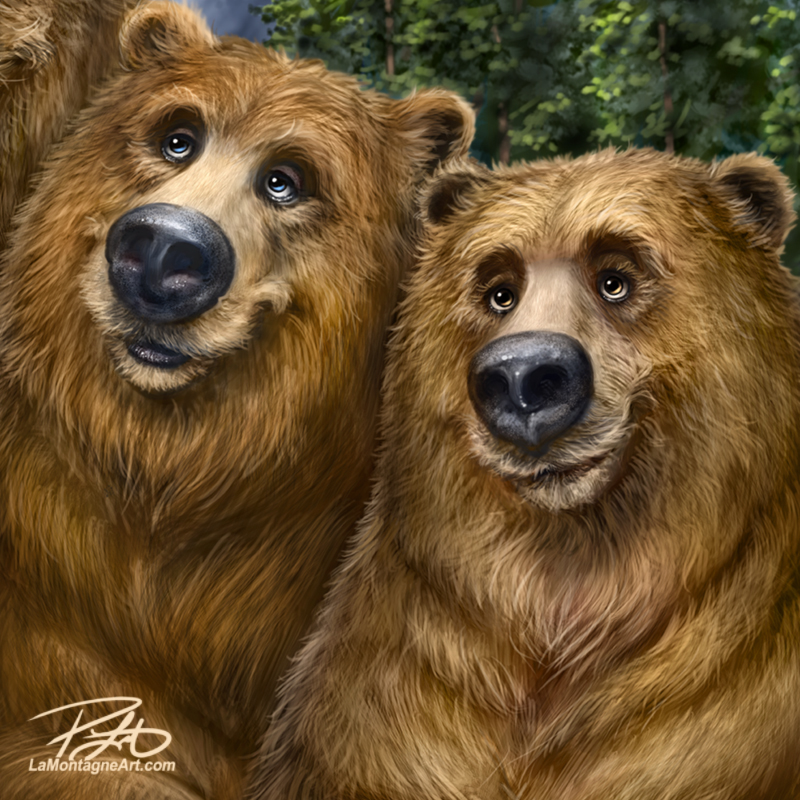 As brown bears come in many shades, from dark brown to red to blonde, I had initially planned to have a more noticeable colour difference between the five. But it looked weird, and I didn’t like it, so I erred on the side of more subtle variations in fur colour.
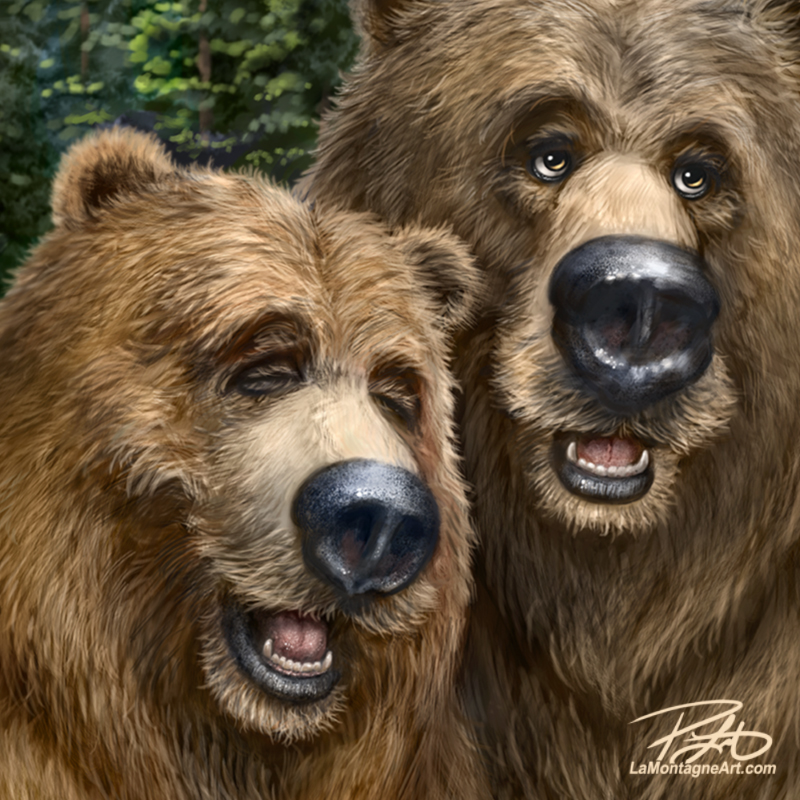 One of the nice things about working digitally is that at the end of each painting session, I can look back at the image when I opened the file and compare it to progress at the end of a session. It’s often a big difference, and that’s satisfying. However, when a painting nears completion, two hours of work may be barely noticeable before and after. That’s usually how I know it’s time to call it done.
 Deciding whether I like a piece or not takes time, but I’m pretty happy with how this turned out. I liked my
 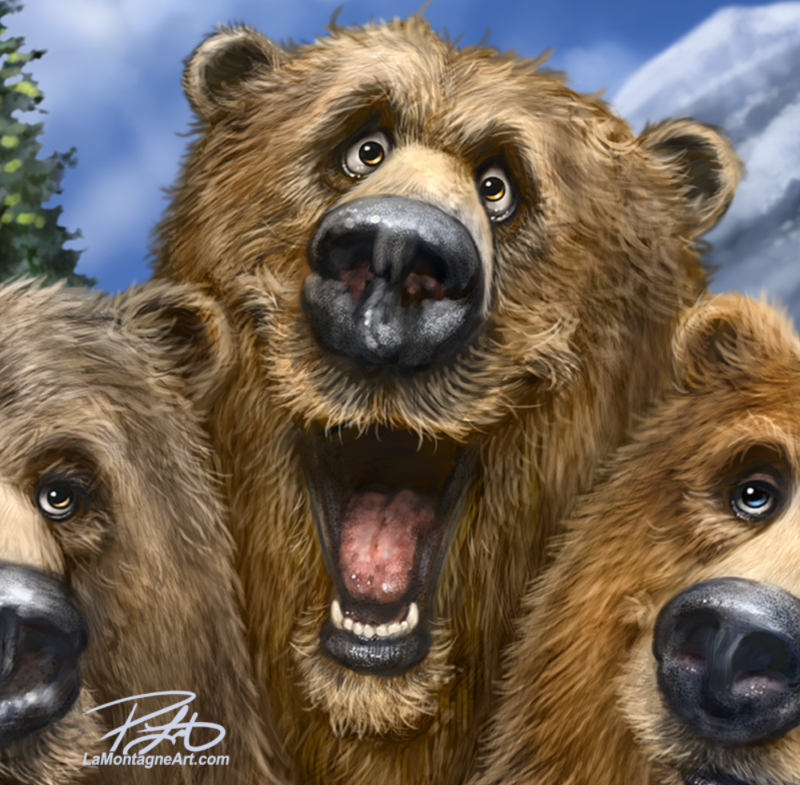 Because of the current uncertain economy, I’m not yet committing to doing puzzles again right away. But when I do, I think this grizzly family is worthy of consideration.