 When people talk about art for a living, they usually mean the highlights—the big launches, the finished pieces, the stuff that looks good on a timeline. But this—the half-finished paintings, the licensing negotiations, the time made for ideas—this is the work.
If you go through any videos, articles, or books about art promotion, you’ll find one consistent theme—be consistent.
It’s easy to promise yourself you’ll write and send a post each week on the same day. Actually doing it? That’s another story.
I’ve been meeting editorial cartoon deadlines every week for more than twenty years. Coming up with ideas isn’t as tough as it used to be, but I still have to draw and send a cartoon, no matter what—whether I’m feeling inspired or not, whether I like the idea or think it’s a dud.
Even though I usually write two or three blog posts and emails each month, there are times when I don’t have much to say. And when that happens, it’s easy to think, “I’ll get to it next week.”
But that kind of procrastination isn’t fair to everyone who’s signed up for this subscription ride, and I don’t take that for granted.
So, with lots in progress but nothing quite finished to share, here’s a bit of a dog’s breakfast of what’s on my desk and on deck.
PAINTINGS
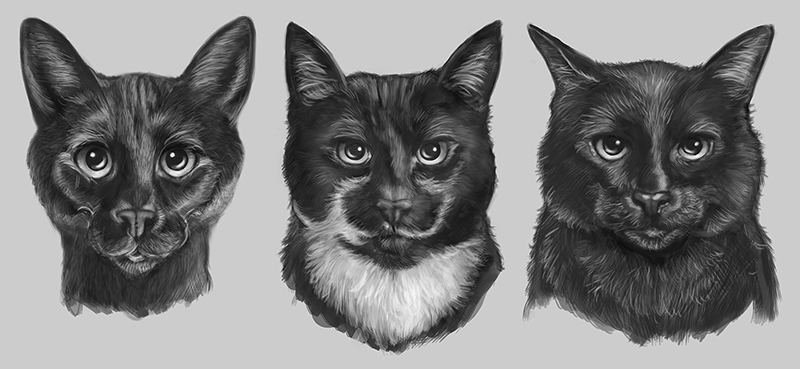
I’m still working on those three cats. That’s normal for commissions—they take time, especially when you’re trying to capture three distinct animals in one piece. But I’ve finally found my groove this week, the fun part.
Thanks to some helpful (and welcome) suggestions from the client, their personalities are coming through. There are two black cats in the painting, each with a different look and vibe, and I was a little worried about pulling that off. That’s where back-and-forth with the client really matters. The more I learn about their features and quirks, the better job I can do.
The cats are now in the same painting rather than separate sketches, and when I open the file now, I don’t clench my teeth. I smile. That’s a good feeling. It’s not unique to this commission either. That’s the usual experience for most of my paintings.
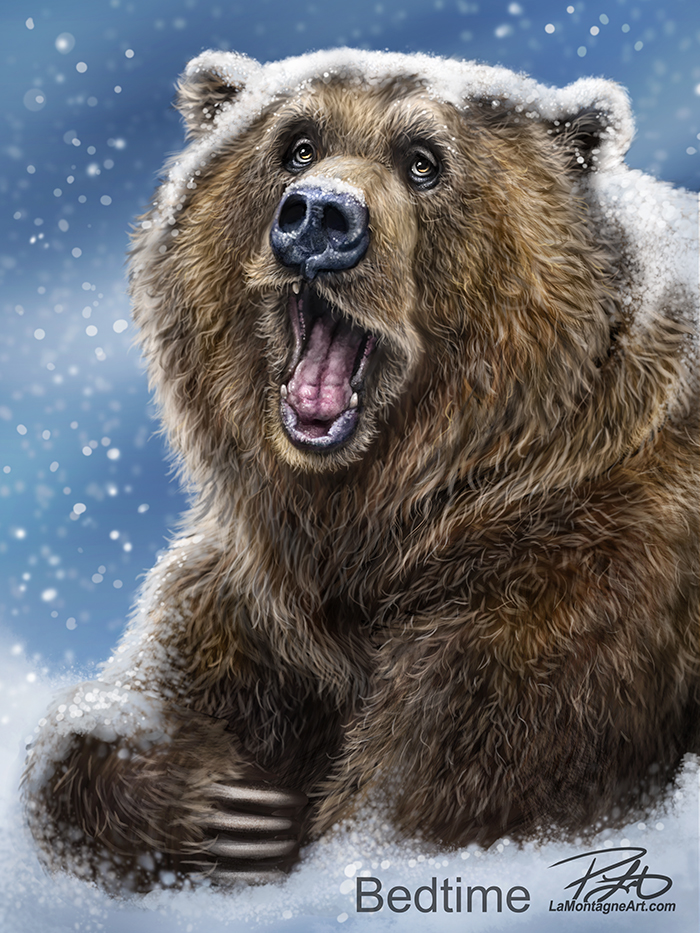
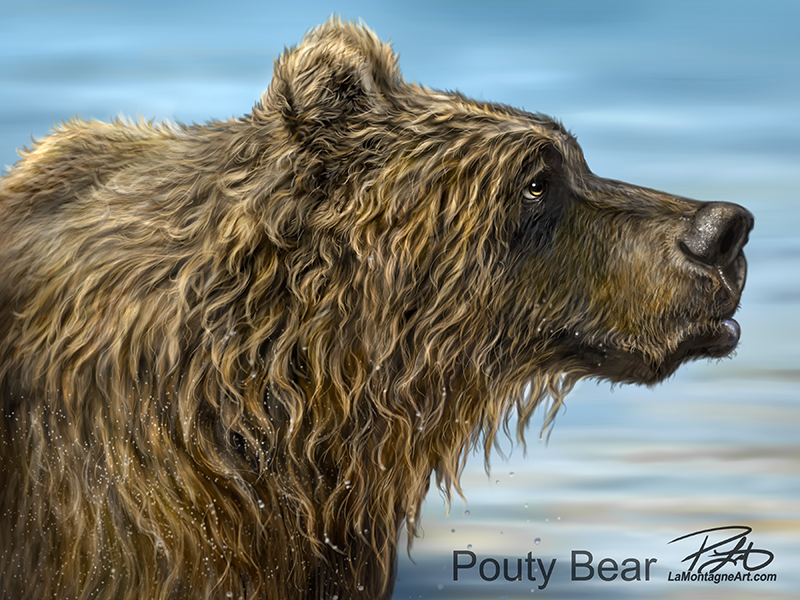
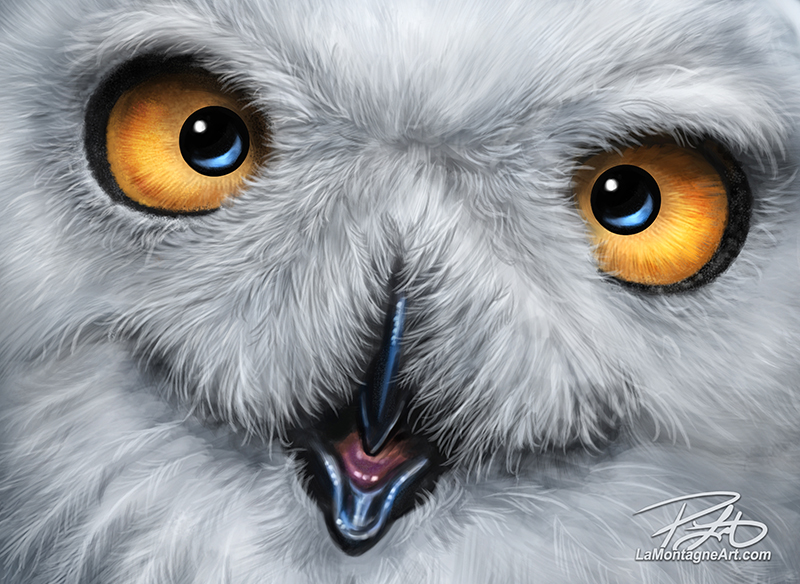
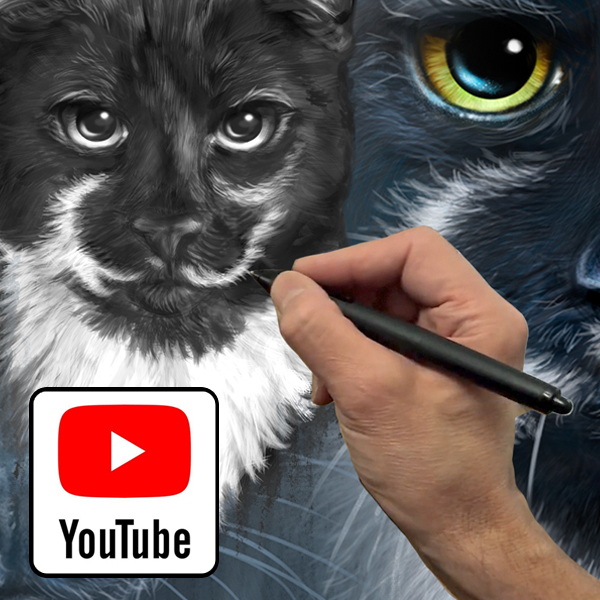
I’m also working on a snowy owl, a grizzly bear, and a raven, all at various stages of completion. There’s a lot more work to do on this one, as I’m also recording the process on video, but here’s a sneak peek at the owl in progress.
LICENSING
It’s been a good couple of weeks on the licensing front. One international company I’ve worked with before came back with a new proposal. Since my first experience with them was pretty close to perfect, I was happy to jump into a new contract with them.
Another company I’d never heard of cold-called me with a very appealing offer to license my work. We’re in the “crossing t’s and dotting i’s” stage now.
Both companies are seasoned pros when it comes to working with artists. There’s nothing unexpected in the contracts, and most of it is just formality. In my experience, that’s typical. While it does happen, it’s rare to come across a company trying to screw you over.
I realize both of these updates probably sound like teases, but that’s the nature of licensing. I can’t talk about names or details until they launch, which could take weeks, months, or even a year. In the meantime, there’s work to do behind the scenes and it takes real time and effort.
The admin side of being a professional artist often eats up more time than most expect. But licensing is a solid revenue stream because it’s built on artwork I’ve already created, and it works well for me.
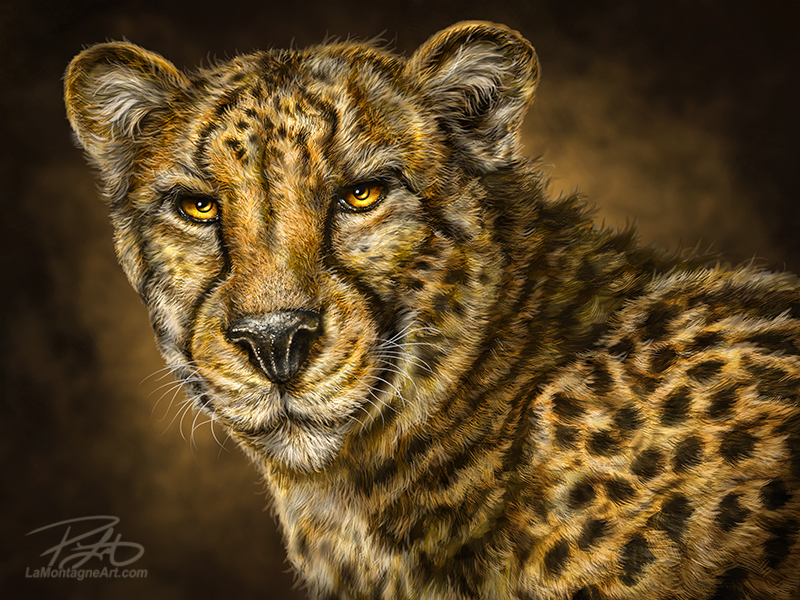 Diamond Art Club just released a new kit featuring my cheetah painting, my sixth kit so far. That one was a surprise, since it’s not one of my more popular prints. But they do plenty of research before launching a new image, and there was a demand for this one. I love working with this company, and there are more pieces in the pipeline. But they decide and let me know when I can share them.
EDITORIAL CARTOONING
A Calgary Herald reader saw one of my recent G7 cartoons and ordered a couple of prints. I don’t get a ton of editorial cartoon orders, but enough that I’ve built a good production system for them. I use the same printer who produces my metal and canvas prints, so the quality is always spot-on.
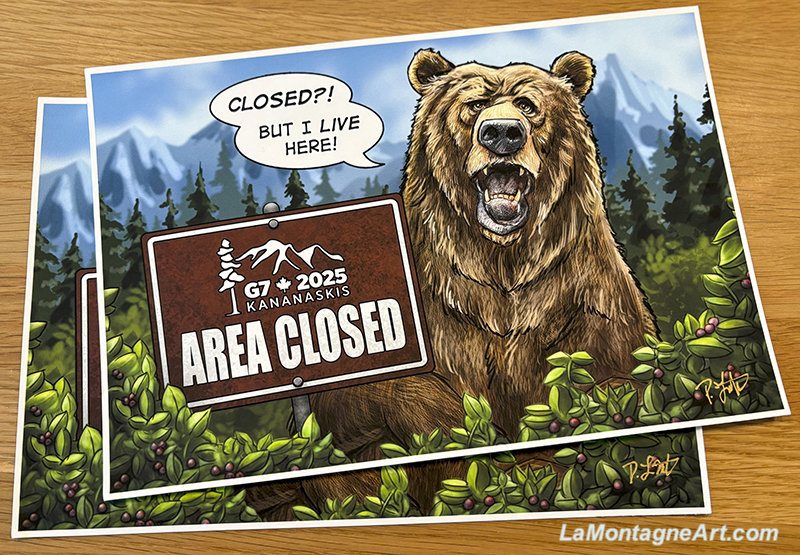 This particular cartoon also featured a grizzly bear—so the best of both worlds. I signed both prints and shipped them yesterday.
LIFE STUFF
Last weekend, I got away for a cabin trip with my buddy Darrel. It’s a good thing we book these months in advance—if I didn’t have the commitment (and the deposit), I’d probably find a too-busy excuse not to go. I know, wrong priorities, I’m working on it. Thankfully, once I’m there, it always feels like the right decision.
After years of getting up at 5:00 a.m., I can’t really sleep late anymore. Even without an alarm, and staying up later than usual, I was still up by 6 or 7. I tiptoed past Darrel’s room, showered, made some coffee to-go, and headed out looking for wildlife.

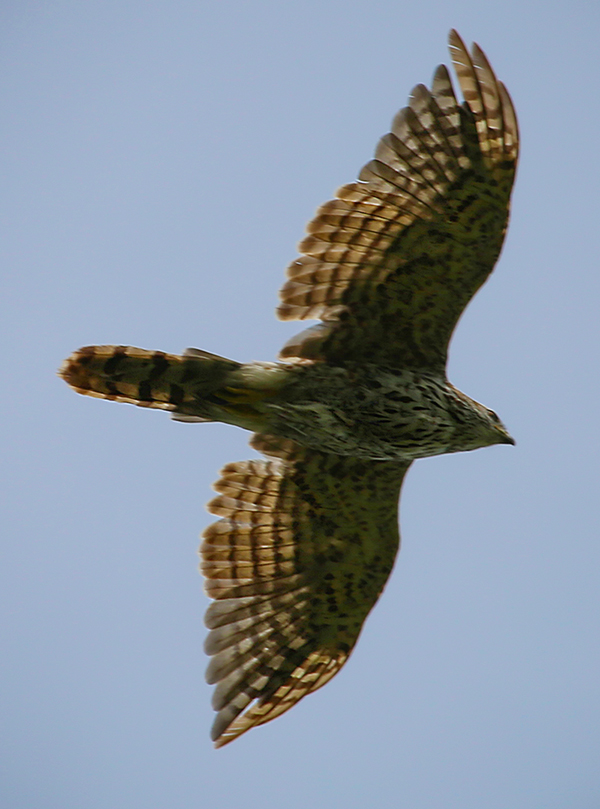
The morning walks were a peaceful start to the day. Critter sightings were limited—just some skittish white-tailed deer, a juvenile Cooper’s Hawk overhead, and cows. Lots of little birds singing in the trees, over a dozen species according to the Merlin app. One evening, a couple of Great Horned Owls were calling to each other. And in the middle of the night, coyotes howled from all directions. That last one is one of my favourite sounds in nature.
 I’m always surprised when I sort through reference photos, because often something I thought I had, doesn’t look as good when I get home. And then a random throwaway photo might spark a painting.
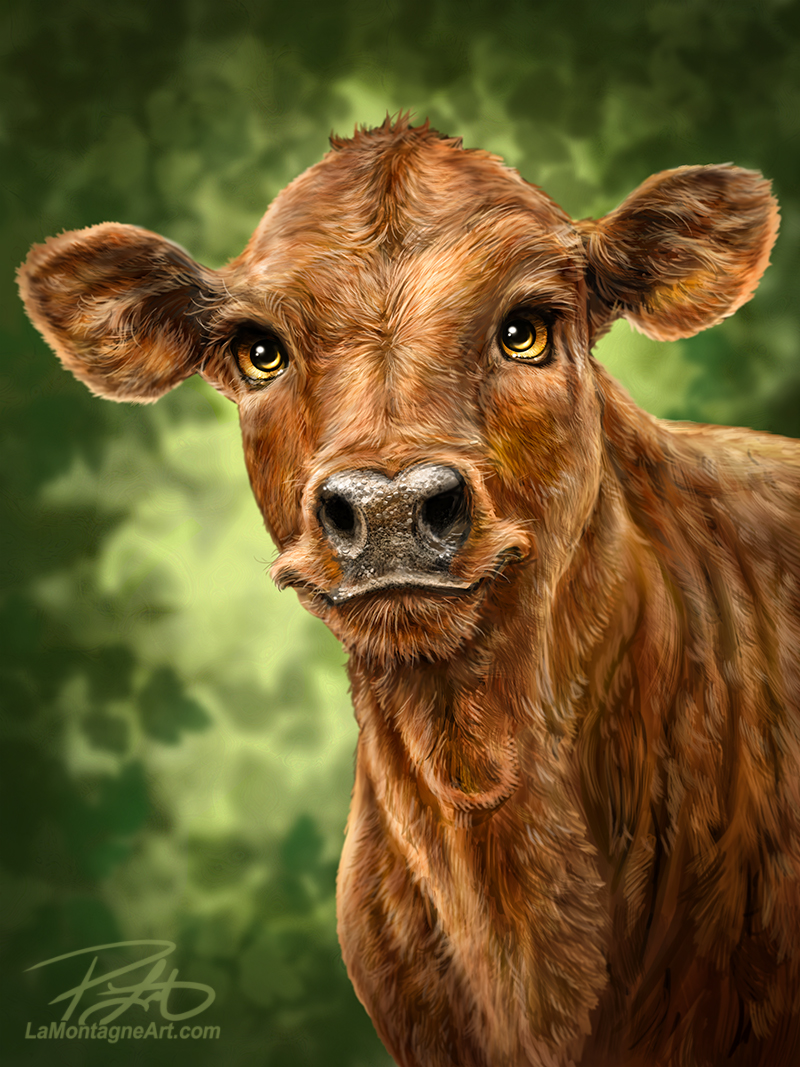 This little calf was painted from reference I took at the cabin a few years ago. I’ve since retired it because frankly it wasn’t popular, even though I enjoyed the work and like the painting. That happens a lot, where my favourites may not be your favourites.
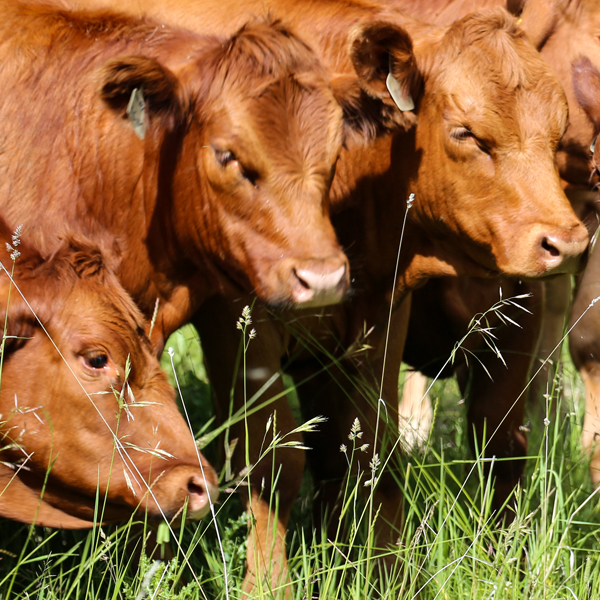
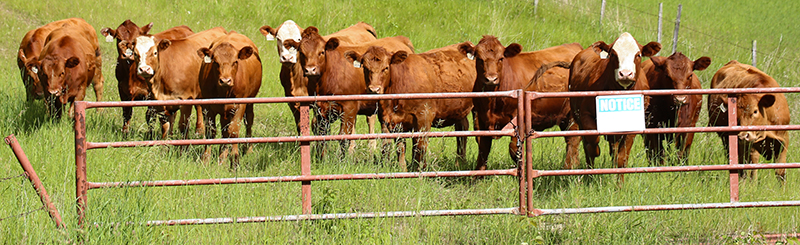 But one evening on this visit, I noticed the neighbour’s cows hanging around his gate near the road, and shortly after this first pic, they clustered together and it struck me comical. So I took a bunch of photos, and though I’d work from several of the ones I shot, I think there’s a painting here. Already thinking about how long it would take, but this is a marathon, not a sprint.
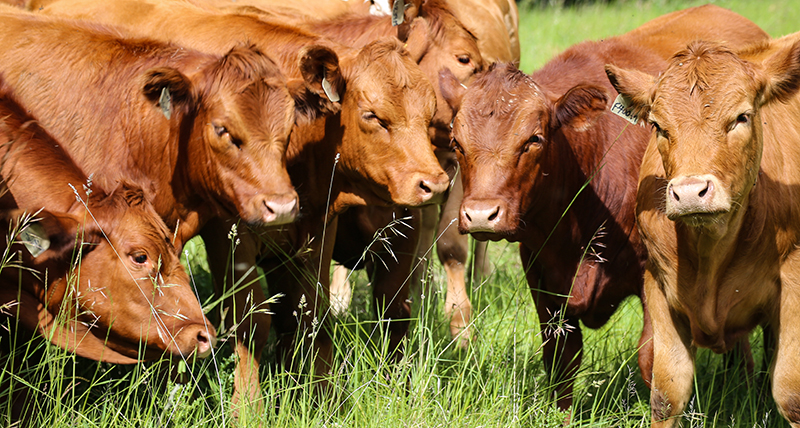 I’ll have to let it simmer a bit, but whenever I hear that voice whisper, “hey, look here,” I try to pay attention.
We did our usual: cards, games, guitar, napping on the deck, and wandering the property without agenda. We had some (always welcome) on-and-off rain, a loud, windy thunderstorm with a bit of non-damaging hail, but overall, the weather was pleasant.
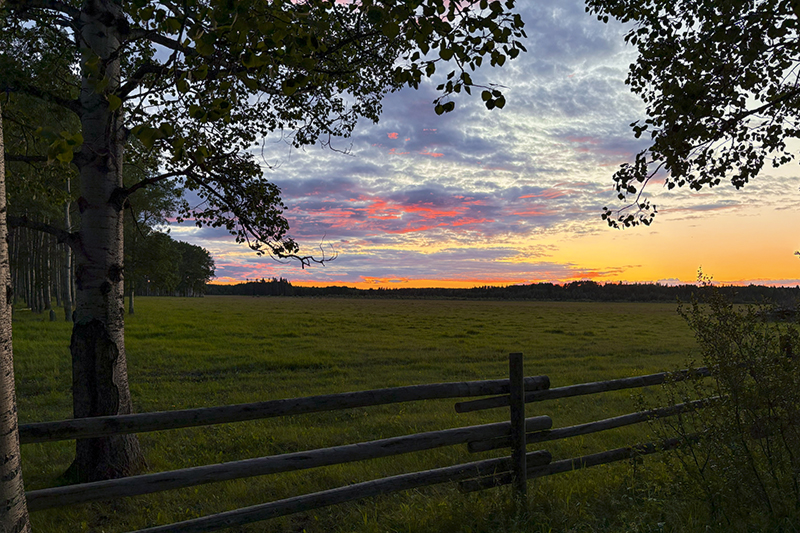 And while I still spent too much time in my own head, thinking about work and worrying about things I can’t control, the setting and company helped me turn down the volume for a few days.
I’ll have some new work to share with you soon.
Cheers,
Patrick


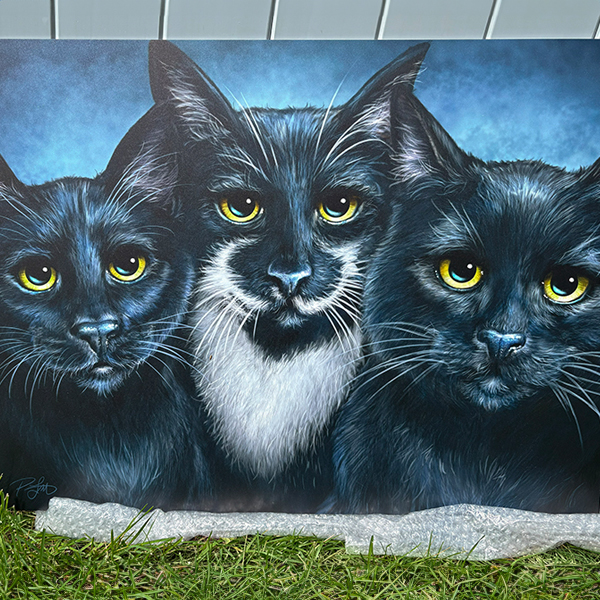
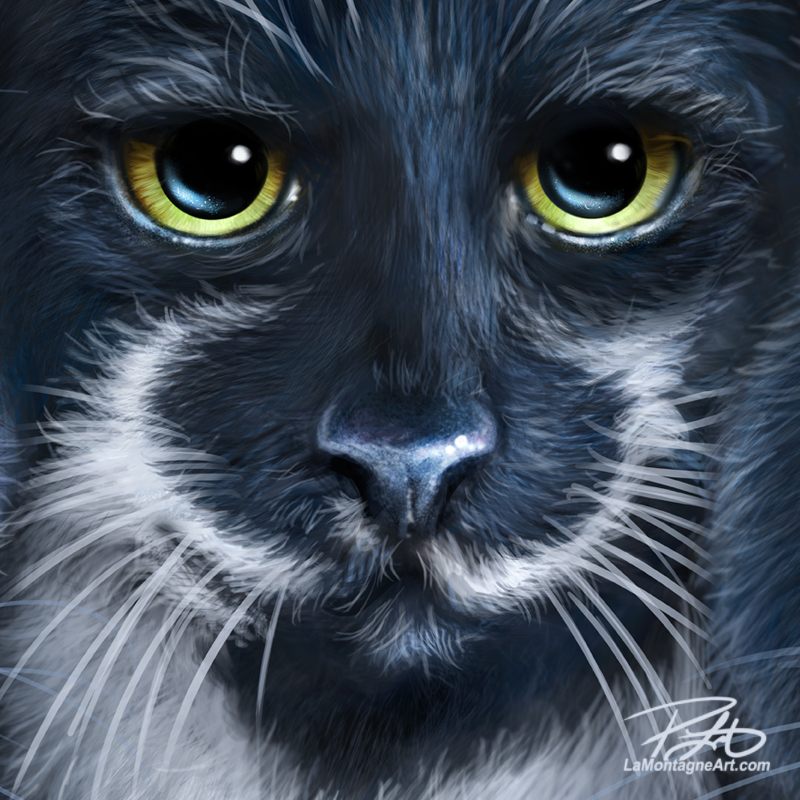
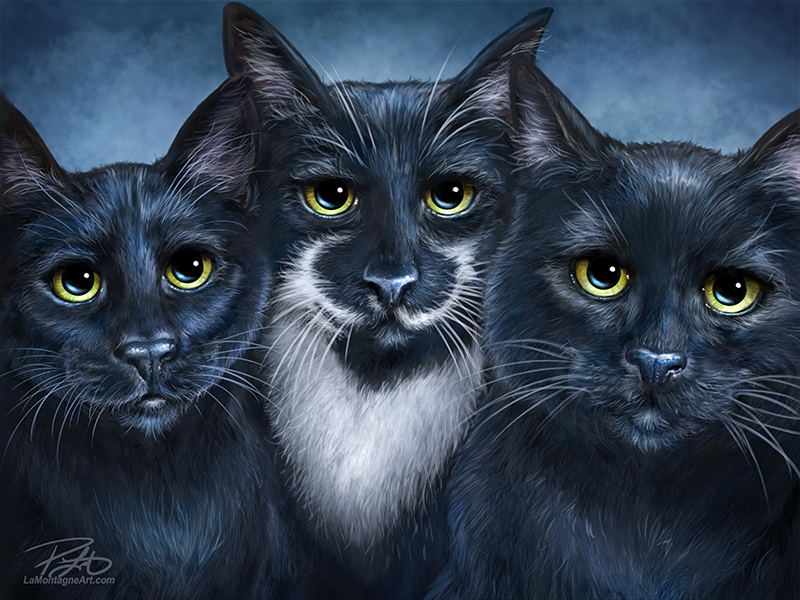 You’ve all heard plenty about the three-cat commission I’ve been working on in recent months, so I’m pleased to finally reveal the finished painting of Fable, Mortdecai, and Jack.
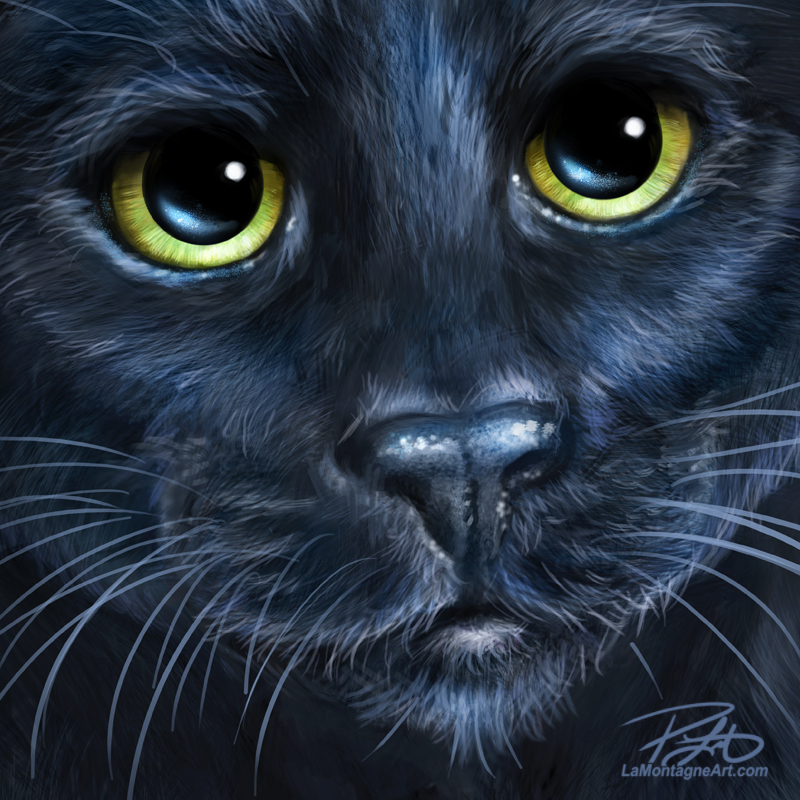 While Mortdecai has some white in him, they’re all still black cats. Both black and white animals, wild or domestic, bring their own difficulties, mostly because they’re not really either. Black fur is defined by the light it reflects, and white fur has similar challenges. It’s the shading that gives the features depth and form.
 Tobi, my client, has a thing for ravens. A lot of the art in her home features them, and I can’t say I blame her. Shonna and I admired some striking raven pieces on her walls when we visited. Shonna likes ravens, too, and longtime followers might recall the aluminum print photo I gave her for her 50th birthday. You can see and
 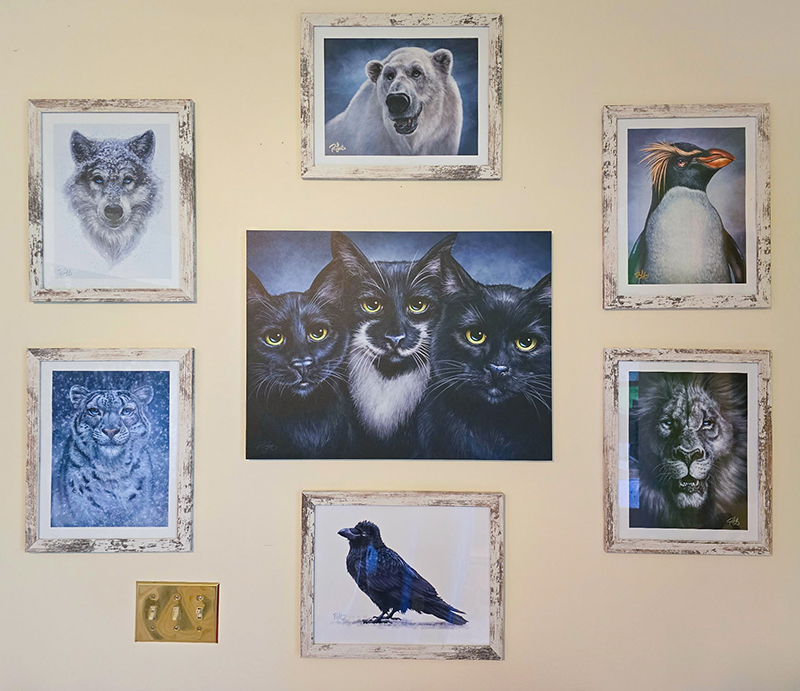 Tobi has been following my work for quite some time. Along with other art in her collection, she owns many of my 11×14 poster prints and a few metal pieces. For this delivery, she had also ordered a custom 16×16 square-cropped metal print of my Winter Raven painting, along with the cat commission.
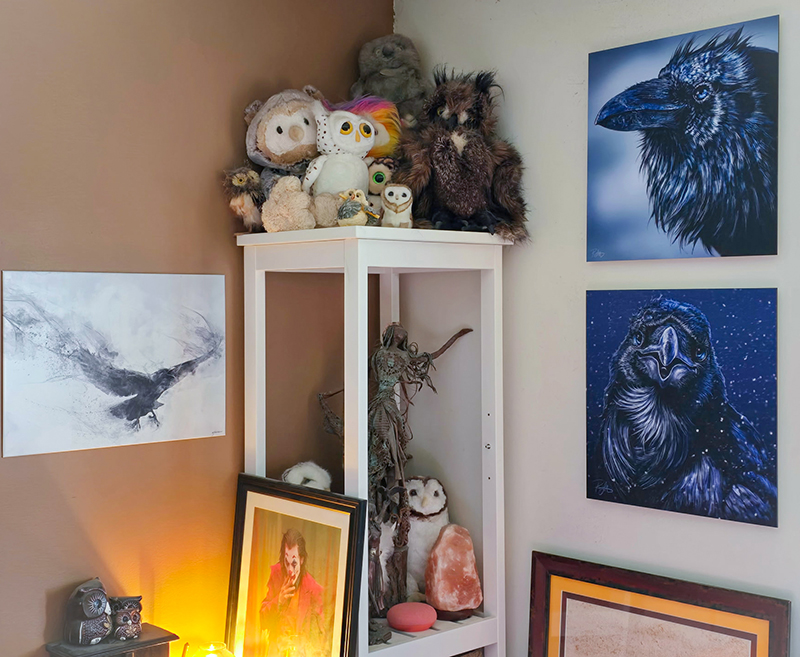 Commissions require a lot of back-and-forth. My clients need to be part of the process, otherwise I may not be able to deliver what they want. I’m fortunate that those who have hired me to paint their pets have almost all been engaged and enthusiastic. They dig up photos, share stories, and talk about personalities and quirks. All of it helps me do my best work.
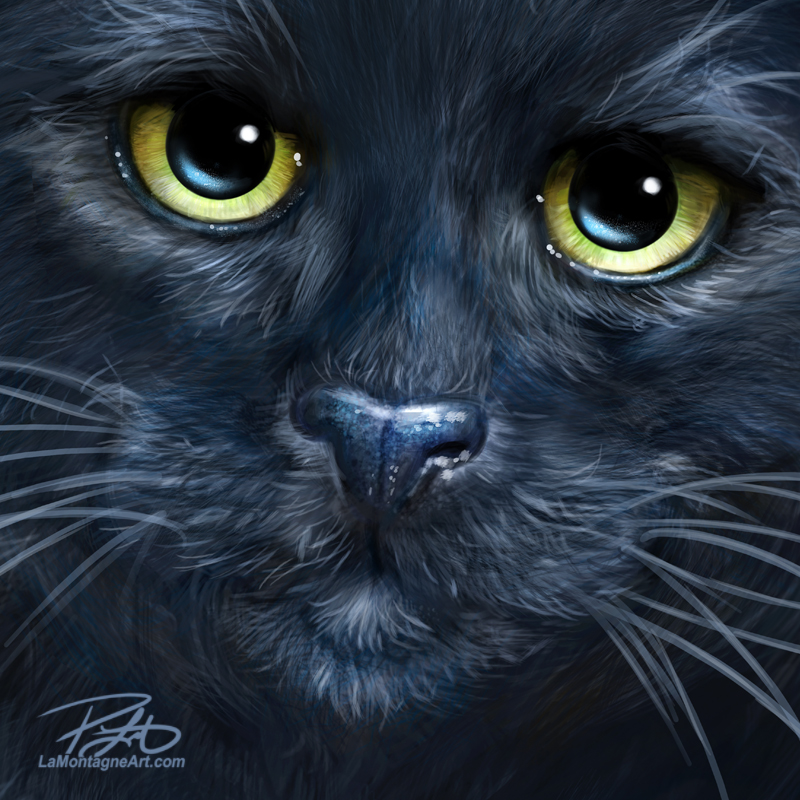 Because I knew three cats in one painting would take more time than any other commission I’ve done, I shared work-in-progress shots with Tobi and with all of you. I don’t usually do that, but since she’s been following my work for so long, I knew she could tell the difference between sketches, roughs, and a finished piece.
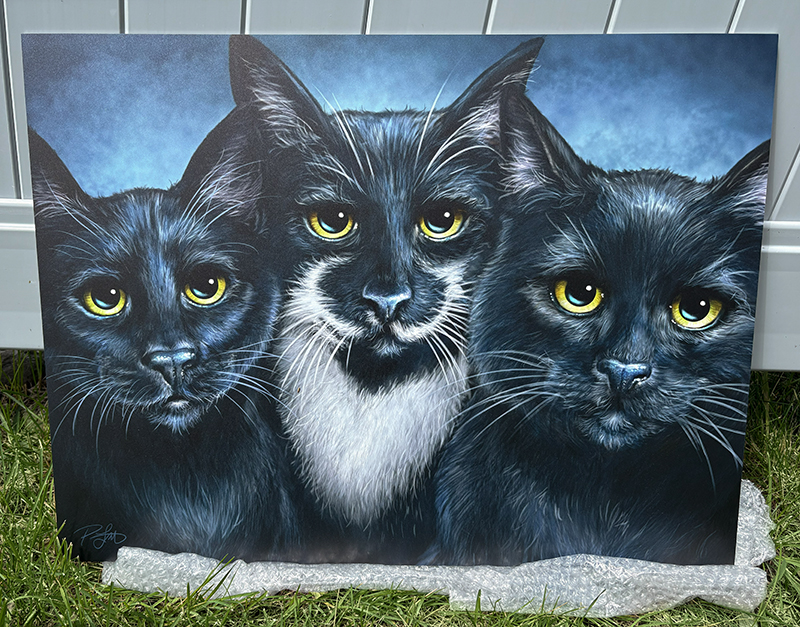 Once the metal print arrived, this shot taken with a lot of light, I arranged to deliver it to Tobi’s home in Calgary. Shonna came along for the ride, and we enjoyed the reveal in person. We also wanted to meet the cats, of course, but in true feline fashion, one ran away, one watched us from up the stairs, and the third never showed. Our old cat Muse was like that, too. Great with us, no time for anyone else.
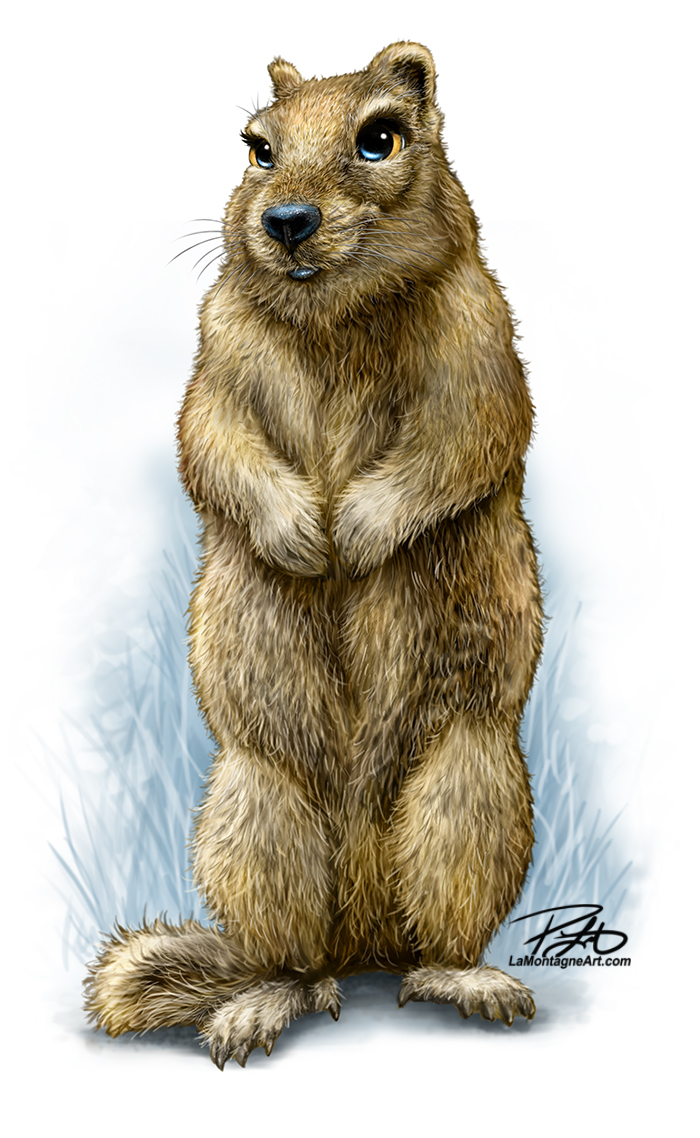 After wrapping up the three-cat commission I’ve been working on (and talking about) for the past couple of months, I needed a reset. Not a full break—but something without expectations, pressure, or deadlines. Just a chance to paint for myself again.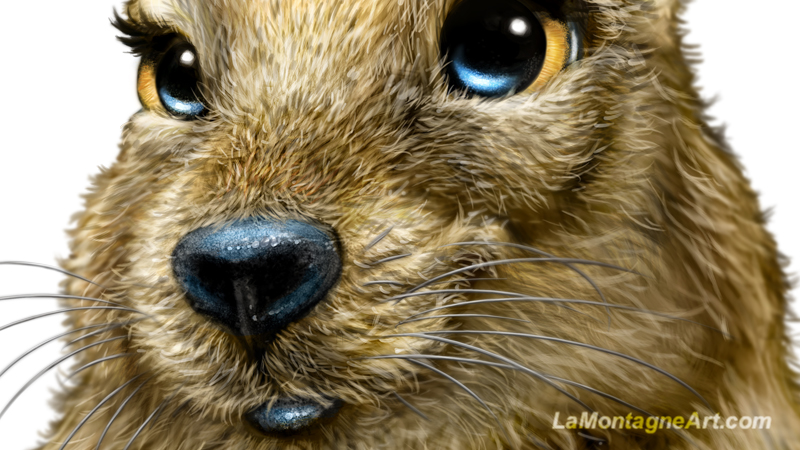


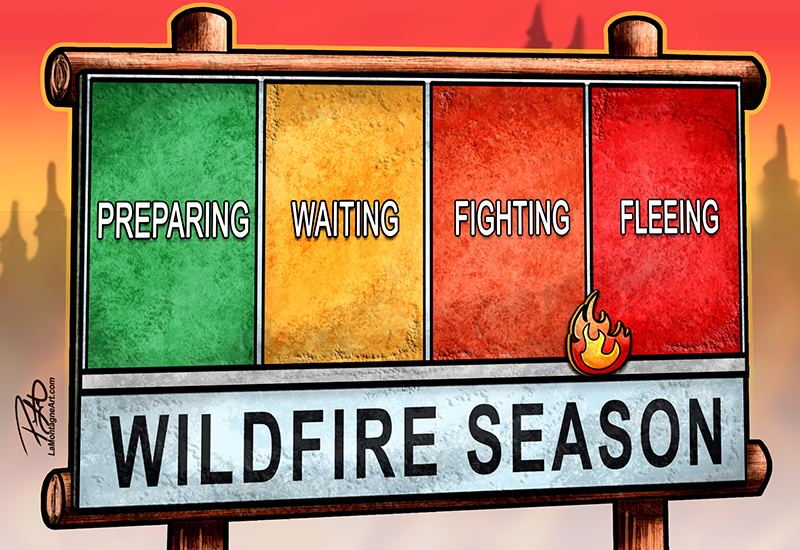
 But even that’s not as comforting as it used to be. The wildfire threat has been weighing heavy. After Jasper’s nightmare last year, it feels like everyone in our part of Alberta is bracing for our turn. Banff and Canmore have done prescribed burns for years, but now they’re also logging to create larger fire breaks. Nobody’s complaining.
 I’ve been working on a big
  Meanwhile, I haven’t finished a new wildlife piece in a while, and that’s eating at me.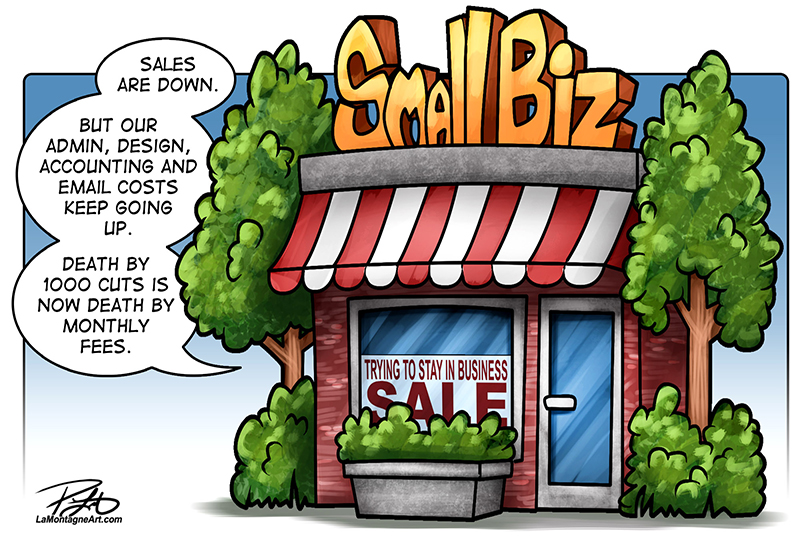
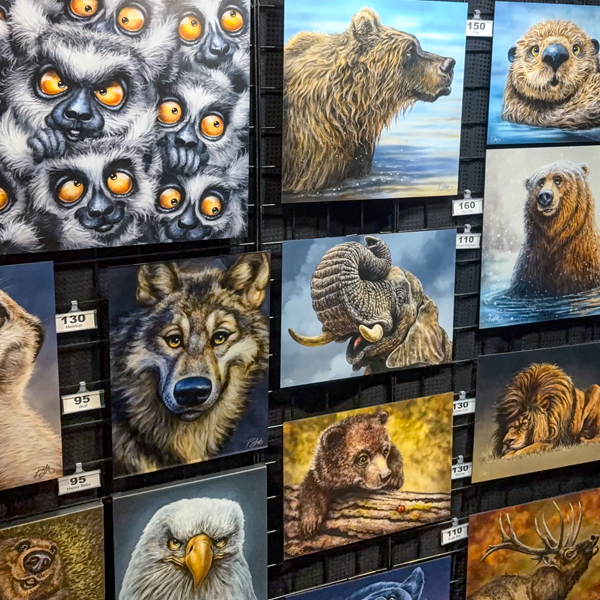
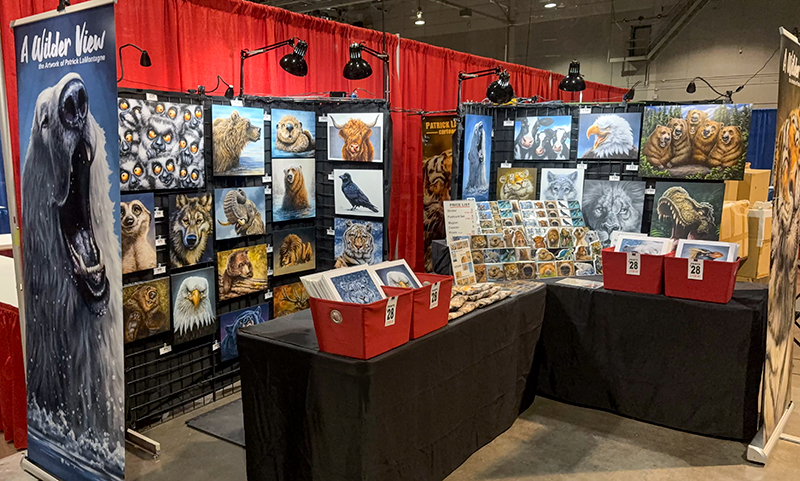
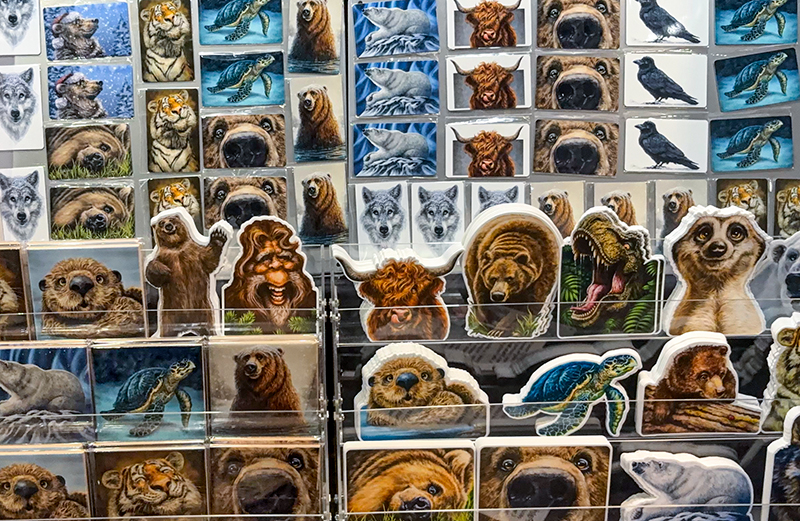 At the show’s end, tearing down took about an hour and a half. But the line-up of cars to access the loading docks was ridiculously long. I have a sturdy hand dolly that transforms into a robust cart. It was quicker for me to haul my booth out in three trips through two large halls to the other side of the building where I had parked my car. That took another hour, but it was better than sitting in a long line of vehicles for all that time.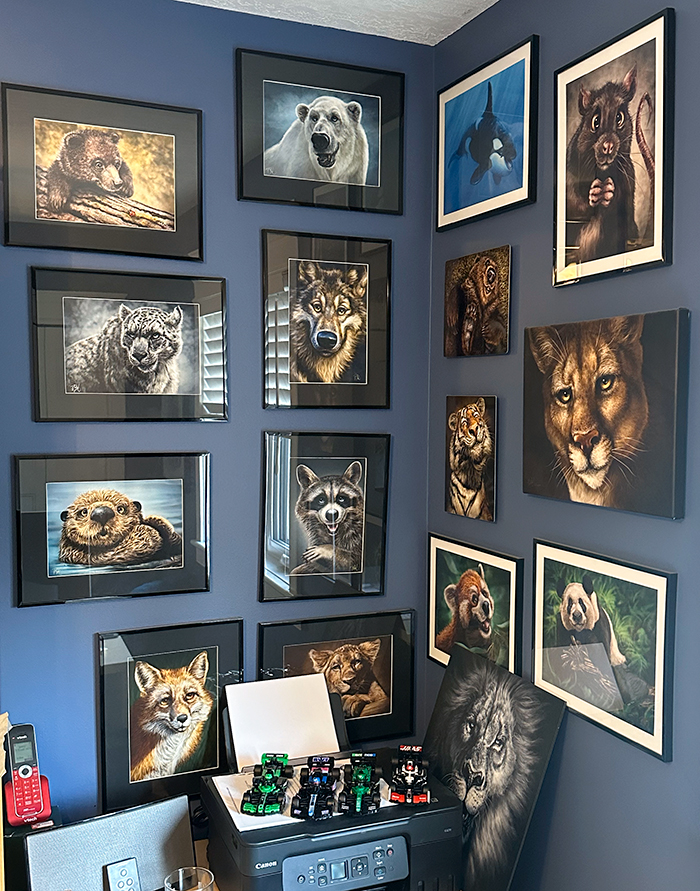
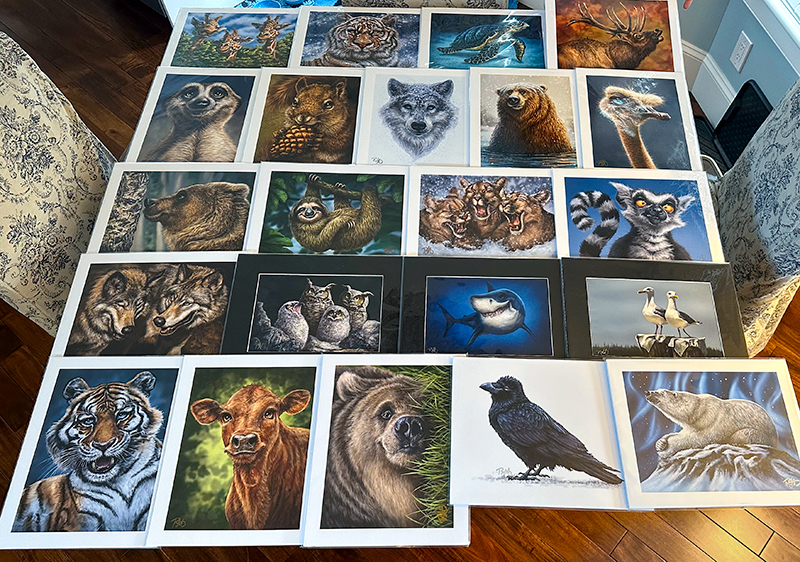
 Though I saw them all weekend, Tracy and Sheldon took these photos of their collection Saturday night and shared them by text. They rotate their prints in what they call Critter Corner. When I saw these photos, I joked that I felt like a drug dealer and it might be time for an intervention, especially since they bought more
 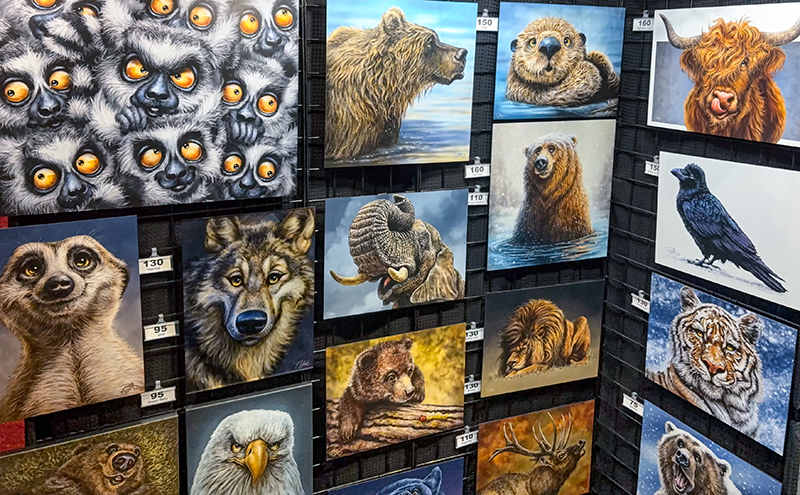 Long-time collectors also bought canvas, metal and acrylic prints this weekend. I have more of those orders to fill this week. I talked with former commission clients and ones whose paintings I’m just about to start. I got the usual gentle pressure about the book, which I never seem to gain traction on, and a few offered welcome suggestions on which animals I might consider painting next.
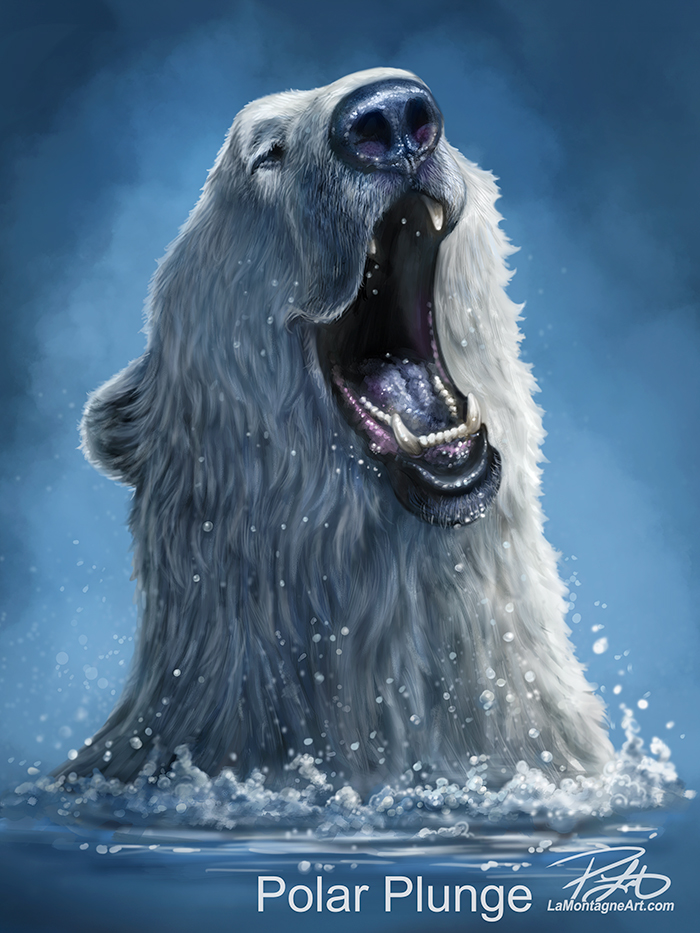
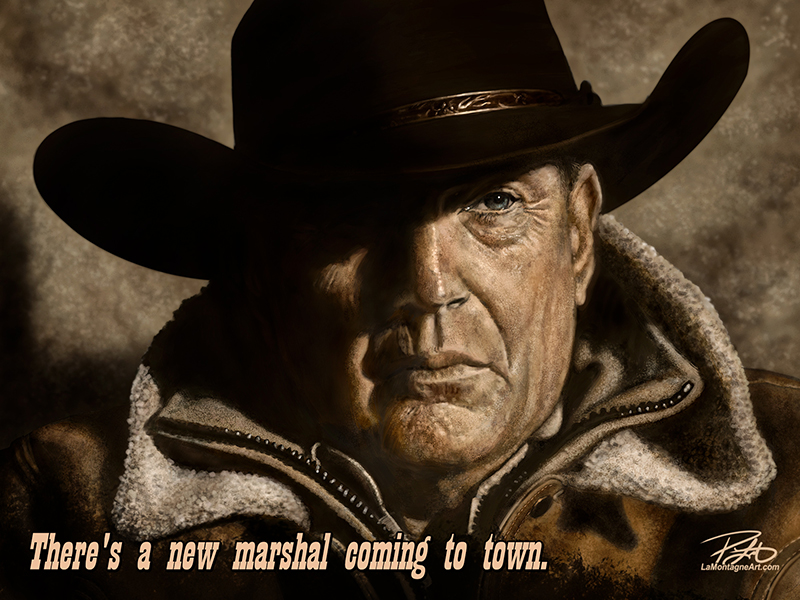
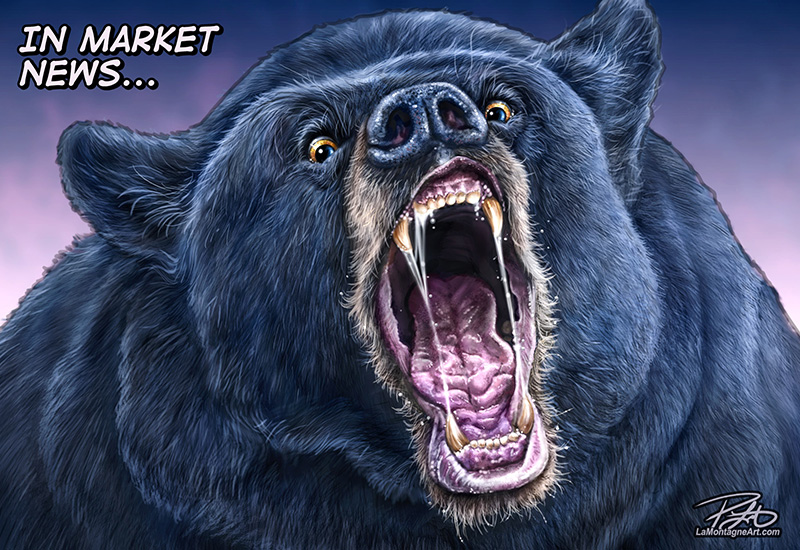 I’ve used a polar bear or two in cartoons about climate change. And when Kevin Costner was the parade marshal for the Calgary Stampede in 2022, I used my portrait of his Yellowstone character, John Dutton, in a cartoon.
 The Calgary Herald currently runs my cartoons more than any other daily newspaper in Canada, and they’ve been publishing my work for more than twenty years. How often, depends on how the editor of the day feels about my work in general. Everyone has their favourite artists.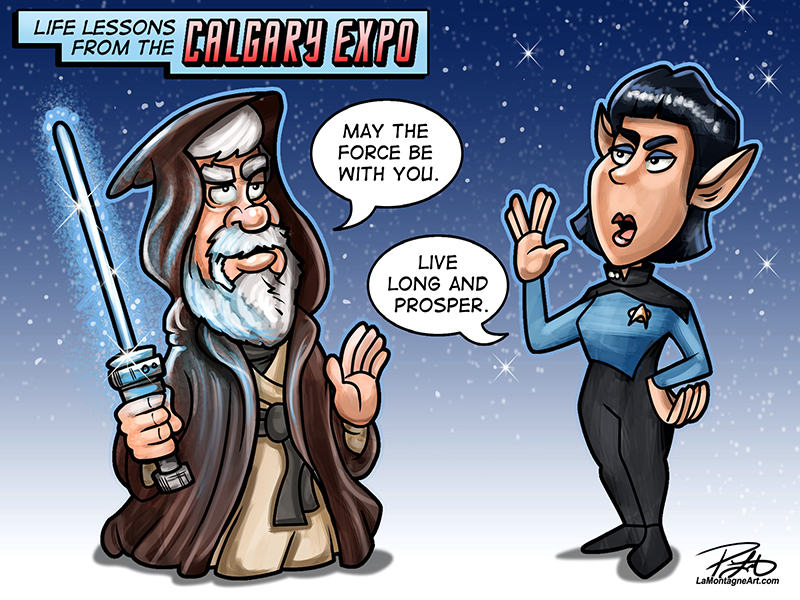
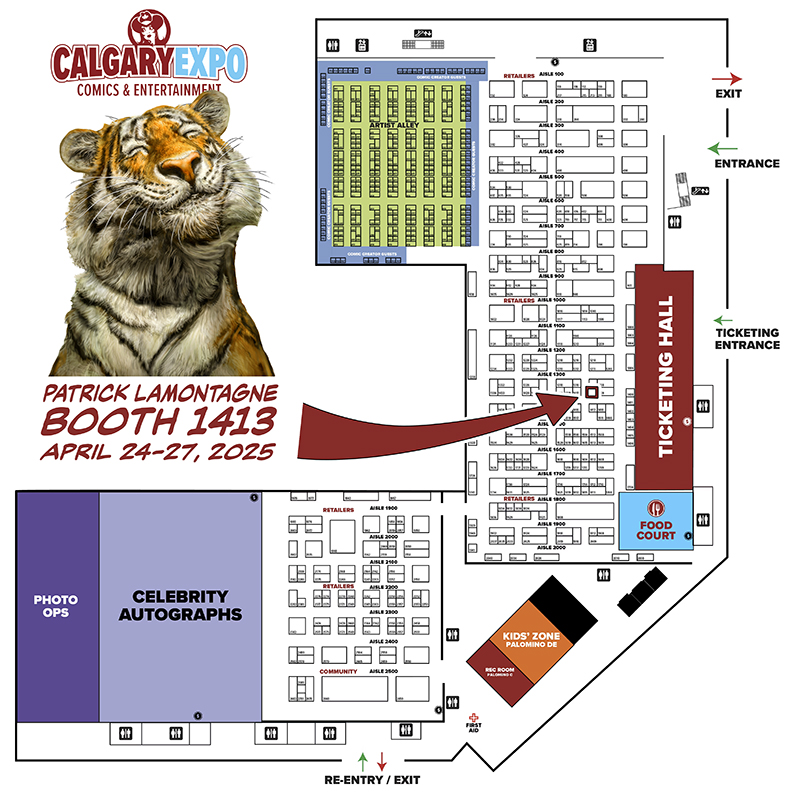 If you’re coming to the Calgary Expo, I’ll be chained to my booth from opening Thursday to closing on Sunday. I set it up yesterday, and I’m ready for the chaos. Come by and say Hello!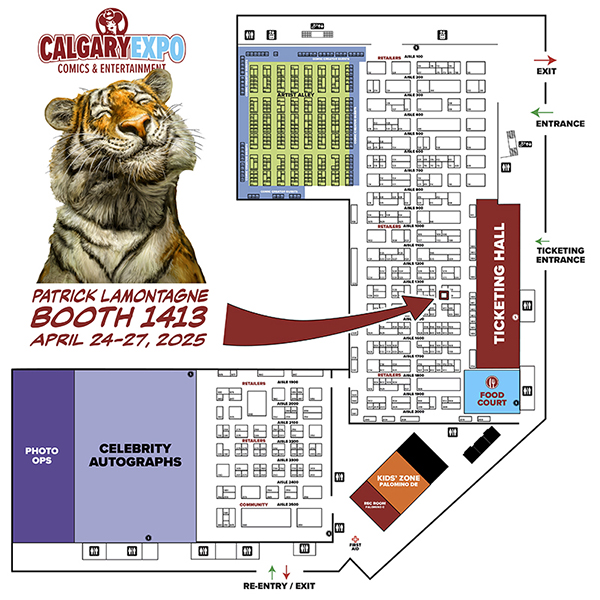

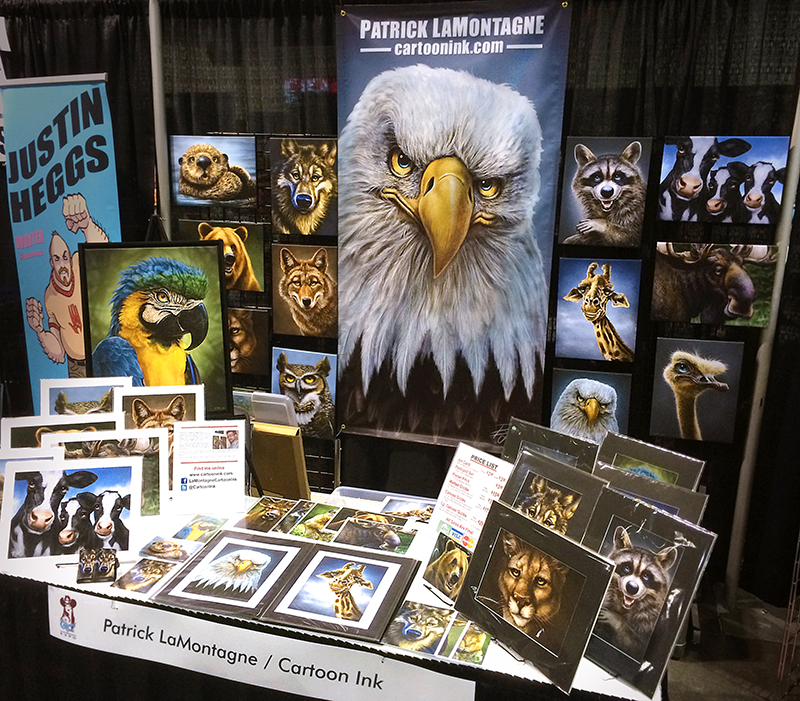 This was my first year setup, and I was thrilled I got enough sales to cover my expenses. Shonna helped me out the first couple of years, but I’ve long been able to handle this show solo. She works hard at her own job, so I don’t need her to come and do mine, too.
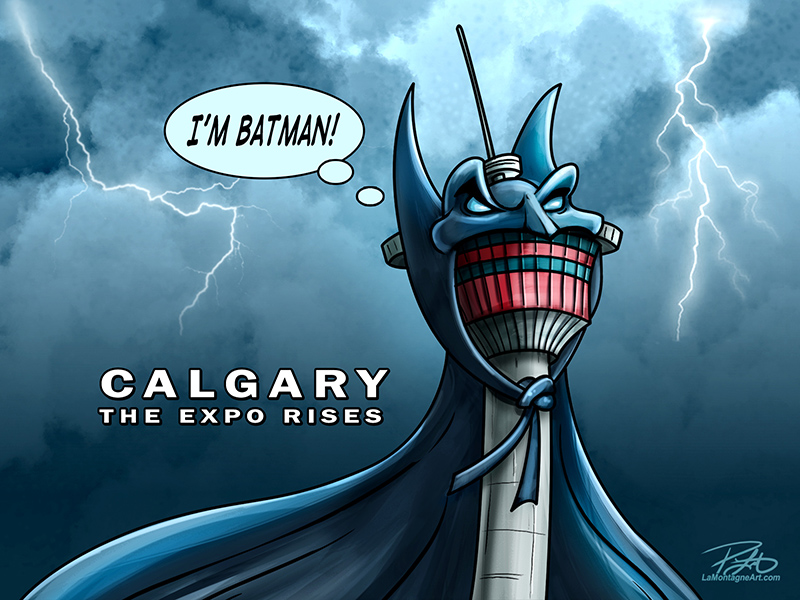 The BMO Centre has been under renovation for several years, and the show’s footprint has kept shifting. With the convention centre expansion and renovation completed this year, it’s a massive change, and Artist Alley is finally back with the rest of the show.
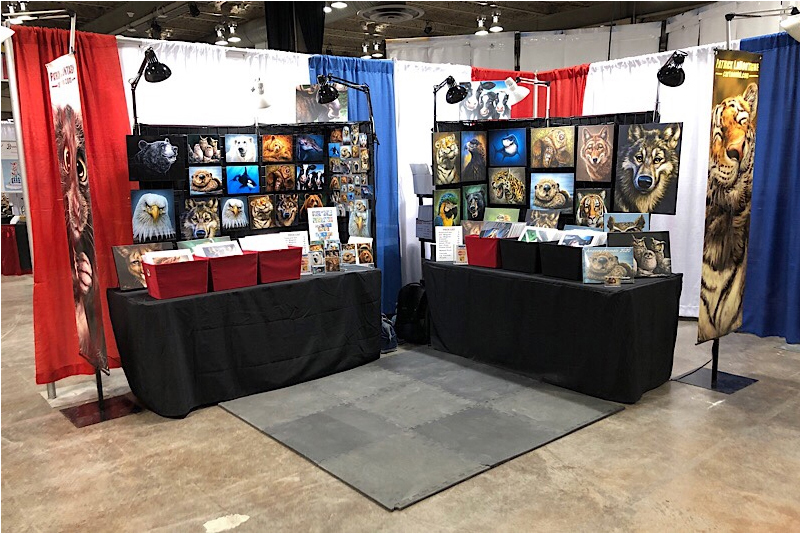 This was my booth in 2019, one of my best spots ever. During setup, the booth next to me was a no-show, and the vendor on the other side of the gap asked the organizers if he could take some of that space. They agreed. He excitedly came to me and said he’d only take half of it, and I could have the other half, a generous gesture on his part. We both expanded our booths and even had storage space between us.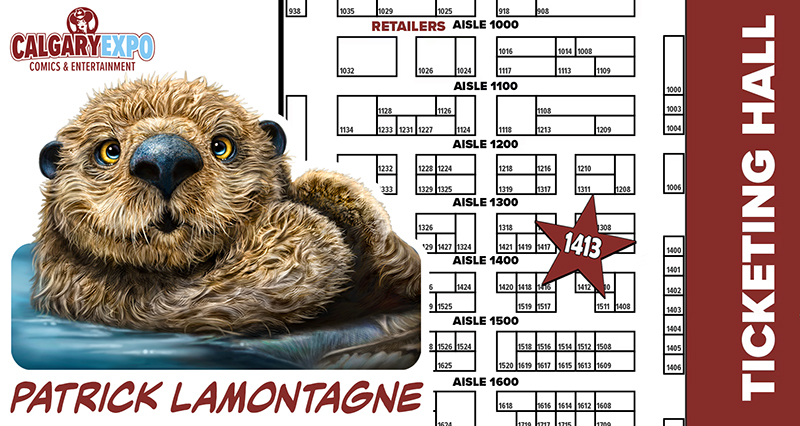

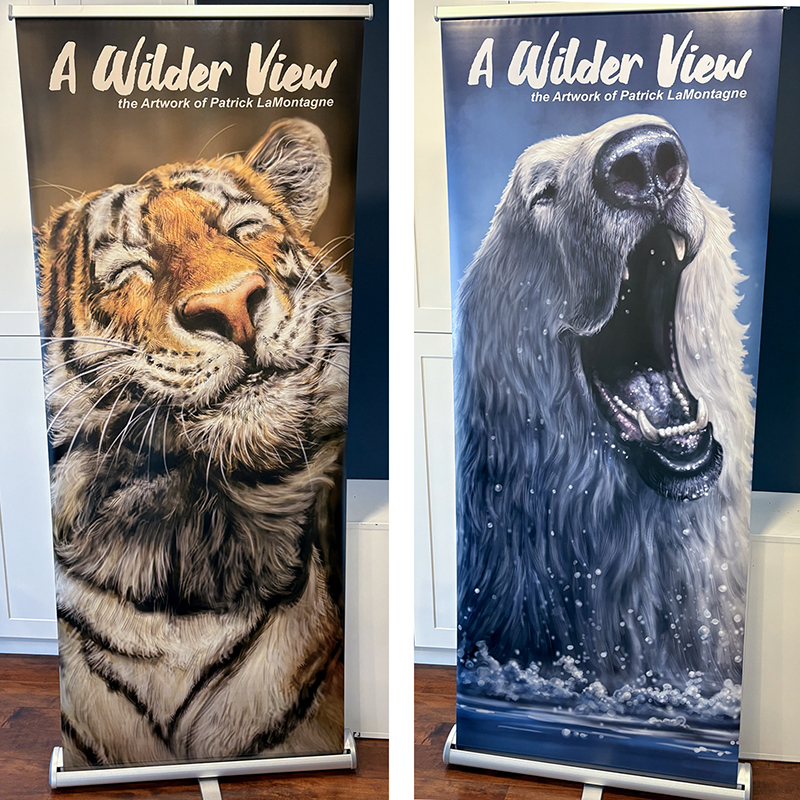 Fortunately, everything I need for Expo is already here or on the way. I placed a large print order earlier this week to fill orders for
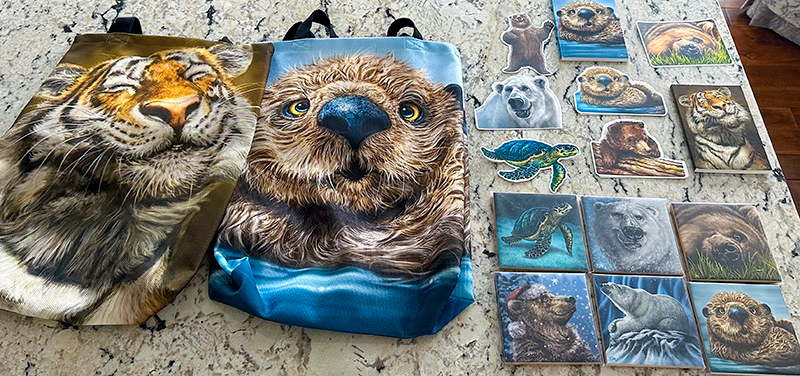
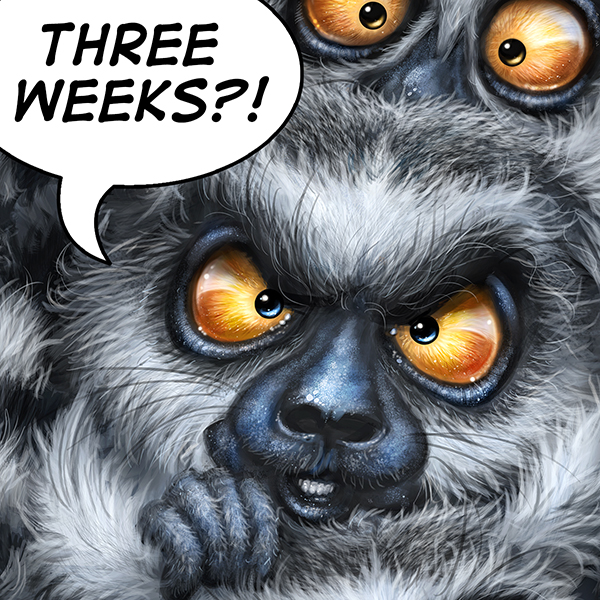
 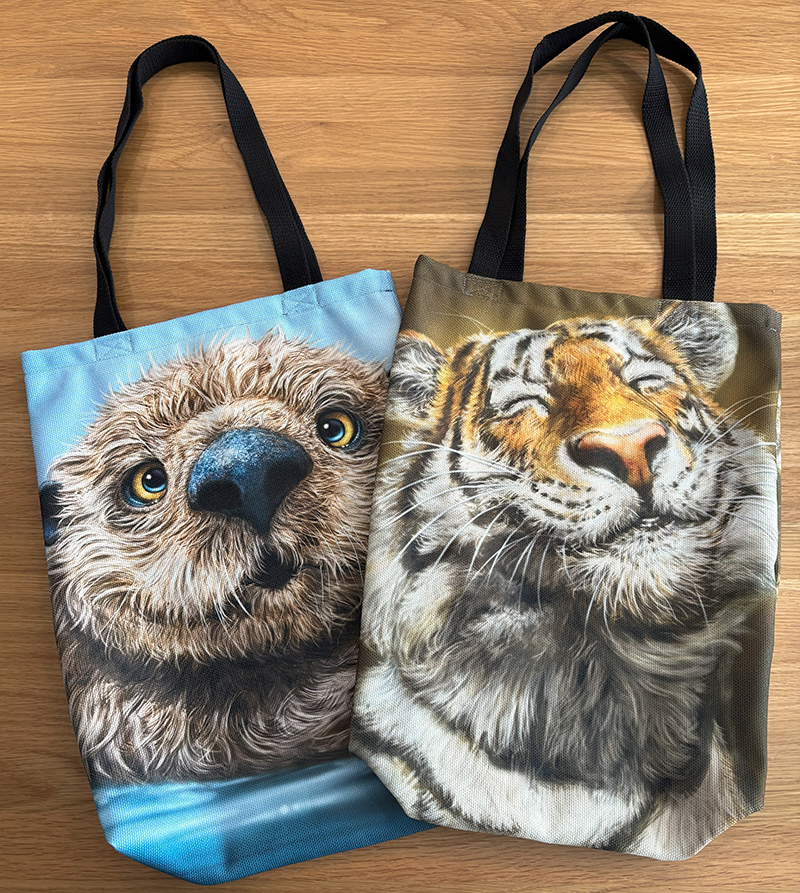 Additionally, the next three weeks will be some of the busiest of my year, and the bags won’t even be here for another week. I don’t have the room to add hours and days of shipping and delivering tote bag orders on top of all the prep and drawing cartoons.
 But every year, even if they follow