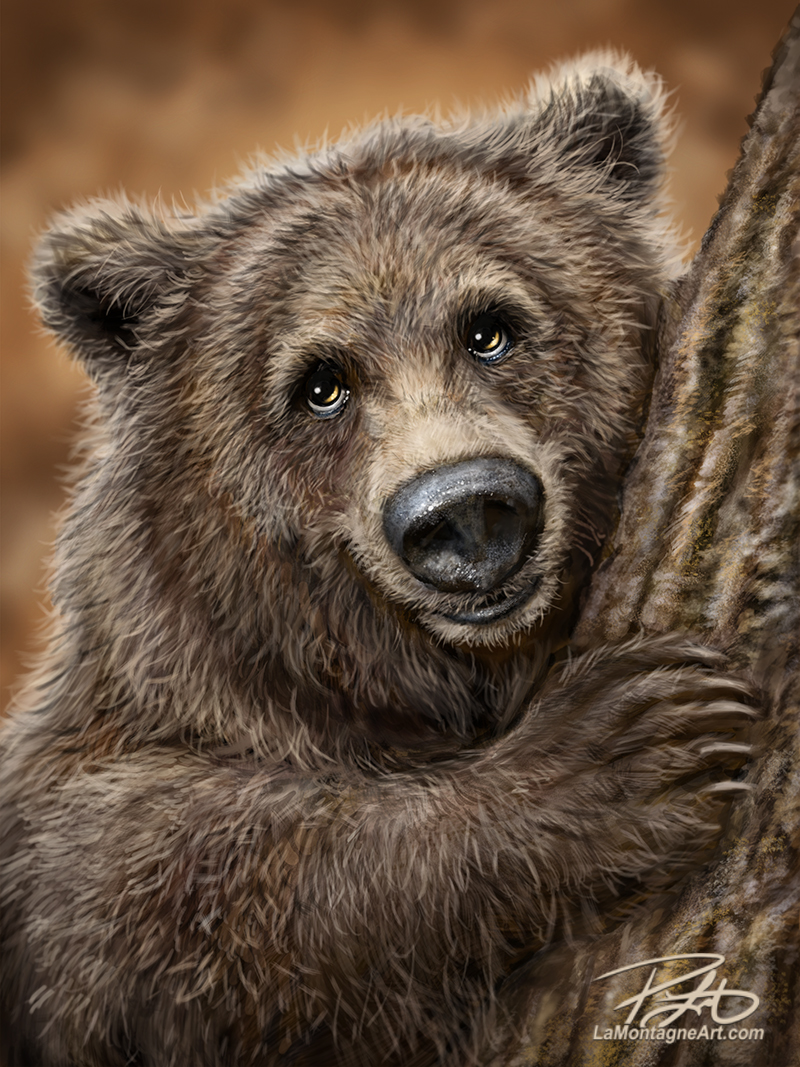
A new painting finished this week. I now have all the planned images completed for the bear book, plus a few I didn’t expect to finish and include. Now I just need to write some more stories and put it all together in InDesign.
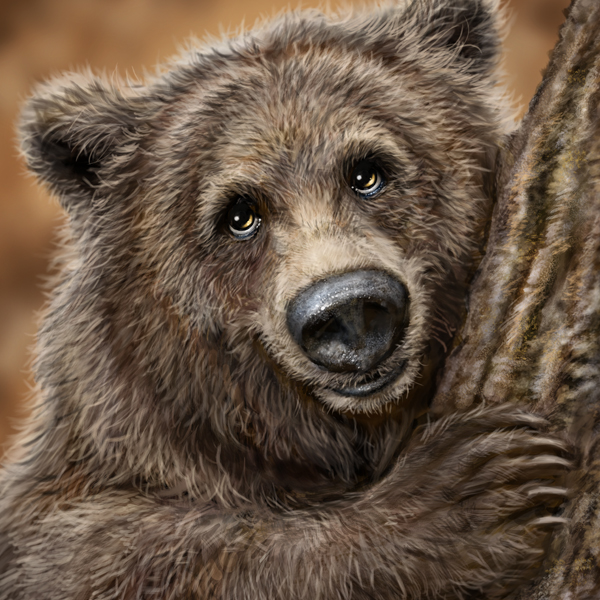
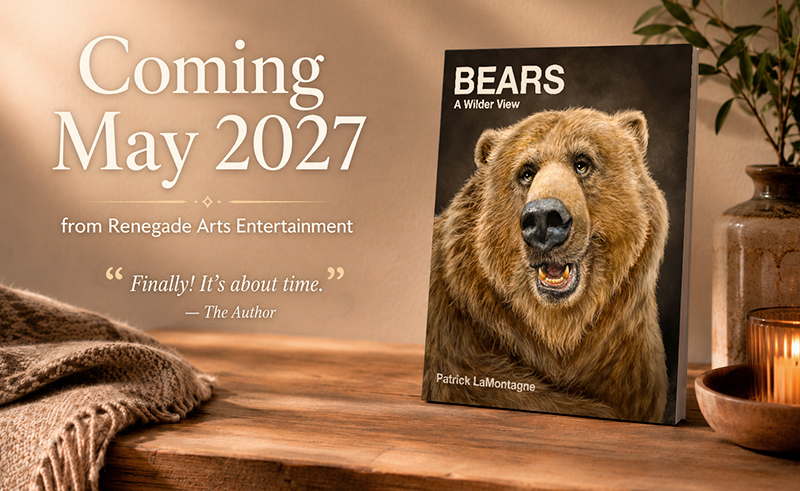
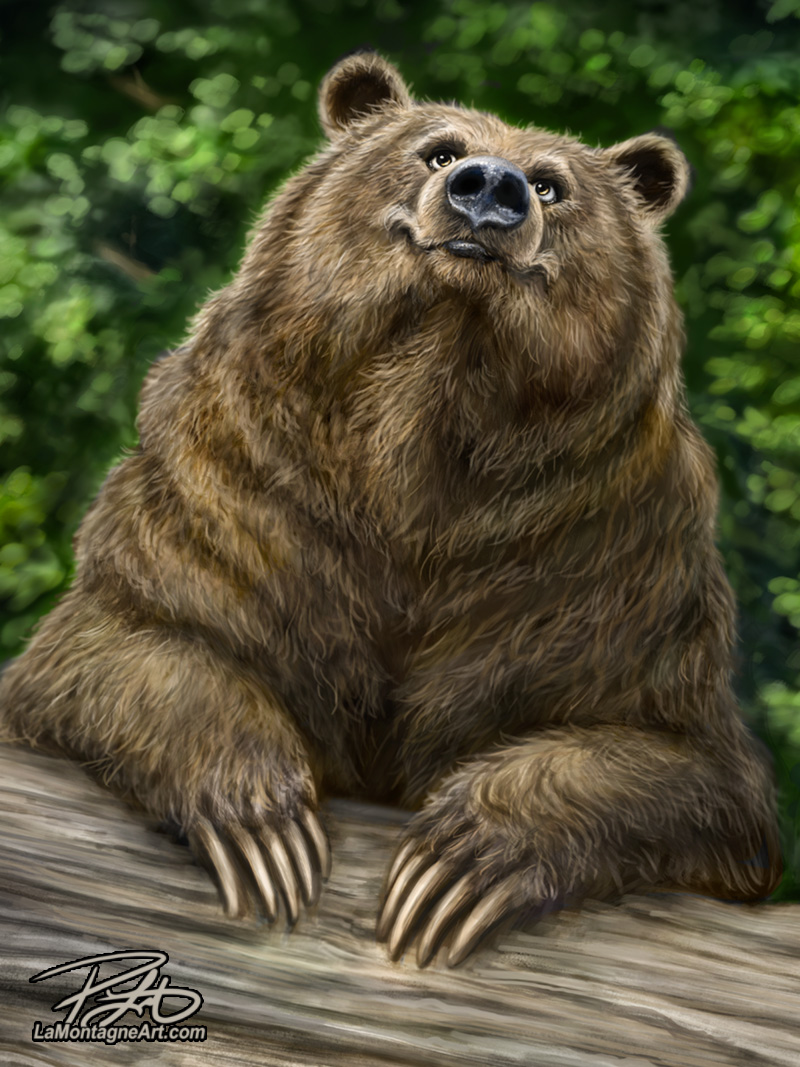
This painting, which I’ve called Treehugger, was originally supposed to be the cover of the book, but my publisher needed one sooner than that. I’m still happy with Crossed Paws in that prime spot, and this new piece will have a two-page spread in the book. Regardless of which painting ended up on the cover, however, it was always going to be Berkley. I’ve painted her more than any other bear.
Having had the joy of meeting her when she was an orphaned cub in April of 2017 at Discovery Wildlife Park, both Shonna and I had several opportunities for close contact with Berkley in her early years, and it was remarkable to get to know such a joyful and gentle bear. And Serena, who raised her, has become one of our favourite people.
Though close contact is no longer allowed for anyone but the keepers at the park, my time getting to know Berkley has been one of the most profound experiences of my life.
It was only fitting that the last piece for the bear book was another painting of Berkley, from reference I took in the fall of her first year.
I often talk about the personality showing up in a piece, that unexpected moment when I’m painting little brush strokes and life just seems to appear. It’s always stirring, often a bit emotional, and more times than I can count, I’ve actually said aloud, “There you are.”
And I don’t even realize I’m going to say it until I do.
On this painting, it was visceral. One minute it was a painting of a bear, the next it was Berkley.
For all the stress, worry and grind that comes with doing this for a living, those moments can’t be bought or planned. They have to be earned. And I’m grateful every time, when the effort pays off.
I’ve painted six or seven bears in the last year, and once the book is done, I’m going to take a bear break for awhile.
They remain my favourite animal to paint, of course, and I have more usable bear reference than I could ever paint from in this lifetime, but too much of a good thing and I might forget why I love them so much. The next time I paint a bear, I want it to be because I miss it.
And I’ve got so many other animals I want to paint, especially the domestic series I’ve been planning for several years. I took the reference photos earlier this year. Now I just need to create the paintings.
Right now, however, my priority is finishing this book and preparing for the Banff Christmas Market, which will be here before I know it.
This is a painting that I’ve been trying to get done for quite a while. Like many paintings, as soon as they’re finished, I haven’t yet got the distance to know how I feel about them.
That comes with time. Some of my favourite pieces only became so weeks or months after their completion.
For the Bear book I’m working on, I wanted to include the grayscale value study I had done earlier, but got it into my head that I should finish it. But honestly, I don’t yet know if I like the finished piece more than the sketch. It’s more detailed, of course, but I get far too invested in these paintings.
When I spend so much time in the details, the personality waxes and wanes and I no longer have a good perspective on them. It’s kind of like repeating a word over and over again to the point where it doesn’t sound right anymore.
And because you won’t find anybody more critical of my own work than me, there comes a time in a lot of paintings where I just feel it looks like garbage, there’s no saving it, and my best artwork is long behind me.
I am not fishing for compliments or extending an invitation to a pity party. This nasty distortion of perception and need to trash our own work seems to be something many artists share.
Early last week, I finally finished three separate dog portraits for a commission client, easily one of the most challenging projects I’ve ever done, which was unexpected. I’ll write about the lessons learned from those commissions in a later post.
I figured getting back to this painting of Skoki would be a nice breather and reset. But this book deadline is very close and that ticking clock is getting louder. And that siphons a lot of the enjoyment away from the work.
I had planned on recording more of it and publishing a video as well. We all consume a lot of video, rapidly scrolling through our feeds, but unless you record your own, you really don’t know the labour involved in writing, recording and editing each one. I just haven’t the time right now.
I have one more painting in progress that I want to finish for the book, and I’m going to try to record some of that, but I still have a lot of writing to do. I know what each topic is and where it goes. I just need to find the time to write it.
And though the layout is mostly done, I need to translate it into InDesign, a program I have never used. But it’s an Adobe product (insert fist-shaking and cursing here), so at least I know how they do things. I don’t think the mechanics of a book layout are that complicated, but I’m about to find out.
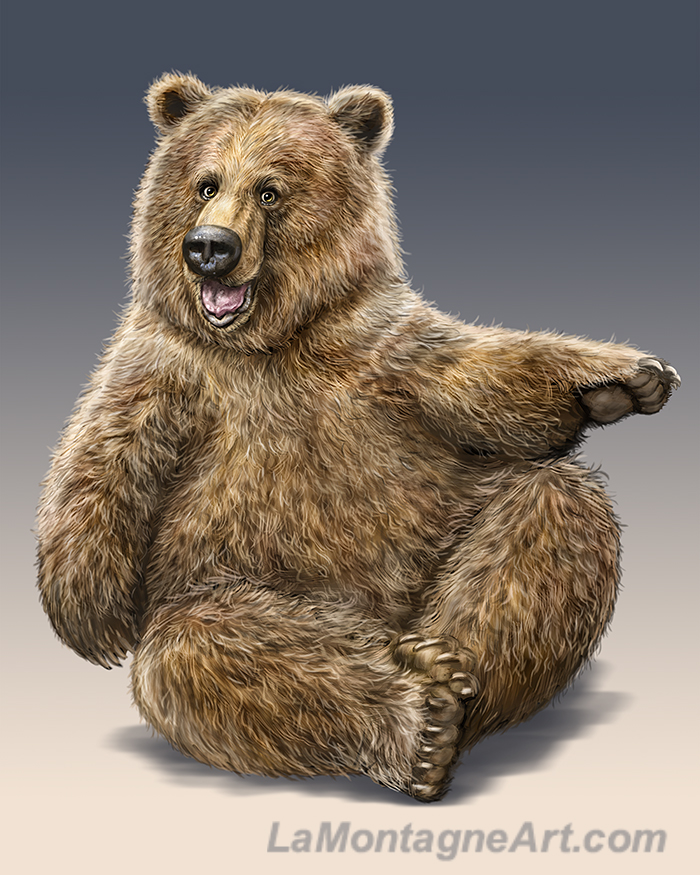
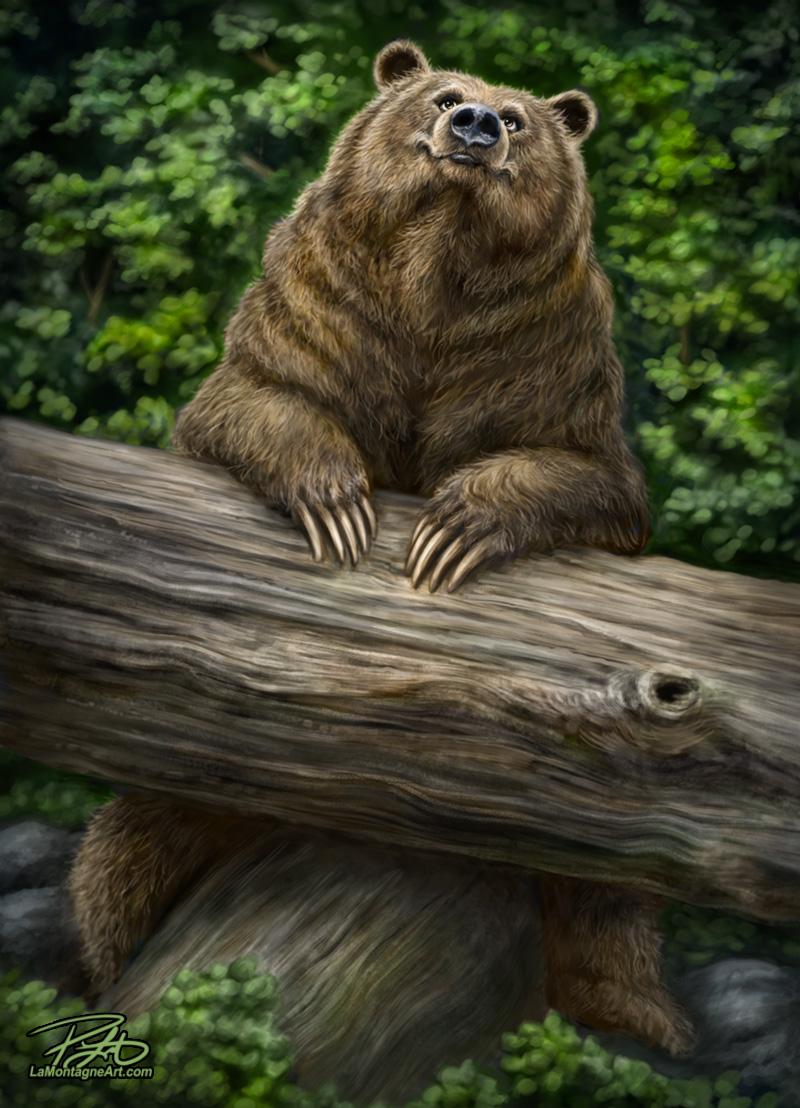
When I finished this painting and showed it to Shonna, she said there was a lot going on in the bottom half, meaning it might be a better painting if I eliminated some of it.
My first thought was, “But I spent HOURS on that!”
However, setting ego aside, I cropped it to a closer version, something I can do because the full painting is 40 inches tall at print resolution, and she might be right. Though I’ll include the whole painting in the book, I’m now thinking that when I do a print, I might just use this version.It highlights the face and personality, which is the hallmark of my artwork.
What do you think? If you were going to buy a print of this painting, which version would you prefer? The full body painting or the close crop? I’d love to hear your thoughts in the comments.
Regardless, another piece done, one more to go, and then I’ve got all the images I need or want for the Bear book.
But with all the rest of it, still miles to go before I sleep.
You can watch and listen above, or read the piece below.
As I write this, I’ve just turned 55.
I’ve got a strange relationship with birthdays, especially in recent years. I’ve never been that big on them. They’ve often felt more like an obligation than a celebration, something I’m expected to enjoy for other people.
Twice a year, I experience a certain flavour of melancholy. New Year’s is one, my birthday is another. It starts a few weeks out, taking stock of where I’m at and feeling like I haven’t done what I meant to in the year that’s passed.
Which is a bit ridiculous, because if I try to name what I actually wanted to do, it’s a mix of specific things, like finishing my bear book or getting out for more wildlife experiences, and vague ones, like doing less doomscrolling, painting more, and yes, making more money.
I’ve never claimed to be above that.
Money may not buy happiness, but it does offer security.
In the months between New Year’s and my birthday this year, I’ve been taking more stock than usual. Not because I want to slow down. I don’t. Time off isn’t good for me. An overactive creative mind left idle tends to wander into places I’d rather it didn’t.
But I’ve become acutely aware that 40 doesn’t feel that long ago. And yet, it’s the same distance between then and now as it is between now and 70.
That lands differently.
I still have a lot of work I want to do. I don’t think I’ve done my best work yet. I’m still improving. I’ve spent most of my art career agreeing with those grade school teachers who wrote the same thing in my report cards. Patrick isn’t living up to his potential.
Those demons are always around. I don’t mind calling them what they are, my own particular brand of batshit crazy, but I’ve come to accept they’re tied to the same place the work comes from.
That’s the trade.
Physically, I’m in decent shape. A few more aches, worse sleep, more bad dreams, a little less tolerance for things I used to shrug off. Nothing alarming. But I’m not naive about where I am on the timeline.
I’m seeing more obituaries for people my age. Some younger. People I’ve known, or at least known of, for years. Heart attacks. Cancer. Strokes. Plans that didn’t get finished.
Didn’t they all think they had more time?
I don’t fear death itself. But I do think about the stretch between now and then more than I used to. I have an acute awareness that the runway isn’t endless.
So what does that have to do with art and funny looking animals?
My start in this career wasn’t early. I didn’t even consider doing this for a living until my late 20s. I’ve been full-time for twenty years now, and for most of that time, I’ve felt like I’ve been trying to catch up.
To who, I couldn’t tell you.
A lot has gone right, some of it by design, some by accident. I never got an editorial cartoonist contract with a daily newspaper, something I really wanted in the early 2000s. In hindsight, I’m grateful for that. Staying self-syndicated meant I still have that part of my business, long after most of those staff jobs disappeared.
Nobody is more surprised than I am that I’m still drawing editorial cartoons every day.
In those early years, I threw a lot at the wall. Some of it stuck, most of it didn’t. Or at least that’s how it felt at the time.
I spent years drawing caricatures of celebrities and regular folks, taking commissions for birthdays and weddings. I did contract illustration work for board games, everything from game cards to box art. I even went down the animation rabbit hole for a while, learning software, recording voiceovers, trying to figure out if that was a direction worth pursuing.
Even though it wasn’t, none of that time was wasted. Every one of those detours built skills I still use.
And one of those experiments became the work I enjoy most, my whimsical wildlife portraits. I painted the first one in 2009 with no real plan. It was just fun, so I did another. Now there are well over a hundred, plus all the sketches and half-finished ideas sitting in folders.
That part worked out.
But something has shifted this year. Maybe it’s the number. Maybe it’s just time doing what time does. Either way, the question feels louder now.
How many more years do I get to do this?
I’m not being dramatic, I’m being practical.
I don’t need a big deal made about my birthday. It matters to me for reflection, but I don’t want it to be a social thing anymore.
A couple of years ago, I rented a cabin for my birthday and went there by myself, just to think.
And it didn’t work.
Because there were the birthday texts. Emails. Phone calls. All well-intentioned. People reaching out because they care. And I answered.
Which pulled me out of it.
That’s when it hit me that it’s not just about wanting the time. It’s about protecting it.
For most of my career, I’ve spent more time running the business than doing the work. Marketing, promotion, logistics, all necessary parts of the job, but they come at a cost.
Time.
And I’ve given too much of it away.
To projects I didn’t really want to take on. To requests I said yes to just to be polite. To things that had nothing to do with the work I actually care about.
I’ve let other people’s agendas, criticisms, and priorities dictate my direction, even when I knew better. I went along to get along. And I regret that.
I can’t afford that anymore.
These days, it’s a polite no.
Because they’re not minting more time.
Even writing this, I caught myself wondering if it sounds too dark. If I should lighten it up, because people just want happy animals and not my voice in their ear going on about this stuff.
But honestly, who am I to decide what people want?
Before I painted my first whimsical grizzly bear, nobody was asking for it. It connected with some people who were already following my work, and then more people came along who liked my brand of wildlife painting, too.
With less time ahead than behind, I don’t have the luxury of trying to be everything to everyone.
The people who like the work, the funny looking faces and the writing that goes with it, will stick around.
Those who don’t will find what they’re after somewhere else. No hard feelings.
We’re all living on borrowed time.
I’d like to spend more of mine on the things that make it bearable.
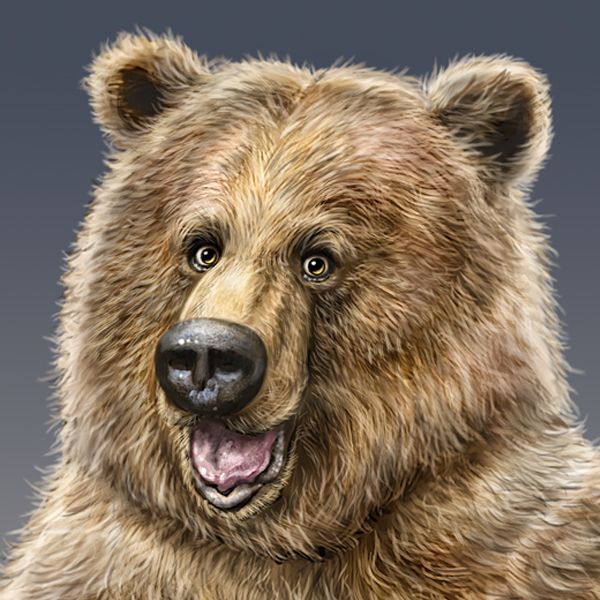
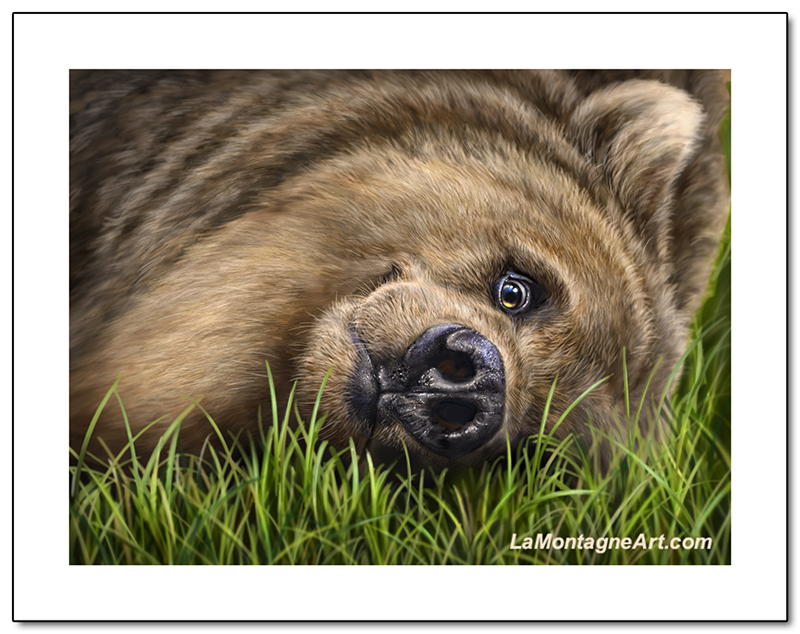
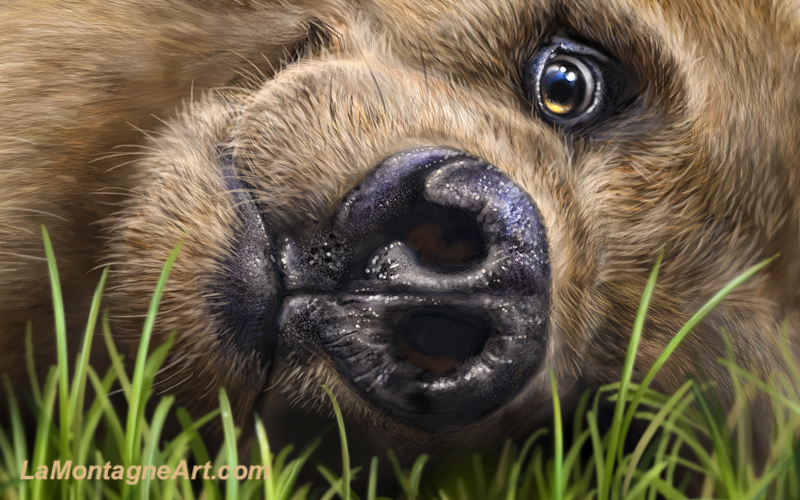
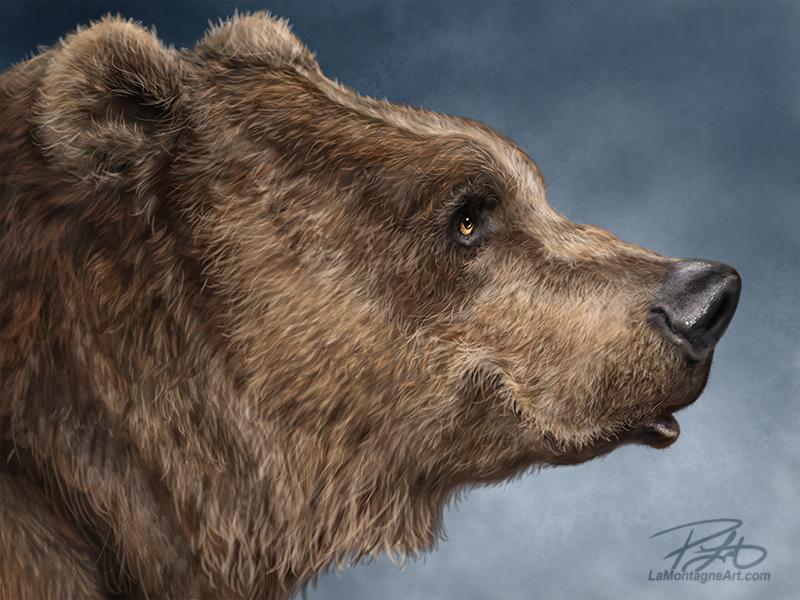
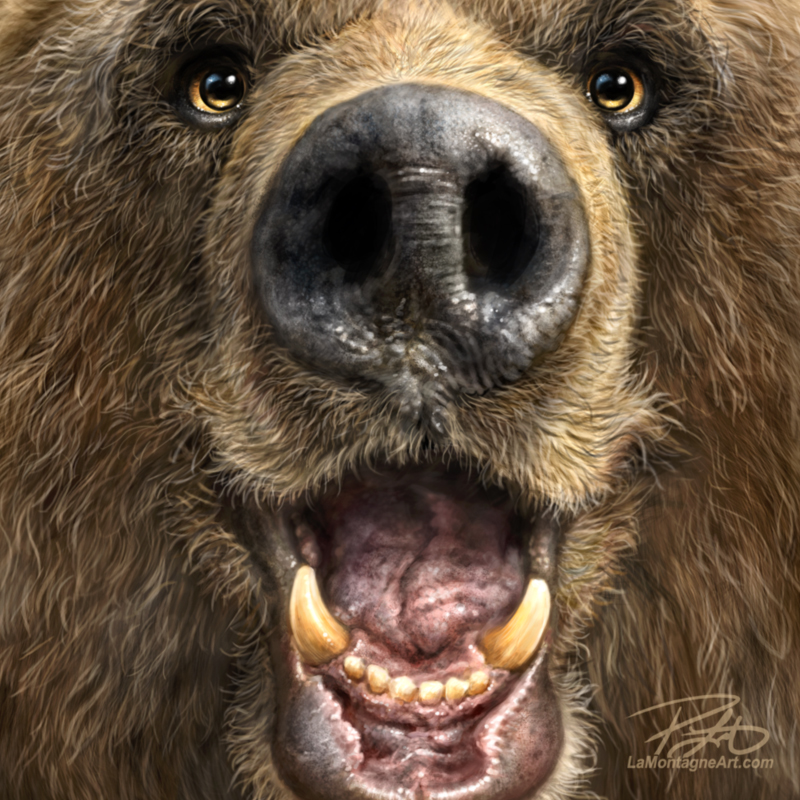
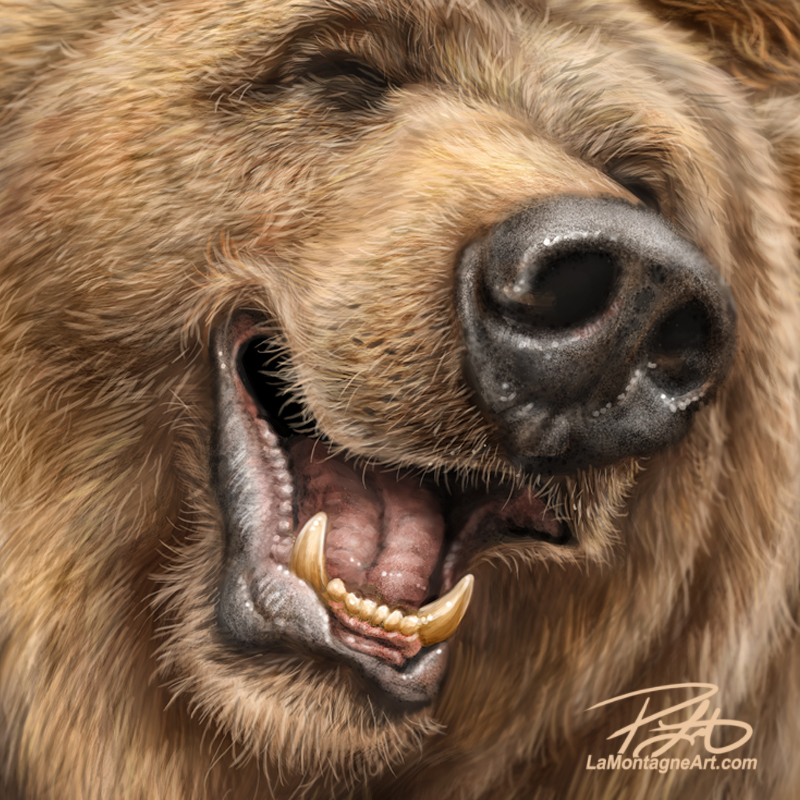
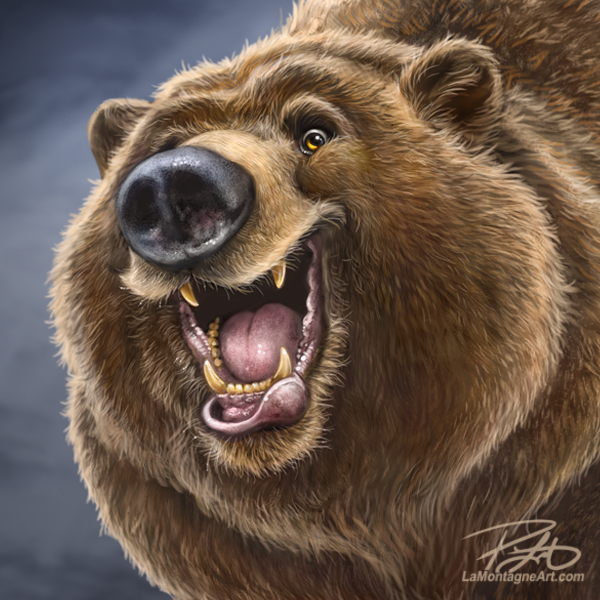
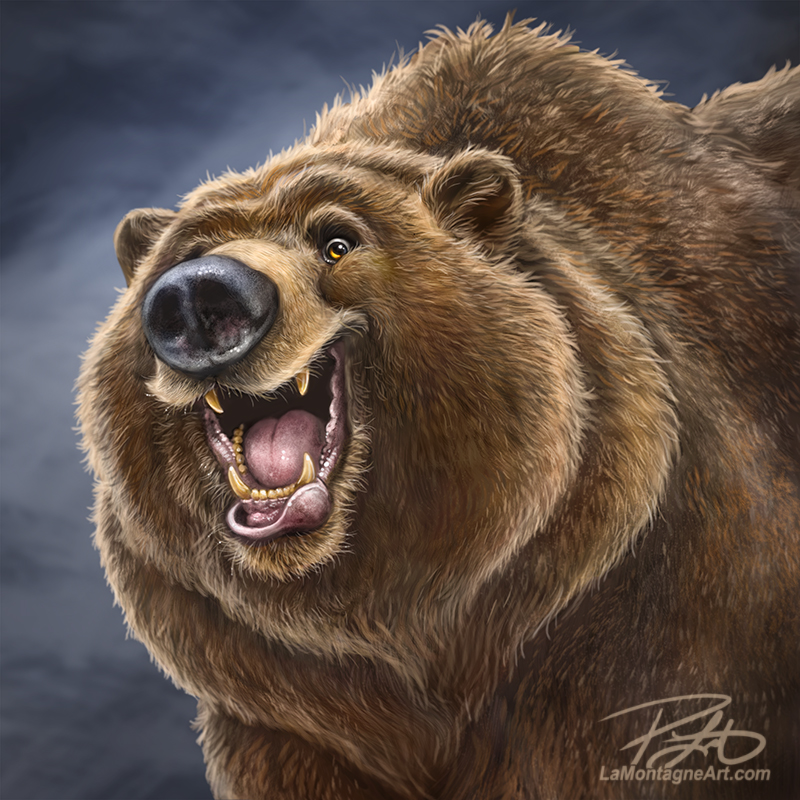
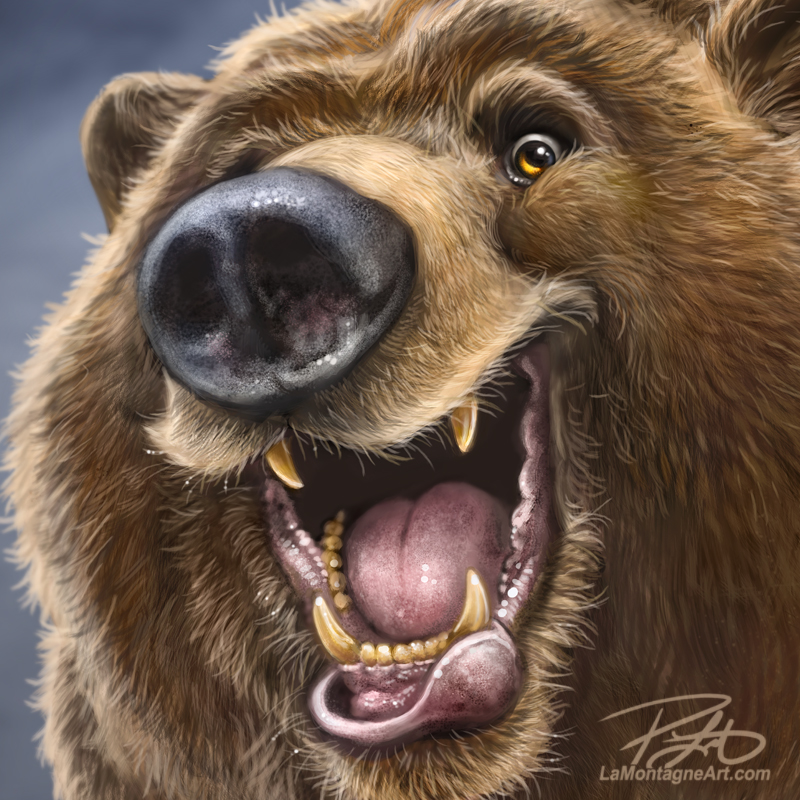
This was the perfect choice of painting to start at the end of one year and finish in the first week of the next. There’s nothing I enjoy painting more than a grizzly bear, and this face was a lot of fun.
The composition is similar to my Peanuts painting, though that one was square and featured a younger bear based on photos I took years ago of Berkley at Discovery Wildlife Park. I love that painting and wanted to paint another closeup grizzly face.
I used a mix of reference photos for this piece, but the main one came from a photo taken by my friend Serena at the Park. On a recent visit she was showing me photos on her phone, and when I asked if I could use a few, she generously told me to take whatever I wanted.
So, of course, I got greedy and airdropped a couple hundred from her phone to mine while we ate lunch. Serena is an excellent photographer, and she’s had countless opportunities for close-up reference through years of rescuing and raising these animals.
I didn’t even know which bear I’d been working from until I sent her the reference photo yesterday and asked. For those who know the bears at the Park, it was Piper.
As with most of my whimsical wildlife paintings, the final piece isn’t often recognizable as the reference model, especially since I pull from multiple images and sometimes multiple animals. When people ask which of my paintings is my favourite, the honest answer is that it changes and I can’t pick just one. Each teaches me something new and that’s what makes them special to me. What I got from this one was that, when I need to remember why I do this for a living, paint a grizzly bear. Because that’s my happy place.
For the record, if you encounter a grizzly bear in the wild, don’t get this close, and seriously, don’t boop its nose.
A post in three parts. Here we go. First, here’s a painting I just finished yesterday called Pouty Bear. Even though most of the animals I paint are smiling and happy, I occasionally change them up, even if I know that a different expression may not appeal to people.
My Angry Bear painting is not popular, but it’s still one of my favourites because I enjoyed the work. The grumpy lion, on the other hand, is a pretty good seller, and that surprised me. The Ring-tailed Lemur creeps some people out but definitely has its fans.
Will this pouting brown bear connect with people? Time will tell. Commissions and Comic-Con
I’ve enjoyed most of the pet portrait commissions I’ve done. Each has a unique story. I like the back-and-forth with clients and am usually happy with the results.
I only paint two or three commissions a year, sometimes only one, so they’re not a big part of my work. I’m OK with that because custom paintings are labour-intensive. Each begins with initial client emails, vetting photos, and discussing expectations. This leads to the actual painting, printing and delivery, which takes several weeks at the best of times. That’s in addition to my daily editorial cartoons and paintings and running my business.
A whimsical wildlife painting takes several hours, too, but each of those paintings has the potential to become a popular print or licensed image that sells for many years. Although every commission advertises my skills to future clients, the painting itself is one and done. It’s unique and specific to the person who hired me. Very few people want a painting of somebody else’s dog.
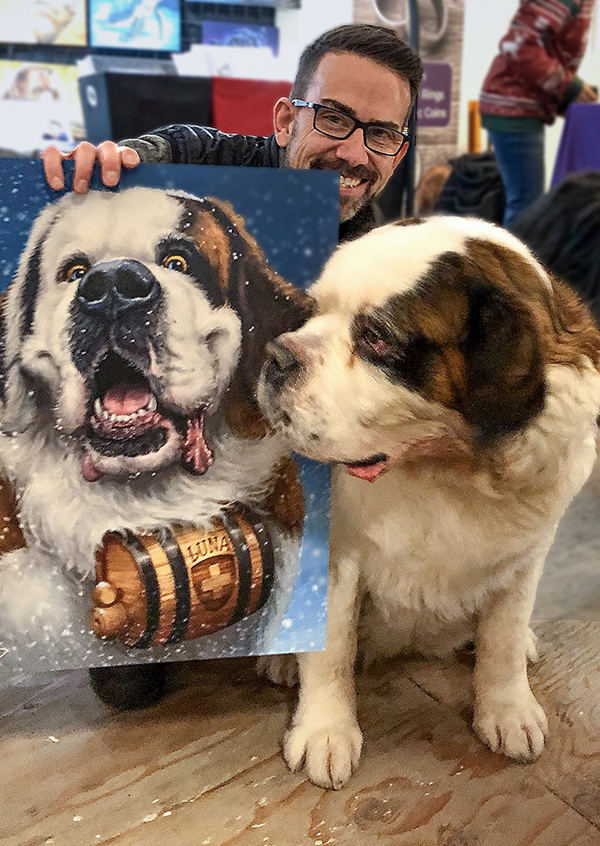
For my clients, a commission is not an impulse buy; it’s an investment in a very personal and meaningful custom painting. Most people hire me after following my work for a while and becoming familiar with my art style and process. They’ve had time to think about a commission, decide they want one, and only then do they contact me. At the Calgary Expo a few years ago, Jeremy asked me about painting his dog, Luna. It was several months later before he reached out and got the ball rolling for a Christmas present for his wife, Jenny. Luna is one of my favourite paintings. I enjoyed the experience and look forward to seeing them each year at the Expo. Jeremy and Jenny even visited the Banff Christmas Market this year and brought their dogs along. I am asked about commissions at shows all the time. For the past couple of years, I have displayed an 18” X24” metal print of Luna in my booth, with a little sign in the corner that reads, “YES, I DO paint commissions. Ask me for more info.”
Since advertising the service with Luna’s painting, I get a lot more inquiries. But here’s the thing: Jeremy was the exception to the rule. Almost nobody hires me for a commission after meeting me at shows. And I’ve realized that talking about commissions is usually the quickest way to get somebody to leave my booth.
Whether it’s at the Calgary Expo or the Banff Christmas Market, here’s how that usually goes. While they scan the metal and canvas prints hanging on the grid walls that define my booth, they see the Luna painting and the commission sign. They get excited that I might paint their dog, and the first question is usually, “How much would that cost?”
I’ve used various talking points to try to soften the sticker shock. I mention that a custom painting is an investment and personal to them. I explain how much work is involved, including printing and shipping/delivery. But as soon as I mention it’s $1900, the disappointed look on most people’s faces is unmistakable.
The price surprises those who are used to buying underpriced art on Etsy, which is often generated AI or photo manipulation. I don’t know how much they thought a custom original painting would cost, but it was much less than what I just quoted them. Because even though very few will flat out say, “I can’t afford that,” it’s evident in their reaction, and that makes them feel embarrassed, even though they shouldn’t. I don’t drop two thousand dollars on anything without planning and careful consideration, so I don’t expect anyone else to.
But now they’re uncomfortable. Their initial enthusiasm for my work, which attracted them to my booth in the first place, is tarnished, and they want to escape this negative feeling as soon as possible. They’ll often ask for a card and say they’ll be in touch, leave the booth, and I know I’m unlikely to ever hear from them.
They never got around to flipping through the 40-50 different prints in the bins, nor did they see the magnets, coasters, stickers, or postcards. I’ll never know how many sales I might have missed if the commission price hadn’t scared them away.
As much as I love showing off that Luna painting, I won’t bring it to shows anymore. I’ll still get commission inquiries at The Calgary Expo, but I won’t advertise them. I’m likely to say that I’m not taking any right now with my current workload.
Like a commission, The Calgary Expo and Banff Christmas Markets are big investments, which I hope will result in excellent sales and allow me to introduce my work to new people. And when they see my happy, smiling animals, along with the occasional pouty bear or grumpy lion, I want to invite them in and show them around my booth rather than give them a reason to leave.
If they sign up for A Wilder View, they can always look into a commission later and decide on their own time that they want to talk about it.
As with all self-employment, art-for-a-living is about adaptation. When something isn’t working, it’s time to make a change.
Tote Bags
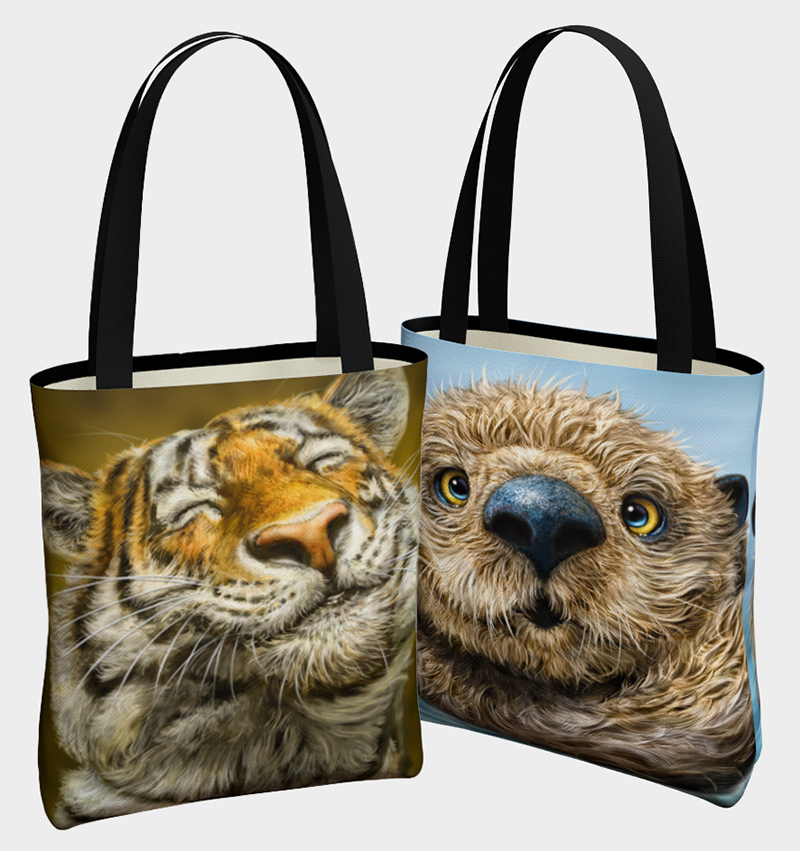
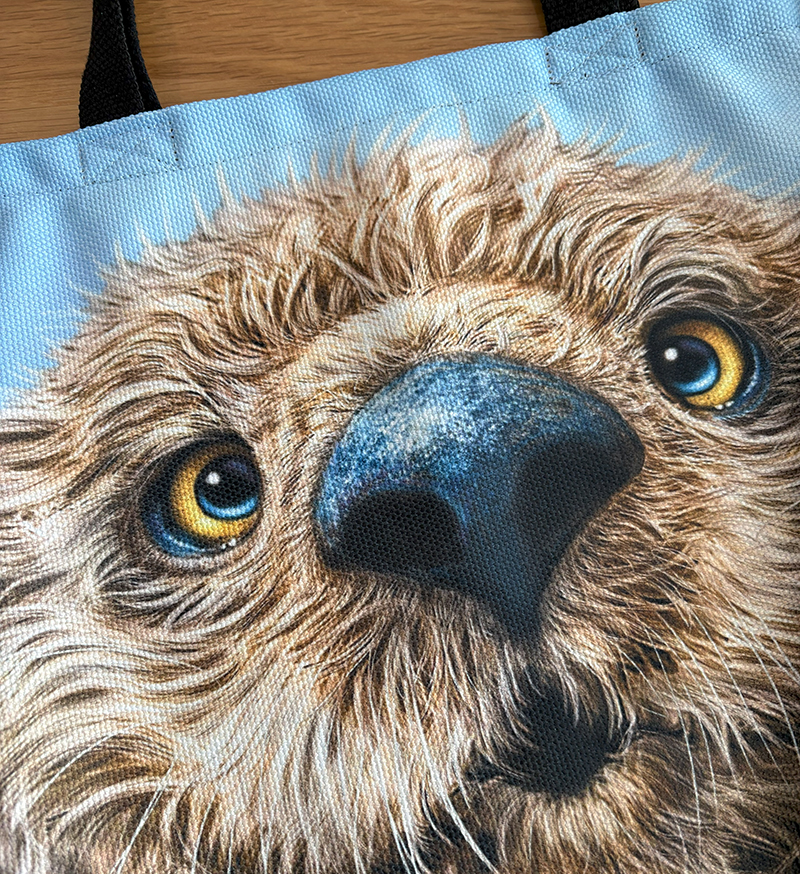
Thank you for all the positive comments and emails about the new Otter and Smiling Tiger tote bags I’m ordering for the Calgary Expo. These vibrant printed bags are 100% polyester textured canvas, machine wash and dry, and will withstand everyday use while looking great. Each measures 16” X 13” X 3”. Several people emailed me asking if I’ll have them in the online store. As with any new product, I must guess how many I might need for the show. Production and delivery timelines mean I won’t get these for more than a month, so I need to order them on Monday to have them in time for the end of April.
While I think they’ll do very well, they’re a significant investment, and I’m erring on the side of caution, which means I hadn’t planned on ordering extras for the online store until I see how they do. And if I added them to the store first and they do very well, I won’t be able to order more in time for Expo. But I’d love to hear your thoughts.
At $29 plus $5 shipping (in Canada) for one bag, would you buy one if I stocked them on my site? Depending on the feedback, I may increase how many I order tomorrow to accommodate online sales. Please let me know in the comments.
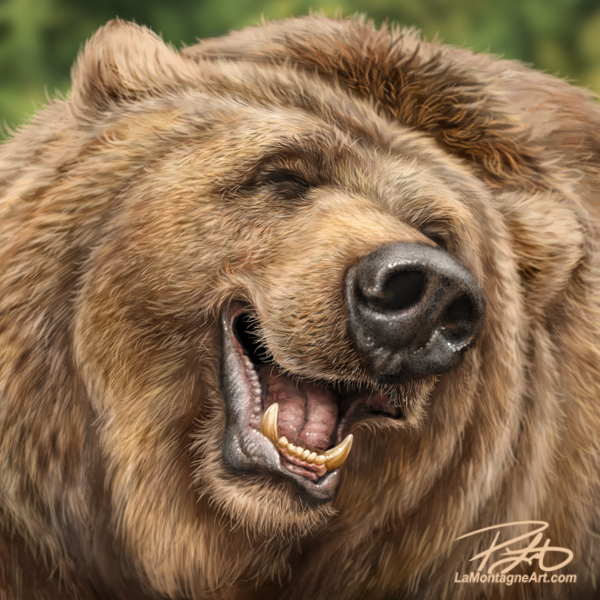
With a fun bit of music to go with it, here’s a grizzly bear from sketch to finish in under two minutes, painted in Photoshop on my trusty Wacom Cintiq 24HD. Enjoy!
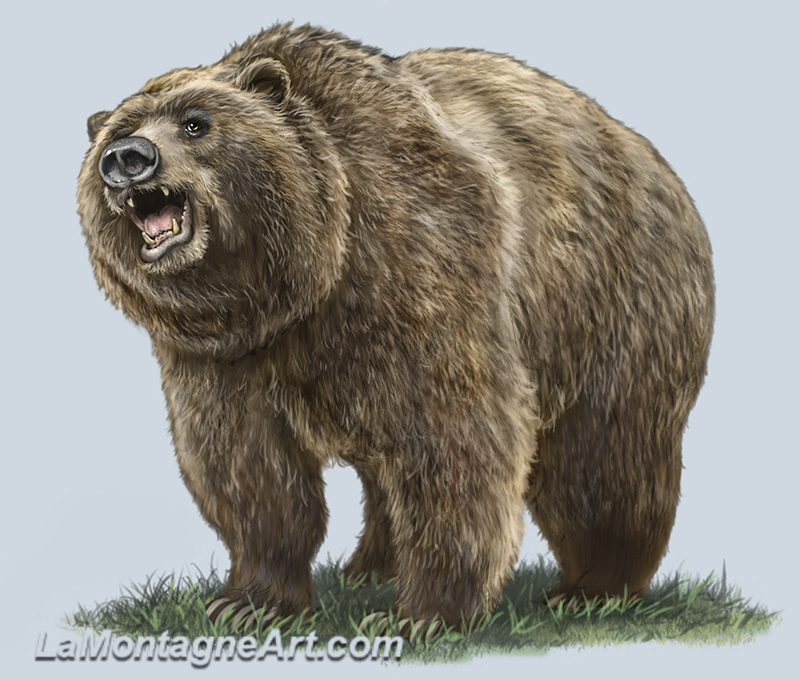
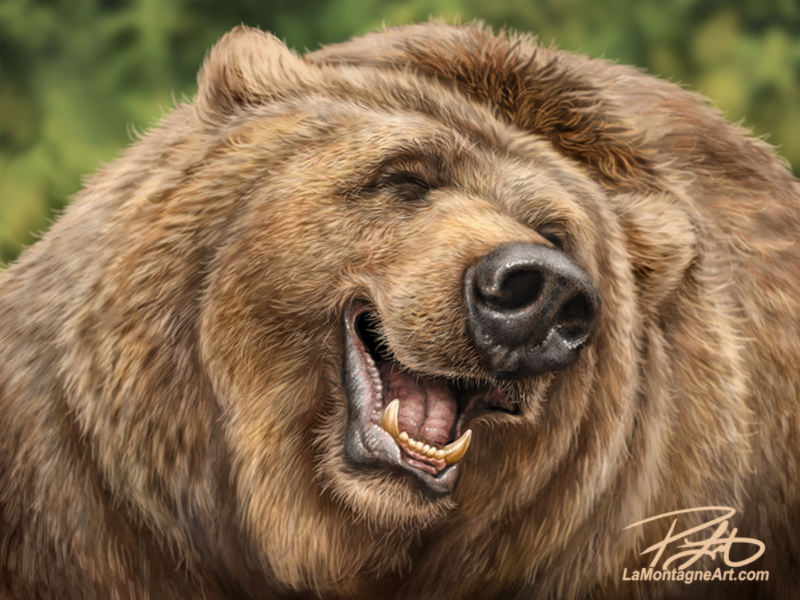
And if you just want to see the finished bear, here it is.
I’ve lost track of how many animals I’ve painted since that first grizzly bear in 2009, but I know it’s more than a hundred.
Each animal I paint comes with its challenges and rewards because I always learn something new. That’s a big part of why I enjoy the work so much. I’ll never know enough, and there will always be room for improvement.
Though there are many species in my portfolio, I’ve painted more than 30 bears.
And then there’s Berkley. This new piece is the eleventh time I’ve painted her, plus all the sketches and unfinished renderings.
If you’ve followed my work for longer than five minutes, you’ll know all about her. An orphan rescued from the US in 2017 by my friend Serena at Discovery Wildlife Park in Innisfail, I’ve known Berkley since she was a few months old and have been painting her ever since. Here’s the first one.I sometimes get flack for supporting places like Discovery Wildlife Park, the Calgary Zoo and the Birds of Prey Sanctuary because they house captive animals.
Ideally, no animal would live in captivity, but we’re not the intelligent species we pretend to be. There are few places left in the world where animals can truly be wild. Even then, they’re likely national and provincial parks, sanctuaries, and conservancies. And of those places, the ones that admit tourists wage a constant battle against our bad behaviour.
Unless those places are fenced, animals don’t know about park boundaries. Their migration routes and natural habitats may take them in and out of protected areas. Once they leave those places, they easily fall victim to hunters and trappers. Sometimes, it’s reluctant ranchers protecting their herds from predation; other times, the animals have been lured out of parks by bait.
So while it’s easy to sermonize on social media that all animals should live in the wild, we’re not willing to sacrifice what it would take for that to happen. We’re the biggest threat to pretty much everything on the planet.
Even without people in the equation, we like to imagine that life in the wild is a happy ending Disney matinee. But nature is often violent, brutal and cruel, and survival is anything but a passive exercise for most species.
Animals are often orphaned and need rescuing. While some facilities exist that minimize human contact and release them back into the wild, truly noble work by dedicated individuals, many animals are rescued too late.
Once an animal has been fed by people or has found too many opportunities to get into unsecured garbage at homes or campsites, they can’t unlearn that lesson. So relocating animals rarely works as they will almost always find their way back to reliable food and familiar territory. Or animals that have already claimed the region will kill this new intruder.
So the choices left to deal with a spoiled bear are a home in a wildlife park or zoo, or they’re destroyed.
I know; I started this post with a happy-looking brown bear, then things got dark. Not my intent to bring you down, simply an explanation of why I support reputable zoos and parks that take care of animals. Serena regularly sends Shonna and I texts and photos of the animals, and we visit Discovery Wildlife Park as often as possible. Not so much the past few years, for obvious reasons, but I intend to change that once the warmer weather arrives.
I’ve painted several animals Serena has raised, often those who had a rough start in life. Some haven’t made it past infancy, others have had challenging health issues, and many have died after living much longer than they would have in the wild. Serena and her staff have often raised these animals from cubs, pups, and kittens. Saying goodbye to them is always painful, often after expensive preventative or emergency veterinary care. Some of the stories have been heartbreaking, and I don’t know how they do it.
Supported by dedicated staff, Serena works seven days a week, often spending late hours at the park when an animal needs extra care. It’s rare when she gets a day off to spend with her husband and family, let alone take a real vacation. A T-shirt and sticker I’ve seen in a few places reads, “I do this for the money, said no zookeeper ever.”
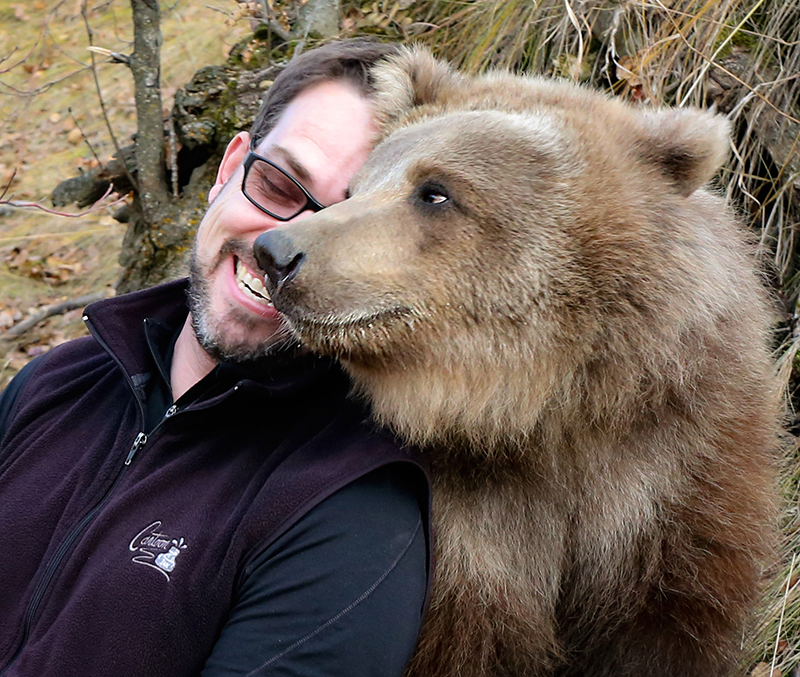
Getting to know Berkley and spending close contact time with her the first couple of years, she always seems happy, though she did go through an amusing terrible-twos phase. I’ve watched her race up trees in a natural area on the grounds, splash through the creek and puddles, and gorge herself on berries in the fall. A favourite memory is Berkley helping herself to Shonna’s water. It’s a wonderful feeling that Berkley still knows me each visit and comes to say hello, no matter where she is in her large enclosure.
Whenever I paint one of the animals Serena has raised, I send her the first look. When I sent her this finished Laughing Bear painting, this was part of our text exchange. Even in my whimsical style, she knows her own bears.
Bos and Piper are two other brown bear cubs the park rescued in 2021, and I’ve taken plenty of photos of them, too. I’ve painted Bos once already, but more will be forthcoming, as they both have big personalities and are natural hams.
But it’s obvious I have a favourite.
I’ve joked with Serena that she rescued her, raised her, nursed her through illness, fed her, trained her, played with her, and sacrificed all her free time for her.
Part of living in bear country is knowing how to be safe when hiking or exploring. It’s important to learn how to react should you encounter a black bear or a grizzly in the woods, and sometimes even in your neighbourhood.
While bear spray within easy reach is more than just fashionable, the best policy is to avoid an encounter, making noise to alert any bears to your presence. Most of them don’t want to encounter humans, so they’ll scurry off before you even see them.
Certain times of the year, however, it’s not so simple. If she’s got curious cubs, Mom will stick around to protect them because they don’t yet know to avoid people. In the fall, bears are eating as much food as possible, preparing for hibernation, and it’s not easy to distract them or get them to leave a bush full of berries.
You can buy bear bells all over the place around here, but they’re ineffective. The noise doesn’t carry; it’s too soft to be heard over the wind or through trees. The same goes for banging sticks or rocks, as those sounds occur naturally.
The best noise is the unmistakable human voice. A conversation among a group of friends will usually convince a bear to seek life elsewhere. Sure, constant yapping goes against the pursuit of natural peace and quiet, but ambulance sirens are worse. Pick your poison. When it’s tough to get a group of people together for a hike, or you just don’t like that many people in the first place, you can sometimes identify solitary hikers by their familiar call of, “Hey Bear!”
I’ve heard this call more times than I can count in the 20+ years I’ve lived and hiked in this area and have used it myself. But it always strikes me funny because, last I checked, bears don’t speak English.
As far as they’re concerned, you could yell anything, and it would still accomplish the same goal. To a bear, there’s really no difference between yelling “Cleanup Aisle 4” or “Flip Flop Hula Hoop” or “Blah, Blah, Frickety, Blah Blah!”
You might amuse other hikers, though.
And if you happened to yell, “Hey, Elk” or “Yo, Squirrel,” it’s not like a grizzly will continue to go about her business, thinking, “oh, that’s for somebody else.”
I don’t know why this occurred to me while painting this bear, but it made me snicker. I thought of walking through the woods, getting that familiar ‘it’s quiet, too quiet’ feeling and calling, “Hey, Bear!” only to have a massive grizzly pop its head up out of a nearby bush and answer, “Hey!”
Here’s a painting of one of the younger bears at Discovery Wildlife Park. I took the reference in September of last year, but because there were two bears the same age, and I don’t know them as well as I do Berkley, I didn’t know which one I was painting.
I sent the finished piece to my friend Serena, the head keeper at the park, and she immediately said it was Bos (rather than Piper), which I took as a compliment that she could identify the bear from my painting. Another keeper also knew which as well, so it felt pretty good that even with my whimsical style, I got the personality and likeness right.
Serena reluctantly mentioned an anatomy issue with one of the paws/claws and said the claws looked more like a black bear than a brown bear. I asked for more clarification and spent some time repainting the problem area.
When it comes to unsolicited criticism, the kind most people offer is a glib comment that costs them nothing, so they speak before thinking. Unfortunately, it can often be unkind, malicious, or personal, which usually says more about the critic than that being criticized.
One of the pillars supporting social media is that we’re all so sure of our clear view from the cheap seats. It has always been easier to tear somebody down than build them up.
Constructive criticism, however, is a valuable resource, and artists need to cultivate relationships with people who genuinely want to see them create better work. For example, my buddy Derek and I have often sent each other paintings in progress, asking for critique.
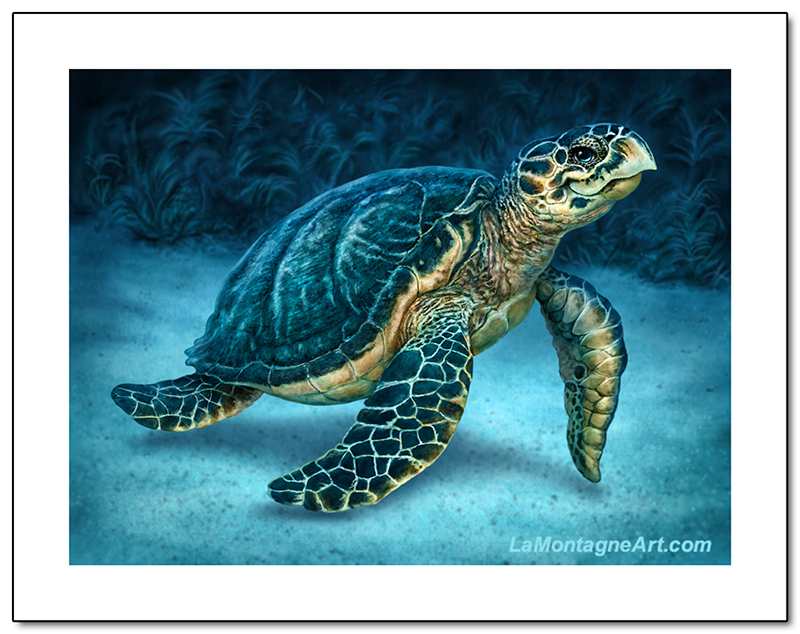
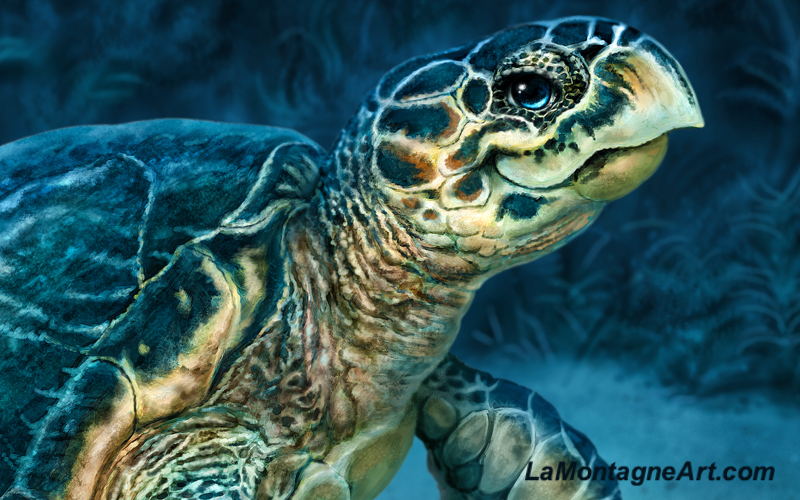
Another tattoo artist friend sent me a beautiful sea turtle painting he’d completed the other day and asked my opinion. I loved the piece and enjoyed seeing it but had no suggestion for improving it, which isn’t unusual.
Most of the time, we’ve each scrutinized our work to death already before we request a second look.
But staring at a painting too long, sometimes you miss what’s right in front of you until a trusted friend and colleague points it out. Then you wonder how you ever could have missed it. Or you make the suggested change to see the results and agree it was a better choice.
When you do get an honest critique from someone whose intentions are genuine, be grateful. That person took the time to help you improve your work.
Serena’s not a painter, but when it comes to animal anatomy, I trust her eye, and I’m glad she saw what I missed. Better still, I’m happy she said so, rather than worry that I would take it personally.
From time to time, however, the creator of a piece might consider a critique and still disagree. That’s fine, too. Every artist sees things differently, and ultimately it comes down to making your own choices. I’ve had plenty of well-intentioned suggestions over the years, both on specific pieces and my business in general, that I decided weren’t right for me.
You never know, however, when somebody might offer a solution to a problem you didn’t know you had. For example, my buddy, Darrel, casually suggested vinyl stickers a while back because he saw a few on vehicles and thought my work would lend itself to those. I’m glad he did because my stickers are now doing well in a few retail stores, and I’m actively seeking more resellers.
But then, I also get a lot of people suggesting I create children’s books, and it’s just not something that interests me.
This painting was supposed to be a practice sketch. But my obsessive nature and perfectionist tendencies don’t seem to allow me to stop if I can just paint in a little… more… detail. So, this became a finished piece. I think it will make a nice sticker, too, and possibly a print later.
Regardless of where it ends up, I consider any time painting bears to be time well spent.
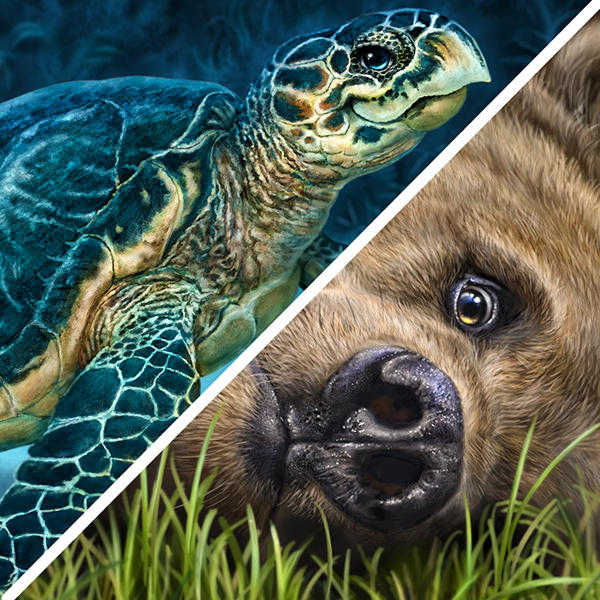
Two new prints are now available in the store, the Sea Turtle and Grizzly on Grass.
All of my prints are professionally printed in Victoria, BC at Art Ink Print. Their commitment to quality and consistency means I never have to worry about what I’m getting when the shipment arrives. Despite having used their services for several years now, I’m still impressed each time I see a proof for a new painting. I can’t remember the last time I’ve had to make a colour adjustment and re-proof.
It can be frustrating sometimes to buy an art print, then have to spend three or four times as much having it professionally framed. That’s why each print in my store is 11”X14”, a standard size that makes it easy to find a store-bought frame. Each print is hand-signed. Not to worry, that website address is not on the actual print. To purchase either of these prints, click on the images, or browse around the store to choose from more than 50 available paintings.

 A new painting finished this week. I now have all the planned images completed for the bear book, plus a few I didn’t expect to finish and include. Now I just need to write some more stories and put it all together in InDesign.
 Regardless of which painting ended up on the cover, however, it was always going to be Berkley. I’ve painted her more than any other bear.
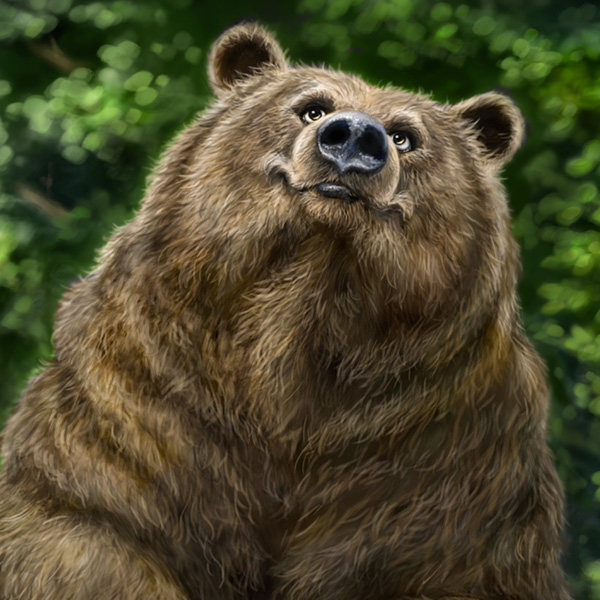

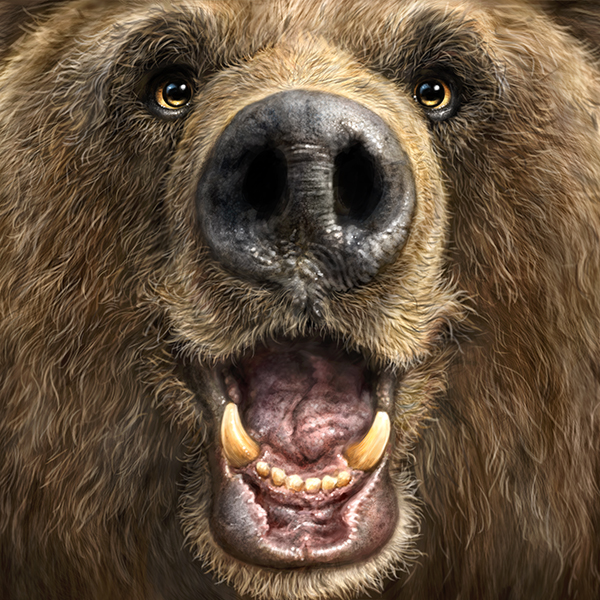
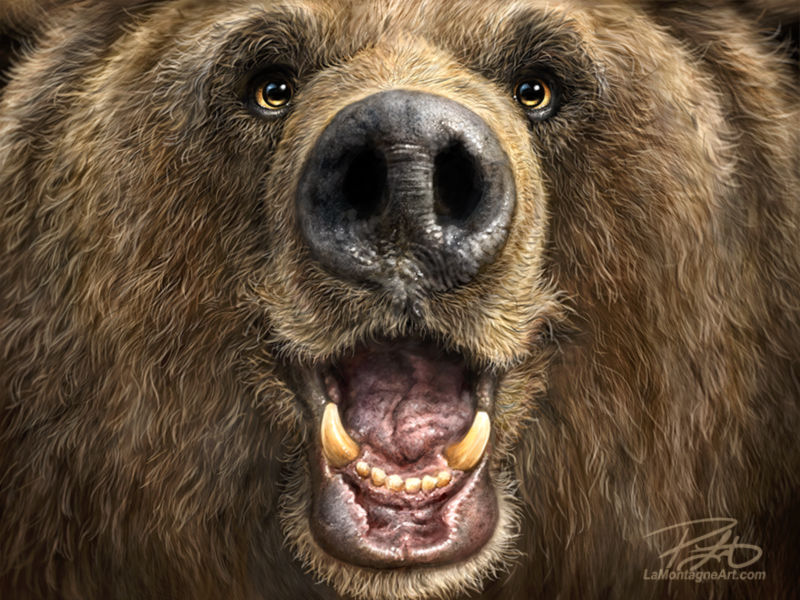 This was the perfect choice of painting to start at the end of one year and finish in the first week of the next. There’s nothing I enjoy painting more than a grizzly bear, and this face was a lot of fun.
 When people ask which of my paintings is my favourite, the honest answer is that it changes and I can’t pick just one. Each teaches me something new and that’s what makes them special to me. What I got from this one was that, when I need to remember why I do this for a living, paint a grizzly bear. Because that’s my happy place.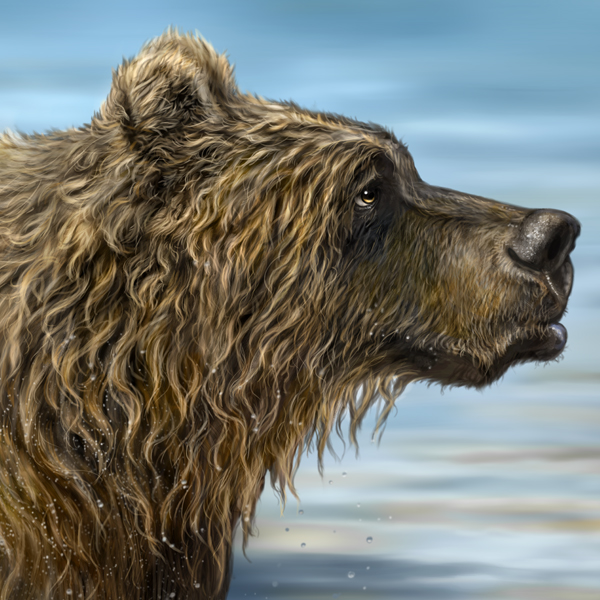
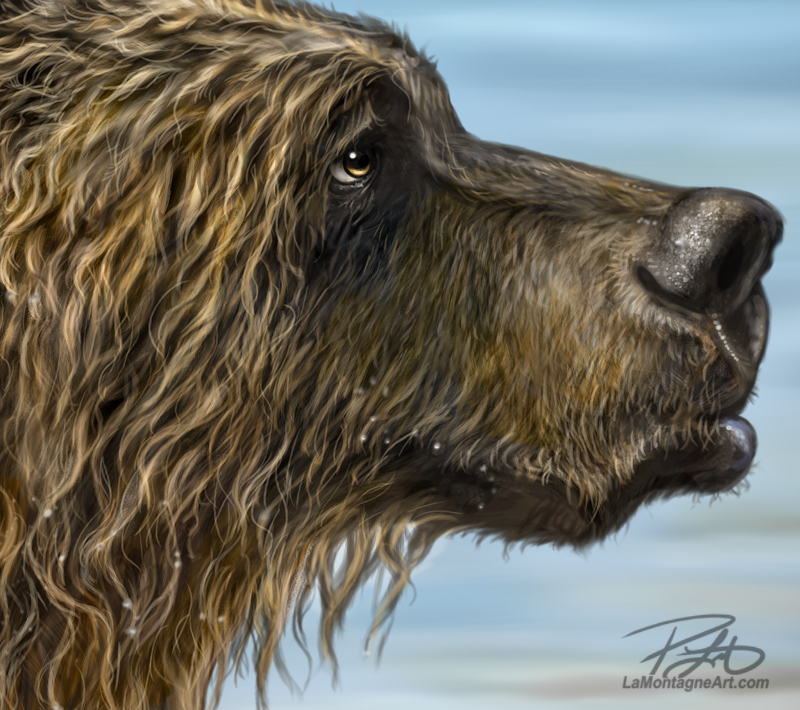
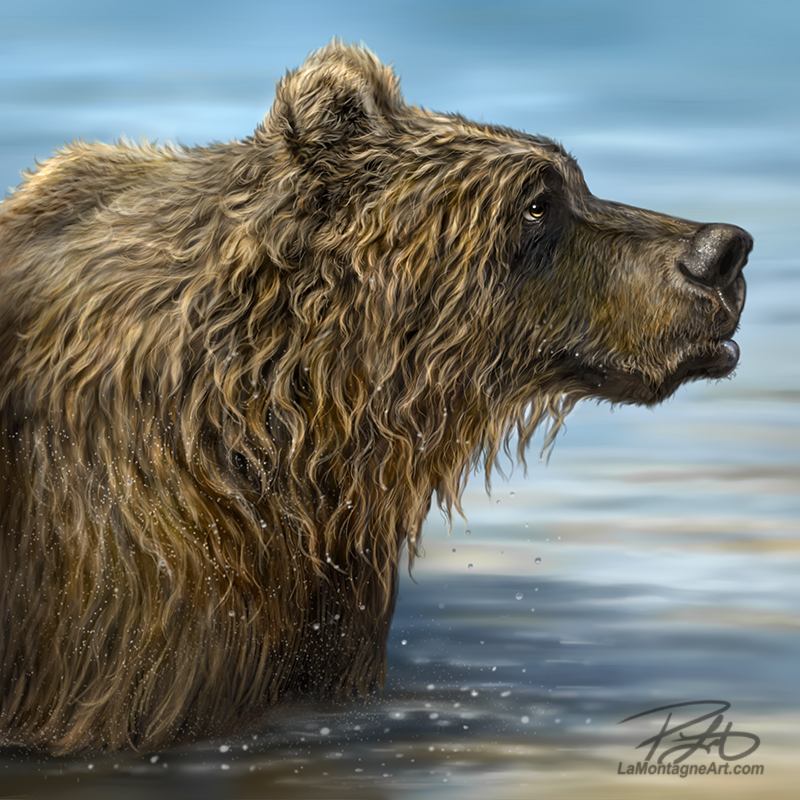 First, here’s a painting I just finished yesterday called Pouty Bear. Even though most of the animals I paint are smiling and happy, I occasionally change them up, even if I know that a different expression may not appeal to people.
 Commissions and Comic-Con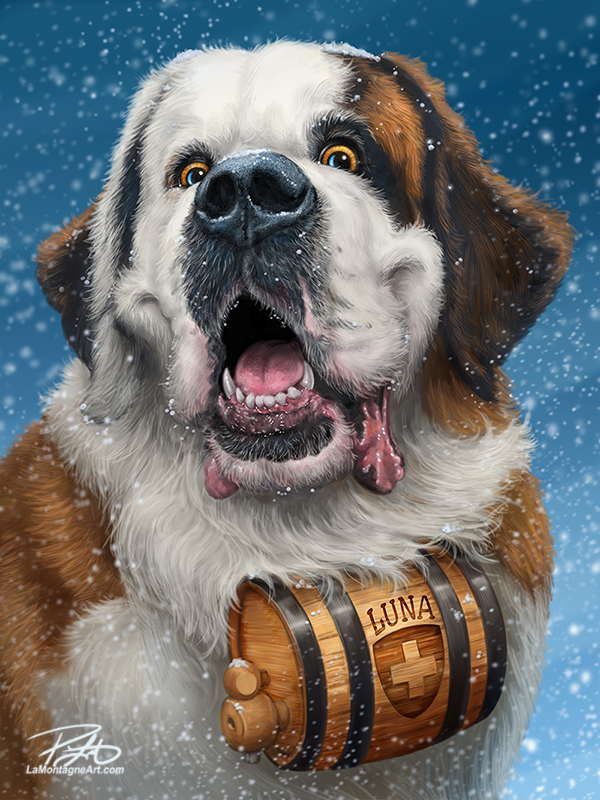
 Several people emailed me asking if I’ll have them in the
  But I’d love to hear your thoughts.

 I’ve lost track of how many animals I’ve painted since that first grizzly bear in 2009, but I know it’s more than a hundred.
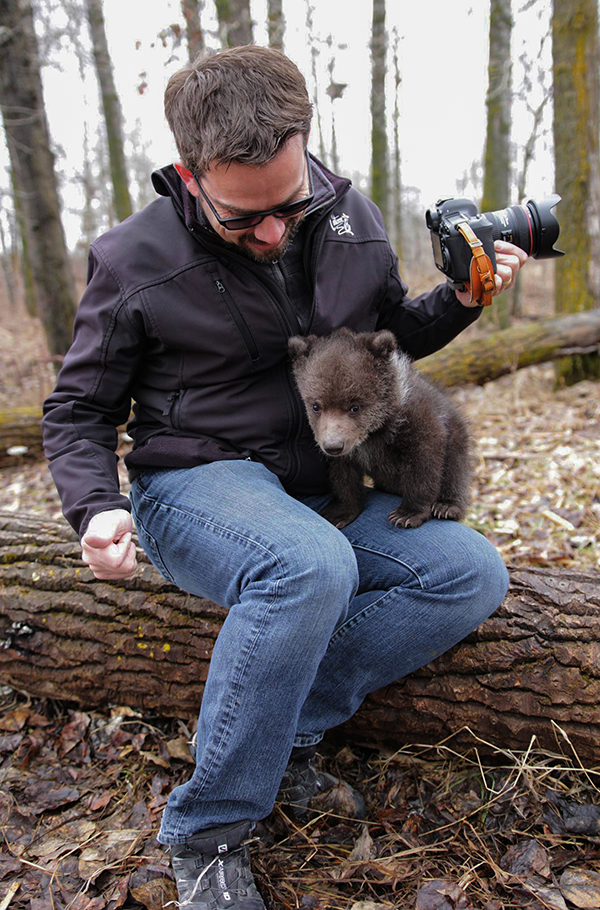 If you’ve followed my work for longer than five minutes, you’ll know all about her. An orphan rescued from the US in 2017 by my friend Serena at Discovery Wildlife Park in Innisfail, I’ve known Berkley since she was a few months old and have been painting her ever since. Here’s the first one.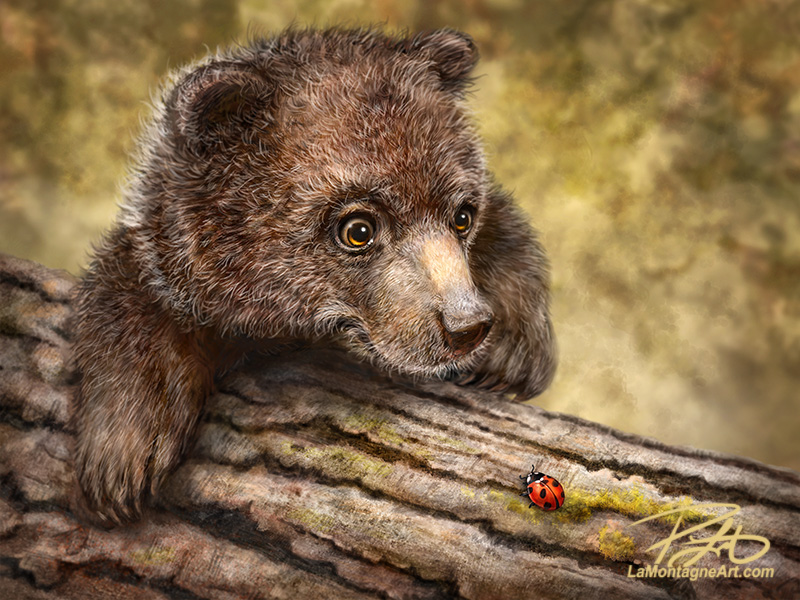
 Serena regularly sends Shonna and I texts and photos of the animals, and we visit Discovery Wildlife Park as often as possible. Not so much the past few years, for obvious reasons, but I intend to change that once the warmer weather arrives.
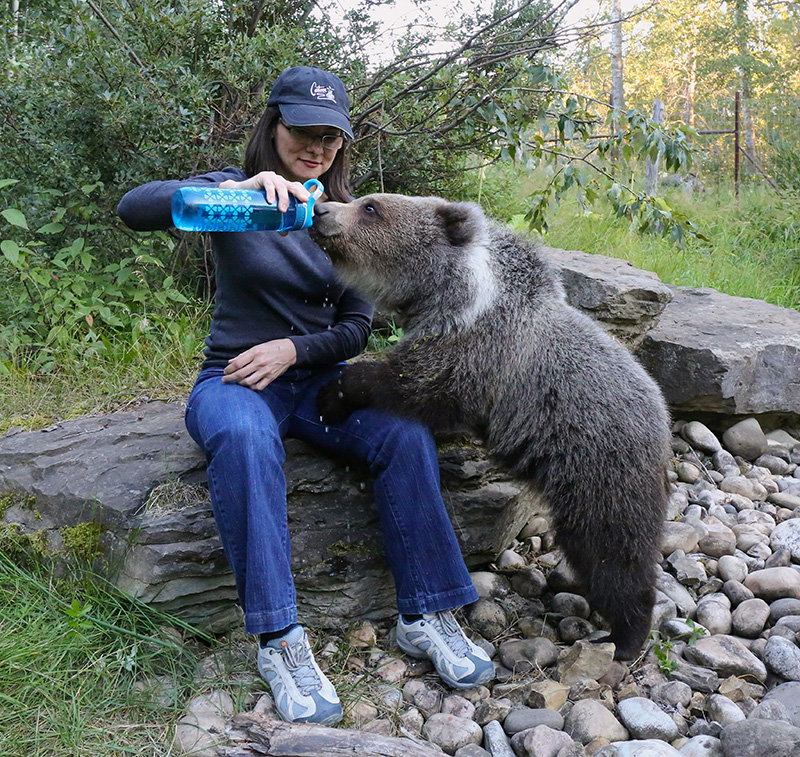 It’s a wonderful feeling that Berkley still knows me each visit and comes to say hello, no matter where she is in her large enclosure.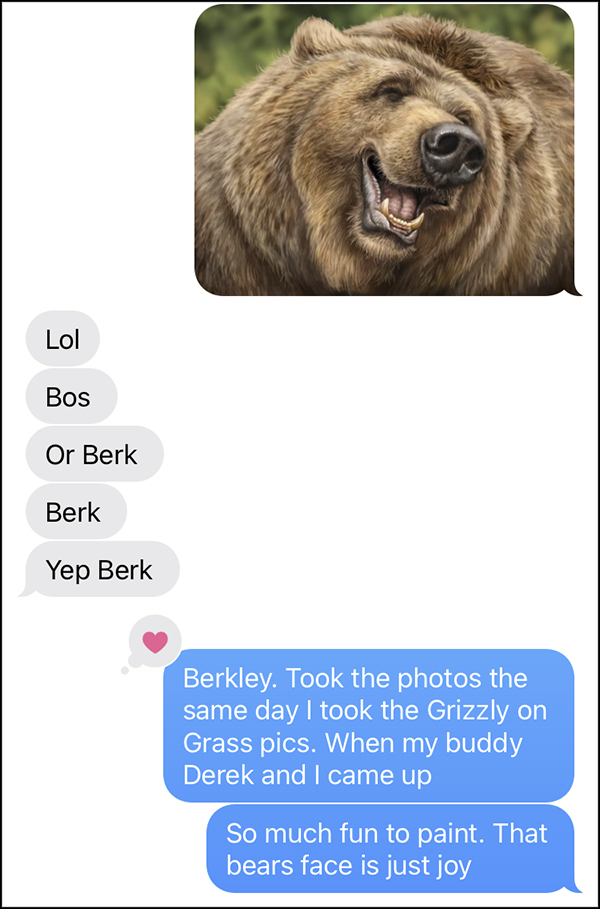

 Part of living in bear country is knowing how to be safe when hiking or exploring. It’s important to learn how to react should you encounter a black bear or a grizzly in the woods, and sometimes even in your neighbourhood.
 When it’s tough to get a group of people together for a hike, or you just don’t like that many people in the first place, you can sometimes identify solitary hikers by their familiar call of, “Hey Bear!”