Posted on 2 Comments

Remember When This Was Fun?

Yeah, it’s been one of those weeks. But it came with a weird benefit.

One of the hardest parts of recording YouTube videos these past few months has been getting over perfectionism. I’ve watched too many “how-to” videos about lighting, audio, editing software, production values, storytelling, countless unimportant details that only served to keep me from hitting record and publish sooner than I finally did.

Sometimes it feels like YouTube is a cult, all serving the Great and Powerful Algorithm. Then again, that pretty much applies to all online life.

It gets exhausting.

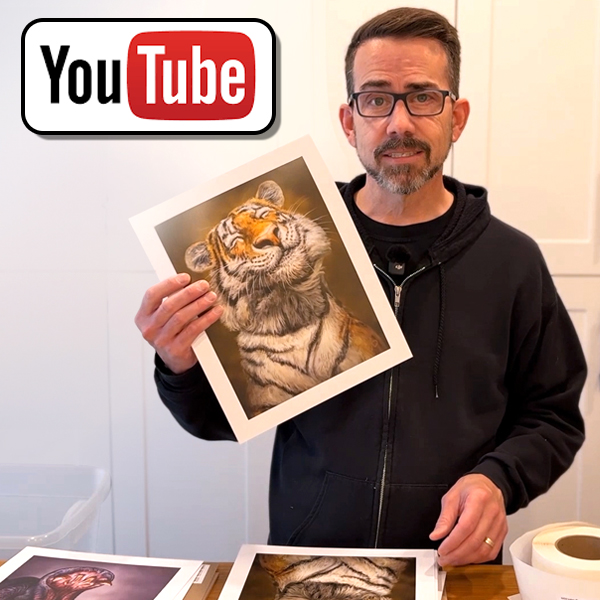
But since I was already there, standing in the kitchen with a pile of prints I needed to sign and package, I threw my phone on a tripod, clipped on the wireless mic, and just talked. Regular kitchen lights, no script, no plan, only a little more organized than a rant.

You’ll see plenty of hard cuts because the original video was almost three times as long before I sliced and diced it with abandon. I came very close to deleting the whole thing, but ultimately decided it was worth sharing.

If you’re an artist thinking you might want to turn it into a business, and you can’t imagine doing anything else with your life, there will be days when you wonder if you’d have been better off not doing so.

Regardless, I didn’t have the energy to obsess over perfection this week. No music, no B-roll, no intro. Just whatever was left in the tank. Here’s the video.


Posted on Leave a comment

From My First Wacom to the MovinkPad 11

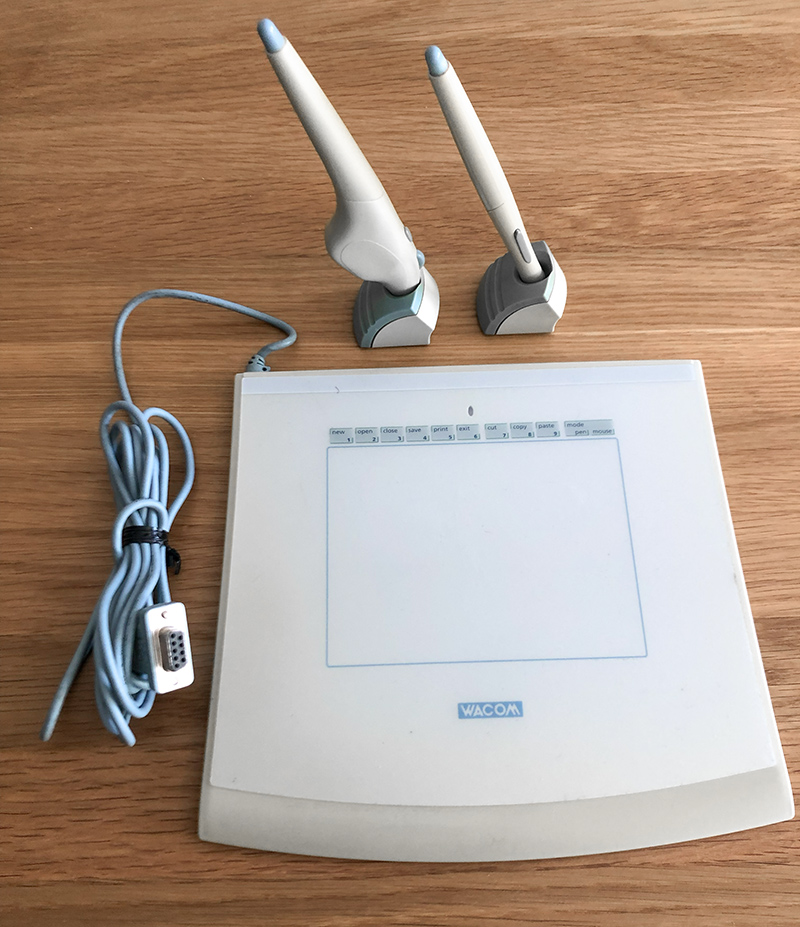
It seems funny now to think back to my first little 4”×5” Wacom Intuos tablet in the ’90s. The first drawing software I used with it was a great little program called Painter Classic, and I only used it because it came with the tablet. I am not a hoarder, so I recycled it a while back, but took some photos for the memories.
Eventually, I got Photoshop and have been shackled to Adobe’s subscription model ever since. Remember when we were allowed to buy stuff, instead of renting it forever? Yeah, it’s a sore spot.

While software and hardware have come and gone in my decades-long career, I’ve always drawn on a Wacom tablet or display. I started upgrading Intuos models as they came out, but at some point, I set my sights on an early Wacom Cintiq.

For those unfamiliar, the Intuos tablets are pressure-sensitive drawing surfaces connected to your computer, mapped to your screen. You draw on the tablet while looking at your monitor. It sounds awkward, but it isn’t.

You don’t stare at your mouse when you use it. Same concept. 

Plenty of pros still create amazing work that way. I keep a spare in my office and could probably still do my full level of detail on it. I should test that claim one day.

But I wanted a Cintiq, a display on which I could draw directly on the screen. I’d seen them in art magazines and behind-the-scenes features about movie concept artists.

At Photoshop World in Las Vegas in 2010, I was thrilled to win the Guru Award for Illustration and Best in Show. When they announced the prizes, they said I’d won a Wacom Cintiq 12WX display, a smaller version of the large one I use now. So, I went to their booth on the trade show floor, eager to pick it up, and that’s when I met Pam.

It turned out the prize was actually a tablet, not a display. The announcer misspoke. Hey, mistakes happen, and I didn’t want to make a scene. But Pam told me she’d see what she could do, and the next morning, they said they’d honour the announcement.

That’s how I got my first Cintiq, because Pam made it happen.
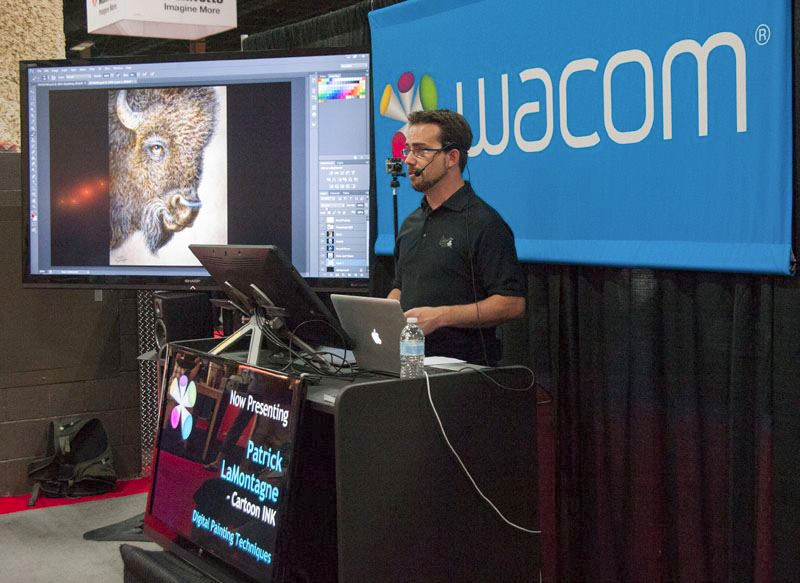
Over the past 15 years, I’ve had several chances to work with Pam and Wacom. I’ve done demos at Photoshop World, been part of webinars, and recorded videos for new products. Once, Wacom even hired me to demo their gear at a packed event in Calgary. I remember opening a shipment of their displays and thinking, “What have I gotten myself into?”

In 2014, I gave a talk at the Banff high school about editorial cartooning and digital painting, and Pam supplied several Intuos tablets for me to donate to the school.

So yes, I’m loyal to the Wacom brand, but mostly to Pam. She’s been the constant, and has always been great to work with. When the right opportunities come up, ones I’m suited for, she still reaches out, and sometimes, new gear comes with the work. To the guy who bought his first tablet in 1998, that would have seemed surreal.

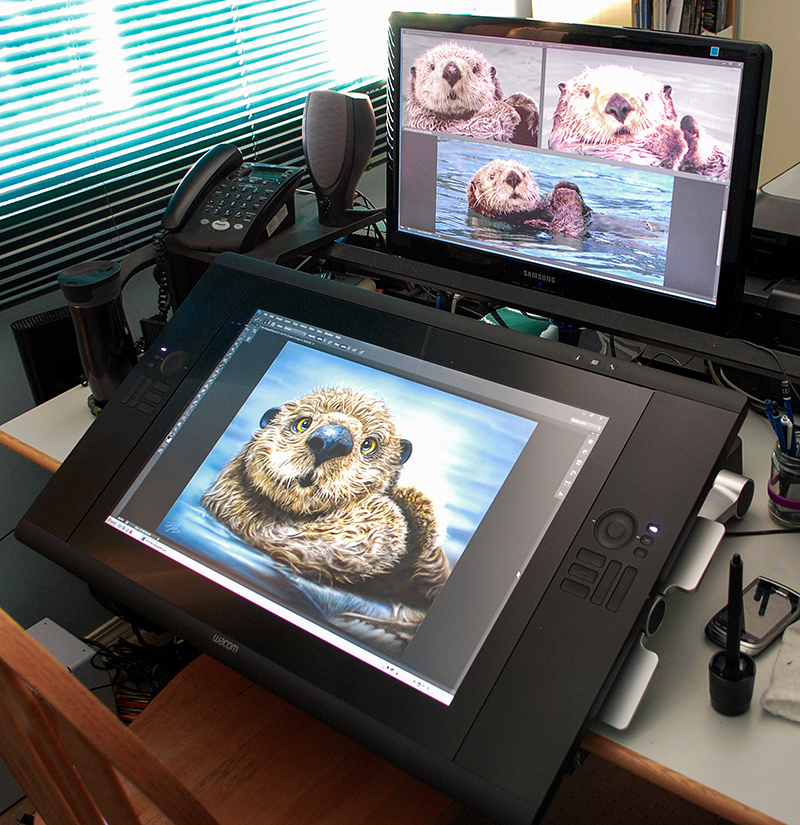
My loyalty to the products comes from experience. Wacom devices are built to last. In a world full of planned obsolescence, my Cintiq 24HD display has been on my desk since 2012. It’s massive, solid, and still does its job for me every day. Pam now calls it a dinosaur. She’s not wrong, as they’ve had several updated models since, but I love it like someone loves an old car. Here it is when brand new, 13 years ago, along with my Otter in progress, still one of my bestselling paintings. Wait…is that a Blackberry?!

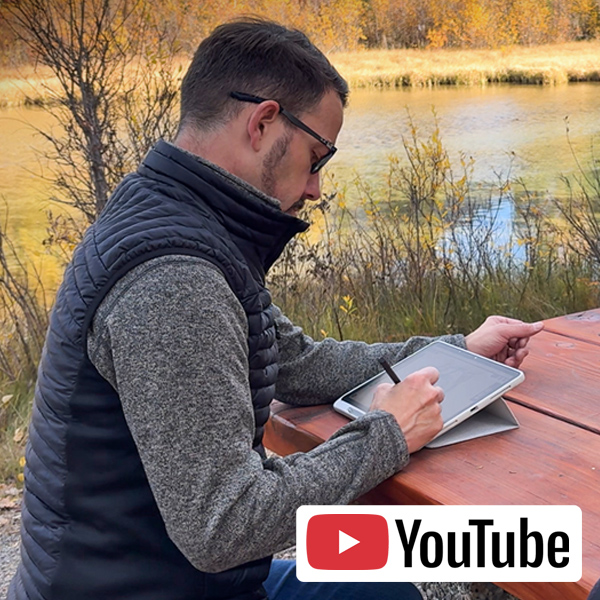
Last month, Pam asked if I’d do a video about their new Wacom MovinkPad 11. I’d already seen a positive review from another artist, so it was an easy yes. We worked out the details, and I was pleased I’d get to keep it. Sometimes that’s not how it works with demo products. She even included a case, which I would highly recommend as it functions as a little stand and pen holder, too. 

Wacom will share the video I created a little later, but it’s already up on my channel, with permission of course. Rather than repeat what I said in the video, I’ll let you watch it.

But I’ll say this much: I didn’t sugarcoat it. This is the best mobile sketching display I’ve ever used, and yes, better than my iPad Pro. If I’d had to return it, I would’ve asked to buy it. They now have a larger MovinkPad Pro 14, but I honestly don’t feel like I’m missing anything. While the pro specs are impressive, I’m not as on-the-go as some people and don’t need something that powerful. This is the one I would buy, and it’s absolutely the tablet I wish I’d had more than 25 years ago when I was learning to draw and paint digitally.

Full disclosure: I was compensated for the video, and the sponsorship is clearly stated on my YouTube channel. But aside from some technical stuff, Pam gave me full creative freedom on the two variations of the video I recorded. This post, however, is mine, and it’s from the heart.

When politics, the news, and the noise of the world get to me, as it too often does, painting fur, feathers, and the little dimples on a critter’s nose is often the antidote. I’m at my very best when I’m drawing on a screen.

Enjoy the video.

Cheers,
Patrick


Posted on 2 Comments

When the Work Gets Heavy, Paint Something Light

I’ve been working on a commission of three cats, and it’s coming along well. The client has provided some valuable feedback on the images I’ve shared so far. I’ve also recorded a bunch of the process, written the video narrative, and I’m still working on that video and the painting itself.

Usually, I sit down, open a Spotify playlist, and start painting. When I’m recording a painting, however, I need to position the camera above my display, adjust the lighting so the viewer can see my hand, record for five or six minutes, move the camera away, paint some more, and then record another segment a half hour or so later. It can take me out of the groove of painting because I’m thinking about something else rather than getting lost in the work.

Once I finish recording, I need to export the files to an external hard drive, format them for ease of use, and bring them into my editing software. I then speed up the footage to prevent the viewer from getting bored. Next, I will record a ‘talking head’ portion, write the narrative to go along with it, possibly source and add some music. It involves several hours of technical work in addition to the painting.

Now, as I become more proficient, that process will become smoother and take less time. However, it’s a bit clunky right now. I don’t have a workflow yet. But I’m getting there.

Lately, I’ve been feeling a bit trapped by the work-for-hire stuff—both the editorial cartoons and the commissions.  Don’t get me wrong, I’m grateful that I am able to make a living in a profession that often pairs the word starving with artist. But sometimes I need to remind myself of the reason I got into this in the first place, for the love of drawing.

So, I took a reset break and painted something just for fun.
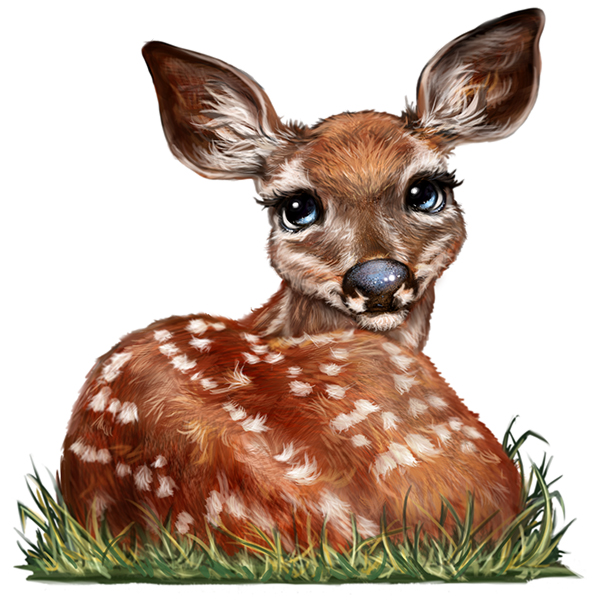
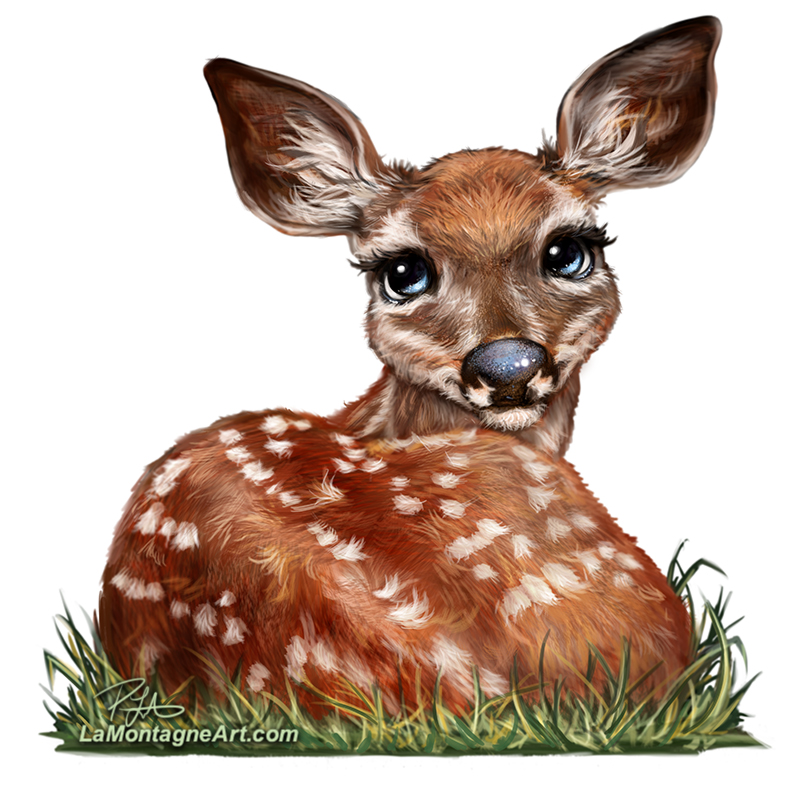
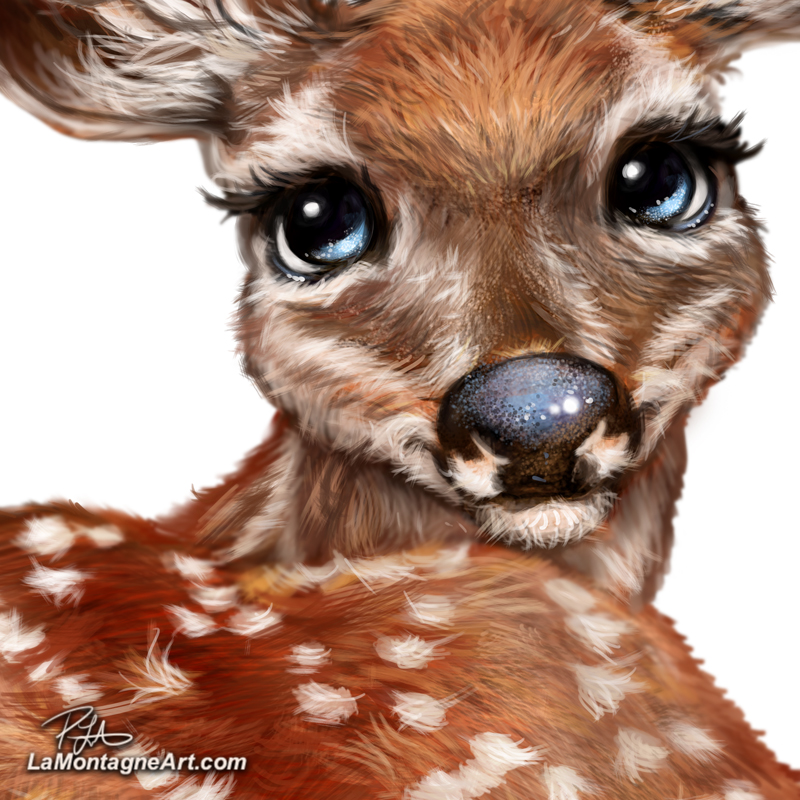
I based this little fawn on reference I shot at Discovery Wildlife Park about three years ago. It’s still rough around the edges. I could add more detail and background, but for now, I’ll leave it and return to the commission.

Whenever I’m deep into one of these big paintings and hit a point where I’m not feeling it, it usually means it’s time to step away. A few days’ break lets me come back with fresh eyes, and I can see what’s missing. That pause-and-return approach has worked for almost every painting I’ve ever done.

This little one would make a cute vinyl sticker as-is, and I’ll likely add it to my new releases before the Banff Christmas Market. And who knows—after some time away from it, I may return with new inspiration to add more detail, a background and turn it into a print.

As always, I’d love to hear your thoughts. Feel free to share them in the comments.

Cheers,
Patrick

Posted on Leave a comment

Designs, Devices and DecalGirl


DecalGirl has been licensing my work on device cases and decals since 2016. It’s not one of my biggest licenses, but it is a favourite. The quality of their printing is excellent and lasts a long time.

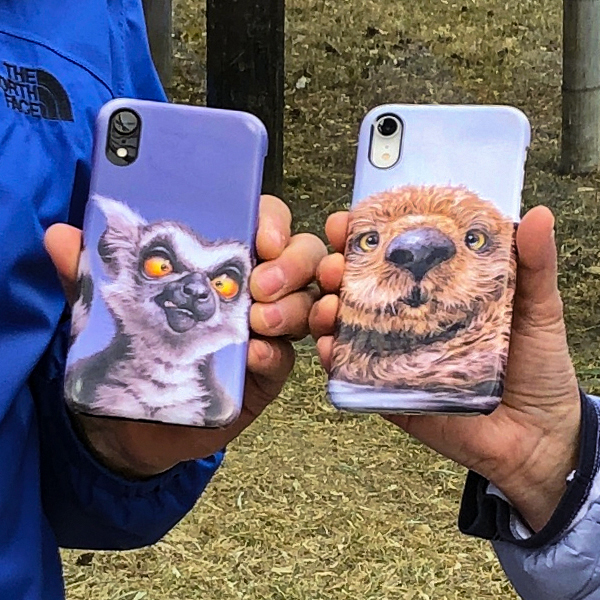
It’s always fun to run into people who have my work on their phones or iPads. The above phones belong to two of my favourite supporters, Sheldon and Tracy, taken during a surprise encounter last year when I spent the afternoon with them at The Calgary Zoo.

Shonna and I have had DecalGirl hybrid cases on our phones for years. We both have the older iPhone 8 Plus; we hang onto tech until it’s dead. They’re solid workhorse phones, so we’re reluctant to replace them. Our Decalgirl Hybrid cases have been on these phones for years and are still in great shape. I’ve also got a beautiful print of my Shark painting on my laptop and a Smiling Tiger decal on my iPad Pro.

When people ask me what I do for a living, a common question in polite conversation, I say, “editorial cartoonist and I paint whimsical wildlife.”

Of course, that leads to more questions because they don’t know what whimsical wildlife means, and it’s hard to describe. So it comes in handy to show them my phone case or iPad decal and say, “stuff like this.”
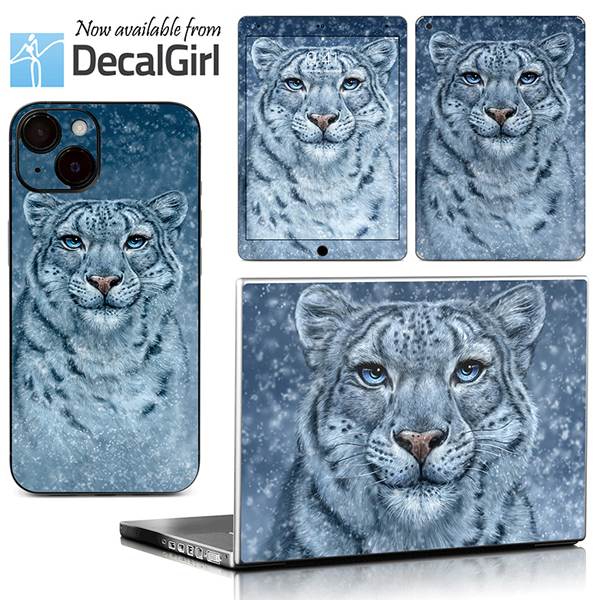
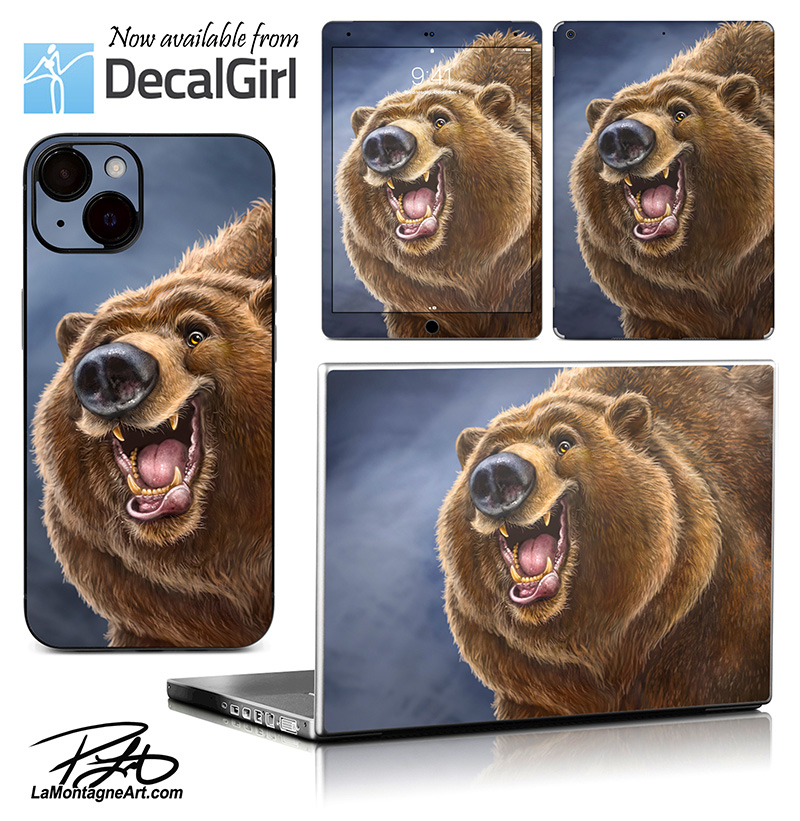
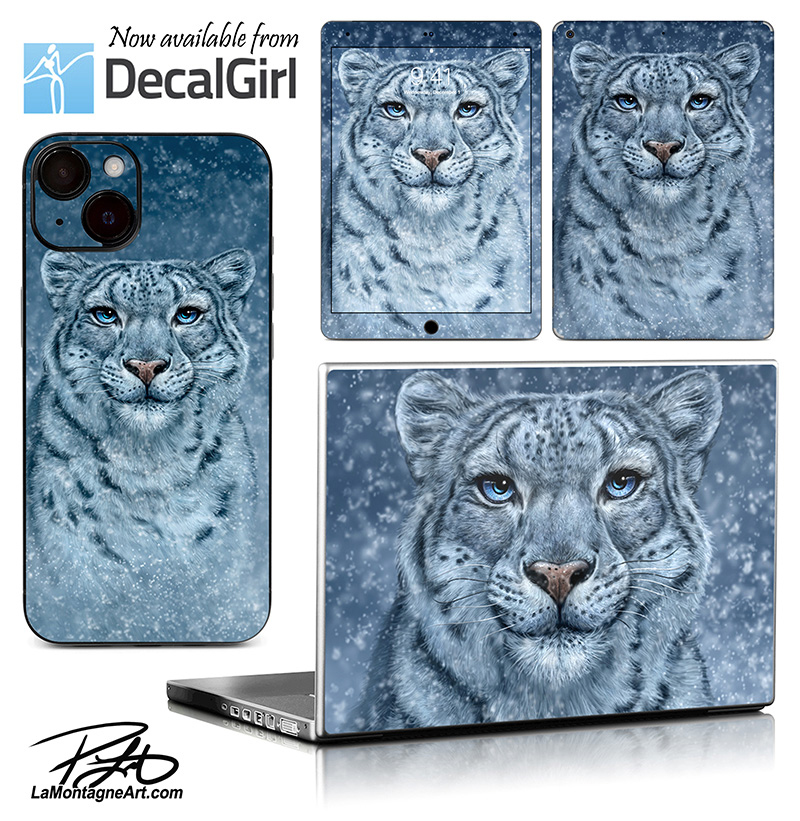
This month, DecalGirl added two new designs to my available images, the Snow Queen and Hey Bear. These are two of my favourite paintings, so I’m pleased to see them in their gallery. As with most licensing, companies will change out the images now and then, keeping the more popular ones and retiring others. I do the same thing with prints.

There are currently ten of my designs available through DecalGirl. Check them out! Use the SAVE25 code to get 25% off right now!

Cheers,
Patrick

Posted on Leave a comment

Crafting a Christmas Cartoon

One of the questions I get from people is, “what’s your medium?”

When I answer that it’s digital, I can expect a few different reactions because many people don’t understand it or think it’s something else.

Many people hear digital and think I’m just messing around with photos on the computer, especially because my work is highly detailed and often has a photorealistic quality. I explain that it’s all brushwork on a digital drawing display, like a cross between a TV monitor and a drafting table. Even though I take my own reference whenever I can, no photos are ever part of the paintings.

For most people, that’s enough of an explanation.

When I tell a traditional artist, somebody who paints with acrylic, oil or watercolour, that I’m working digitally, I often get disdain and condescension. A lot of traditional artists don’t like digital. It might be that they can’t do it, don’t understand it, or feel threatened that it will replace their work medium. Or they don’t like the idea that anybody creates anything on a computer and calls it art.

It used to bother me, and I’d feel insecure about defending my medium, but these days, I dismiss it and move on. I started creating art on a computer in 1998 with one of the first drawing tablets Wacom ever made. I’ve been making my full-time living as an artist for almost twenty years and arguing art mediums is wasted time and energy.

I can’t imagine any photographers or moviemakers still arguing film vs. digital these days. But when digital cameras first came out, those communities had plenty of heated discussions. It seems rather foolish as the camera doesn’t create the art; the photographer does.

It strikes me ironic that artists who are all about free expression, exploring creativity and pushing boundaries are often the first to tell another creative, “you have to stop because that’s not the way it’s done.”

Judge a piece of art by how it makes you feel. If you get nothing from my work, it’s simply not for you. Move on to another artist whose creations push your buttons.

Fortunately, anybody under 30 has grown up with digital art, so they have no stigma. They’ve seen it in movies and video games their whole life. They’ve been doodling on their tablets and phones for years. So when those people ask me about the work, they usually want to learn how to do it.

And I’m always happy to share what I know because so many generous artists gave me their time and knowledge when I was coming up.

While creating a Christmas-themed editorial cartoon this week, I decided to share the different stages of how I draw a cartoon. This isn’t a tutorial, as I don’t want to bore all of you who aren’t aspiring digital artists. Instead, it’s simply a window into the creation.

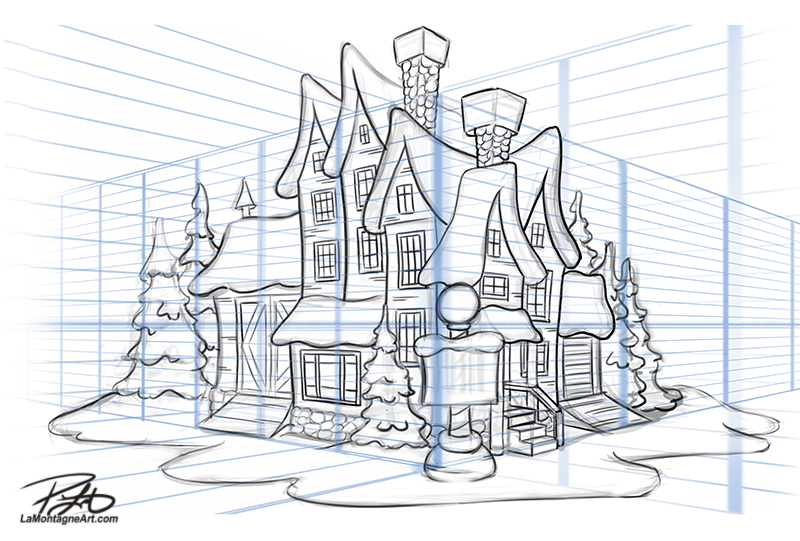
I put rough perspective guides on a layer in Photoshop for this cartoon.

On another layer, I’ll sketch out whatever I’m drawing and keep refining over and over until I get what you see here. It’s the same principle as sketching and drawing on paper, without all the mess of smudging and erasing.
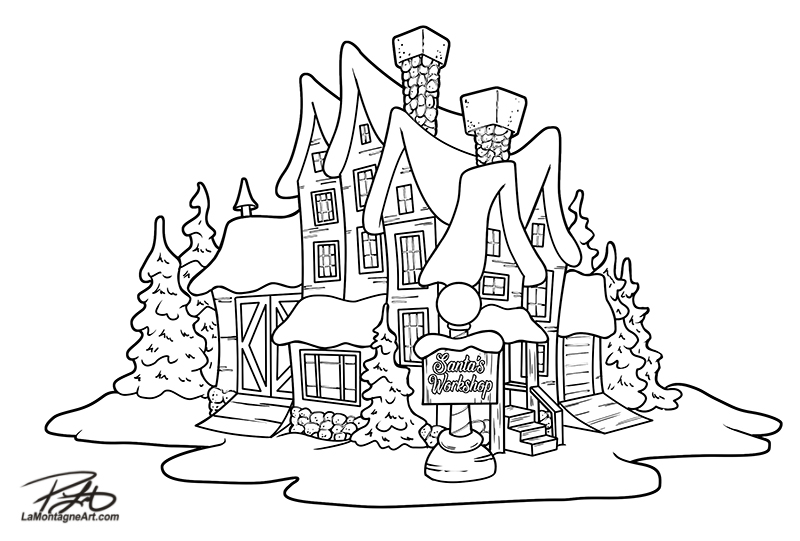
Then I’ll drop the opacity of the sketch layer, so it’s very faint and create cleaner black lines on the layer above. I call this an Ink layer, even though there’s no ink involved.
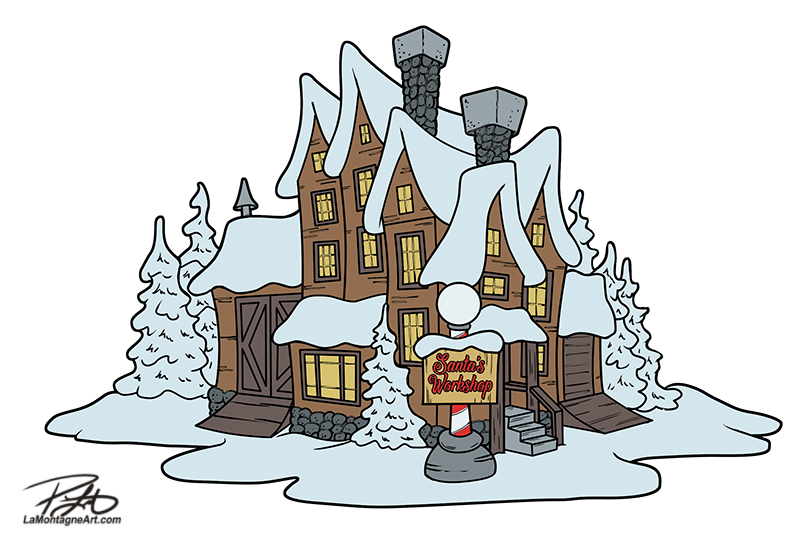
I’ll delete the sketch, create a new layer beneath the ink layer and fill in sections of flat colour on different layers. This helps me establish a base colour for separate pieces and select certain painting sections easily.

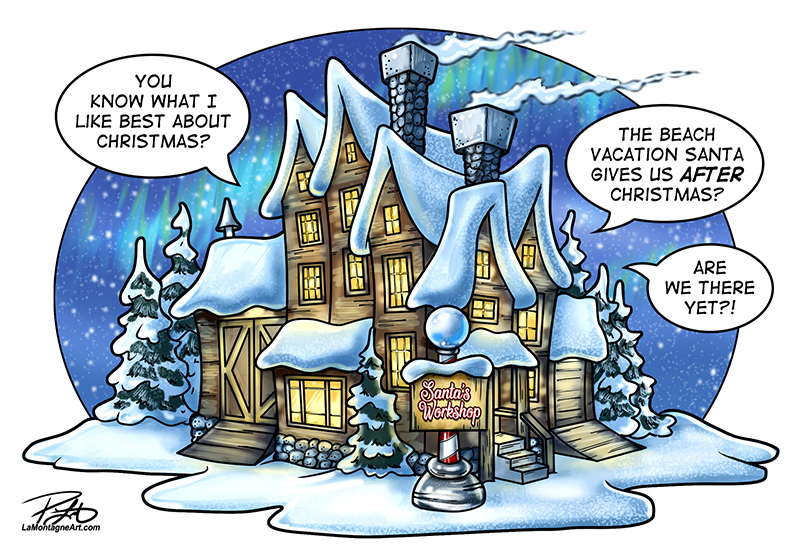
On top of the flat layer, I create a layer for light and shading. The initial sketching and the painting layer are where I have the most fun.
Finally, I’ll create a painted background, add talk bubbles, my text and signature, and save different formats to send to my newspaper clients across Canada.

Years ago, I recorded a whole DVD on this process through PhotoshopCAFE. It’s no longer available, but this is the basic idea.
The painting process I use for my whimsical wildlife and portraits of people is more complicated because each painting takes many hours to complete and involves a lot of fine detail. But the tools are the same. Many artists have asked me about my painting brushes over the years, and they’re surprised that they’re not complicated. Just like in traditional art, it isn’t the brush; it’s the person wielding it.

As in any profession, creative or otherwise, skills only come from years of working on your craft, and there are no shortcuts.

I created a time lapse video of a Christmas reindeer a few years ago. It shows the Wacom display on which I work and a painting from start to finish in two minutes. Watch ‘til the end for a little digital magic.

As this is likely my last post before the 25th, I hope you all have a Merry Christmas. I’ll have something else for you before New Year’s Eve.

Cheers,
Patrick

Posted on Leave a comment

Eagles and Reality TV

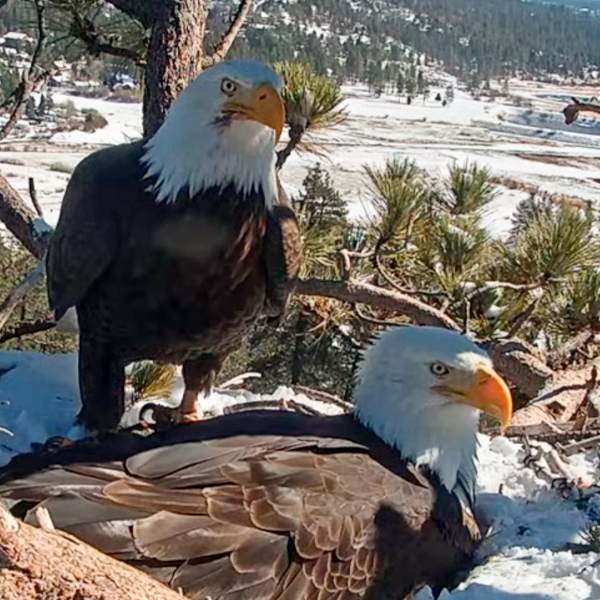
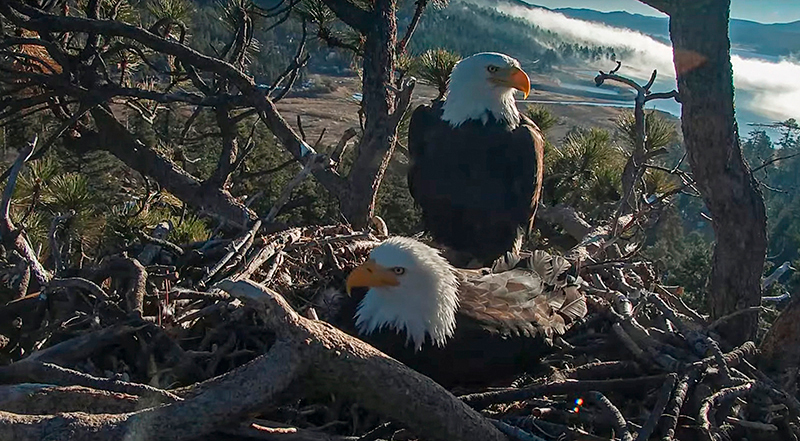
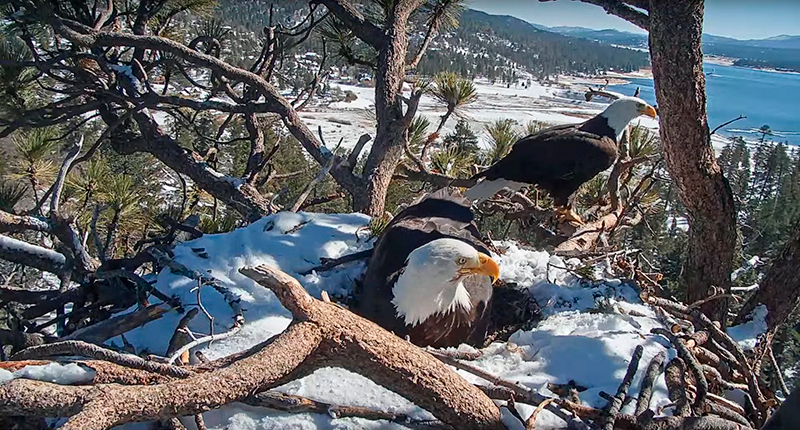
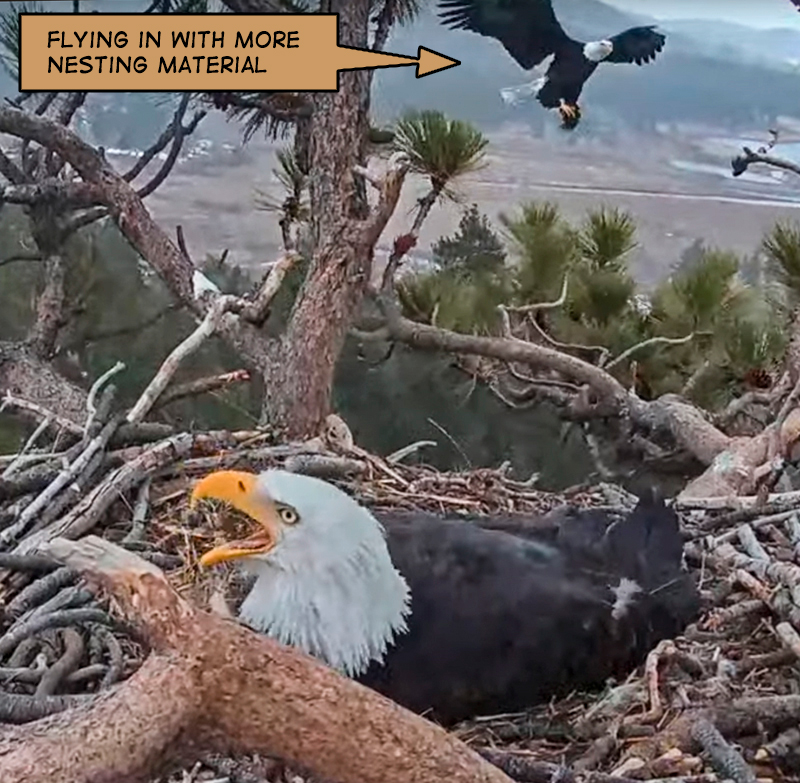
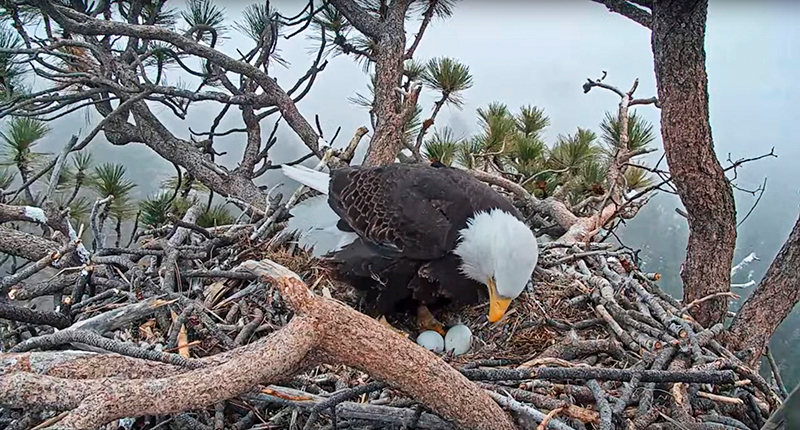
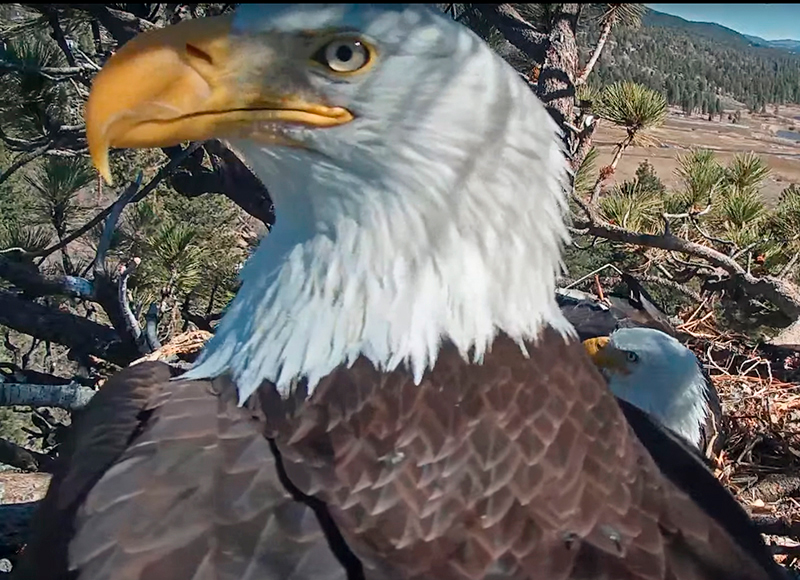
Late last month, a subscriber sent me a link to a live cam of a bald eagle nest on Big Bear Lake, California. She has a cabin on this lake.

These cams exist all over the place; there’s one of an osprey nest just down the road from me. I took to this one because of the story of the breeding pair, Jackie and Shadow, and the beautiful scenery in which they live. The image quality and camera placement is fantastic; it switches to infrared at night, providing a clear image without disturbing the eagles. Their nest is 145 feet high in a Jeffrey Pine Tree.
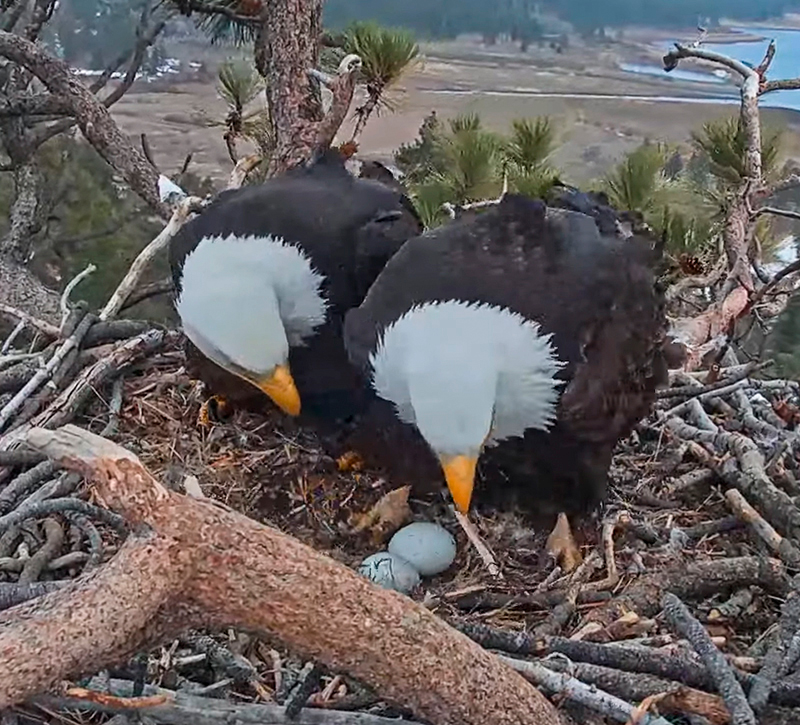
I’ve been checking in on them every day, sometimes more than once, as it lets me scan backward several hours to see if I missed anything good. I only end up watching a few minutes each time, and I’ll admit to preferring the scenes where both eagles are in the nest, which is usually only a minute or two.
Jackie laid her eggs in January, and ‘pip watch’ begins next week. Jackie and Shadow haven’t had a successful clutch the last couple of seasons, so hopefully, they will this year. But, unfortunately, nature can be pretty brutal, and life isn’t as rosy and fairy tale as we’d like to imagine. There’s no guarantee that these eggs will produce healthy offspring that survive to leave the nest, between predators, the elements, and all that can go wrong. That makes those that do even more of a wonder.

The information shared on this camera space by Friends of Big Bear Valley is extensive, as is the commentary in the sidebar chat. While I’ve not participated in that conversation, I’ve learned a lot from reading through it.

I’ve enjoyed watching the two eagles switch off incubating the eggs so the other can go eat, fending off marauding ravens, and interacting with each other. The chatter between them when one flies in is amusing and fascinating. That tree also gets rocking when the Santa Ana winds blow over the lake. A snowstorm blew in fast and heavy last week, and while the eagles certainly didn’t look like they were enjoying themselves, they handled it well.

I didn’t see them complaining about it on their phones, at least.


© Patrick LaMontagne

Posted on 6 Comments

Whimsical Wildlife NFTs

I’ve recently signed with two different NFT marketplaces, minting a selection of my whimsical wildlife paintings. They’re both launching in locked BETA in the next week or two, which kind of makes them members-only clubs, for the time being, so with nothing to link to, you’ll have to take my word for it.

I won’t get super-technical, but this does require a little unpacking. The average person has a problem understanding NFTs, cryptocurrencies and the blockchain because some of the people explaining it speak a language the rest of us don’t.

I’ve been drawing and painting digitally in Photoshop since the late 90s. With other digital artists, I can talk about Adjustment Layers, Blend Modes, Histograms, Paths, and Color Spaces, all standard terms in Photoshop, but geek-speak to anyone unfamiliar with the software.

The language of the Cryptosphere is no different. But just as you don’t need to know how the internet works to use it, the average person doesn’t need to know everything about NFTs to understand them.

NFTs are digital originals; they can be images, music, gifs, videos, documents and more. These assets are traded on a blockchain, a digital ledger of events and transactions using tokens and coins. The T in NFT stands for token.

Somebody more blockchain savvy than I might add “well yeah, sort of, but…” before elaborating on my explanation to make it more specific and accurate, but you get the idea.

My understanding is that when I mint one of my digital paintings, the code within the NFT certifies it ‘an original’ in the Cryptosphere. The verification process renders it unchangeable due to a gauntlet of checks and balances with computers from all over the world, all of which must agree that this is the original.

But, I can save 1000 copies of the same digital painting, all identical and indistinguishable from the original piece, so why is one more valued than the rest?

Because it’s the original, or in some cases, one of a finite collection.

It’s the same concept as a numbered limited edition giclée. It could be an exact copy of an open edition print, but some collectors, especially in the last century, are willing to pay more for that number. For example, one first edition copy of Moby Dick recently sold for almost $50,000, even though I can read the same story in the paperback I bought from Amazon for $7.50.

As someone who doesn’t collect anything, I don’t covet first or limited editions, rare pieces of art, or an original Aliens script signed by James Cameron, even though I’m a big fan of that movie. But I shouldn’t need to explain that plenty of people love these things.

So, dismissing or judging NFT collectors simply because they’re interested in something new that many don’t understand is foolish. As much as I respect the genius of da Vinci, I just don’t get the hype surrounding the Mona Lisa or why it’s worth over 100 million dollars.

I do, however, think it’s a crime that Leonardo never saw a dime of that money.

Scarcity and rarity have value. They always have. To some people, but not all people.

However, if these rare things matter to you and your community, whether it’s sports, music, literature, comic books, archeology, art, or anything else, what others think shouldn’t matter.

The guy who paints his whole body in team colours, puts on the jersey and cheers himself hoarse for three hours at a game, surrounded by thousands of people like him, doesn’t waste his time worrying about the millions who couldn’t care less about the sport that gives him so much happiness.

After last year’s frenzied reporting around a few artists who scored big on NFT sales, I wrote a post about the pros and cons of NFTs, as I understood them. I saw the potential for artists but wasn’t rushing to create NFTs of my work at that time. One reason was the environmental impact.

NFTs have a well-earned reputation for consuming a lot of energy because of something called Proof of Work. Proof of Work requires a shit-ton (not a crypto term) of computers worldwide to talk to each other to verify that the code is legitimate.

Those computers run on electricity, so the process has a significant environmental footprint. Even though most of that traffic comes from verifying cryptocurrencies rather than NFTs, artists have been reluctant to sign up to be part of the problem.

In that first post, I wrote, “They’ll solve the blockchain energy problem, and it will become more affordable and less environmentally destructive.”

That’s happening right now.

Everything that must be verified by all those computers, that Proof of Work, is shifting to something called Proof of Stake. Other processes are called Proof of Residence, Proof of Randomness, and likely more I haven’t yet heard of. This should provide even more secure transactions and render the process more sophisticated and familiar. When cryptocurrencies adopt these other Proofing methods, the environmental impact of minting coins and NFTs will go from ecologically disastrous to environmentally friendly almost overnight.

Cryptocurrency investors are in it to make money. It’s the same reason traditionalists invest their pension funds and retirement savings in the stock market, which, as we have too recently seen, can be just as risky when bad actors rig the game.

Just ask somebody who lost their home or life savings in 2008. The current system only masquerades as secure, but we accept it out of familiarity.

We take comfort that our financial system is regulated, but it’s built on faith and belief. Cash is only paper or plastic, and our investments are just numbers in somebody else’s database. The stock market routinely veers wildly all over the road.

While cryptocurrencies are unlikely to replace the current banking system, they likely aren’t going away. Your traditional bank is investing in them, and the signs point to the integration of the two.

Regardless of where they keep them, everybody wants their investments to grow.

The people running cryptocurrencies realize that an environmentally friendly reputation is more attractive to investors, so it’s in their best interest to develop more energy-efficient methods and operation models. Revised Proofing is just the first step. The environmental impact of minting cryptocurrencies and NFTs will soon be a thing of the past.

Another reason I’m getting involved is the emergence of more sophisticated NFT art marketplaces created and operated by business professionals. Some are treating these marketplaces like professional galleries, curating their collections. Artists are vetted, approved, and recruited for inclusion based on their work quality, reputations, and experience.

There was already a large NFT marketplace called OpenSea. The problem with OpenSea is that anybody can mint anything and call it an NFT, put it on the platform, and it becomes one big tasteless soup. A professional artist with years of experience, an established niche and audience can create an NFT of a piece of her art and upload it to OpenSea. Two seconds later, her work is on Page 45 of today’s offerings because somebody uploaded a collection of 1000 poop emojis wearing different hats.

It would be like walking into a gallery looking for beautiful art but having to dig through millions of finger paintings, crayon scribbles and post-it note doodles to find it.

So, when my buddy Derek Turcotte told me a new type of NFT marketplace contacted him, and he gave me some of the details, I was intrigued. I researched the project and the people involved and saw the potential. Shortly after that, Derek suggested another marketplace I found even more appealing.

One was big on hype and promotion but backed by experienced operators in the crypto world. They didn’t have it all spelled out like I was used to, but I didn’t see it as nefarious, just a different culture that operates a lot more casually. I considered the risks vs. rewards and still felt it was a good bet. And yes, the word bet is appropriate because all of this is new and speculative.

However, the second platform was more like dealing with a real-world licensing opportunity. After an actual phone call from the company in the U.S., where I was free to ask plenty of questions, I agreed to give it a shot. I received a professional legal agreement, names, emails, and phone numbers of people assigned to help me navigate the process. I uploaded my initial images to a professional site, and now I’m waiting for the launch.

What the first platform could learn from the second is that if you want professional artists to mint NFTs and participate in this world, you must learn to talk to them in the language they speak. Artists who do this for a living are used to dealing with companies, galleries, and markets, and you won’t earn their trust if you speak to them like gaming crypto-bros.

Just as amateur artists must learn business language to become professionals, companies must learn how to speak to artists if they want them to climb aboard.

From talking to these NFT marketplaces in recent weeks, there are two stark differences between the crypto world and the traditional business art world.

In the real world, for lack of a better term, galleries, licenses, and retailers will try to get artists to sign exclusivity contracts, especially in smaller regions. So if your work is sold in a gallery, you can’t sell it in another one nearby, sometimes even in the same town or city.

When I asked the NFT markets about this, each waved it off. The only exclusivity required is that you can’t sell the same NFT on more than one marketplace. That’s more about logistics and reputation than anything else. An NFT is essentially a certified original. If two people bought the same original simultaneously from two different marketplaces, it would erode any confidence in the parties involved.

The second thing is that the NFT market seems to value quality artwork more than the real world, as far as pricing goes. These collectors understand the value, scarcity, and provenance of a piece of NFT art and that it has more value than a print.

In the real world, I paint custom commissions for clients, as original a piece as you’re ever going to find. And yet, I get push-back on the price all the time from people who want my best work, but at garage sale prices. Some of my first NFTs are priced higher than my custom commission rate, because they will be originals in that space.

Finally, the crypto community has been the most impressive surprise in this whole experience. True, you can find sinister characters everywhere, but my interaction with these people so far has been positive.

After receiving an out-of-the-blue invite to learn more about this world, I spent an hour in an online phone call with five other people from different parts of the U.S. I admitted my ignorance about much of this. While one guy laughed and said, “wow, you’re just a baby,” he followed it up with, “hey, we’ve all been there.”

Although they were all experienced crypto investors, he cautioned that cryptocurrency and NFTs could very well be a recurrence of the dot-com bubble of internet start-ups in the late nineties. Many of these cryptocurrencies and speculative ventures have already failed, and more of them will, just like plenty of businesses in the real world.

Great reward doesn’t exist without risk. But, if you’re aware of that risk and do your best to mitigate it, you can approach it with open eyes, hoping for the best but ready for a possible rug-pull.

An important caveat here; the only reason the first guy reached out was my friend, Derek. It is very much who you know and who vouches for you that gets you invited into these discussions. If you’re associated with good people online or in the real world, that goes a long way to establishing trust. And if somebody asks, “who’s this guy?” then the answer will most likely be, “this is Patrick; he’s a friend of so-and-so.”

I asked one of these guys why somebody hasn’t created a course for artists to help them navigate this new frontier. He said there are some introductory courses, but everything changes so fast. The only way to keep up is to do the reading, join discussions, and get involved.

Community is essential in this world, which means I will have to be more social in some of these forums, something I have avoided in recent years. Thankfully, there are rules established in these communication spaces. They all have moderators, and a common theme seems to be, “don’t be a dick.”

If only other more popular platforms could adopt the same policy.

I’m excited to wade into these waters. True, I have risked some of my artwork, but none of my best sellers yet. These platforms need to earn that trust. Professional artists take risks with their work the first time they sell a high-quality print or canvas in a gallery. All it takes is somebody with the right equipment to scan the work and sell it to somebody else as their own. It happens every minute of every day all over the world.

Last month, I sent a cease-and-desist to a company in Australia. They were selling my Smiling Tiger image on a product. They took it down, but who knows if they just put it up on another site or how many other places are illegally selling my work? It’s a sad joke that artists know their work is good once people start stealing it. Unfortunately, theft is part of the trade, and good luck suing a company on the other side of the world.

Lately, there have been cases of automated bots scraping images from Twitter and art sharing communities like DeviantArt, stealing an artist’s work and minting NFTs from it. While most of these marketplaces will take down the counterfeits, finding the offence and reporting it takes a lot of time that most people don’t have. And if you do manage to get it taken down, ten more pop up in the meantime.

These curated marketplaces are working on that problem, too, with patents pending for better security software. Banks and credit card companies had to do it, and every corporation on the planet must constantly invest in security. The marketplaces that make it a priority will soon get that reputation. Word will spread, and consumers will learn that the NFTs you buy from Market A are often counterfeit, but those from Market B are vetted, verified, and support the rights of individual artists.

Which market would you trust, especially if you want to invest in value and growth?

It’s still the wild west, but the sheriffs and posses are multiplying, making it harder for the outlaws to roam the territory unimpeded.

There will undoubtedly be challenges, growing pains, and issues with this new venture. After record-breaking gains in 2021, cryptocurrencies across the board have experienced massive losses in these first weeks of 2022. While it will likely correct and recover, when (if?) that will happen is just best guess. Nobody really knows. As a financial investment, the crypto world is not for the faint of heart.

As a creative investing my art in the crypto world, it’s about the same as every other potential opportunity in art-for-a-living. You throw a bunch of stuff at the wall and see what sticks. This is no different.

I still have a lot to learn, but I’m more optimistic about the potential than early last year. I’m sure I’ll have more to say on the subject as these marketplaces launch and speculation becomes experience.

Cheers,
Patrick

Posted on 2 Comments

The Delight Is In the Details

I began a new painting last weekend, which will have a high-speed painting video to go with it. I didn’t intend to paint this animal right now, but the video narrative will explain the choice and why I tried to talk myself out of it for all the wrong reasons.

A week into it, I’m enjoying the work a lot more than I thought I would because I stopped overthinking it and surrendered to having some fun.

With daily editorial cartoon deadlines, the usual admin work, and other myriad tasks that go with self-employment, I usually reserve Saturday mornings for painting. I paint throughout the week, of course, but if I’m home, Saturday morning is usually my sacred painting time. Sundays are one of my busiest days of the week because I draw two editorial cartoons to send out first thing Monday morning.

This week was a little different.

Shonna and I were fortunate to book our first vaccines for mid-morning on Saturday. Grateful to get our shots; it was obviously our top priority.

While it doesn’t happen every year, there have been times where I haven’t felt that great the day after my annual flu shot, a common possible side effect with any vaccine. A couple of friends both felt a little under the weather the day after their COVID shots, so I planned to take Sunday off if needed. This meant getting my editorial cartoons done on Saturday.

I had still planned to get up at five on Sunday as usual, but with the cartoons done, I realized that I could paint all day if I felt good. If I didn’t, no big deal.

I woke feeling fine, more than a little relieved to have received the first shot, so I spent the day painting hair, fur and features. I don’t recall the last time I switched up that routine, but I might do it again. I enjoyed the freedom of having the deadlines done a day early.

Here’s a sneak peek at some of the detail so far. And no, it’s nowhere near done yet.

As Shonna worked at her part-time job Sunday evening, I decided to watch Kong: Skull Island again, a light, fun, monster movie. Here’s the trailer if you haven’t seen it.
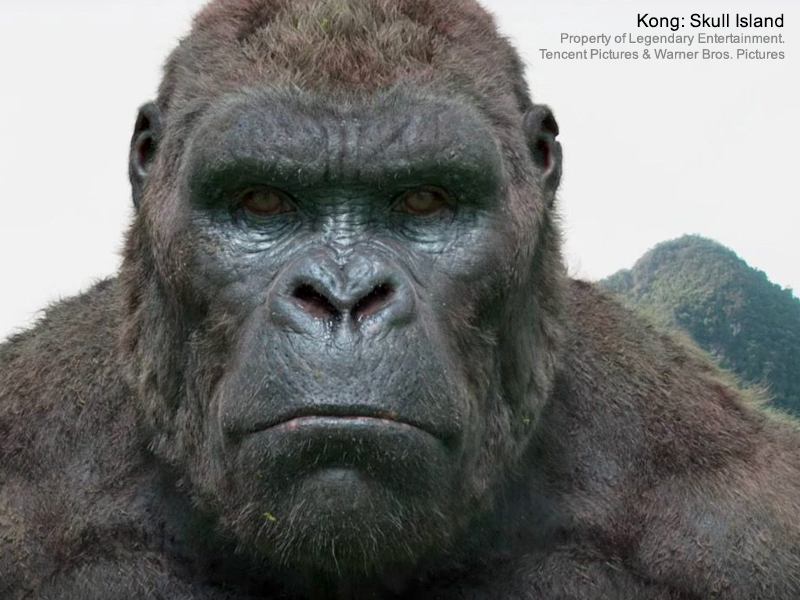
The original King Kong was released in 1933. That’s 88 years ago! The original monster was stop-motion, clunky, and laughable by today’s standards, but it was an incredible achievement at the time. Since then, each of the eleven King Kong remakes has pushed the realism envelope a little more.

I watch a lot of movies more than once and get something new out of them each time. This was no exception. The camera got close to Kong’s skin, hair, eyes, and I frequently paused the movie to take a good look at the incredible realism they achieved.

One of the things I love most about movies today is the extra content. From Director’s commentary to behind-the-scenes features, I enjoy seeing how movies are made, the artistry and collaboration of hundreds of creative professionals coming together to realize a shared vision.

In one featurette, Jeff White, the Visual Effects Supervisor and Creative Director for ILM Vancouver, explained how they brought Kong to life. While he talked about the structure, rigging, muscles and skin, it should come as no surprise that I was most fascinated by how they achieved such realistic hair.

“He’s covered in about 19 million hairs. A lot of the detailed styling and sculpting of the hair is all done by hand. We had two artists working on it for almost a year, just on getting all the different styles and looks to his hair.”

He then went on to talk about how messing up the hair was a big challenge because, in the story, the fur would get wet and damaged, which would change the texture and consistency.

Two artists worked on hair for a year?!

I have a lot of patience painting hair and fur because I enjoy it so much. I’m always trying to achieve a new level of realism. While I never quite get there and will eventually abandon a painting to move on to the next one, I’m now inspired to try even harder.

Granted, for two artists to devote that much time to get the hair right in the movie, they had to be compensated, so their bills got paid. I would imagine there were more than a few days where that meticulous detail got tedious, especially when the software started acting up, as it always will from time to time. This would have been an incredible amount of challenging hard work.
But when they saw their efforts come to life on the big screen, for it to look so delightfully real and terrifying, I can only imagine their pride in the accomplishment. I also suspect they both still noticed flaws that nobody else would see.

Because that’s what artists do. We are always our own worst critics.

This morning, while continuing to work on the current painting, I decided I’m not going to rush it. I’m taking a little more time on this one to push it further because I’m enjoying it so much.

I’ll be pleased to share the finished piece and the video that goes with it, though I don’t currently have an idea when that will be. But even if I’m happy with it, it won’t be long before I see the flaws, wish I’d done something different, and try to do better the next time.

Because that’s what artists do.
© Patrick LaMontagne
Follow me on Instagram @LaMontagneArt

Posted on Leave a comment

Bear Hug

It’s been a while since I’ve been able to focus on a whimsical wildlife painting. For those who follow my work specifically to see those, thank you for your patience.

Wacom hired me to create a video for them connected with a promotion they’re doing right now called “Find Your Gift.”

As many of you know, Wacom creates the tablets and displays on which I’ve created my work for more than twenty years. I’ve been their guest on webinars, created new product demo videos for them, represented them at an event in Calgary, presented at their booth at Photoshop World, and they generously allowed me to donate tablets to a local school.

My work wouldn’t be possible without Wacom.

So when my friend Pam asked me to create another video for them, there was only one answer.

What I like best about our relationship is that Pam lets me do my own thing. Of course, we have some back and forth to make sure my vision matches hers, but she knows what to expect from me, and I do my best to deliver.

In this case, I had the freedom to interpret the word gift and paint and write what I wanted, which allowed me to create my best work.

I spent the last three or four days chained to my desk, creating this painting, recording with the camera and screen capture, writing and recording the narration, and editing it all together a la Dr. Frankenstein. It was a lot of work, but I’m quite pleased with the result.

I realized that the three recent paintings I like best are ones I did for Wacom videos. Those include the Amur Tiger, the Ring-tailed Lemur and this one.

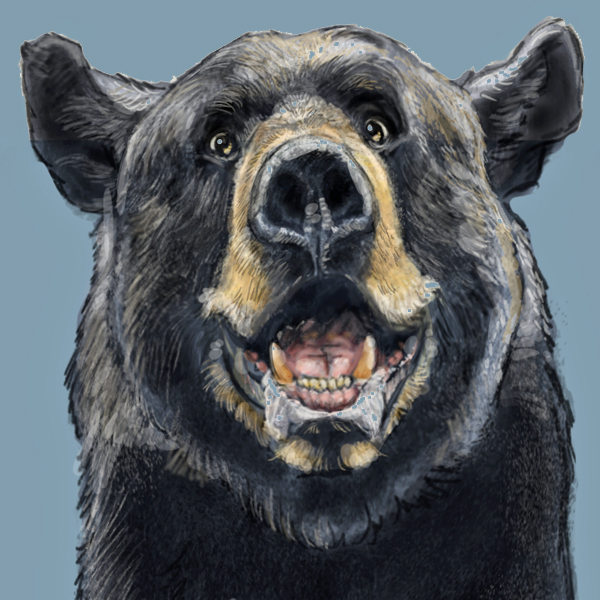
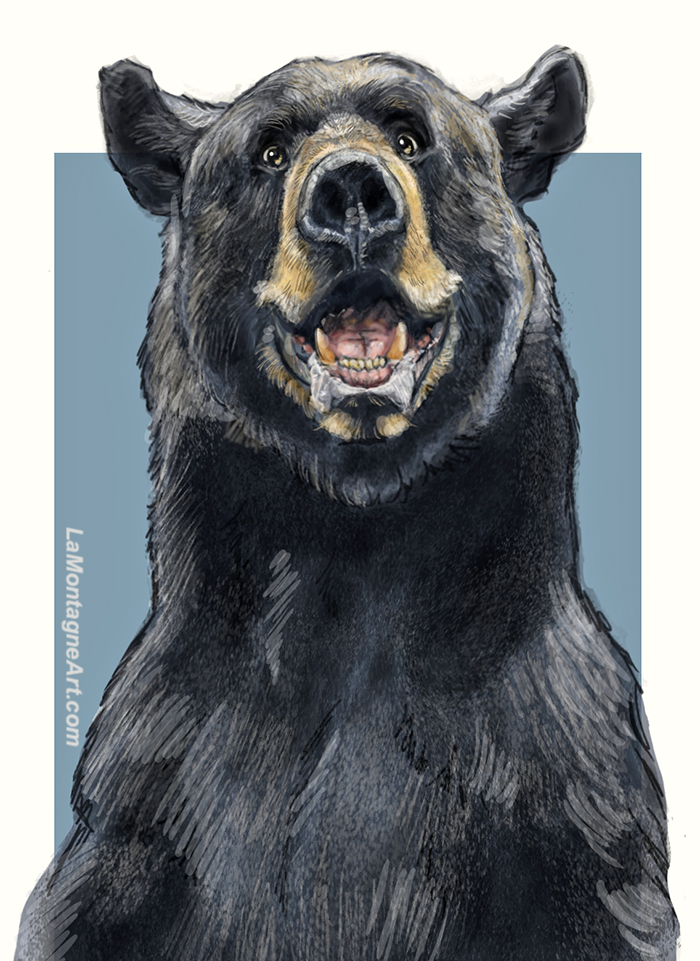
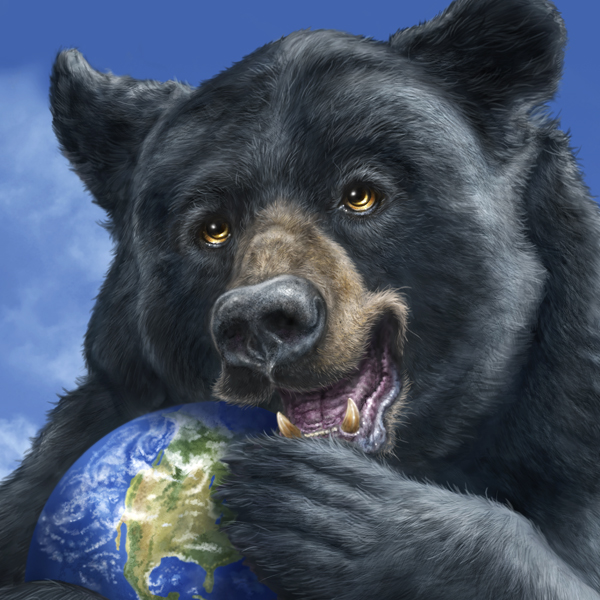
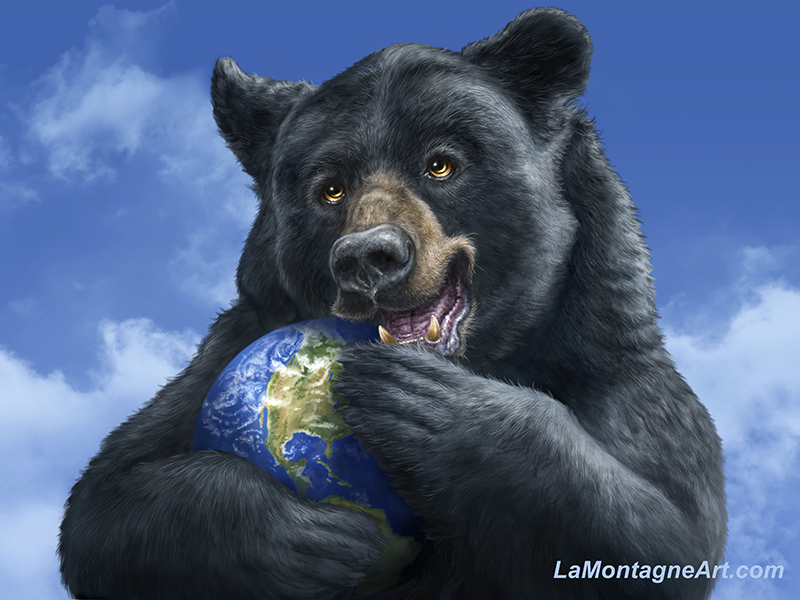
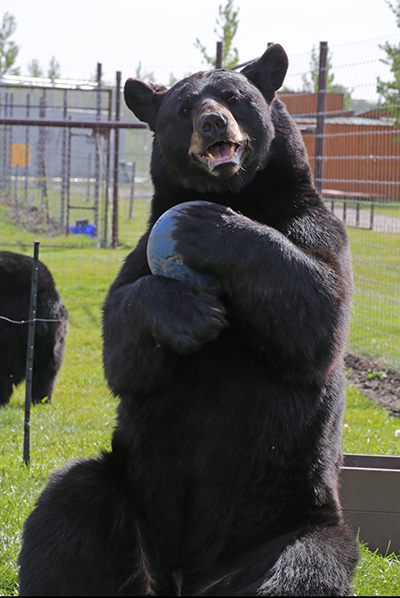
The model for this painting is one of the most handsome residents of Discovery Wildlife Park. Gruff was an orphaned black bear cub who had a rough start in life, but thanks to Serena and her staff’s tireless efforts, he has grown into a beautiful, gentle bear with a wonderful personality. The keepers try not to pick favourites, but they each have a special place in their heart for Gruff, as do I.

I’ve often written about how much I value my relationship with Discovery Wildlife Park. They allow me incredible access to the animals, for which I’m immeasurably grateful. On my most recent visit in September, I was able to sit inside the enclosure while they did their bear education presentation, where they teach people about bear safety, behaviour and conservation.

I took hundreds of reference shots and didn’t realize I’d be using ones from that session so soon.

One of the keepers, Jacob, was in Canmore last week, and I had a brief visit with him. I told him what I was painting, inspired by the poses I shot. He told me that Gruff almost always has a ball with him. It doesn’t need to be the same ball, but it’s kind of like his security blanket. He even takes a ball with him into his den when he hibernates.

On one visit to the park a couple of years ago, Serena sent me a text asking where I was. I said that I was watching a silly bear play with a ball. She responded, “Gruff.”

Gruff taught himself how to pose with the ball and because it was so endearing, the keepers used positive reinforcement to encourage that behaviour. It was this pose that inspired the painting. As the light wasn’t great in this shot, the sun beside and behind him, I had to use other reference photos for the details. Thankfully, I have hundreds of pictures of Gruff.

Even though I was pressed for time on this, more self-inflicted than not, this painting was a joy to create. It’s been a while since I’ve had this much fun painting one of my whimsical wildlife portraits. Considering the kind of year it’s been for all of us, that’s no small thing.

If you’ve got five minutes, you can see a high-speed time-lapse below of how I painted Gruff and hear some of my thoughts about the importance of finding and sharing your own gifts.

Take care of yourselves,
Patrick

___

© Patrick LaMontagne
Follow me on Instagram @LaMontagneArt
Sign up for my newsletter which features blog posts, new paintings and editorial cartoons, follow this link to the sign up form.

Posted on

Odds and Ends

As the title suggests, here’s a collection of smaller updates in one post.

Pacific Music and Art

The funny-looking face masks continue to be popular, now sold in many retail stores in Western Canada, Alaska, the Pacific Northwest, and everywhere else via their online store. The masks have gone through a recent design evolution. The image now covers the entire mask, the straps are more elastic, with a flexible nose bridge inside the upper seam. They still come with rubber grommets to make the straps more adjustable.
In addition to the masks, there are now face scarves available, fun because they’re so versatile. They can be used as a neck scarf, beanie, head band, head scarf and they can be doubled up over your face to serve as a mask.
Once again, the masks and face scarves are not for medical use and are not intended as a replacement for N95 masks or medical grade PPE.

If you’d like to see the available designs for both masks and scarves, follow this link. There are also some new face mask designs that previously weren’t available, so be sure to look through all three pages. Use the promo code Patrick5OFF, and you get 5% off everything on the site. The code expires at the end of December.

Wacom

I’m recording another video for Wacom over the next couple of weeks. These are always challenging, but I usually end up having a lot of fun with them. For anyone new to my work, Wacom is the company that makes the digital displays on which I create my art. I’ve been using their tools for more than twenty years and welcome any opportunity to work with them.

A couple of videos I did this past year for Wacom resulted in two of my favourite paintings, the Ring-tailed Lemur and the Amur Tiger, shown below. I’m excited about the image I’m painting in this new video as well.

Sharing

I have been ripped off quite a bit throughout my career. People have used my images illegally for promotion, have altered my cartoons and paintings for their own agendas, and have claimed my images as their own work. One woman on Vancouver Island even used my Otter painting as her business logo and had large images on her store’s windows for two or three years. Then she had the nerve to get mad at me when I sent her a cease-and-desist. She argued that she found it on Google, so she thought it was free. Try that with Mickey Mouse and let me know how it turns out for you.

Sadly, it’s part of the online world. Once your work gets good enough to sell, then it’s good enough to steal. Every artist I know who makes their living from their creations deals with this problem.

But from time to time, people ask if they can share the paintings, cartoons, newsletters, and blog posts I send. While I appreciate that consideration, you don’t need permission. If I share it with you, then you can share it with anyone you like. In fact, I’m always grateful when people introduce my work to others.

As long as it’s not altered, my site name or signature remains on the image, and you aren’t making money from it, then share away, with my thanks.

Take care of yourselves. I’ll have something new to share in a couple of weeks.

Cheers,
Patrick

___

© Patrick LaMontagne
Follow me on Instagram @LaMontagneArt
Sign up for my newsletter which features blog posts, new paintings and editorial cartoons, follow this link to the sign up form.